I’m Nathan. I’ve worked as an HVAC technician for over 10 years, and while most of my day-to-day is home heating and cooling, thermostats are still thermostats. The principles are the same: a thermostat is a temperature-controlled valve or switch that helps a system reach and hold the right operating temperature.
In your car, that “right temperature” matters a lot more than most people realize. When the engine can’t warm up properly, you’ll often feel it in your fuel economy, your heater output, and sometimes even in how the engine runs.
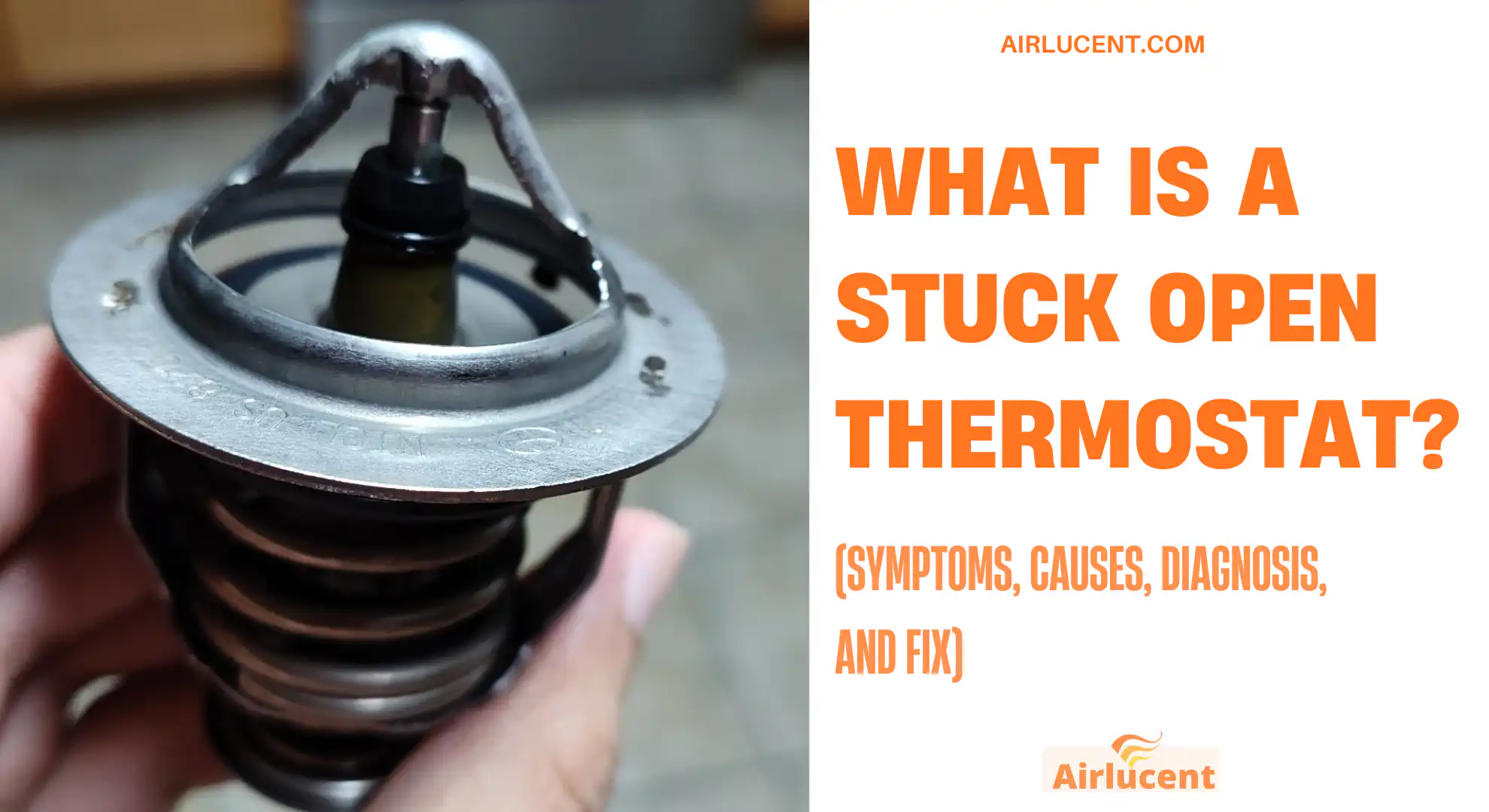
This guide breaks down what a stuck open thermostat is, what it does to your engine, how to diagnose it accurately, and what you should do next.
- What the thermostat does in a car (and why it matters)
- What happens when the thermostat is stuck open?
- Stuck open thermostat symptoms you can notice
- Symptom-to-cause table (fast troubleshooting)
- Can a stuck open thermostat cause overheating?
- What causes a thermostat to stick open?
- How a stuck open thermostat affects fuel economy and emissions
- Why a stuck open thermostat can increase engine wear over time
- How to diagnose a stuck open thermostat (step-by-step)
- Stuck open thermostat diagnosis flow (quick guide)
- Can you drive with a thermostat stuck open?
- How to fix a stuck open thermostat
- Typical replacement cost (what most drivers can expect)
- Prevention: how to reduce the odds of thermostat failure
- Stuck open vs stuck closed thermostat (do not confuse these)
- FAQs
- Final thoughts (from Nathan)
- References and further reading
What the thermostat does in a car (and why it matters)
Your car’s thermostat sits between the engine and radiator. Its job is to control coolant flow based on temperature.
Normal thermostat behavior
- Cold start: Thermostat stays closed so the engine warms up fast.
- Warm operating temp reached: Thermostat opens gradually to keep temperature stable.
- Temperature regulated: Coolant flow increases or decreases to prevent overheating and prevent running too cold.
Typical operating temperature range
Most modern engines are designed to run roughly around:
| Thermostat rating (common) | 180°F to 205°F |
| Many modern engines “happy zone” | about 195°F to 220°F (90°C to 104°C) |
What happens when the thermostat is stuck open?
When the thermostat is stuck open:
- Coolant circulates through the radiator constantly
- The radiator sheds heat even when the engine needs to build heat
- The engine often takes much longer to warm up
- In many cases, the engine may never fully reach operating temperature, especially at speed or in cold weather
This creates a ripple effect across the vehicle.
Why a cold-running engine is a problem
Engines are calibrated (fueling, ignition timing, variable valve timing, transmission behavior on some cars) assuming they will reach operating temperature within a reasonable time. When they do not, you can get:
- Richer fuel mixtures for longer
- Poorer fuel economy
- Higher emissions
- Reduced cabin heat
- More moisture and contamination in oil over time
Stuck open thermostat symptoms you can notice
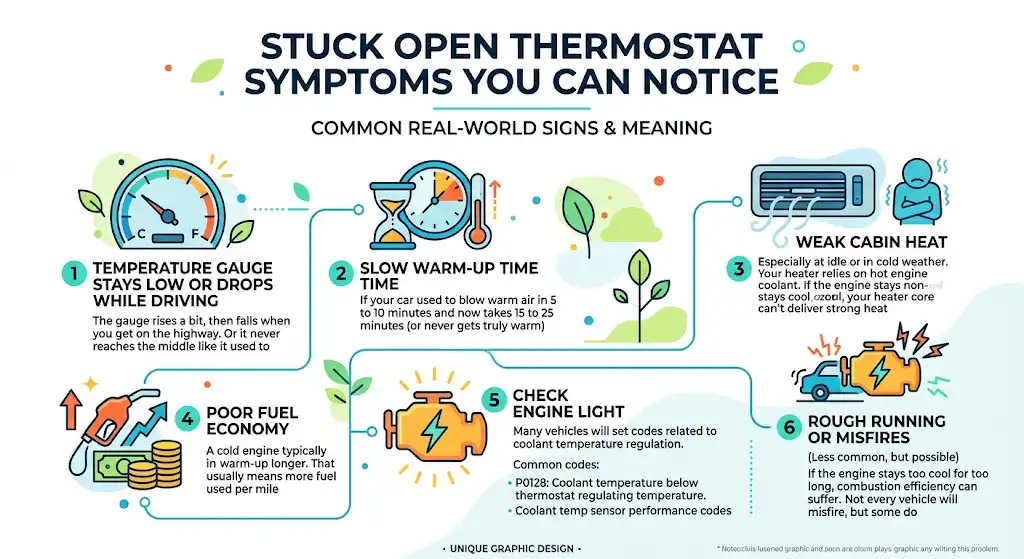
Here are the most common real-world symptoms I see people describe (and what they usually mean).
1. Temperature gauge stays low or drops while driving
- The gauge rises a bit, then falls when you get on the highway
- Or it never reaches the middle like it used to
2. Slow warm-up time
If your car used to blow warm air in 5 to 10 minutes and now takes 15 to 25 minutes (or never gets truly warm), a stuck open thermostat is a top suspect.
3. Weak cabin heat (especially at idle or in cold weather)
Your heater relies on hot engine coolant. If the engine stays cool, your heater core can’t deliver strong heat.
4. Poor fuel economy
A cold engine typically stays in warm-up strategy longer. That usually means more fuel used per mile.
5. Check engine light
Many vehicles will set codes related to coolant temperature regulation.
Common code examples:
- P0128: Coolant temperature below thermostat regulating temperature
- Some vehicles may also log coolant temp sensor performance codes if temperature behavior looks abnormal
6. Rough running or misfires (less common, but possible)
If the engine stays too cool for too long, combustion efficiency can suffer. Not every vehicle will misfire, but some do.
Symptom-to-cause table (fast troubleshooting)
| Gauge stays low all the time | Stuck open | Bad coolant temp sensor, missing thermostat, wrong thermostat installed |
| Gauge rises then drops at speed | Stuck open | Cooling fans running constantly, sensor issue |
| Little or no cabin heat | Stuck open | Low coolant, air trapped in cooling system, clogged heater core |
| Check engine light with P0128 | Stuck open (very common) | Coolant temp sensor, low coolant, wiring issue |
| Overheating | Usually not stuck open | Stuck closed thermostat, water pump failure, radiator restriction, low coolant |
Can a stuck open thermostat cause overheating?
Most of the time, a stuck open thermostat causes underheating, not overheating.
But here’s the nuance: people sometimes report overheating “with thermostat problems” because there are multiple cooling system failures that can overlap, such as:
- low coolant
- air pockets
- radiator flow restriction
- water pump issues
So while the thermostat being stuck open is typically a cold-engine problem, don’t ignore overheating. If you’re overheating, you need a proper diagnosis immediately.
What causes a thermostat to stick open?
Thermostats fail for a few predictable reasons:
Common causes
- Age and wear: The internal spring and wax pellet mechanism wear out over time.
- Corrosion or rust: Old coolant or mixed coolant types can accelerate corrosion.
- Debris in the cooling system: Sludge or scale can physically jam the valve.
- Improper installation: Wrong orientation, damaged gasket, or wrong thermostat temperature rating.
- Cooling system neglect: Infrequent coolant service increases deposits and corrosion.
How a stuck open thermostat affects fuel economy and emissions
Fuel economy impact
When your engine runs colder than designed:
- fuel vaporization is worse
- the ECU may keep a richer mixture longer
- the engine spends more time in “warm-up mode”
Result: you often see a noticeable MPG drop.
Emissions impact
Cold engines produce more pollutants, especially right after start-up. Industry and government emissions testing has long shown that a large portion of total trip emissions can happen early in a drive cycle before everything is fully warm (engine and catalytic converter).
Plain English: if your engine never fully warms up, it’s harder for the vehicle to operate in its cleanest, most efficient mode.
Why a stuck open thermostat can increase engine wear over time
This part gets overlooked.
When an engine stays too cool:
- oil can stay thicker than intended
- condensation and fuel dilution can build up more easily
- sludge risk increases over time (especially with short trips)
Will it destroy your engine tomorrow? Usually not. But if you drive for months like this, you’re stacking the odds against long-term engine health.
How to diagnose a stuck open thermostat (step-by-step)
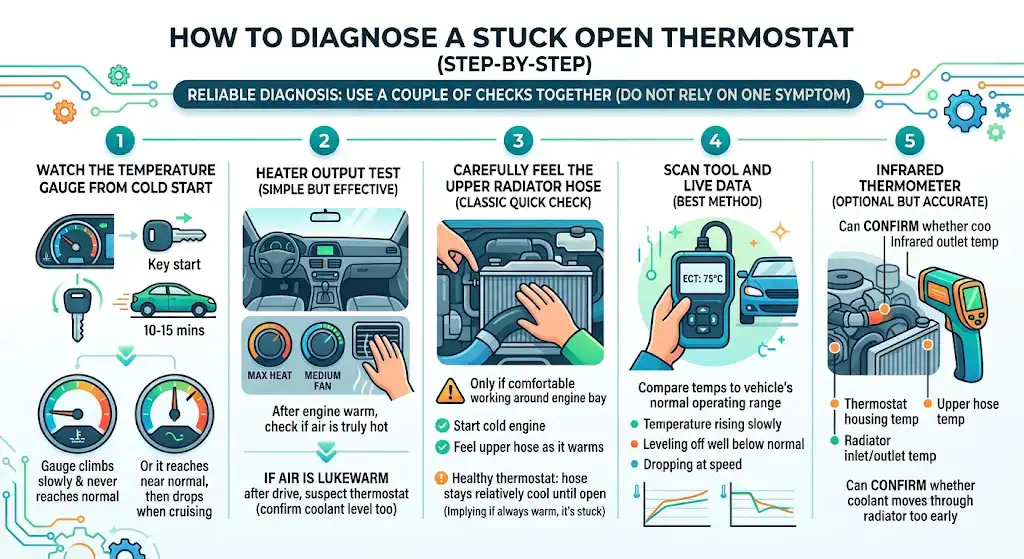
If you want a reliable diagnosis, do not rely on one symptom alone. Use a couple of checks together.
Step 1: Watch the temperature gauge from cold start
- Start the car cold
- Drive normally for 10 to 15 minutes
What you’re looking for:
- Gauge climbs slowly and never reaches normal
- Or it reaches near normal, then drops when cruising
Step 2: Heater output test (simple but effective)
- Set the heat to max
- Fan on medium
- After the engine should be warm, check if the air is truly hot
If the air is lukewarm even after a normal drive, suspect thermostat (but also confirm coolant level).
Step 3: Carefully feel the upper radiator hose (classic quick check)
Only do this if you’re comfortable working around an engine bay.
- Start with a cold engine
- As it warms, feel the upper radiator hose
- With a healthy thermostat, that hose usually stays relatively cool until the thermostat opens
Step 4: Scan tool and live data (best method)
If you have a basic OBD-II scan tool that shows live data:
- Look at Engine Coolant Temperature (ECT)
- Compare your observed temps to what’s normal for your vehicle
A stuck open thermostat often shows:
- temperature rising slowly
- leveling off well below normal operating temp
- and dropping at speed
Step 5: Infrared thermometer (optional but accurate)
An infrared temp gun can help you compare:
- thermostat housing temperature
- upper hose temperature
- radiator inlet/outlet temperature
This can confirm whether coolant is moving through the radiator too early.
Stuck open thermostat diagnosis flow (quick guide)
- Cabin heat weak + gauge low
Check coolant level first - Coolant level OK + gauge drops at speed
Strongly suspect thermostat stuck open - Check engine light + P0128
High probability thermostat stuck open - Still unsure
Use live data ECT and/or IR thermometer
Can you drive with a thermostat stuck open?
Yes, in many cases you can drive, but you probably should not ignore it.
What you risk by delaying the fix
- worse fuel economy (more money at the pump)
- more engine wear over time (especially if you do short trips)
- potential inspection or emissions test failure
- poor defrost performance in winter (safety issue)
When not to keep driving
Stop and get it checked immediately if you see:
- overheating
- coolant loss
- steam
- temperature gauge swinging wildly
- heater suddenly goes cold while the engine is hot (could indicate low coolant or air pockets)
How to fix a stuck open thermostat
In most cases, the fix is straightforward:
The proper repair
- Replace the thermostat (and gasket or housing seal)
- Refill coolant with the correct type
- Bleed air from the cooling system
- Optional but smart: coolant flush if the old coolant is rusty, sludgy, or contaminated
Should you replace the coolant temperature sensor too?
Not always. If you have a P0128 and clear evidence the engine is running cold, the thermostat is usually the culprit.
But if your temperature readings seem erratic or unrealistic, test the sensor and wiring before replacing parts.
Typical replacement cost (what most drivers can expect)
Pricing varies by vehicle design and labor time. Some thermostats are easy, others are buried.
| Thermostat replacement | $100 to $300 |
| Thermostat housing (if needed) | $150 to $450 |
| Coolant flush (if added) | $100 to $200 |
Tip: If the thermostat is integrated into a housing with sensors (common on some newer vehicles), cost goes up.
Prevention: how to reduce the odds of thermostat failure
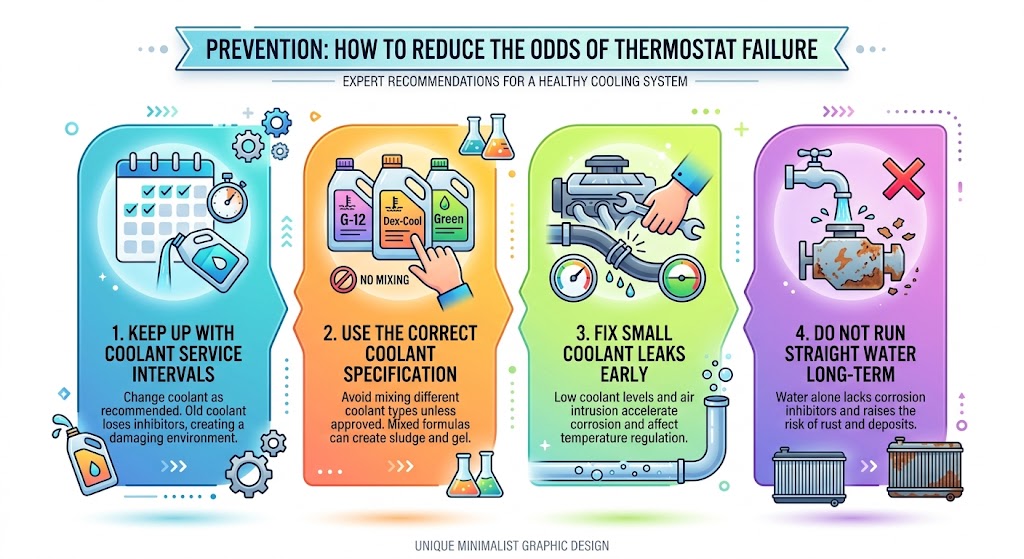
Here’s what I recommend if you want to avoid repeat cooling system issues:
1. Keep up with coolant service intervals
Follow your manufacturer’s interval. Old coolant loses corrosion inhibitors and can turn into a thermostat-killing environment.
2. Use the correct coolant specification
Do not mix coolant types unless the manufacturer explicitly allows it. Mixing can create sludge or gel.
3. Fix small coolant leaks early
Low coolant and air intrusion can accelerate corrosion and cause temperature regulation problems.
4. Do not run straight water long-term
Water alone lacks corrosion inhibitors and raises the risk of rust and deposits.
Stuck open vs stuck closed thermostat (do not confuse these)
| Stuck open thermostat | Engine runs too cool | Poor MPG, emissions, heater weak, long-term wear |
| Stuck closed thermostat | Coolant cannot reach radiator | Overheating quickly, severe engine damage risk |
If your car is overheating fast, a stuck closed thermostat is more likely than a stuck open one.
FAQs
Will a stuck open thermostat cause a check engine light?
Very often, yes. Many vehicles detect that the engine is not warming up as expected and set a code like P0128.
Is replacing the thermostat a DIY job?
Sometimes. On some vehicles it’s very accessible. On others, it’s buried and easy to leak or trap air if you don’t bleed the system correctly. If you’re not comfortable, a shop can usually handle it quickly.
Final thoughts (from Nathan)
A stuck open thermostat sounds minor, but it can quietly cost you money and reliability. If your temperature gauge is staying low, your heat is weak, or you’re seeing P0128, don’t just live with it. The fix is usually straightforward, and the payoff is immediate: better heat, better MPG, and an engine that runs the way it was designed to run.
References and further reading
- AxleAddict: How to determine if a car’s engine thermostat is stuck (diagnostic concepts and checks)
https://axleaddict.com/auto-repair/How-to-Determine-if-a-Cars-Engine-Thermostat-is-Stuck - Cash Cars Buyer: Driving with thermostat stuck open (practical implications)
https://www.cashcarsbuyer.com/driving-with-thermostat-stuck-open/