
You know that feeling when you walk into a space and instantly think, “Wow, someone actually cares about this place”? That’s exactly what happens when schools transform their hallways from boring beige corridors into vibrant, inspiring environments.
I’ve walked through countless school hallways over the years, and trust me, the difference between a thoughtfully designed space and a generic one is like comparing a rainbow to… well, beige paint 🙂
Let me share ten hallway ideas that’ll turn your school’s corridors into places where students actually want to spend time.
These aren’t your typical bulletin board suggestions – we’re talking full-scale transformations that’ll have kids running to school instead of dragging their feet.
Interactive Growth Mindset Hallway

This hallway becomes your school’s personal cheerleading squad, available 24/7.
I love this concept because it tackles one of the biggest challenges students face: believing they can actually improve. Instead of static motivational posters (you know, the ones with cats hanging from branches), this hallway engages students in their own growth journey.
Picture walking down a corridor where interactive challenge stations line the walls. Students can spin wheels to get daily growth mindset prompts, write on whiteboard sections about their learning goals, or add sticky notes to collaborative “mistake celebration” boards. Yes, you read that right – we’re celebrating mistakes because that’s where the real learning happens.
The beauty of this setup? Students become active participants rather than passive observers. They’re not just reading about growth mindset; they’re practicing it every time they walk to class.
Key elements that make this work:
- Rotating challenge boards where students can attempt brain teasers and puzzles
- “Yet” walls where students write things they can’t do “yet” and update them as they progress
- Growth mindset vocabulary displays with terms like “perseverance” and “neuroplasticity”
- Student reflection stations with prompts like “What did I learn from my mistake today?”
Ever notice how some kids seem naturally resilient while others give up at the first sign of difficulty? This hallway helps level that playing field by making growth mindset concepts visible and accessible to everyone.
School Reading Adventure Hallway
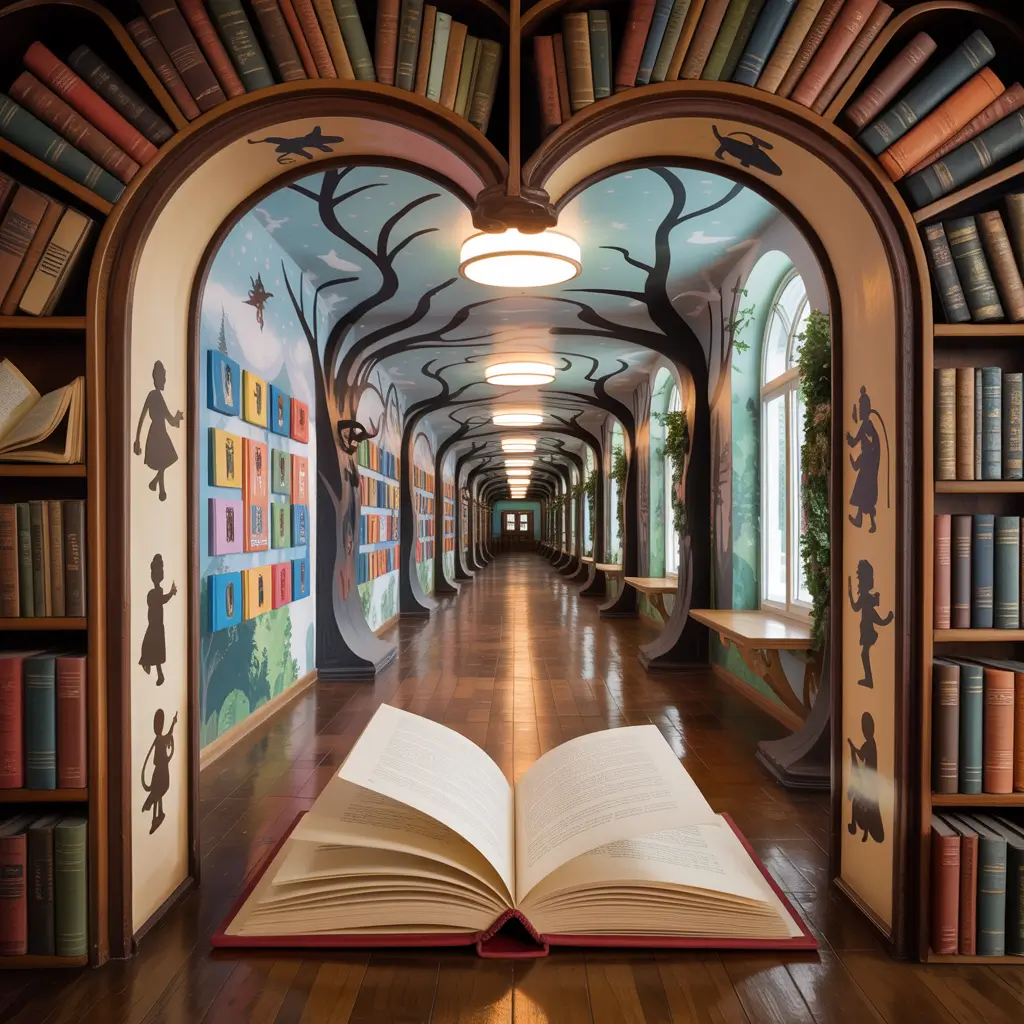
Transform your hallway into a literary wonderland that makes books irresistible.
Remember when you were a kid and certain places just felt magical? That’s what we’re creating here. This isn’t about cramming more reading requirements down students’ throats – it’s about making reading feel like the adventure it actually is.
I’ve seen schools create themed reading zones that transport students to different worlds. One section might look like Harry Potter’s Diagon Alley, complete with floating books and mystical lighting. Another area could resemble a cozy library corner with bean bags and soft lighting where students can actually sit and read during breaks.
The interactive elements really make this hallway shine:
- Book recommendation trees where students hang favorite book suggestions for their peers
- Character costume corners where kids can dress up as their favorite book characters
- Reading progress thermometers that fill up as the school hits collective reading goals
- Author spotlight areas that rotate monthly and include fun facts and book displays
What makes this particularly effective? Students see their peers’ genuine enthusiasm for books, which is way more convincing than any adult lecture about reading’s importance. When kids recommend books to each other, magic happens.
The best part? You don’t need a massive budget. Some schools have created incredible reading adventures using cardboard, paint, and lots of creativity. IMO, the homemade touches often feel more authentic than expensive commercial displays.
Student Artwork Gallery Hallway
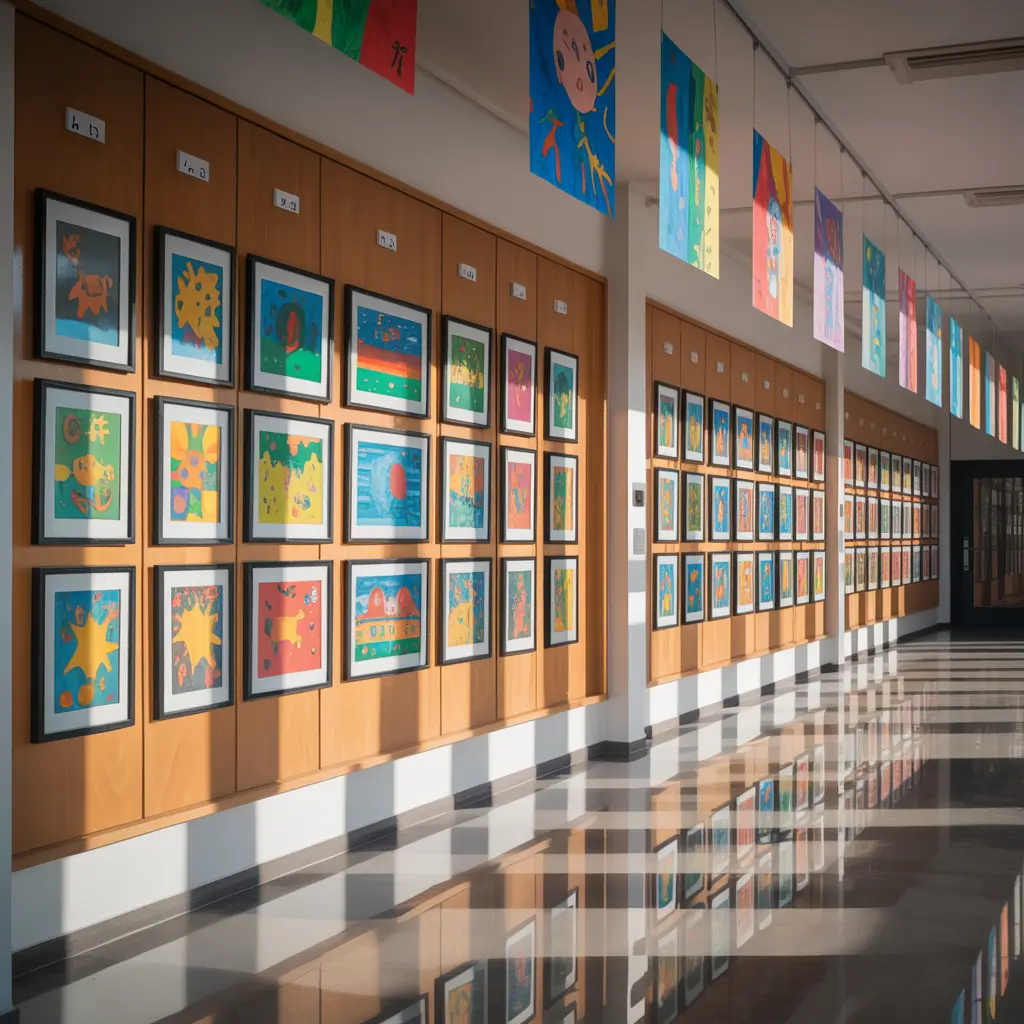
Turn your corridor into a rotating museum that celebrates every student’s creativity.
Here’s something that bugs me about traditional school art displays: they often showcase the same few “talented” students while everyone else’s work gets buried. This gallery hallway approach flips that script entirely.
Every student gets their moment to shine, regardless of artistic skill level. The key is creating a professional-looking display system that makes every piece of artwork feel important. Think museum-quality frames (or at least consistent presentation) with proper lighting and descriptive plaques.
I love seeing schools that include artist statements next to each piece. When a third-grader explains their creative process or what their artwork means to them, it adds depth that transforms a simple drawing into meaningful expression.
Smart organization strategies include:
- Rotating monthly themes that align with curriculum (like “Community Helpers” or “Scientific Observations”)
- Grade-level sections that show artistic development over time
- Mixed-media displays including photography, sculptures, and digital art
- Student curator programs where older students help select and arrange displays
The psychological impact here is huge. When students see their work displayed with the same care as professional art, they start viewing themselves as real artists. That confidence spillover into other subjects is remarkable.
Also Read: 10 Stunning Hallway Lighting Ideas for Every Home
Around the World Culture Hallway
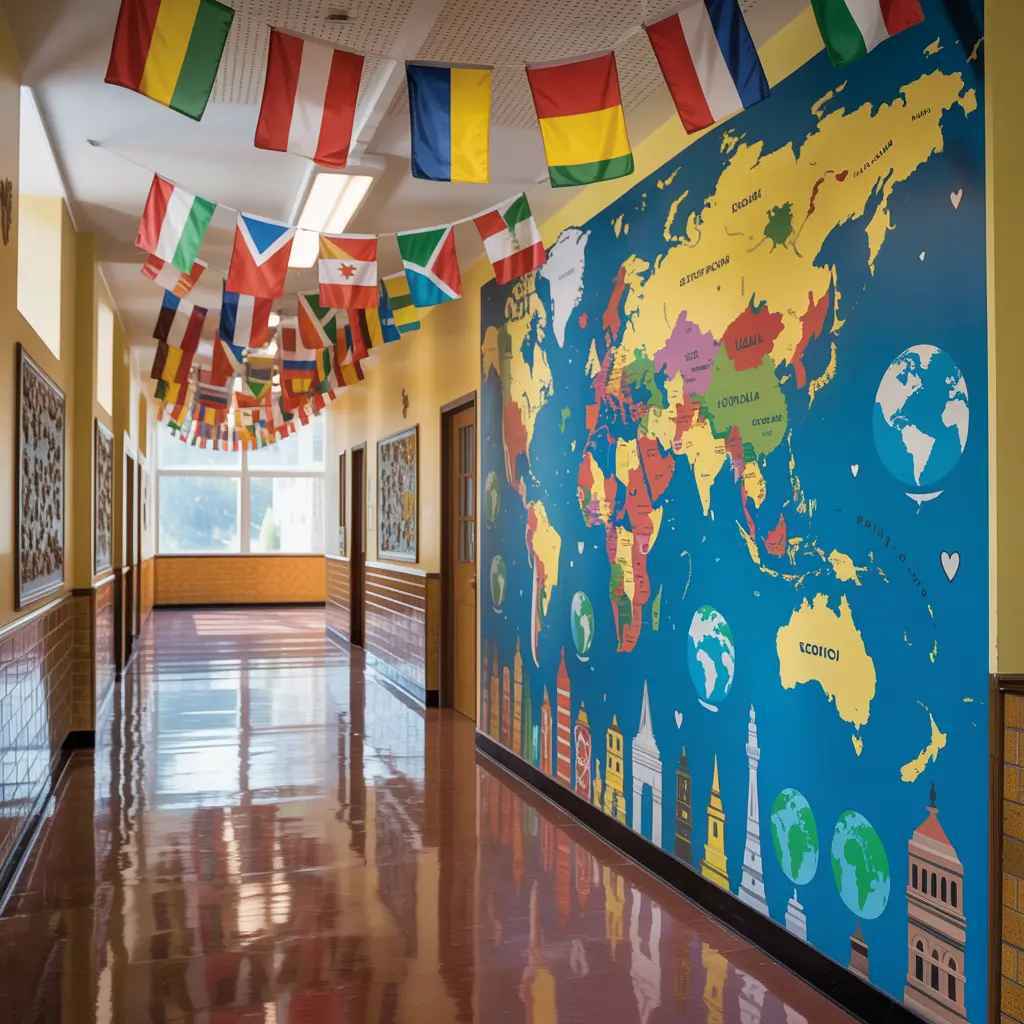
Create a passport-free journey that celebrates diversity and builds global awareness.
This hallway idea tackles something crucial that many schools struggle with: helping students understand and appreciate the rich cultural diversity in their own community and beyond. Instead of surface-level “multicultural month” displays, this becomes a year-round celebration of global connections.
Interactive passport stations let students “visit” different countries by scanning QR codes that lead to virtual tours, traditional music, or student presentations about their heritage. I’ve seen schools where kids genuinely get excited about collecting passport stamps as they learn about new cultures.
The most successful versions I’ve encountered include:
- Student heritage spotlights where families contribute photos, artifacts, and stories
- World language greetings that students can practice as they walk by
- Global pen pal correspondence displays showing letters and packages from international schools
- Cultural celebration calendars highlighting holidays and traditions from around the world
What really makes this work? Authenticity over stereotypes. Instead of generic “Mexico = sombreros and tacos” displays, successful culture hallways feature real stories from real people in the school community.
Ever wonder why some students feel more connected to their school than others? Often, it’s because they see themselves reflected in their environment. This hallway helps every student feel valued and included.
Nature-Inspired Learning Hallway
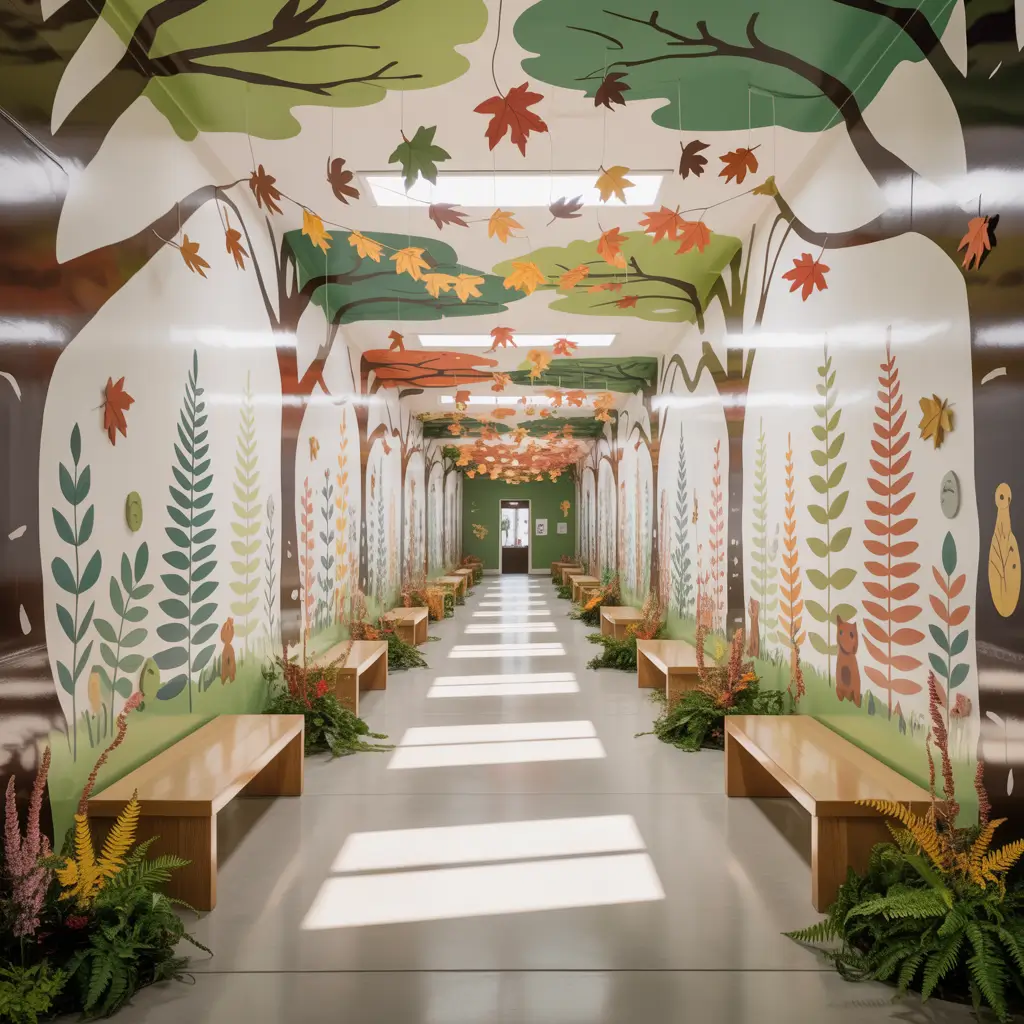
Bring the outdoors inside and transform your corridor into an ecosystem classroom.
There’s something almost therapeutic about walking through a nature-themed hallway, especially in schools that might not have access to extensive outdoor spaces. This isn’t just about hanging pictures of trees – we’re talking about creating an immersive environment that teaches while it calms.
Living elements make all the difference. Student-maintained plant stations along the hallway teach responsibility while improving air quality. Weather tracking displays let students monitor and record daily conditions. Seasonal change documentation shows how the natural world transforms throughout the school year.
Interactive features that work brilliantly:
- Nature sound stations where students can listen to different ecosystems
- Recycling and sustainability challenges with visible progress tracking
- Local wildlife identification boards featuring animals students might see around school
- Garden planning areas where students design and track their own plots
The science integration opportunities here are endless. Students naturally start asking questions about photosynthesis when they’re caring for plants, or about weather patterns when they’re tracking daily conditions.
I particularly love seeing schools that incorporate student nature photography into these displays. When kids start noticing and documenting the natural world around them, they develop a deeper connection to environmental stewardship.
Colorful STEM Discovery Hallway
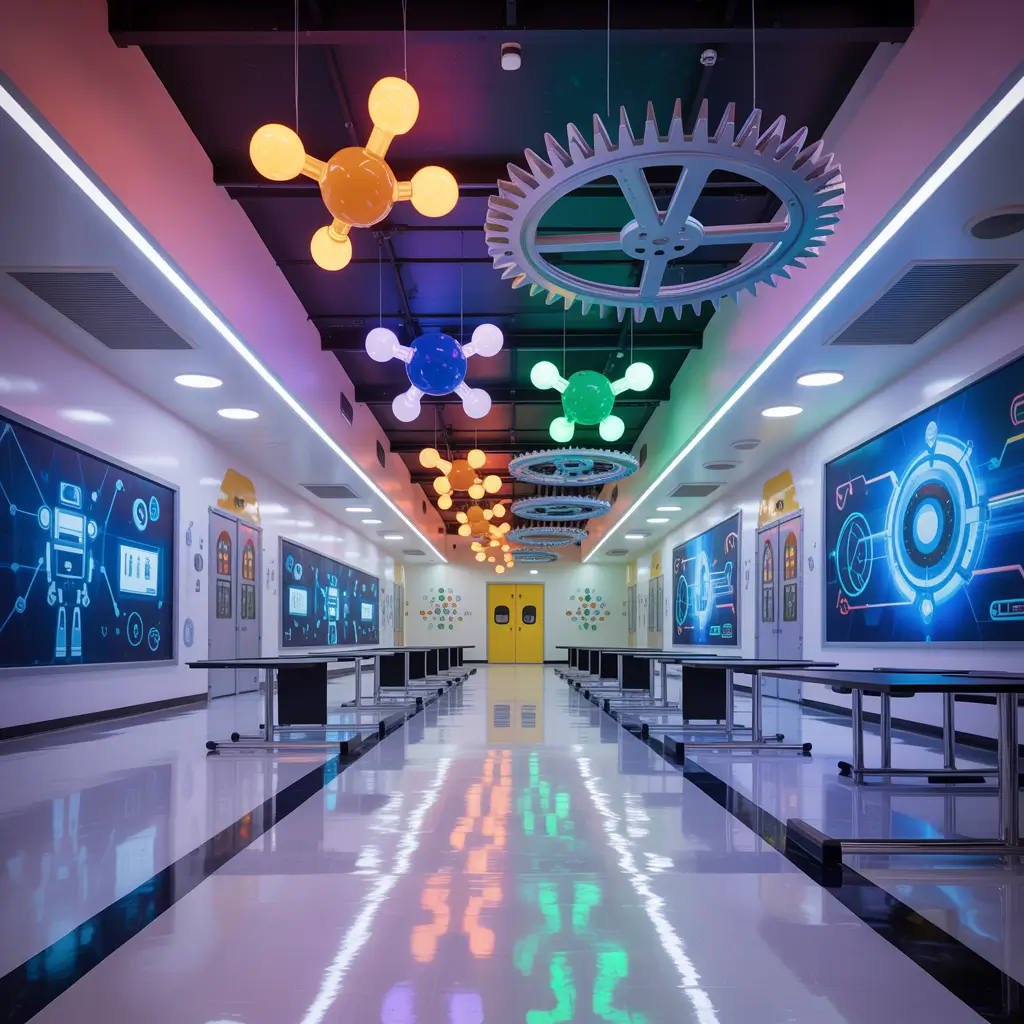
Transform boring corridors into hands-on science labs that spark curiosity.
Let’s be honest – traditional science displays often feel pretty stale. You know, the same old periodic table poster that’s been hanging there since the Clinton administration? This STEM hallway concept brings science to life through interactive experimentation and discovery.
Student-designed experiments line the walls, complete with hypothesis boards, data collection sheets, and results displays. Walking down this hallway feels like touring an active research facility where every student is a scientist working on their own investigations.
The magic happens in these elements:
- Problem-solving challenge stations that rotate weekly with new engineering puzzles
- Math in real life displays showing how algebra appears in sports statistics or geometry in architecture
- Technology showcases where students demonstrate coding projects or robotics creations
- Science fair preparation areas where ongoing projects get displayed and refined
What sets this apart from typical science displays? Everything is touchable and changeable. Students don’t just read about science; they actively participate in ongoing experiments and investigations.
The most successful STEM hallways I’ve seen encourage collaborative problem-solving. Students leave notes for each other about potential solutions, building on each other’s ideas as they walk through their daily routines.
Also Read: 10 Creative Hallway Wall Decor Ideas to Transform Your Space
Kindness and Positivity Hallway

Create a corridor that radiates good vibes and encourages emotional intelligence.
In a world that sometimes feels pretty harsh, schools have an incredible opportunity to be havens of positivity and kindness. This hallway concept goes way beyond generic “Be Kind” posters to create interactive systems that reinforce positive behavior and emotional awareness.
Kindness tracking systems let students nominate classmates for acts of compassion, creating visible recognition for positive behavior. Emotion regulation stations provide quiet spaces where students can check in with their feelings and access calming strategies.
Effective components include:
- Gratitude walls where students and staff can post appreciation notes
- Conflict resolution resources with student-friendly mediation strategies
- Mindfulness corners with breathing exercises and stress-reduction techniques
- Compliment stations where students can leave encouraging messages for classmates
The psychological research on this stuff is pretty clear: environments that explicitly promote positive social interaction actually change behavior. Students who regularly see kindness celebrated start expecting and creating more of it themselves.
I’ve noticed that schools with these hallways report fewer disciplinary issues and higher student satisfaction scores. When kindness becomes part of the school’s visible culture, everyone benefits.
Back to School Welcome Hallway

Design an entry experience that makes everyone excited to be there.
First impressions matter enormously, and the beginning of each school year sets the tone for everything that follows. This welcome hallway concept creates an entry experience that feels like a celebration rather than a return to institutional life.
Student summer sharing stations let kids display photos and stories from their break, helping everyone reconnect and catch up. Goal-setting areas encourage students to think about what they want to accomplish in the coming year, making learning feel personal and purposeful.
Key welcoming elements:
- New student orientation stations with helpful tips from current students
- Teacher introduction displays showing personal interests and teaching philosophies
- School tradition explanations helping everyone understand the community they’re joining
- Excitement building countdowns for upcoming events and activities
The most effective welcome hallways acknowledge that starting school can feel overwhelming and provide resources to help students navigate successfully. They balance excitement with practical support.
Ever notice how some schools feel welcoming from the moment you walk in, while others feel institutional and cold? The difference often starts with intentional design choices that prioritize human connection over efficiency.
Future Careers Inspiration Hallway
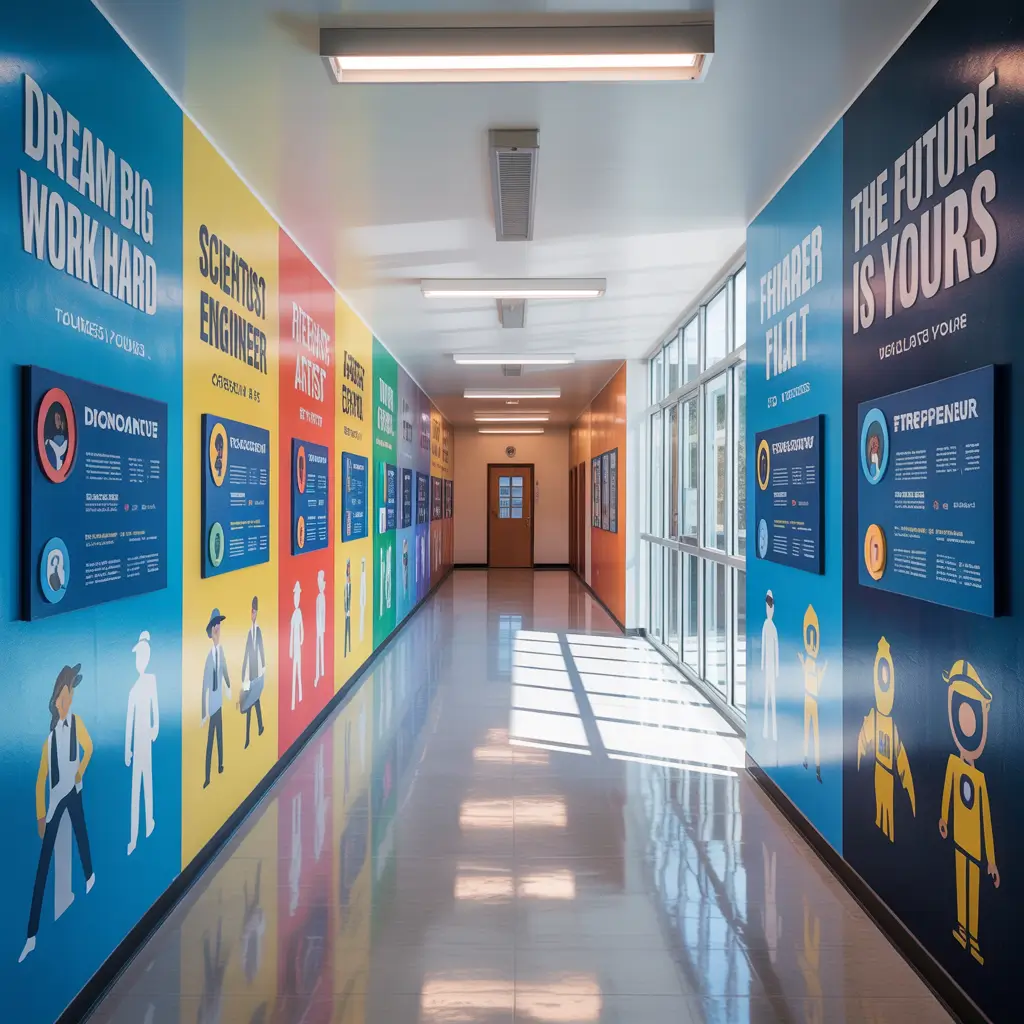
Connect current learning to real-world possibilities and dreams.
One of the biggest motivation killers in education is when students can’t see how their current studies connect to their future lives. This careers hallway bridges that gap by showing concrete connections between classroom learning and professional possibilities.
Local professional spotlights featuring community members in various careers help students see that success looks different for different people. Students interview professionals about their educational journeys, creating displays that show how school subjects actually apply in real jobs.
Inspiring features include:
- Career pathway maps showing different routes to similar destinations
- Skills matching stations where students identify their strengths and explore related careers
- Salary and education requirement information presented honestly and age-appropriately
- Student job shadowing reports sharing real experiences from workplace visits
The most impactful versions avoid stereotypical career presentations and instead show diverse professionals in unexpected roles. Students need to see that career paths aren’t always linear and that their interests can lead to opportunities they might never have imagined.
FYI, research shows that students who can visualize their future selves perform better academically. This hallway helps make those future selves feel real and achievable.
Also Read: 10 Stunning Small Hallway Decor Ideas to Transform Your Space
School Achievement Celebration Hallway
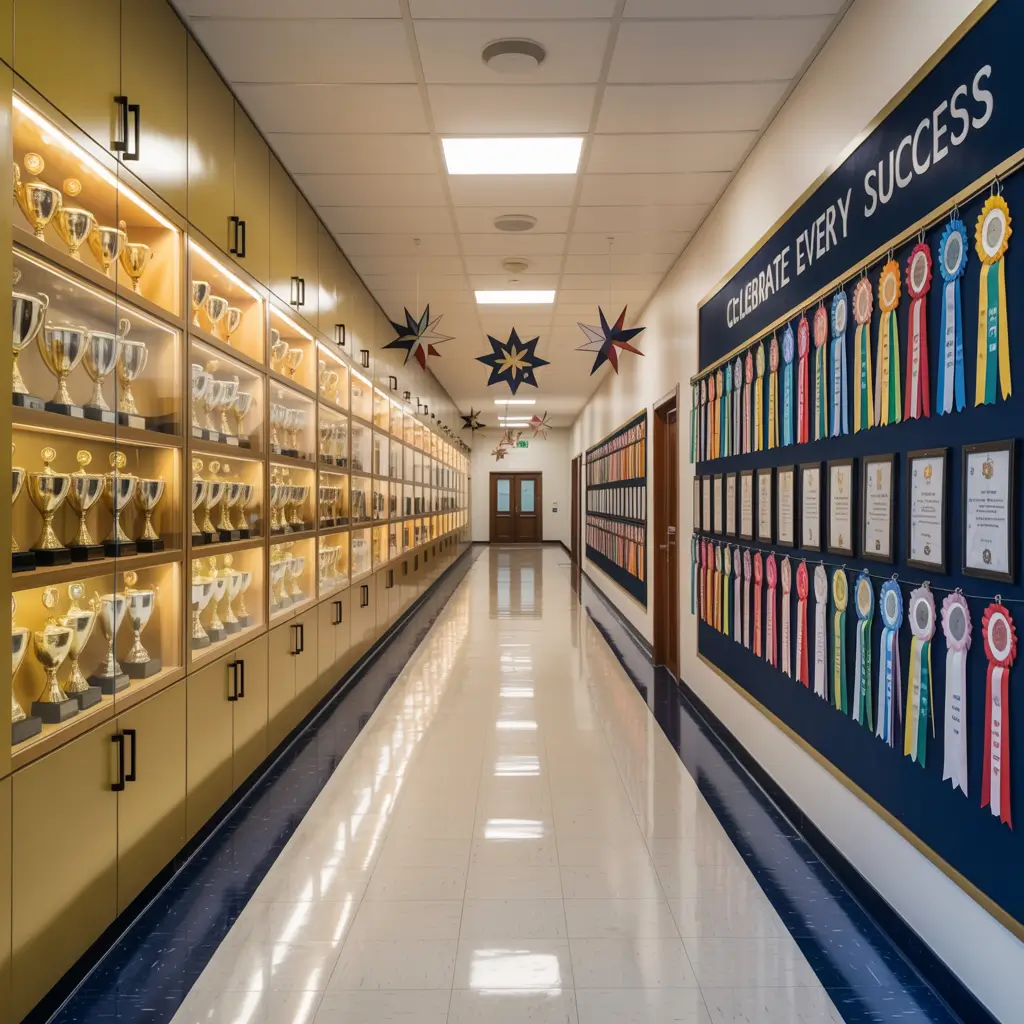
Create a space that honors all types of success and progress.
Traditional achievement displays often focus on a narrow definition of success – usually academic honors and athletic victories. This celebration hallway recognizes the full spectrum of student accomplishments, from academic growth to character development to creative expression.
Progress tracking systems show individual student growth over time rather than just final grades or scores. Improvement celebrations highlight students who’ve made significant strides, regardless of their starting point.
Comprehensive celebration elements:
- Multiple intelligence recognition honoring different types of smart
- Character award displays celebrating kindness, perseverance, and leadership
- Creative achievement showcases for artistic, musical, and innovative accomplishments
- Collaborative success stories highlighting effective teamwork and peer support
The psychological impact of broadening the definition of achievement can’t be overstated. Students who struggle academically but excel in other areas finally get recognition for their strengths.
I’ve seen schools where this approach completely transformed student motivation. When everyone has something to celebrate, the entire school culture becomes more positive and inclusive.
Conclusion
Here’s the thing about transforming school hallways: it’s not really about the decorations or displays. It’s about creating environments that communicate to every student, every day, that they matter, that learning is exciting, and that school is a place where they can grow and thrive.
These ten ideas work because they shift hallways from passive spaces students endure to active environments that support and inspire them. The best part? You don’t need unlimited budgets or administrative miracles to implement them. You just need creativity, commitment, and a genuine desire to make your school a place where everyone wants to be.
The most successful school transformations I’ve witnessed started small – maybe with one section of one hallway – and grew as students and staff got excited about the possibilities. So pick the idea that resonates most with your school community and start there. Your hallways are waiting to become something amazing.