You know that awkward upstairs hallway in your house? The one that’s basically a glorified pathway between bedrooms that you rush through without a second thought? Yeah, that one.
Well, what if I told you it could be so much more than a forgotten tunnel of beige walls and squeaky floorboards?
I’ve been obsessing over hallway transformations lately (don’t judge me), and let me tell you – these spaces have serious untapped potential. After scrolling through countless design feeds and testing some ideas in my own home, I’ve discovered that upstairs hallways can become genuine showstoppers.
Ready to turn that boring corridor into something that makes guests pause and say “wow”? Let’s get into it.
1. Cozy Reading Nook Upstairs Hallway
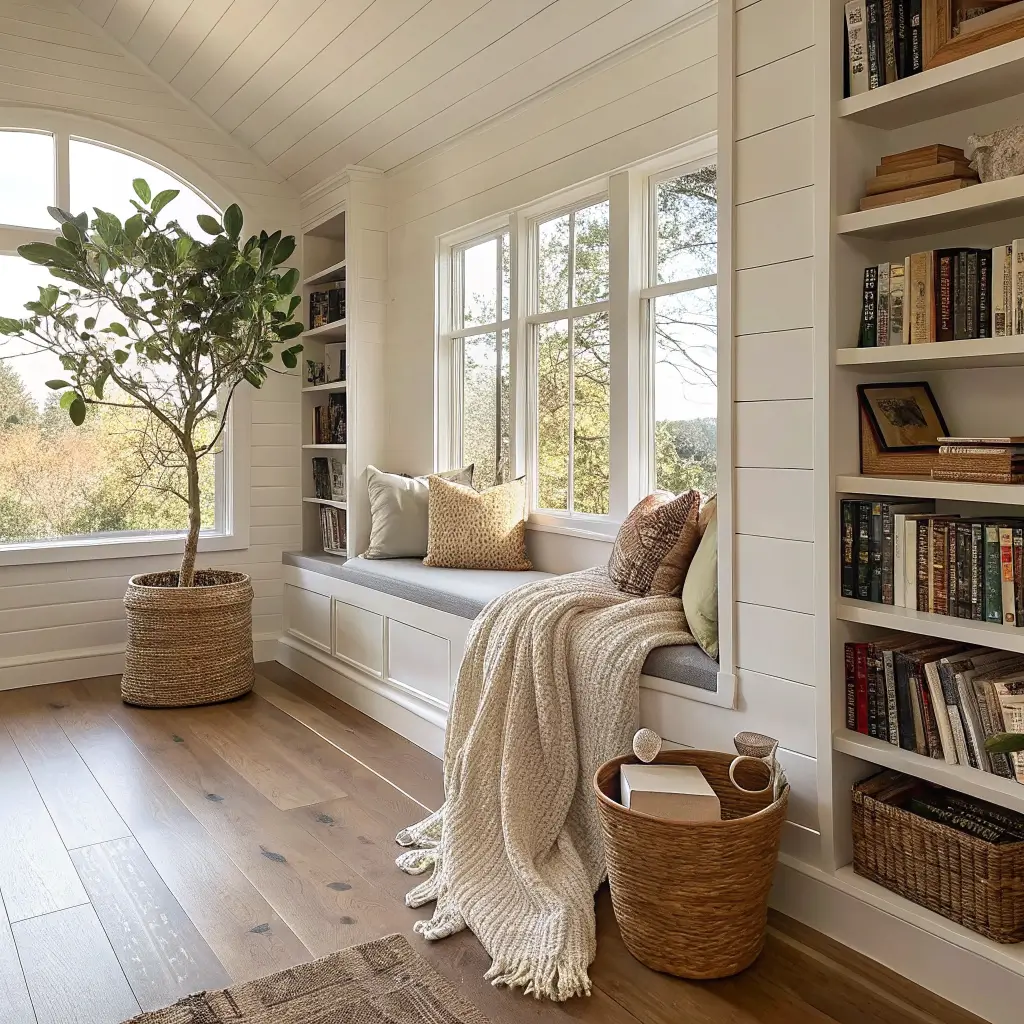
Ever wished you had a secret reading spot that nobody else claims? Your upstairs hallway might be the answer you didn’t know you were looking for.
I stumbled upon this idea when I realized my hallway had this perfect little alcove near the window that was doing absolutely nothing. Now it’s my favorite escape spot in the entire house. The key is creating intimacy in what’s typically a transitional space.
Making It Work
Start with a small, comfortable chair or even a built-in bench if you’re feeling ambitious. Add a side table for your coffee (because reading without coffee is basically pointless), and throw in some soft lighting. A floor lamp or wall sconces work perfectly here.
The magic happens with the details:
- Soft throw blankets draped over the chair
- A small bookshelf or floating shelves for your current reads
- Warm, ambient lighting that doesn’t strain your eyes
- A small rug to define the space and add warmth
What I love most about this setup is how it transforms dead space into something functional and inviting. Plus, it’s way easier to concentrate up there than in the living room where everyone’s constantly interrupting your reading flow.
2. Modern Gallery Wall Upstairs Hallway
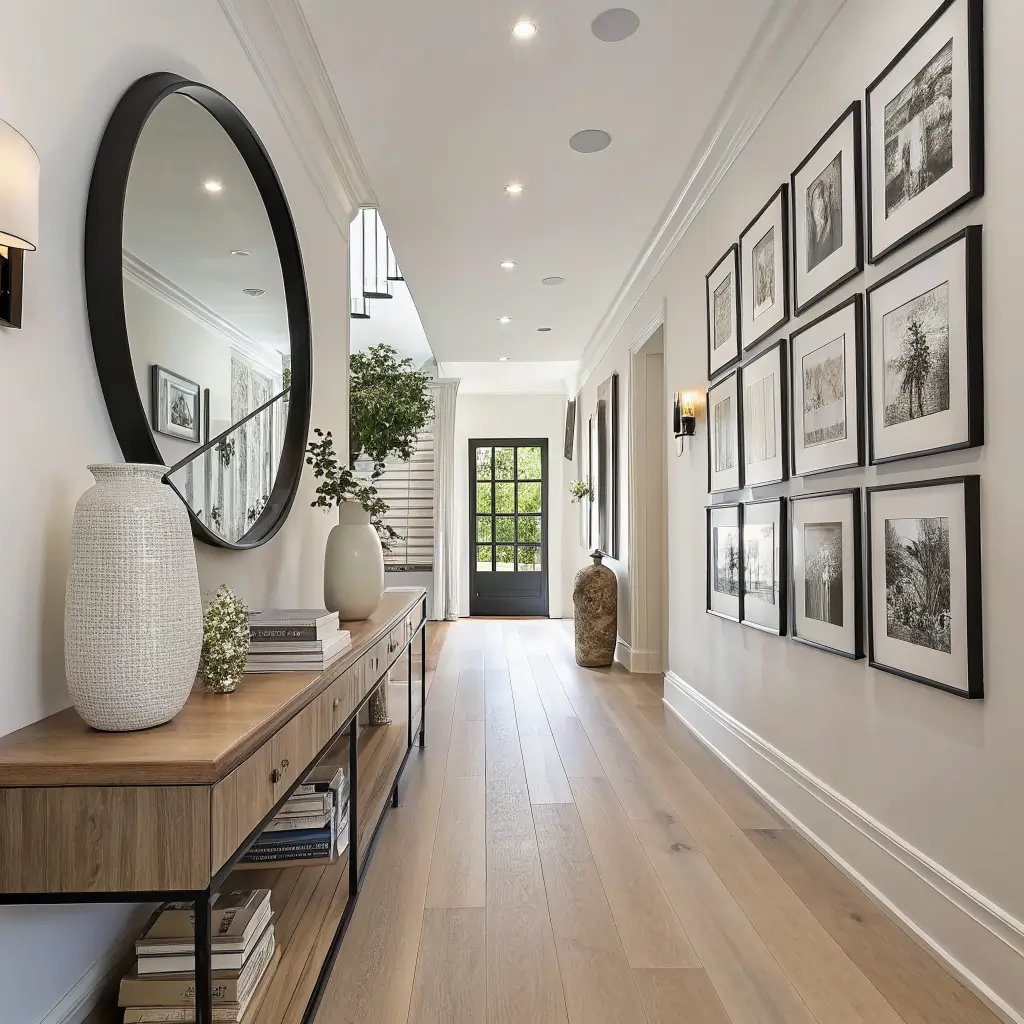
Gallery walls aren’t just for living rooms anymore – your hallway is actually the perfect canvas for showcasing art without overwhelming your main living spaces.
Creating Visual Impact
I learned this the hard way: symmetry isn’t always your friend in narrow hallways. Instead of forcing perfectly aligned frames, embrace a more organic arrangement that flows with the space.
Here’s what works:
- Mix frame sizes and styles for visual interest
- Keep a consistent color palette to maintain cohesion
- Include different types of art – photos, prints, small paintings
- Use proper lighting to highlight your pieces
The trick is starting with your largest piece and building around it. I usually tape paper templates to the wall first (learned that tip after making way too many holes). Pro tip: Keep the bottom edge of your lowest frames at least 60 inches from the floor to maintain proper proportions.
Personal Touch
Don’t just fill it with random art – make it meaningful. I’ve got family photos mixed with local artists’ work and even some pieces my kids created. It tells a story and makes the hallway feel intentional rather than just decorated.
3. Narrow Upstairs Hallway with Built-In Storage
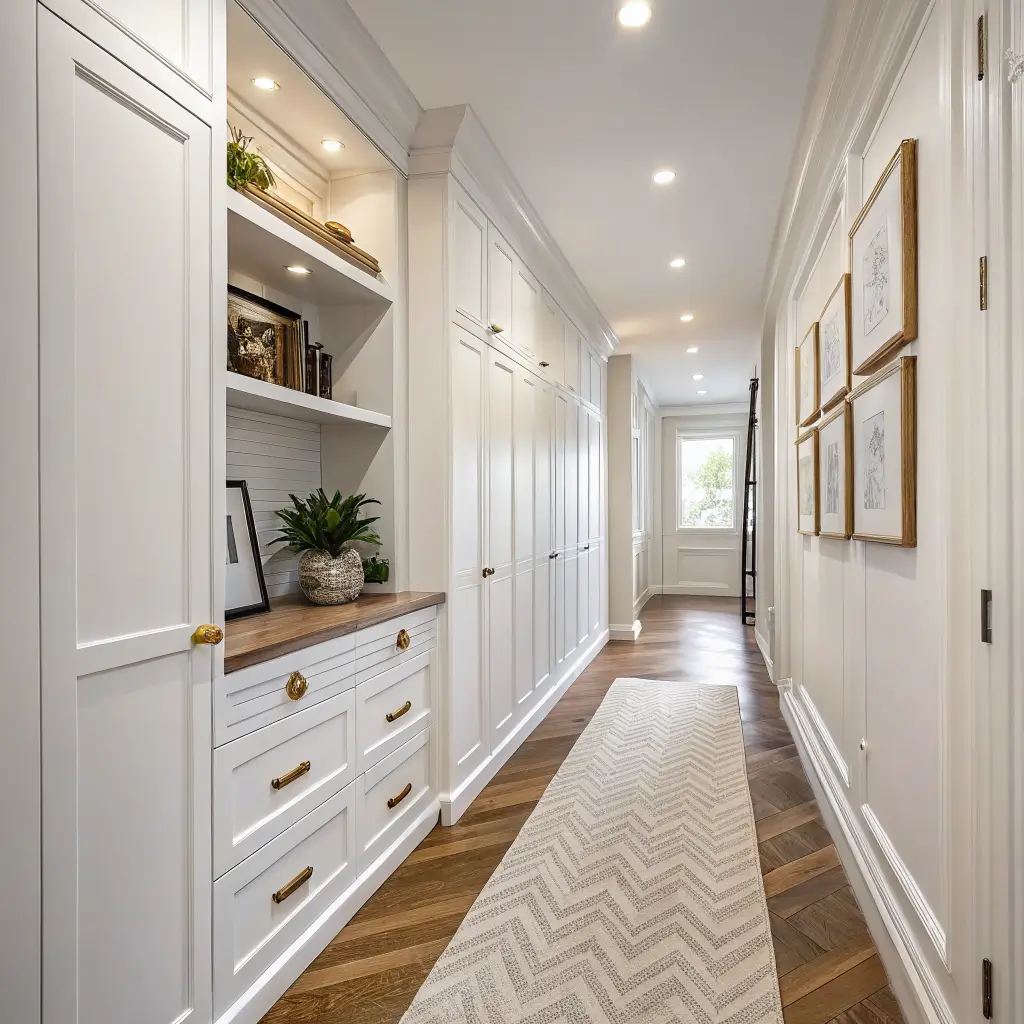
Narrow hallways are tough, but they’re also golden opportunities for storage if you think vertically and get creative with the space.
Maximizing Every Inch
Built-in storage might sound intimidating, but it doesn’t have to mean major construction. I’ve seen incredible transformations using simple solutions that look custom but won’t break the bank.
Smart storage ideas include:
- Floor-to-ceiling cabinets with clean, handleless fronts
- Built-in cubbies for shoes, bags, or seasonal items
- Hidden storage benches that double as seating
- Recessed shelving between wall studs
The key is keeping everything visually light. Use the same paint color on the storage as the walls so it blends seamlessly. When storage looks intentional rather than added as an afterthought, it actually makes narrow spaces feel more spacious.
Functionality Meets Style
I installed simple white cabinets along one wall of my narrow hallway, and honestly? It was a game-changer. No more tripping over shoes or hunting for winter coats. Everything has a place, and the clean lines actually make the hallway feel wider than before.
Also Read: 10 Inspiring School Hallway Ideas for Creative Learning Spaces
4. Bright Upstairs Hallway with Skylight Design
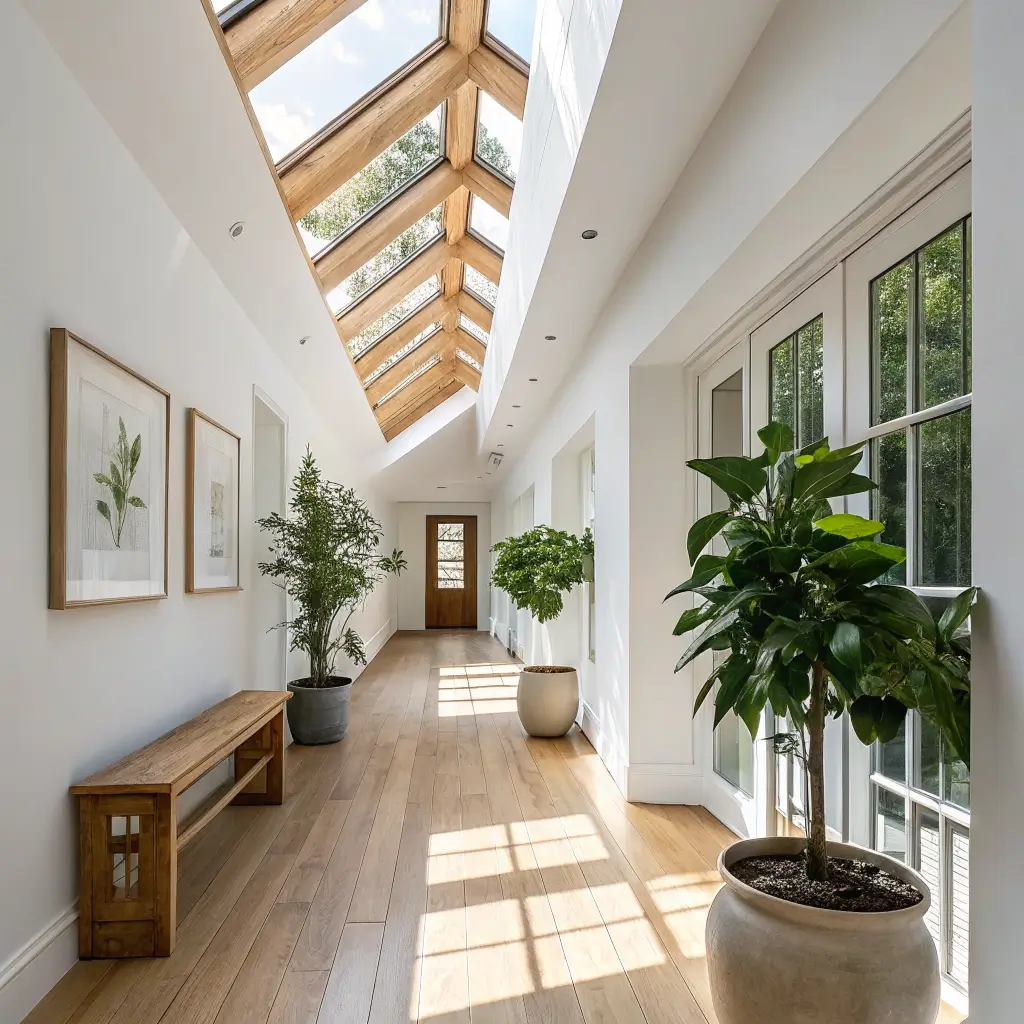
Natural light in an upstairs hallway? Yes, please! If you’ve got the opportunity to add a skylight, or if you’re lucky enough to already have one, this design direction will completely transform your space.
Embracing the Light
Skylights turn hallways from dark, cramped corridors into bright, airy passages that feel almost spa-like. The natural light changes throughout the day, creating different moods and atmospheres.
To maximize the impact:
- Use light, reflective colors on walls and trim
- Add mirrors strategically to bounce light around
- Choose materials that complement natural light – think light woods and soft textiles
- Keep window treatments minimal to avoid blocking precious light
Working with What You’ve Got
If a skylight isn’t in your budget (totally get it), you can fake the effect with strategic lighting and color choices. Paint the ceiling a light, reflective color and add plenty of well-placed light fixtures to mimic that bright, airy feeling.
5. Elegant Upstairs Hallway with Wainscoting
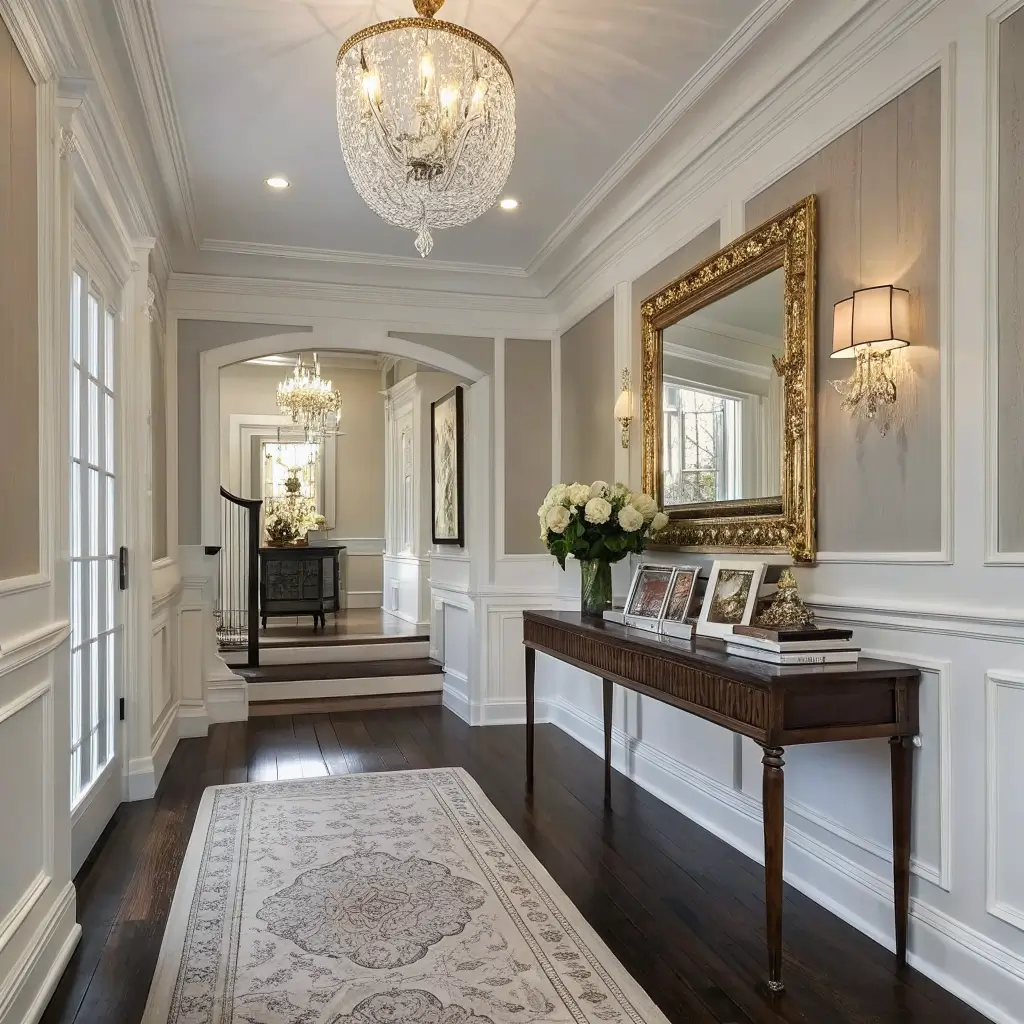
Wainscoting might sound stuffy and old-fashioned, but when done right, it adds serious elegance and architectural interest to any hallway. IMO, it’s one of the most underrated design elements out there.
Classic Meets Modern
The trick with wainscoting is finding the right balance between traditional and contemporary. I’ve seen it work beautifully in both styles, but the proportions and finish make all the difference.
Consider these approaches:
- Board and batten for a more casual, farmhouse feel
- Traditional raised panels for classic elegance
- Simple flat panels for a modern twist
- Chair rail height – typically 36 inches works well in most spaces
Color and Contrast
Don’t be afraid of contrast – white wainscoting with darker walls above creates drama, while monochromatic schemes feel more subtle and sophisticated. I painted my wainscoting the same color as the walls but in a different finish (semi-gloss vs. eggshell), which adds subtle texture without being overwhelming.
The installation might seem daunting, but it’s actually pretty DIY-friendly if you’re handy with basic tools. Just measure twice, cut once, and take your time with the details.
6. Scandinavian Minimalist Upstairs Hallway
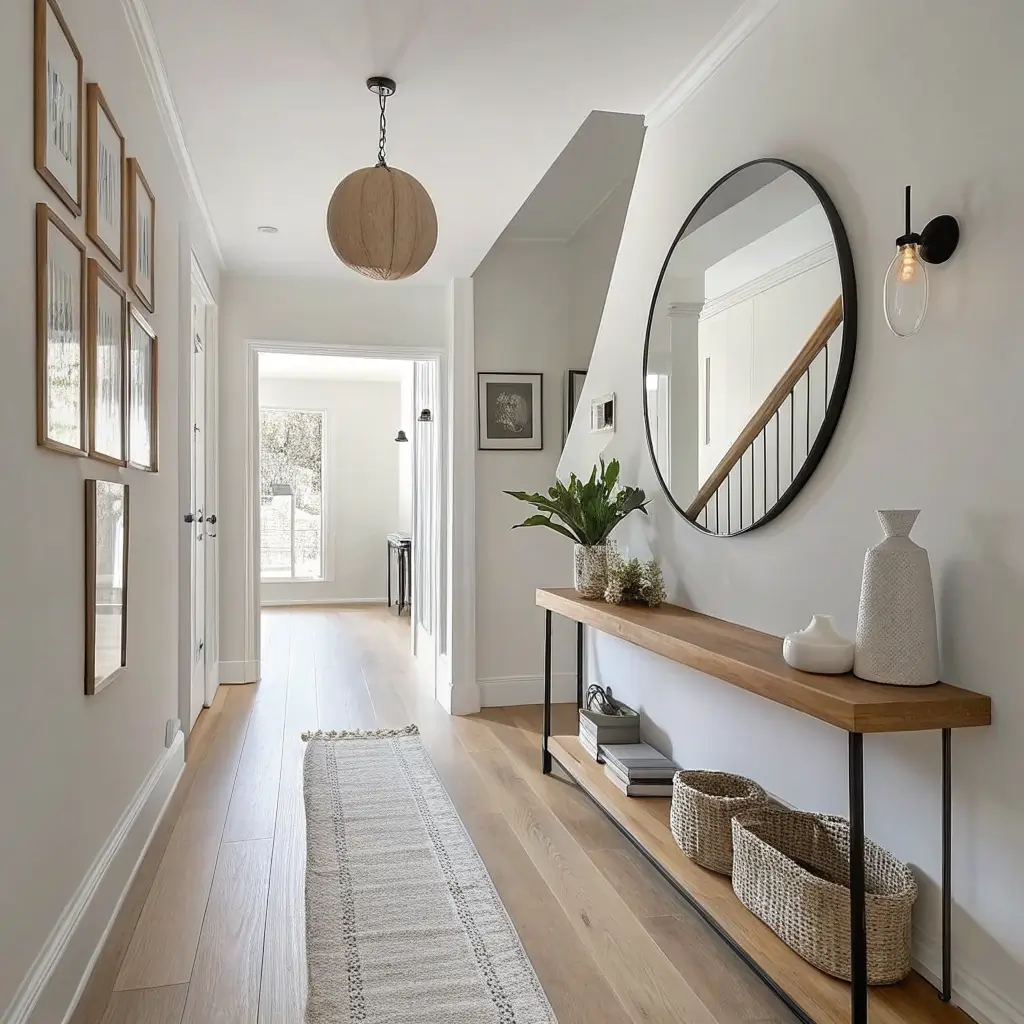
Scandinavian design in a hallway? It’s basically a match made in heaven. The clean lines and focus on functionality work perfectly in these transitional spaces.
Less Really Is More
The beauty of Scandinavian style lies in its restraint. Every element has a purpose, and nothing feels excessive or cluttered. In a hallway, this translates to calm, peaceful movement between spaces.
Key elements include:
- Light wood tones – birch, pine, or white oak
- Neutral color palette – whites, grays, and soft beiges
- Functional furniture with clean lines
- Natural textures like wool rugs and linen accessories
Cozy Minimalism
Just because it’s minimal doesn’t mean it’s cold. I love how Scandinavian design incorporates hygge – that cozy, comfortable feeling. A simple wooden bench with a soft wool throw, clean white walls, and warm wood flooring create a space that feels both serene and welcoming.
The lighting is crucial here. Pendant lights with clean shapes or simple wall sconces provide necessary illumination while maintaining the uncluttered aesthetic.
Also Read: 10 Stunning Hallway Lighting Ideas for Every Home
7. Luxury Upstairs Hallway with Statement Lighting
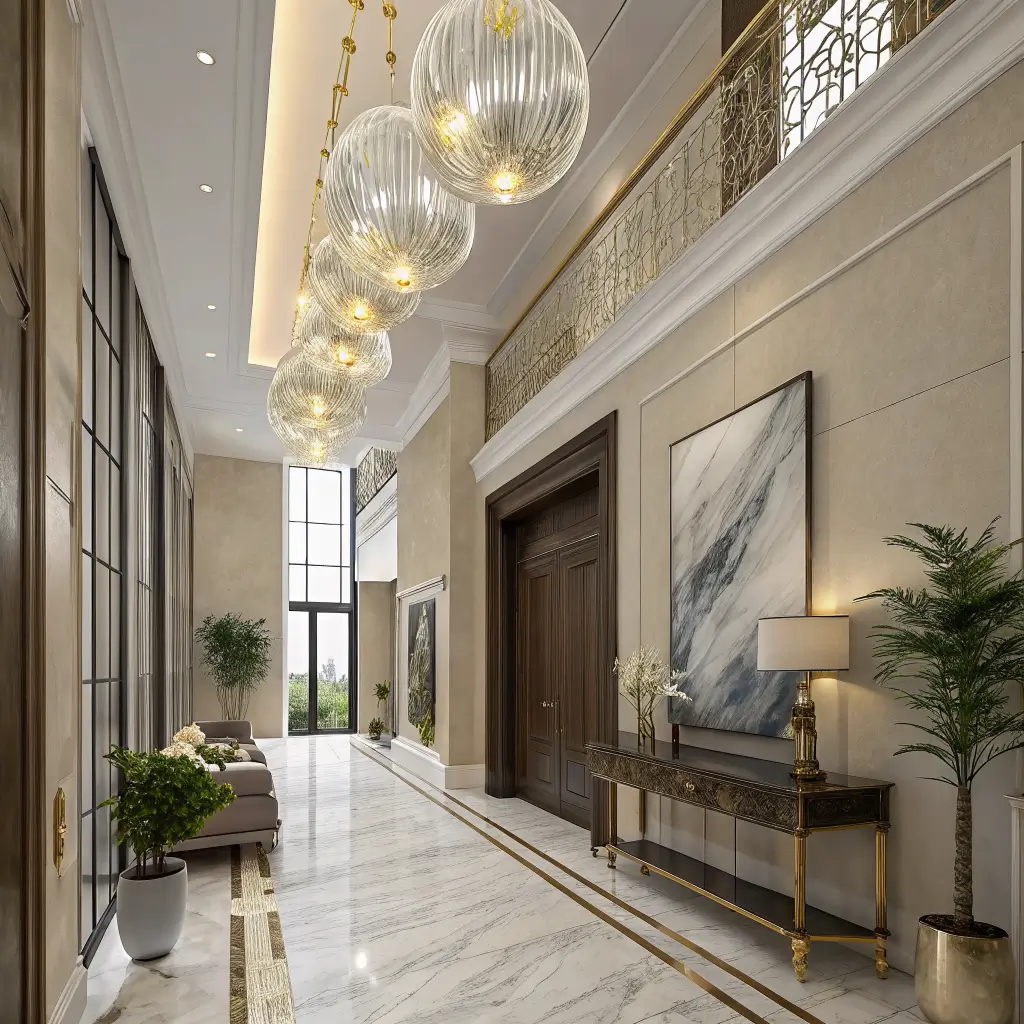
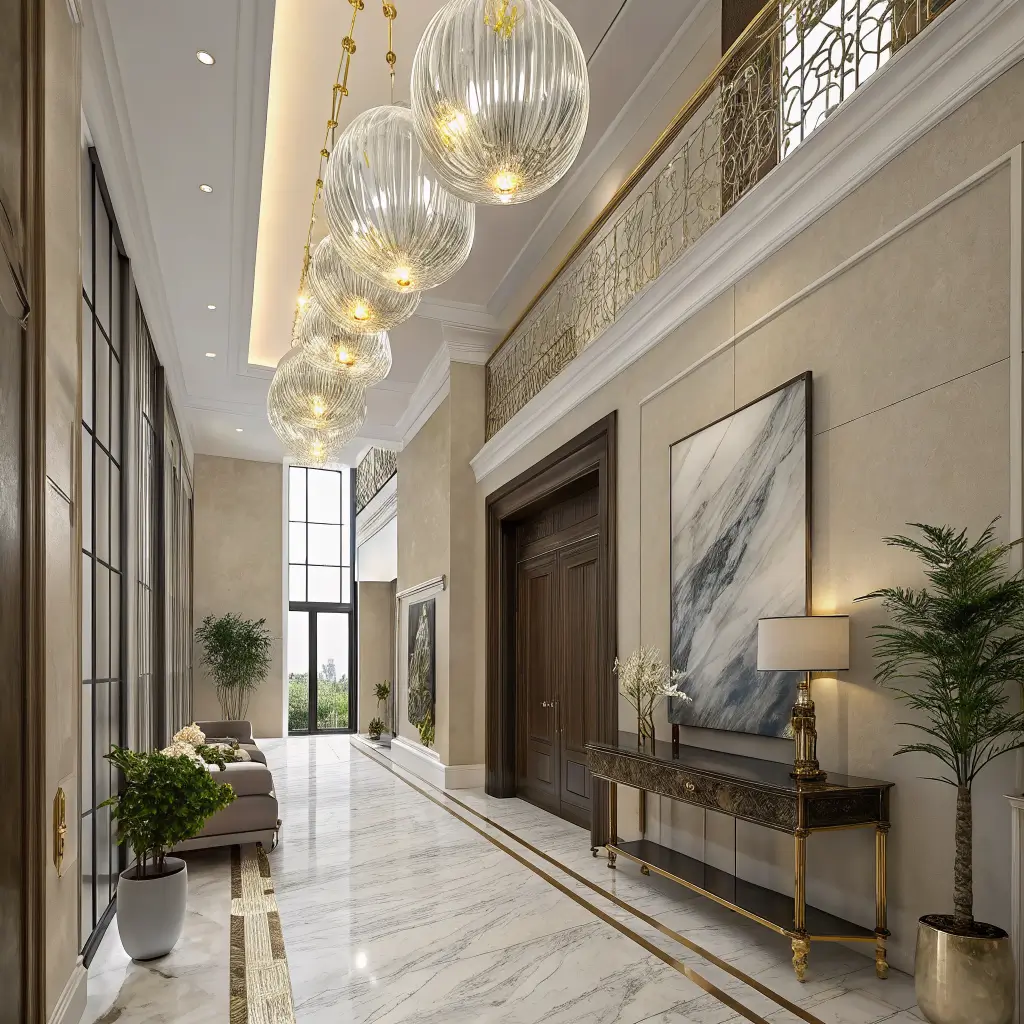
Want to make a real impact? Statement lighting in a hallway is pure drama – and I’m here for it. There’s something so unexpected and delightful about encountering gorgeous lighting in what’s typically a utilitarian space.
Go Big or Go Home
Hallways are perfect for statement lighting because they don’t have to compete with furniture or other large elements. A stunning chandelier or dramatic pendant becomes the star of the show.
Some showstopping options:
- Crystal chandeliers for classic glamour
- Modern geometric pendants for contemporary elegance
- Artistic fixtures that double as sculpture
- Multiple pendants in a row for longer hallways
Creating Ambiance
Dimmer switches are non-negotiable with statement lighting. You want to be able to adjust the mood from bright and practical to soft and atmospheric. I installed smart switches that let me control the lighting from my phone – it’s probably overkill, but it makes me feel fancy 🙂
The key is choosing a fixture that’s proportionate to your space. Too small and it’ll look lost; too large and it’ll overwhelm. When in doubt, go slightly larger than you think you need.
8. Farmhouse Upstairs Hallway with Rustic Bench
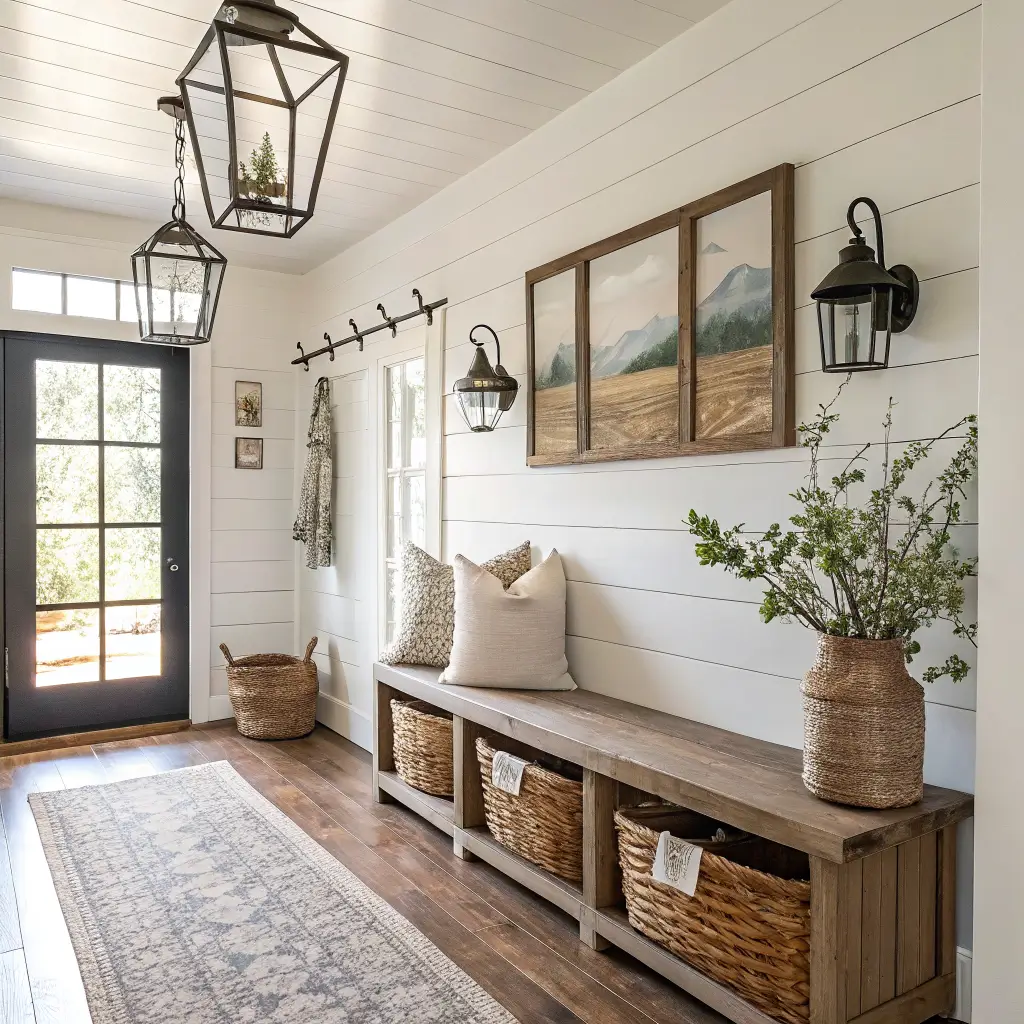
Farmhouse style brings warmth and character to upstairs hallways in a way that feels both nostalgic and fresh. A rustic bench is the perfect anchor piece that adds both function and charm.
Authentic Rustic Elements
The beauty of farmhouse style is in the imperfections and lived-in quality. Don’t stress about everything matching perfectly – that’s not the point. Mix different wood tones, embrace some wear and patina, and focus on pieces that tell a story.
Essential farmhouse hallway elements:
- Reclaimed wood bench with visible wear and character
- Shiplap or board and batten walls
- Vintage or vintage-inspired accessories
- Galvanized metal accents
- Mason jar lighting or lantern-style fixtures
Functional Charm
That rustic bench isn’t just for show – it’s incredibly practical. Use it for putting on shoes, storing bags, or just taking a moment to sit. Add some vintage baskets underneath for hidden storage, and throw a cozy blanket over the back for instant warmth.
I found my bench at a local antique shop, and the stories the vendor told me about its history made it even more special. Sometimes the backstory is what makes a piece truly perfect for your space.
9. Upstairs Hallway with Floating Shelves and Decor
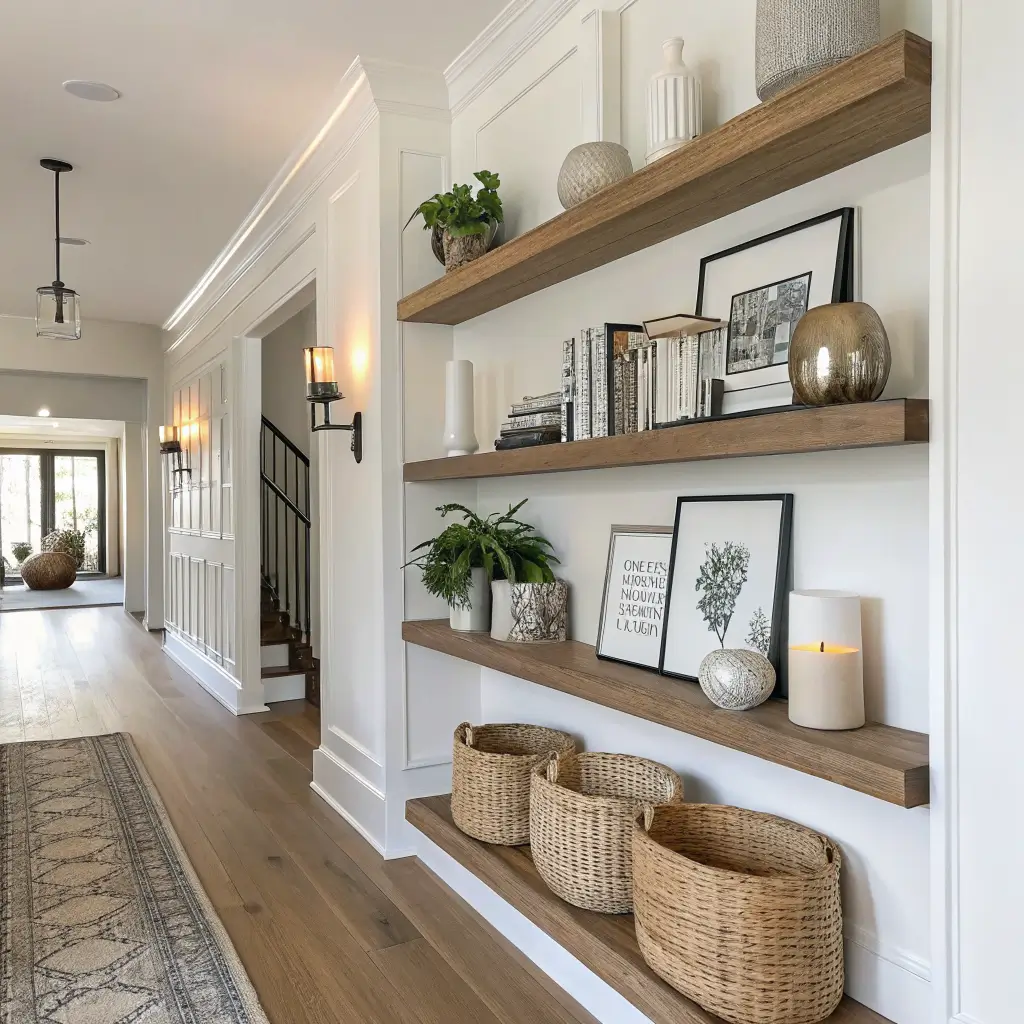
Floating shelves are like the Swiss Army knife of hallway design – they’re versatile, practical, and can completely transform a boring wall into something interesting and functional.
Styling Success
The secret to great shelf styling is layering and varying heights. Don’t line everything up like little soldiers – mix books, plants, decorative objects, and personal items for a collected-over-time look.
My go-to shelf styling formula:
- Start with books as your base – lay some flat, stand some upright
- Add height with plants or tall objects
- Include personal items like framed photos or travel souvenirs
- Mix textures – smooth ceramics, rough baskets, glossy picture frames
Placement Strategy
Odd numbers work better than even when grouping shelves or objects. I learned this from a designer friend, and once you see it, you can’t unsee it. Three shelves look more natural than two or four.
Consider the traffic flow in your hallway when placing shelves. You don’t want people bumping into protruding objects or feeling like they’re navigating an obstacle course.
Also Read: 10 Creative Hallway Wall Decor Ideas to Transform Your Space
10. Long Upstairs Hallway with Runner Rug and Mirrors
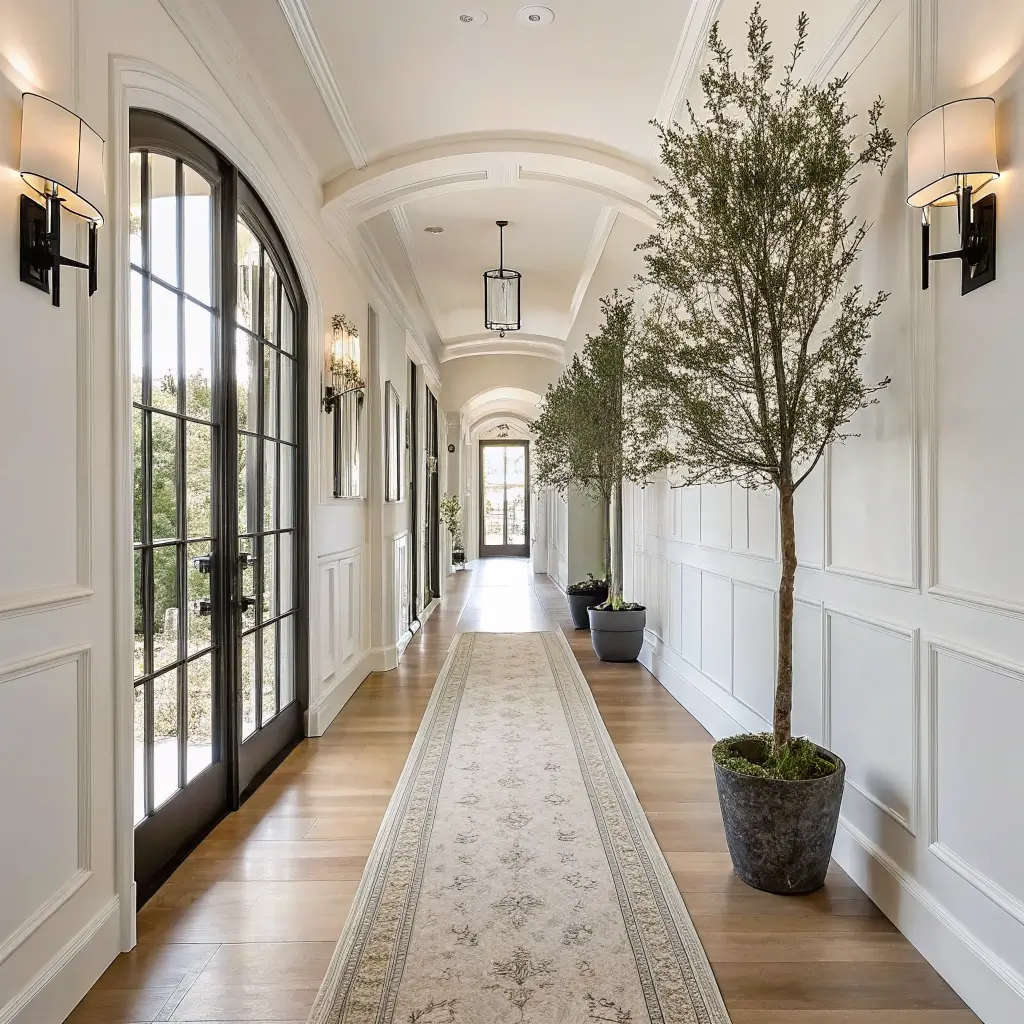
Long hallways can feel like endless tunnels, but with the right approach, they become elegant galleries that enhance your home’s flow and style.
Breaking Up the Length
The challenge with long hallways is preventing them from feeling monotonous. A beautiful runner rug immediately adds warmth and visual interest while helping to define the space.
Mirror placement is crucial here:
- Multiple mirrors at varying heights create visual rhythm
- Large mirrors reflect light and make the space feel wider
- Antique or decorative frames add personality
- Strategic placement opposite windows maximizes natural light
Pattern and Color
Don’t be afraid of bold patterns in your runner rug – hallways can handle more drama than you might think. A gorgeous Persian runner or modern geometric pattern adds personality without overwhelming the space.
I chose a runner with blues and grays that picked up colors from the artwork on my walls. The continuity makes the long hallway feel intentional and cohesive rather than just functional.
Maintenance Reality Check
Real talk: light-colored rugs in hallways are beautiful but impractical. Choose something that hides dirt well and is easy to clean. Trust me on this one – I learned it the hard way with a gorgeous cream runner that looked dirty after about a week.
Making Your Hallway Dreams Reality
Here’s the thing about hallway transformations – they’re often easier and more affordable than you’d expect. You’re not dealing with plumbing or major electrical work (usually), and the square footage is manageable.
Start with one element that excites you most. Maybe it’s that statement light fixture, or perhaps you’re drawn to the cozy reading nook idea. Build from there, and don’t feel pressured to do everything at once.
FYI, some of these ideas work beautifully together. I’ve combined elements from several approaches in my own home, and the result feels uniquely mine rather than copied from a magazine.
The upstairs hallway might be the most overlooked space in your house, but it has the potential to be one of the most delightful. Every time you walk through it, you’ll smile instead of just rushing past. And honestly? That daily dose of joy is worth the effort.
What’s your hallway’s biggest challenge – length, width, lighting, or just general blandness? Whatever it is, there’s definitely a solution in this list that’ll work for your space and budget. Time to give that forgotten corridor the attention it deserves!