
Let’s face it – you’re staring at that tiny dining space wondering how the heck you’re supposed to fit both style and function into what feels like a glorified closet.
I get it. I’ve been there, cramming a dining table into corners that weren’t meant for human gatherings, trying to convince myself that eating standing up is “trendy.”
But here’s the thing: small dining rooms aren’t a curse, they’re actually a blessing in disguise. Think about it – less space to clean, cozier conversations, and way less pressure to host your entire extended family for Thanksgiving (you’re welcome).
You just need the right tricks to make your compact dining area work harder than a coffee shop WiFi connection.
Minimal Scandinavian Dining Nook

The magic of Scandinavian design lies in its “less is more” philosophy, and honestly, it’s perfect for small spaces. I discovered this when I downsized my apartment and suddenly had to make a 6×8 foot corner feel like a proper dining room.
The Scandinavian approach focuses on clean lines, light woods, and neutral colors that make spaces feel larger than they actually are. Start with a simple wooden table – pine or birch work beautifully – and pair it with white or light gray chairs. The key is keeping everything uncluttered and functional.
Natural light becomes your best friend here. Position your nook near a window if possible, and skip the heavy curtains for sheer panels or nothing at all. Add a single pendant light with a simple geometric shade – nothing fancy, just clean and purposeful.
Want to add warmth without clutter? Throw in a single plant (a snake plant works great because it’s basically unkillable) and maybe one piece of ceramic dishware as decor. That’s it. The beauty of this style is what you don’t add, not what you do.
Space-Saving Wall Mounted Table Setup
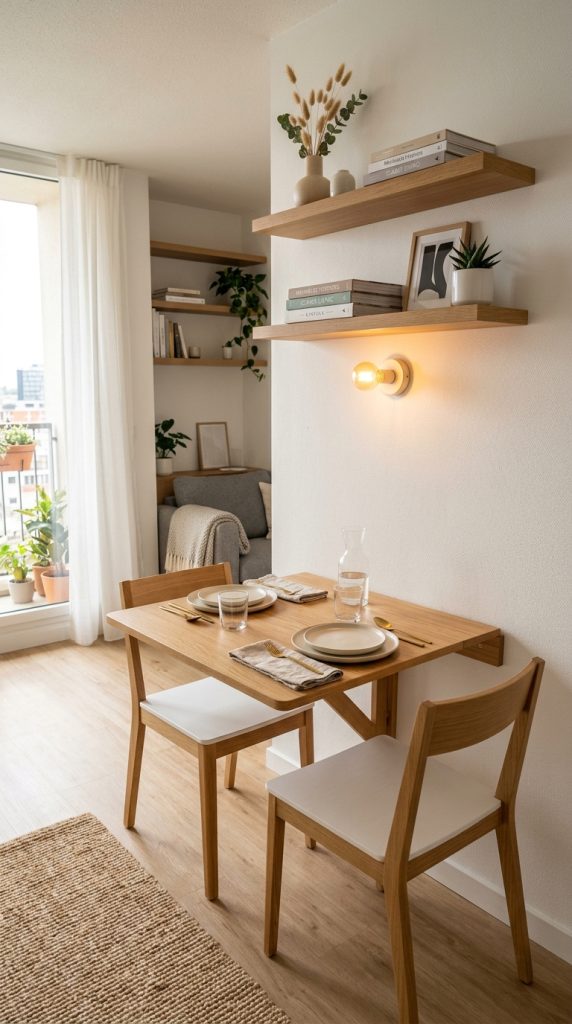
Ever wish your dining table could just disappear when you’re not using it? Well, welcome to the world of wall-mounted drop-leaf tables – basically the transformer of dining furniture.
I’ll be honest, I was skeptical about these at first. How sturdy could a table attached to the wall really be? But after living with one for two years, I’m a convert.
When you’re not eating, it folds flat against the wall like a shelf. When dinner time rolls around, it extends to seat two to four people comfortably.
Installation is key here – and I mean really key. You need to hit wall studs or use heavy-duty anchors because nobody wants their dinner ending up on the floor (been there, not fun). Mount it at standard table height, about 29-30 inches from the floor.
Pair your wall-mounted table with folding chairs that hang on wall hooks when not in use. It’s like having a dining room that exists only when you need it. Pretty genius, right?
For storage, add floating shelves above the table area. When the table’s folded down, it creates a clean vertical line that makes your space look taller and more organized.
Mirror Illusion Dining Room Design

Mirrors are basically optical illusions in home decor form, and in small dining spaces, they’re your secret weapon for creating the feeling of double the square footage.
The trick isn’t just slapping any mirror on the wall and calling it a day. Strategic placement makes all the difference. Position a large mirror opposite a window to reflect natural light and outdoor views – suddenly your cramped dining nook feels like it opens onto another room.
I learned this the hard way when I first tried the mirror trick. I hung a small mirror randomly on a wall and wondered why it didn’t work. Size matters here. Go big or go home. A large mirror (at least 3 feet wide) creates a much more convincing illusion than several small ones.
Mirror positioning tips that actually work:
- Place mirrors at eye level when seated
- Angle slightly downward to reflect the table and room, not the ceiling
- Use mirrors with simple frames to avoid visual clutter
Want to get really clever? Use mirrored furniture pieces like a sideboard or console. It adds storage while maintaining that spacious feeling. Just don’t go overboard – too many reflective surfaces start feeling like a funhouse, and nobody wants to eat in a carnival.
Also Read: 10 Creative Dining Room Table Decor Ideas Fresh Looks – Airlucent
Cozy Corner Banquette Seating

Built-in banquette seating is like getting a hug from your dining room, and it’s incredibly space-efficient. Instead of chairs that need to be pulled out (eating up precious floor space), a banquette tucks neatly into a corner.
The best part? Hidden storage underneath the seats. I can fit everything from extra linens to my collection of takeout menus (don’t judge) in there. It’s like having a secret compartment in your dining room.
Here’s what works: build the banquette about 18 inches deep and 18 inches high – any deeper and you’ll feel like you’re sitting in a booth at a highway diner, any shallower and it’s uncomfortable. Add cushions in a durable fabric because, let’s be real, food happens.
Color strategy for banquettes:
- Light colors make the space feel larger
- Dark colors create intimate, cozy vibes
- Patterns can hide stains (speaking from experience)
Pair your banquette with a round table instead of rectangular – it’s easier to slide in and out, and the curved edges prevent that awkward corner-bumping dance we’ve all done.
Floating Shelf Dining Decor Style

Floating shelves are the unsung heroes of small dining spaces because they provide storage and style without eating up floor space. Think of them as the Swiss Army knife of wall decor.
The key is creating layers and visual interest without making things look cluttered. I arrange mine in a triangle pattern – one long shelf in the middle with two shorter ones above and below at different heights. It’s more dynamic than straight lines and gives you flexibility for different sized items.
What actually works on floating shelves:
- Everyday dishes you use regularly (they’re decorative AND functional)
- A few plants (trailing ones look especially good)
- One or two interesting serving pieces
- Books (but not a library’s worth)
Skip the temptation to fill every inch. Empty space is just as important as the stuff you display. It’s like negative space in photography – it makes everything else look more intentional.
Pro tip: Install shelves with hidden brackets for that true “floating” look. Visible brackets can make shelves look chunky and obvious, which defeats the whole elegant purpose.
Round Table Small Space Layout

There’s something almost magical about how a round table changes the flow of a small dining space. No sharp corners to navigate around, no awkward “head of the table” dynamics, and everyone can actually see each other without craning their necks.
I switched from a rectangular table to a round one in my last apartment, and the difference was immediate. The space felt more open, movement around the room became easier, and conversations got more natural. Round tables are basically the social butterflies of furniture.
Size guidelines that won’t steer you wrong:
- 36-inch diameter seats 2-4 people comfortably
- 42-inch diameter works for 4-6 people
- Anything larger starts overwhelming small spaces
The base matters too. Pedestal bases work better than four legs because they don’t compete for floor space with chair legs. It’s one less thing to bump into when you’re maneuvering around the table.
For placement, center the table in your dining area if possible, or push it slightly toward a wall if you need to create a pathway. The goal is making the room feel balanced, not cramped.
Also Read: 10 Fabulous Dining Room Wall Decor Ideas for Home Makeover – Airlucent
Rustic Farmhouse Compact Dining Area
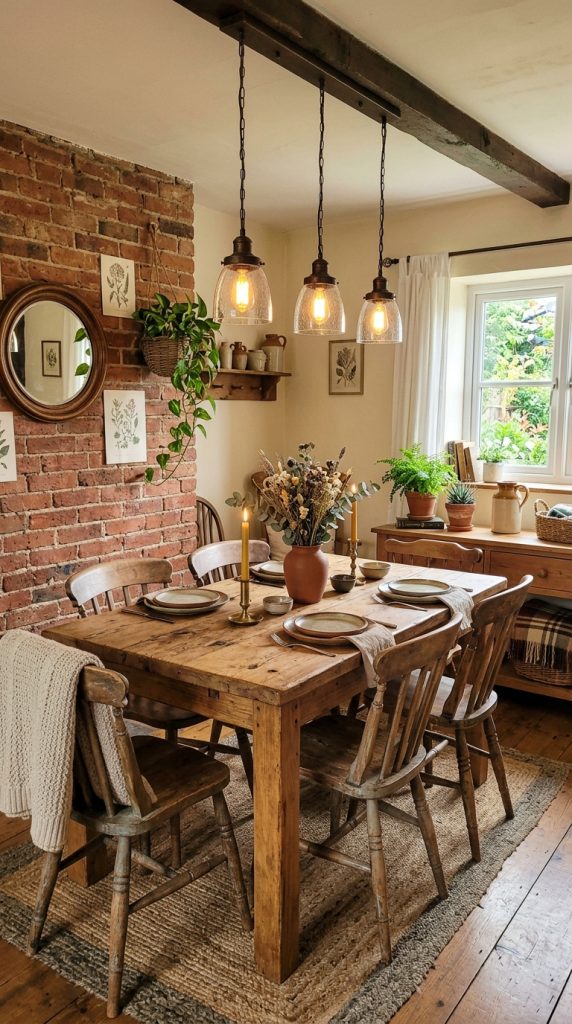
Farmhouse style in a small space might seem contradictory – after all, farmhouses are traditionally spacious, right? But the warmth and character of farmhouse elements can actually make small dining areas feel more welcoming, not smaller.
The trick is choosing the right farmhouse elements without going full barn conversion. A reclaimed wood table brings character without bulk, especially if you choose one with simple, clean lines rather than chunky, oversized pieces.
Essential farmhouse elements that work in small spaces:
- Light, weathered wood finishes
- Mason jar lighting (yes, it’s cliché, but it works)
- Simple white or cream dishware displayed openly
- One statement piece like a vintage scale or wooden cutting board
I love using open shelving with farmhouse style because it lets you display your dishes and glassware as decor. Mix different textures – smooth ceramic next to rough wood, shiny glass next to matte metal. It creates visual interest without adding bulk.
Skip the heavy, dark woods and oversized furniture that traditional farmhouse style sometimes embraces. In small spaces, lighter woods and more delicate proportions maintain the style’s warmth while keeping things airy.
Modern Glass Table Minimal Setup

Glass dining tables are like the invisible heroes of small space design – they provide all the function of a solid table while taking up way less visual space. It’s furniture that practically disappears, making your room look larger instantly.
I was initially worried about glass being too fragile or cold-feeling, but modern tempered glass tables are surprisingly durable. Plus, the transparency keeps sight lines open, which is crucial in compact spaces.
Glass table advantages:
- Makes rooms appear larger
- Easy to clean (goodbye, wood stain worries)
- Works with any style of chairs
- Reflects light around the room
Pair your glass table with chairs that have interesting silhouettes – since the table disappears visually, your chairs become the main design statement. Acrylic chairs create an ultra-minimal look, while colored chairs add personality without overwhelming the space.
One caveat: glass shows everything. Fingerprints, water spots, crumbs – it all becomes very visible. IMO, it’s worth the extra cleaning for the spacious feeling it creates, but fair warning if you’re not into frequent table wiping.
Multi-Use Living Dining Combo Space
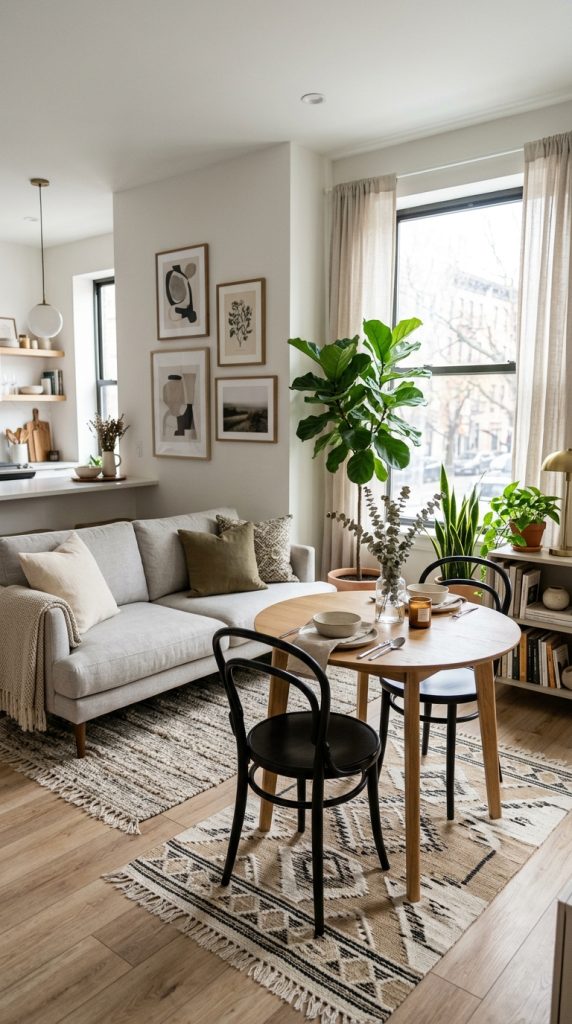
When your dining room IS your living room, you need furniture that works overtime. This setup requires some serious strategic thinking, but the payoff is a space that feels intentional, not cramped.
The key is creating zones without walls. Use a console table behind your sofa to define the living area, then position your dining table in the remaining space. Area rugs become your best friend for visually separating the two functions.
Furniture pieces that earn their keep:
- Storage ottoman that works as extra seating or coffee table
- Console table that serves as bar/buffet for dining
- Bookshelf room divider that provides storage for both areas
- Expandable dining table that shrinks when you need more living space
Lighting helps define zones too. Use different types of lighting for each area – pendant lights over the dining table, table lamps in the living area. It signals to your brain (and your guests) that these are separate spaces with different purposes.
Color coordination keeps everything feeling cohesive. Choose a palette that works for both functions rather than trying to make them completely separate styles.
Also Read: 10 Inspiring Dining Room Decor Ideas Worth Saving – Airlucent
Vertical Wall Art Dining Accent Zone
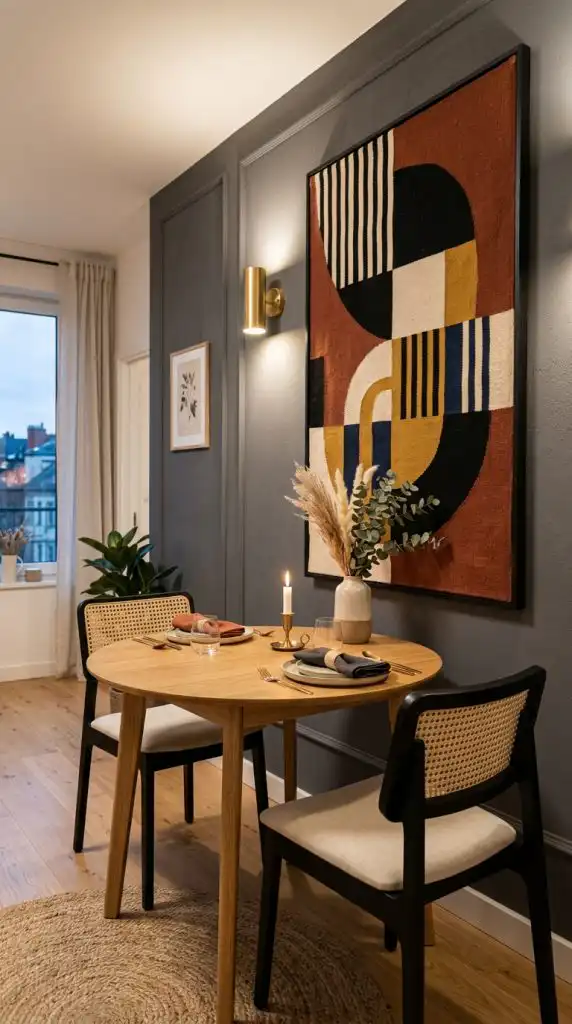
When floor space is limited, think vertical. Your walls become prime real estate for adding personality and style without cluttering up the room. But wall art in dining spaces isn’t just about pretty pictures – it’s about creating focal points that make the space feel intentional.
I’ve found that one large piece works better than a gallery wall in small dining areas. A big piece of art draws the eye up, making ceilings feel higher and the room feel larger. Gallery walls can make small spaces feel busy and chopped up.
Art placement strategies that actually work:
- Hang art at eye level when seated (lower than you’d think)
- Choose pieces that complement your dining table, not compete with it
- Consider the lighting – art needs to be visible during dinner
Non-traditional art ideas for dining spaces:
- Large vintage serving trays arranged on the wall
- Floating wooden shelves with interesting dishes
- A collection of cutting boards in different shapes and woods
- One oversized piece of photography or abstract art
The goal is creating a backdrop that makes your dining area feel special and intentional, not like an afterthought squeezed into whatever space was left over.
Making It All Work Together
Here’s the truth about small dining room design: it’s not about cramming everything in, it’s about choosing what matters most. Each element needs to earn its place by either looking great, functioning well, or ideally, doing both.
Start with your biggest pieces first – table, seating, storage – then add smaller elements that enhance rather than compete. Remember, empty space isn’t wasted space; it’s breathing room that makes everything else look better.
The most important rule? Live in your space before you commit to major purchases. Eat a few meals, host a friend for dinner, see how you actually move through the area. Your space will tell you what it needs if you pay attention.
FYI, these ideas work best when you adapt them to your specific space rather than trying to copy them exactly. Your tiny dining room has its own personality – work with it, not against it.
And remember, even the smallest dining space can feel generous when it’s thoughtfully designed. Sometimes the coziest rooms are the ones that hug you back.