
Look, I’ll be honest with you—I used to think boho dining rooms were just an excuse to throw a bunch of mismatched pillows around and call it “curated chaos.”
Boy, was I wrong. After spending way too many hours scrolling through Pinterest at 2 AM and actually transforming my own boring dining space into something that makes me want to linger over coffee for hours, I’ve become a complete convert to the boho dining room aesthetic.
The thing about boho decor is that it’s not trying too hard. It’s effortlessly cool, naturally warm, and honestly? It’s one of the most forgiving design styles out there.
You can mix patterns, textures, and eras without looking like you raided a thrift store blindfolded. And when you add that natural element into the mix? Chef’s kiss.
You get a dining space that feels grounded, organic, and ridiculously inviting.
So grab your favorite beverage, get comfy, and let me walk you through ten absolutely stunning boho dining room ideas that lean heavily into natural elements. Trust me, your dining room is about to get a serious glow-up.
Earthy Rattan Boho Dining Retreat

Rattan is basically the MVP of boho design, and I will die on this hill. There’s something incredibly satisfying about incorporating this woven wonder into your dining space—it brings texture, warmth, and that unmistakable boho vibe without even trying.
Start with rattan dining chairs. They’re lightweight, visually interesting, and surprisingly comfortable (though I’d recommend adding some cushions because nobody wants to feel like they’re sitting on a basket for two hours during Sunday brunch).
You can find them in everything from classic peacock chair designs to sleek modern silhouettes. The beauty here is that rattan plays well with almost any table style—whether you’re rocking a chunky wood farmhouse table or something more streamlined.
But why stop at chairs? Layer in rattan pendant lights above your dining table to create this gorgeous, earthy focal point.
I hung two oversized rattan shades over my table last year, and the way they cast these beautiful shadow patterns on the ceiling at night? Absolutely worth the installation headache.
Plus, the natural texture contrasts beautifully with smoother elements in the room.
Don’t forget about those smaller touches:
- Rattan placemats or chargers under your dinner plates
- Woven basket wall art or hanging planters
- A rattan bar cart for that extra dose of texture
- Natural fiber table runners that complement the woven vibe
The key to nailing this look is balancing all that texture with some breathing room. You don’t want your dining room to feel like the inside of a basket (unless that’s your thing—no judgment).
Mix in some smooth ceramics, linen napkins, and maybe a simple glass vase with eucalyptus branches. The contrast is what makes the rattan really pop.
Neutral Desert-Inspired Dining Space

Ever wondered why desert-inspired interiors feel so darn peaceful? It’s because they embrace this beautiful, stripped-back color palette that just lets you breathe. We’re talking sandy beiges, warm taupes, creamy whites, and those gorgeous muted terracotta tones.
I accidentally stumbled into this aesthetic when I painted my dining room walls this soft, warm sand color. I was going for “neutral” and somehow ended up with “I vacation in Joshua Tree every weekend.” And honestly? Best happy accident ever.
Your foundation here is all about those earthy neutrals. Choose a dining table in light or bleached wood—something that looks sun-kissed and weathered. Pair it with upholstered chairs in linen or cotton in shades of cream, oatmeal, or that perfect greige (gray-beige for the uninitiated). The fabric should feel natural and slightly textured, not slick or shiny.
Layer in desert vibes with these elements:
- Cacti and succulents (real or faux—I won’t tell) in terracotta or concrete pots
- Sandy-toned ceramics and stoneware for your table settings
- Woven wall hangings in neutral tones
- Natural wood serving boards and bowls
- Dried pampas grass or wheat arrangements
The magic happens when you play with different shades within the same color family. Don’t just go full beige—that’s boring. Mix warm creams with cooler taupes, add some dimension with different textures, and throw in the occasional pop of dusty pink or sage green to keep things interesting.
One thing I learned the hard way: this look can read as bland if you don’t add enough texture and variation. FYI, texture is your best friend here. Mix smooth with rough, matte with subtle shine, and always—always—add some organic elements like wood or stone to keep it grounded.
Cozy Macrame Accent Dining Room

Macrame had a moment in the ’70s, disappeared for a while, and now it’s back with a vengeance. And you know what? I’m here for it.
There’s something wonderfully tactile and handmade about macrame that fits perfectly into the boho aesthetic.
The statement macrame wall hanging is your starting point. Hang a large one on the main wall of your dining room—ideally behind a console table or buffet if you have one.
I scored mine from a local artist at a craft fair, and every time someone comes over, they immediately gravitate toward it. It’s like the conversation starter you didn’t know you needed.
But macrame doesn’t have to stop at wall hangings. Get creative with these ideas:
- Macrame plant hangers at varying heights near windows
- Table runners with macrame details or fringe
- Macrame chair back covers (yes, this is a thing, and yes, it’s adorable)
- Knotted placemats or coasters
- Macrame pendant light covers
The trick to keeping this from looking like your grandmother’s basement is choosing pieces with clean, modern patterns. Skip the ultra-fussy, complicated knots in favor of simpler, geometric designs.
And please, for the love of all things design, stick to natural cotton in white, cream, or soft beige. Colored macrame can work, but it’s a risky move that often tips into craft fair gone wrong territory.
I paired my macrame wall hanging with a simple wooden dining table and some mixed metal chairs, and the contrast between the soft, organic texture of the macrame and the harder materials totally elevated the space. It’s all about balance, people.
Also Read: 10 Chic Farmhouse Dining Room Decor Fresh Ideas – Airlucent
Modern Boho Dining With Black Accents

Who says boho has to be all soft and dreamy? Sometimes you want a little edge, a little drama. That’s where black accents come in to save the day and give your boho dining room some serious attitude.
Start with black dining chairs. Whether you go for classic Windsor-style, modern metal, or rattan chairs with black frames, this darker anchor grounds all those natural, lighter boho elements. I swapped my all-wood chairs for black wishbone-style chairs last year, and suddenly my dining room went from “cute” to “I actually know what I’m doing.” 🙂
Layer in more black through strategic accents:
- Black-framed mirrors or artwork
- Matte black pendant lights (these look incredible against natural wood)
- Black ceramic vases or planters
- Dark-stained wood elements
- Black metal shelving or storage units
The genius of adding black to your boho dining room is that it creates contrast and definition without feeling harsh. Against all those natural textures, warm woods, and organic materials, black acts like eyeliner for your room—it makes everything pop and adds structure to what could otherwise feel too soft or undefined.
One warning though: don’t go overboard. This isn’t a goth dining room (although if that’s your vibe, I respect it). The black should account for maybe 15-20% of your overall color scheme. Keep the majority of your space light, natural, and textured, then use black as your secret weapon to add depth and sophistication.
Vintage Eclectic Boho Dining Corner

Here’s where boho really shines—giving you permission to mix eras, styles, and pieces that technically “shouldn’t” go together but somehow totally work. The vintage eclectic approach is basically controlled chaos, and it’s my personal favorite because it tells a story.
Your dining table and chairs don’t have to match. Read that again. This is the beauty of eclectic boho—you can pair a mid-century modern table with Victorian-era chairs, or a rustic farmhouse table with sleek 1960s seating. The key is finding a common thread that ties everything together, whether it’s wood tone, color palette, or general vibe.
I built my eclectic dining space over time, hunting at flea markets, estate sales, and vintage shops. My table is a 1940s oak beauty I refinished myself, surrounded by a mishmash of chairs—two vintage rattan, two painted wood from the ’50s, and two upholstered mid-century numbers. Sounds like a disaster, right? But they all share warm wood tones and similar scale, so it works.
Elements that nail the vintage eclectic vibe:
- Mismatched vintage dining chairs (aim for 2-3 different styles, max)
- Antique or vintage lighting fixtures (think old brass pendants or retro glass shades)
- Collected artwork in various frames
- Vintage rugs layered under the dining table
- Old wooden crates or trunks repurposed as storage
- Antique serving pieces and dishware mixed with modern
The biggest mistake people make with this style is not editing. Just because everything is mismatched doesn’t mean you throw in every random piece you find. Each item should earn its place in the space. Ask yourself: Does this add to the story I’m telling, or is it just adding clutter?
IMO, the vintage eclectic approach is the most personal and interesting take on boho dining because it reflects actual lived experience rather than a catalog photoshoot. Your space becomes uniquely yours, and nobody else will have the exact same combination of pieces.
Plant-Filled Bohemian Dining Oasis

If you can’t turn your dining room into a literal indoor jungle, what’s even the point? I’m kidding (mostly), but seriously—plants and boho design are basically soulmates, and a dining room is the perfect place to go full botanical.
Start by assessing your light situation. I made the mistake of buying a fiddle leaf fig for my north-facing dining room, and let’s just say it didn’t end well for the fig. Choose plants that will actually thrive in your space’s lighting conditions. For bright dining rooms, you’ve got tons of options. For darker spaces, pothos, snake plants, and ZZ plants are your friends.
Create layers with your plant placement:
- Tall floor plants in corners (rubber trees, birds of paradise, fiddle leaf figs if you have the light)
- Medium plants on sideboards or shelves (monstera, philodendron, peace lilies)
- Hanging plants from the ceiling or macrame hangers (pothos, string of pearls, spider plants)
- Small plants as centerpieces (succulents, herbs, small ferns)
The dining table is a fantastic place for a living centerpiece. I keep a long wooden trough down the center of my table filled with potted herbs and small succulents. It looks gorgeous, smells amazing when you brush against the herbs, and I can actually use them for cooking. Triple win.
Don’t forget about planters—they’re a huge part of the aesthetic. Stick with natural materials like terracotta, ceramic, concrete, or woven baskets. Skip the plastic and overly colorful pots; they’ll break the natural boho vibe you’re creating.
One thing nobody tells you: plants require maintenance. Dead, brown, crispy plants do not add to the boho aesthetic—they just look sad. If you’re not into plant parenting, invest in some really high-quality faux plants. The options nowadays are incredibly realistic, and your secret’s safe with me.
Also Read: 10 Smart Small Dining Room Decor Ideas for Functional Style – Airlucent
Rustic Wood and Woven Dining Haven
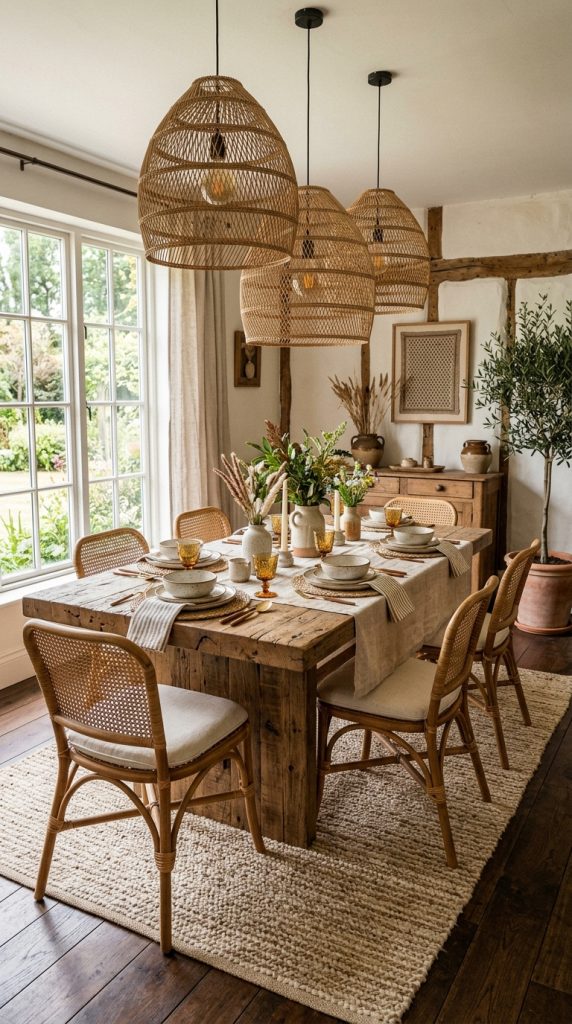
There’s something primal and comforting about surrounding yourself with raw, natural materials. The combination of rustic wood and woven textures creates this incredibly grounding, organic dining space that makes you want to gather around the table for hours.
Your centerpiece (literally) should be a solid wood dining table with visible grain and character. I’m talking about a table with knots, variations in color, maybe some live edge action. This isn’t the time for glossy, perfectly uniform wood—you want something that looks like it has a story. Reclaimed wood tables are perfect for this vibe, plus they’re eco-friendly, which is a nice bonus.
Pair that substantial table with woven elements:
- Rattan or wicker dining chairs
- Woven pendant lights in jute, seagrass, or rattan
- Jute or sisal area rug under the dining table
- Woven placemats and chargers
- Basket storage for linens or serving pieces
- Woven wall art or hanging planters
The beauty of this combination is the textural contrast. The smooth (but not too smooth) wood plays against the intricate texture of woven materials, creating visual interest without needing a bunch of color or pattern. It’s sophisticated in its simplicity.
I added a massive jute rug under my dining table, and it completely transformed the space. It grounds the whole room, adds warmth underfoot, and the natural fiber complements the wood table perfectly.
Just make sure you get a rug that’s large enough—nothing looks worse than a too-small rug with chair legs awkwardly half-on, half-off.
Keep the color palette warm and natural—think honey woods, warm browns, tans, and creams with maybe some muted greens or terracotta as accents.
This isn’t the place for bright pops of color; you’re creating a serene, nature-inspired retreat where the materials themselves are the stars.
Light and Airy White Boho Dining Room

White boho is like regular boho that went to a meditation retreat and came back super zen. It’s light, bright, and has this effortless, breezy quality that makes your dining room feel bigger and more peaceful.
Start with white or cream walls—this is non-negotiable for this look. I went with a warm white (not stark white, which can feel sterile) that has just a hint of cream undertone. It reflects light beautifully and creates the perfect backdrop for layering in texture.
Your furniture should follow suit:
- White-washed or painted white dining table
- White or cream upholstered chairs (linen or cotton, not leather)
- White or cream pendant lights (rattan or fabric shades work great)
- Light wood or white-painted storage pieces
Now, here’s the thing about an all-white palette—it can easily look boring or feel cold if you don’t add enough texture and organic elements. This is where your natural boho elements save the day:
- Plenty of green plants (the contrast is stunning)
- Natural wood serving pieces and bowls
- Woven textures in white or cream
- Linen table runners and napkins
- Ceramic dinnerware in white with organic shapes
- Rattan or seagrass accents
I learned this the hard way when I first attempted a white dining room. Everything was white and smooth, and it felt like eating in a dentist’s office.
Then I added plants, switched to textured linen curtains, layered in a chunky knit table runner, and hung a white macrame piece on the wall. Suddenly it went from sterile to serene.
The trick is varying your whites and creams. Use warm whites, cool whites, creams, ivories, and off-whites all together. The subtle variation adds depth and keeps the space from feeling flat. And don’t be afraid of a little imperfection—slightly worn whites and creams actually add to the relaxed boho vibe.
Terracotta Tones Boho Dining Design

Terracotta is having a major moment right now, and honestly, it deserves it. These warm, earthy, rust-orange tones bring instant coziness and that sun-baked Mediterranean vibe that makes you want to serve rustic bread and olive oil at every meal.
Introduce terracotta through pottery and planters first. These are easy, moveable ways to test out the color without committing to anything permanent.
I started with a few terracotta pots for my plants, fell in love, and then went a bit overboard (shocking, I know).
Terracotta planters look absolutely gorgeous against green plants—the warm orange-brown and vibrant green are complementary colors, so they naturally make each other pop.
Ways to incorporate terracotta tones:
- Terracotta planters in various sizes
- Rust-colored textiles (table runners, napkins, cushions)
- Terracotta-glazed ceramic dinnerware
- Clay or ceramic vases
- Terracotta-toned artwork or wall hangings
- Burnt orange throw pillows on dining benches
- Rust-colored vintage rugs
Pair terracotta with neutrals and natural materials for the best results. Think cream walls, natural wood furniture, white or cream linens, and plenty of greenery. The terracotta adds warmth and personality without overwhelming the space.
I painted one accent wall in my dining room this gorgeous dusty terracotta shade, and it completely changed the energy of the room. It feels warm and inviting, especially in the evening when the natural light hits it. But if paint feels too permanent, try a large piece of terracotta-toned artwork or a vintage rug in rust and cream—same impact, less commitment.
One word of caution: terracotta can skew pink or orange depending on the specific shade and your lighting. Test samples in your space before going all in. I almost painted my whole dining room a shade that looked beautiful in the store but turned straight-up orange in my north-facing room. Crisis averted.
Also Read: 10 Creative Dining Room Table Decor Ideas Fresh Looks – Airlucent
Global-Inspired Layered Texture Dining Room

This is where boho really gets to flex. The globally-inspired approach pulls from various cultures and design traditions, creating a dining space that feels well-traveled and collected over time. It’s basically worldly boho with serious wanderlust energy.
The foundation is layering textures from different cultures and regions. Start with a base of natural materials and build from there. Your dining table might be simple wood, but you layer on a Turkish kilim runner, Moroccan ceramic dinnerware, African mudcloth napkins, and an Indian brass bowl centerpiece. Sound chaotic? It can be, if you don’t have a strategy.
The key to making global-inspired work is choosing a cohesive color palette. Even if your pieces come from totally different parts of the world, they should share common colors. I stick to a palette of warm neutrals (creams, tans, warm browns) with pops of deep blue, rust, and muted pink. This allows me to mix Mexican serape pillows with Moroccan poufs and Japanese ceramic plates without it looking like a theme park.
Elements that create a global-inspired boho dining room:
- Layered vintage rugs from different regions (Persian, Turkish, Moroccan)
- Mixed global textiles (ikat, suzani, mudcloth, kilim)
- Handcrafted ceramics from various cultures
- Woven baskets from Africa or the Philippines
- Brass or copper metalwork (Moroccan lanterns, Indian trays)
- International artwork and textiles as wall decor
I spent years collecting pieces for my global boho dining room, picking up items during travels and from local import shops. My most treasured piece is a vintage Moroccan Beni Ourain rug that I found at a market in Marrakech. It sits under my dining table and grounds the entire space with its neutral diamond pattern.
The biggest thing to remember: this style should feel collected and authentic, not costumey. Choose pieces because you genuinely love them and they tell a story, not just because they fit a theme.
And please, for the love of good design, avoid mass-produced “exotic” décor that’s culturally appropriative or just plain tacky. Support artisans when possible and choose quality over quantity.
So there you have it—ten absolutely gorgeous ways to bring natural boho vibes into your dining room. Whether you go all-in on one of these looks or mix elements from several (very boho of you), the key is creating a space that feels authentically you.
The beauty of boho design is that it’s forgiving, flexible, and fundamentally about creating comfort and warmth.
It’s not about perfection or following strict rules—it’s about layering textures, embracing natural materials, and surrounding yourself with things that make you happy.
Your dining room should be a place where people want to linger, where conversations flow as freely as the wine, and where every element tells part of your story.
Start with one idea that really speaks to you, maybe that plant-filled oasis or the terracotta-toned warmth, and build from there.
Add pieces slowly, edit ruthlessly, and don’t be afraid to switch things up when something isn’t working. The perfect boho dining room isn’t created overnight—it’s curated, collected, and constantly evolving.
Now, if you’ll excuse me, I have some rattan pendant lights to install and a sudden urge to buy more plants. Happy decorating, friend!