You know that feeling when you walk into a space and it just clicks? Well, most school hallways have the complete opposite effect.
They’re basically concrete tunnels that drain the soul out of anyone who dares to venture through them. But here’s the thing – it doesn’t have to be this way.
I’ve spent way too much time wandering through schools (occupational hazard of being an educator), and I’ve seen everything from hallways that look like they belong in a prison to ones that make you feel like you’ve stepped into a Disney movie.
Trust me, the difference is night and day, and it has a real impact on how students feel about being at school.
So let’s talk about 10 school hallway designs that actually work – ones that inspire, engage, and maybe even make Monday mornings a little less painful. These aren’t just pretty decorations; they’re thoughtfully designed spaces that can transform the entire school experience.
1. Colorful Student Art Gallery Hallway

Picture this: you’re walking down a hallway, and instead of staring at blank walls or motivational posters from 1995, you’re surrounded by genuine student creativity. The art gallery hallway concept turns your corridor into a living, breathing showcase of what kids can actually do when you give them the chance.
I’ve seen schools nail this by creating rotating display systems using sleek frames or even simple wire hanging systems. The key here isn’t just slapping up some finger paintings and calling it a day. You want to curate this space like a real gallery – with proper lighting, clear labels, and maybe even artist statements from the students.
What makes this approach brilliant is how it gives students ownership of their space. When a kid sees their artwork displayed professionally, it sends a message: “Your voice matters here.” Plus, it’s constantly changing, so there’s always something new to discover.
The practical side? Get some magnetic strips or clip systems that make it easy to swap out artwork regularly. Trust me, you don’t want to be there with a staple gun every few weeks trying to update displays. And here’s a pro tip: involve students in the curation process. Let them help decide what goes up and how it’s arranged.
2. Inspirational Quote Wall School Hallway

Okay, I know what you’re thinking – “Great, another cheesy quote wall.” But hear me out. Done right, an inspirational quote wall can actually be powerful. The trick is avoiding the generic “Hang in There” kitten poster vibe and going for something that feels authentic and relevant.
Student-generated quotes work way better than anything you’ll find on Pinterest. Ask kids to submit quotes that actually mean something to them – maybe from books they’ve read, songs they love, or even things their grandparents told them. Mix in some quotes from diverse voices, not just the usual suspects.
I’ve seen schools create interactive quote walls where students can add their own thoughts using removable elements. Sticky notes, dry erase sections, or even QR codes that link to student-recorded audio of them reading their favorite quotes.
The visual design matters too. Instead of just painting text on a wall, consider using different typography styles, colors, and layouts. Make it feel like street art rather than a corporate boardroom poster. And FYI, changing quotes seasonally keeps things fresh and gives you an excuse to highlight different themes throughout the year.
3. Interactive Learning Zone Hallway
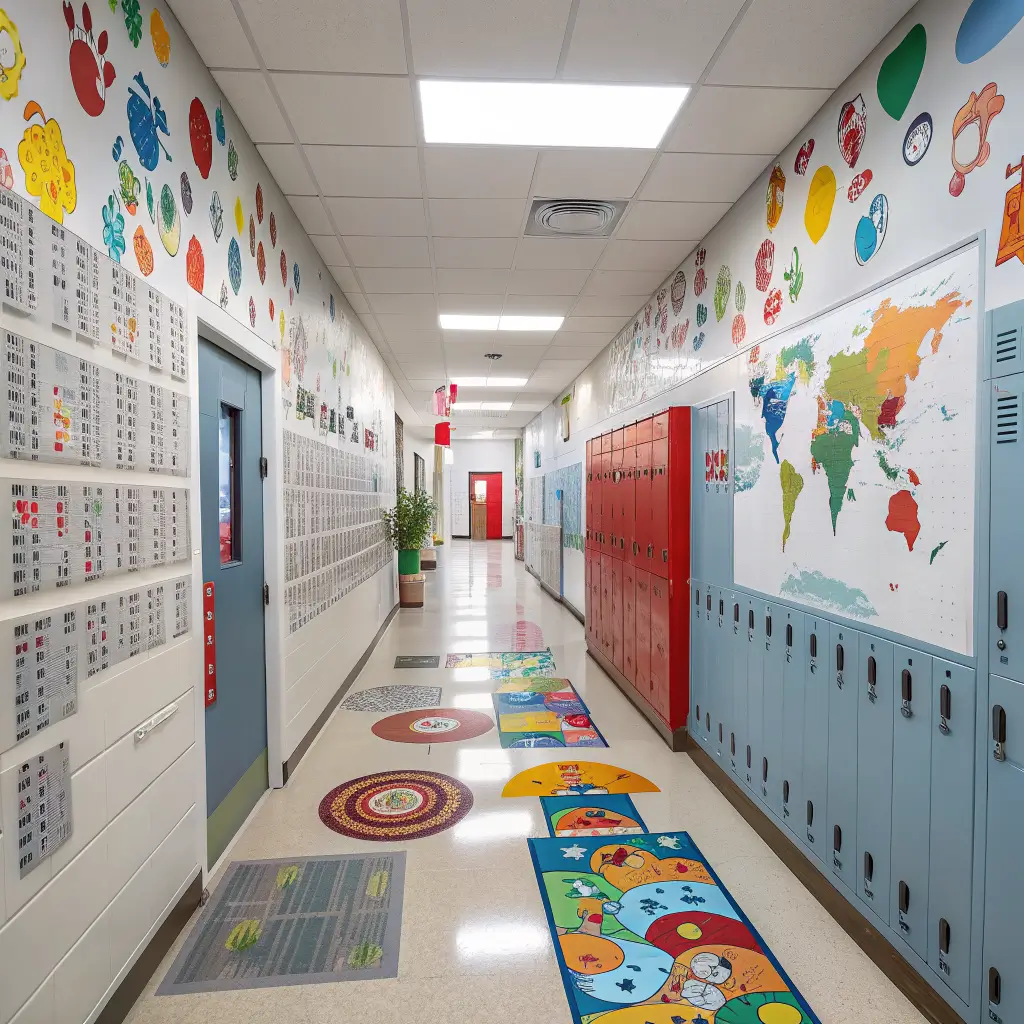
Here’s where things get interesting. Why should learning stop when students leave the classroom? An interactive learning zone hallway turns those in-between spaces into actual educational opportunities.
Think QR codes that link to mini-lessons, puzzles built into the wall design, or even simple math problems integrated into the floor tiles. I’ve seen schools create timeline hallways where each section represents a different historical period, complete with interactive elements that let students explore different eras.
The beauty of this approach is that it captures those micro-moments when students are transitioning between classes. Instead of just walking from Point A to Point B, they’re engaging with content in a low-pressure, exploratory way.
One school I visited had installed digital displays with rotating brain teasers and trivia questions. Students could submit answers via text, and correct responses were displayed in real-time. It turned hallway time into an impromptu competition, and kids were actually excited about it.
But you don’t need fancy tech to make this work. Floor decals with hopscotch games that incorporate multiplication tables, wall-mounted puzzles, or even simple “Did You Know?” facts can transform a boring corridor into an engaging learning environment.
Also Read: 10 Gorgeous Hallway Flooring Ideas for Dream Interiors
4. Nature-Themed School Hallway Design

There’s actual science behind why biophilic design works so well in schools. Natural elements reduce stress, improve concentration, and just make people feel better. A nature-themed hallway brings some of that outdoor magic inside.
I’m not talking about slapping up some tree decals and calling it done. Think living walls with easy-to-maintain plants, natural wood elements, and color schemes that mirror the outdoors. Earth tones, greens, and blues create a calming atmosphere that’s the perfect antidote to the typical institutional feel of most schools.
Skylights or light wells are amazing if you can swing them architecturally, but even strategic use of full-spectrum lighting can mimic natural light patterns. Add some natural textures – maybe a wood accent wall or stone-like surfaces – and you’ve got yourself a space that feels more like a peaceful forest path than a school corridor.
Student projects can tie into this theme beautifully. Botanical illustrations, nature photography, or environmental science displays all fit naturally (pun intended) into this design concept. Plus, you can incorporate real learning opportunities by having students help maintain classroom plants or track seasonal changes visible through windows.
5. Rainbow Bright Elementary Hallway

Elementary kids need color, energy, and joy in their environment. A rainbow bright hallway delivers all three while still being purposeful rather than just chaotic.
The secret sauce here is intentional color psychology. Different colors can energize, calm, or focus students depending on what you’re trying to achieve. Use brighter, more energetic colors near areas where you want movement and activity, and cooler tones near quiet zones or testing areas.
Color-coded wayfinding is genius for younger students who might still be learning to navigate the school. Each grade level or subject area gets its own color family, making it easier for kids to find their way around independently.
I’ve seen schools create interactive color walls where students can vote on their favorite colors or contribute to collaborative rainbow murals. It’s not just decoration – it’s a way to teach color theory, discuss emotions, and create a sense of shared ownership in the space.
And here’s something cool: chromatic flooring that creates a literal rainbow path students can follow. It’s functional wayfinding that also brings pure joy to the daily school experience 🙂
6. Reading Adventure Book Hallway

Every school talks about promoting literacy, but a reading adventure hallway actually shows students that books are exciting. This isn’t just about putting up posters of book covers; it’s about creating an immersive experience that makes reading feel like the adventure it should be.
Book spine displays that look like actual library shelves, complete with student reviews and recommendations, turn the hallway into a browsing experience. Add comfortable reading nooks – even just a few cushions and good lighting – and suddenly you’ve created micro-libraries throughout the school.
Interactive elements make this concept really sing. Story mapping where students can trace the journeys of their favorite characters, author spotlights featuring both famous writers and student authors, and reading challenges displayed prominently all contribute to a culture that celebrates books.
One brilliant idea I’ve encountered: book door decorations where each classroom door represents a different genre or featured book. Students walking down the hall get a preview of all the literary adventures waiting for them. IMO, this approach makes reading feel exciting rather than like another assignment.
Also Read: 10 Inspiring Hallway Runner Rug Ideas for Elegant Hallways
7. School Spirit Celebration Hallway

School spirit isn’t just about sports games and pep rallies. A well-designed spirit hallway celebrates everything that makes your school community special – achievements, traditions, values, and the people who make it all happen.
Trophy cases are obvious, but think bigger. Create achievement walls that highlight academic accomplishments, community service, artistic achievements, and personal growth stories. Not every student will be a star athlete, but everyone deserves recognition for their contributions.
Timeline displays showing school history help students understand they’re part of something bigger than themselves. Include photos, artifacts, and stories from different eras. Let current students interview alumni and add their stories to the collection.
The key is making this feel current and relevant, not like a dusty museum. Rotate displays regularly, incorporate social media elements (with appropriate permissions), and always include opportunities for current students to add their own contributions to the school’s ongoing story.
8. Modern Minimalist School Corridor
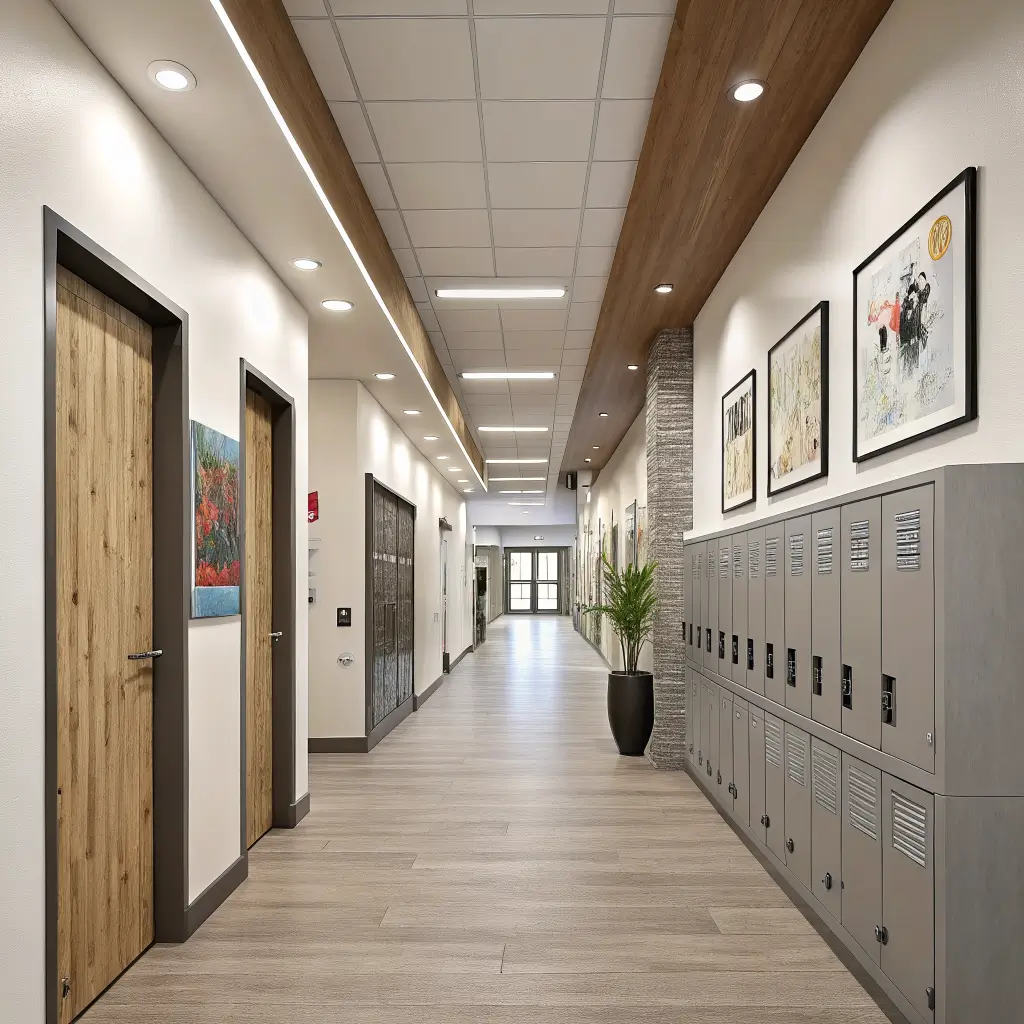
Sometimes less really is more. A modern minimalist approach can create calm, focused energy that helps students transition more peacefully between activities. This doesn’t mean boring – it means intentional.
Clean lines, neutral color palettes, and strategic use of white space create a sophisticated atmosphere that treats students like the capable people they are. Add interest through texture rather than color – maybe exposed brick, natural wood, or interesting architectural details.
Functional beauty is the name of the game here. Built-in seating that doubles as storage, sleek display cases for rotating exhibits, and integrated technology that doesn’t look like an afterthought all contribute to a space that feels both peaceful and purposeful.
This approach works especially well for middle and high school students who might appreciate a more mature environment. It’s also easier to maintain than more elaborate decoration schemes, which your facilities team will definitely appreciate.
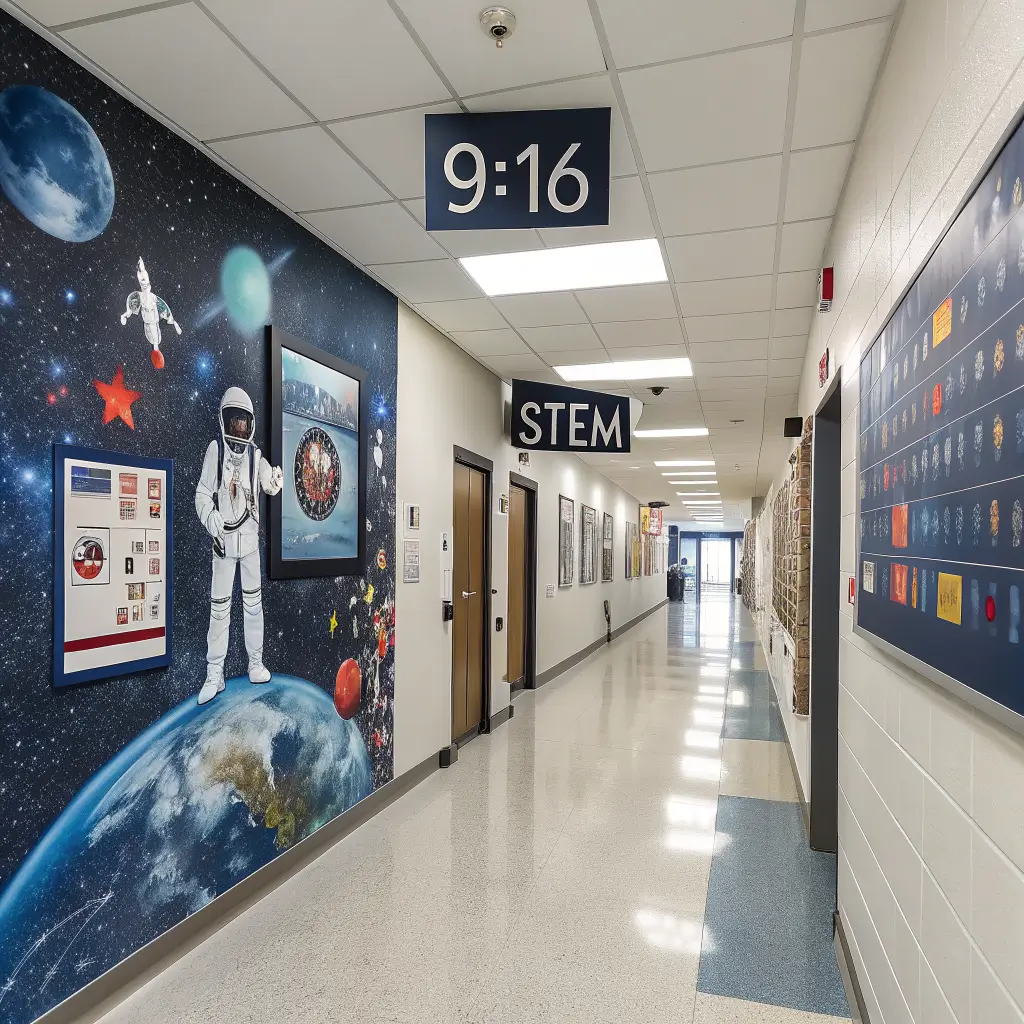
9. STEM Discovery Hallway Display
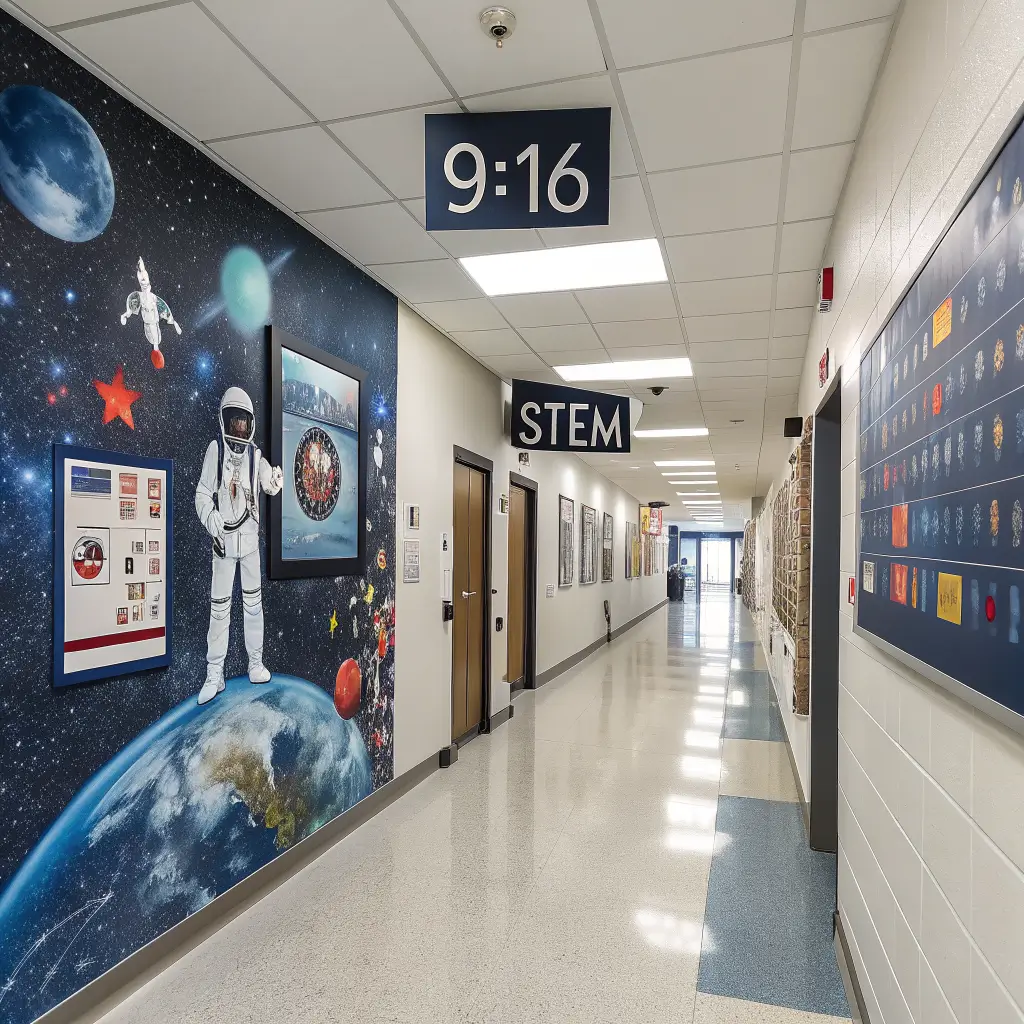
STEM education is everywhere these days, but a discovery hallway makes those concepts tangible and exciting. This is where science meets art meets real-world application.
Interactive science demonstrations that students can actually manipulate – think simple machines, optical illusions, or basic chemistry concepts safely displayed – turn the hallway into an extension of the lab. Student project showcases featuring everything from robotics to environmental research give peers inspiration and recognition.
Industry connections make STEM feel relevant to students’ futures. Partner with local businesses, universities, or community organizations to bring real-world examples into your displays. Show students that the math and science they’re learning actually leads somewhere exciting.
QR codes linking to deeper content let interested students dive further into topics that catch their attention. Maybe it’s a video explanation of the engineering behind the school’s building design, or a virtual tour of a local research facility.
Also Read: 10 Stunning Pink Hallway Ideas For A Dreamy Home Look
10. Seasonal Classroom Door & Hallway Decor

Seasonal decoration keeps the school environment fresh and responsive to the world outside. But this isn’t about slapping up paper pumpkins every October. Think strategically about how seasonal changes can reinforce learning and create anticipation.
Cross-curricular themes work beautifully here. Fall might highlight harvest science, winter could feature crystallization and weather patterns, spring brings growth and renewal concepts, and summer can showcase everything students have learned throughout the year.
Student-created seasonal displays are way more engaging than store-bought decorations. Let different classes take ownership of different seasons or have ongoing projects that evolve throughout the year. This creates investment and pride in the shared space.
Cultural celebrations from your diverse student population can be woven into seasonal themes, creating opportunities for students to share their traditions and learn about others. It’s decoration with purpose – building community while making the space feel alive and responsive.
The key is planning ahead and making sure your seasonal approach enhances rather than distracts from learning. When done thoughtfully, seasonal decoration creates a sense of rhythm and celebration that makes school feel more like a community and less like an institution.
Making It All Work Together
Here’s the thing about great hallway design – it’s not just about picking one theme and calling it done. The best school environments thoughtfully combine elements from different approaches to create something unique to their community.
Start by really understanding your student population, school culture, and practical constraints. A design that works beautifully in a brand-new building might need serious adaptation for a school built in the 1970s. Similarly, what resonates with kindergarteners probably won’t work for high school seniors.
Budget-friendly approaches can be just as effective as expensive overhauls. Student artwork costs nothing but has huge impact. Strategic paint choices can transform a space without breaking the bank. And involving students in the design and implementation process creates buy-in that makes any investment worthwhile.
Remember, the goal isn’t just to make hallways look pretty. Great hallway design supports learning, builds community, and makes students feel valued and excited about being at school. When you nail that combination, you’ve created something that goes way beyond decoration – you’ve created an environment where students can truly thrive.
The best part? Once you start seeing hallways as opportunities rather than just transitional spaces, you’ll never look at school design the same way again. And neither will your students.