Look, I’ll be straight with you – if you’re scrolling through Pinterest at 2 AM looking for kitchen island inspiration (we’ve all been there), you’ve probably noticed that rustic farmhouse vibes are having a serious moment.
And honestly? Good for them. There’s something about that weathered wood, cozy charm, and “I-totally-have-my-life-together” aesthetic that just hits different.
But here’s the thing: not all farmhouse kitchen islands are created equal. Some scream “I spent my kid’s college fund on reclaimed barn wood,” while others whisper “I’m practical, beautiful, and I won’t judge you for eating cereal for dinner.”
Today, we’re exploring ten rustic farmhouse kitchen island ideas that’ll give you all the charm without the drama – or the astronomical price tag.
Reclaimed Wood Rustic Farmhouse Kitchen Island: The Ultimate Statement Piece
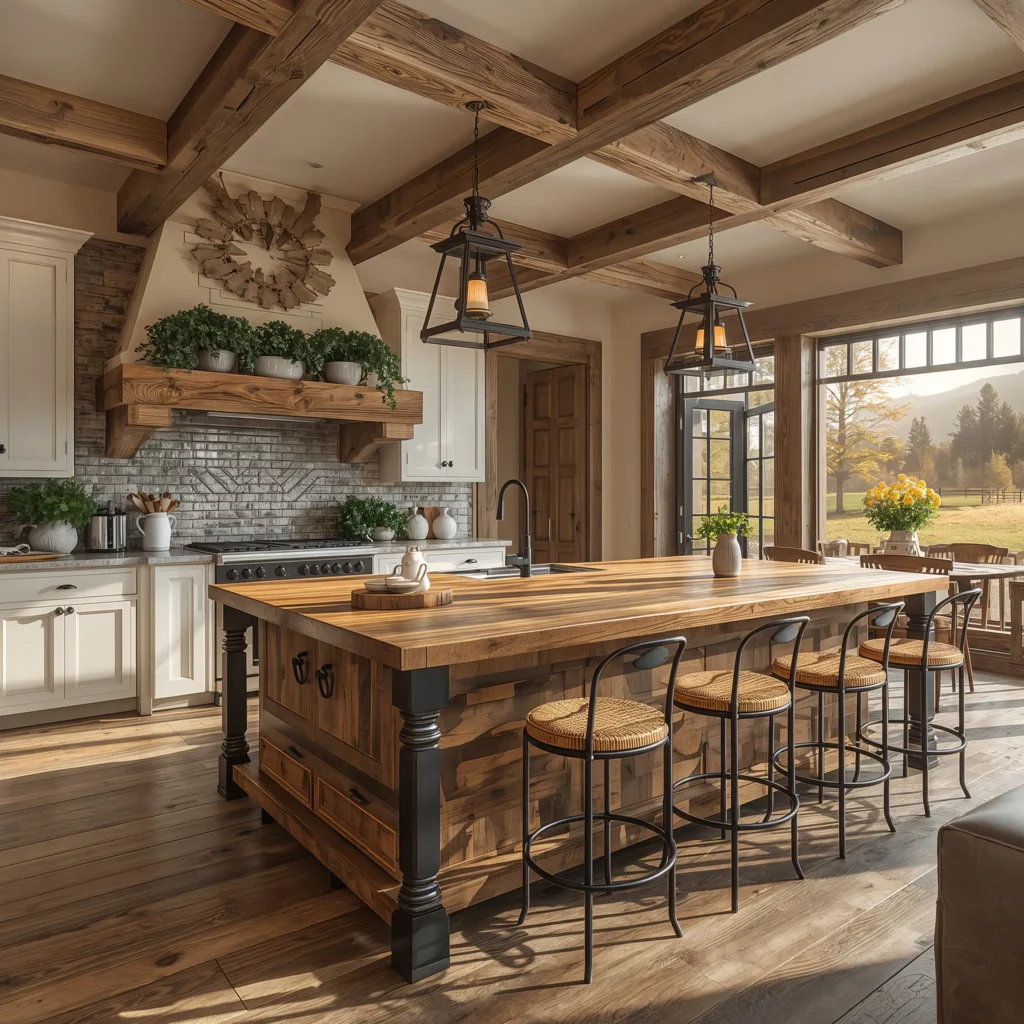
Let me tell you about reclaimed wood – it’s like the vintage denim of the kitchen world. Every scratch tells a story, and that story usually involves someone paying premium prices for authenticity. But hear me out on this one.
A reclaimed wood kitchen island brings instant character to your space. We’re talking about wood that’s lived a full life – maybe it was part of a century-old barn or a weathered dock. The natural patina and unique grain patterns create a focal point that’s impossible to replicate with new materials.
When shopping for reclaimed wood islands, pay attention to the thickness of the wood planks and the stability of the construction. Thicker planks (around 2-3 inches) not only look more substantial but also handle daily kitchen chaos better. Trust me, you don’t want your beautiful island wobbling every time you chop an onion.
Pro tip: Look for pieces that combine reclaimed wood tops with sturdy painted bases. This gives you the rustic charm without compromising on functionality. Plus, painted bases are way easier to keep clean than all-wood construction – and we all know how messy kitchens can get 🙂
The beauty of reclaimed wood lies in its imperfections. Nail holes, weathering marks, and color variations aren’t flaws – they’re features. Each piece brings its own personality to your kitchen, making your island truly one-of-a-kind.
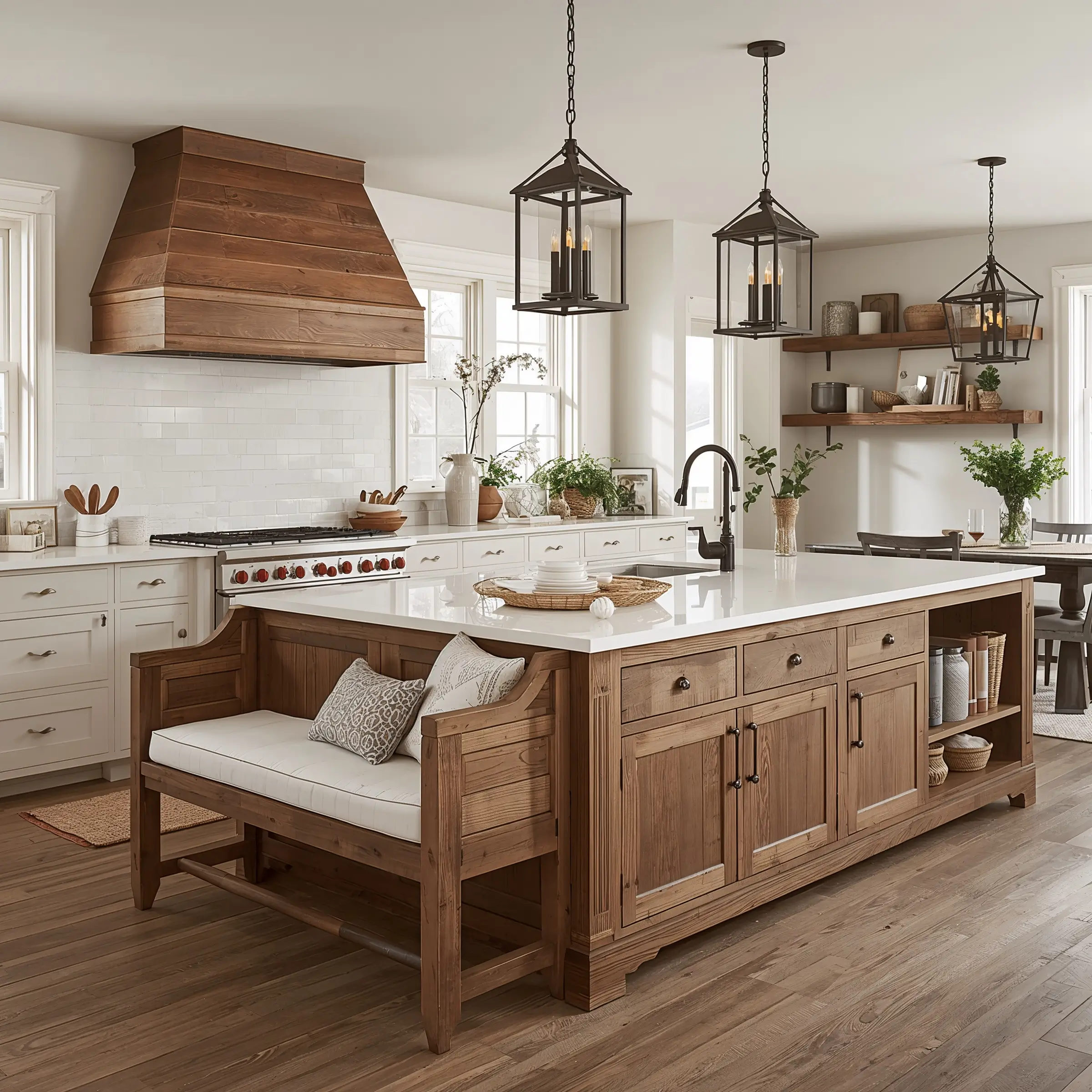
Rustic Farmhouse Kitchen Island with Built-In Seating: Where Function Meets Comfort
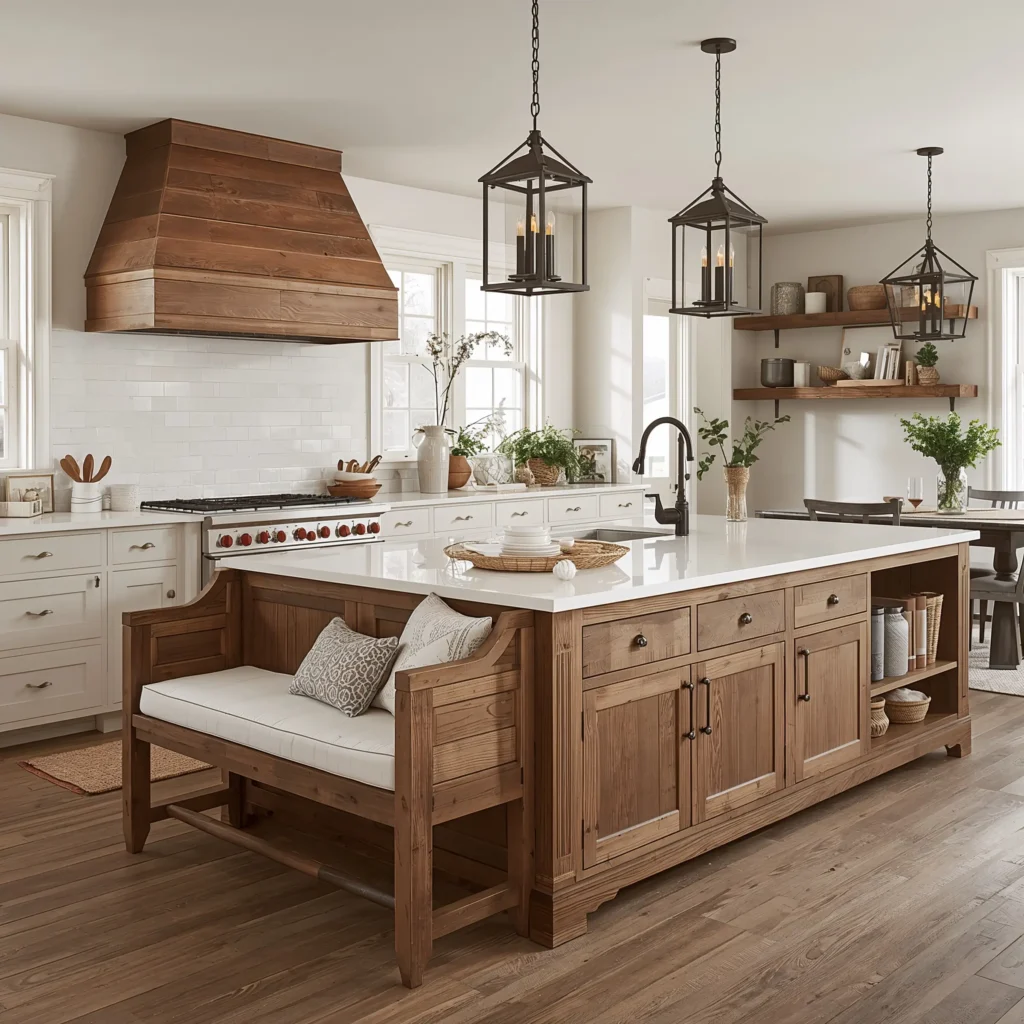
Ever wonder why some kitchens feel like the heart of the home while others feel like sterile food-prep stations? Built-in seating is often the secret ingredient. A farmhouse island with integrated seating creates an instant gathering spot that says “come hang out while I pretend I know how to cook.”
Bench-style seating is the most popular choice for farmhouse islands, and for good reason. It’s casual, comfortable, and can accommodate more people than individual stools. Plus, you can add cushions for extra comfort and a pop of color that complements your kitchen’s palette.
Consider the height ratio carefully – standard counter height is 36 inches, while bar height sits at 42 inches. For built-in seating, counter height usually works better because it feels more intimate and accessible for kids. Nobody wants to feel like they’re perching on a bar stool just to grab a snack.
Storage underneath the seating is a game-changer, especially in smaller kitchens. You can stash everything from seasonal serving pieces to the good china you never actually use. Just make sure the storage compartments have soft-close hinges – nothing ruins the farmhouse vibe like cabinet doors slamming shut.
The key to nailing this look is proportional design. The seating area should feel intentional, not like an afterthought. A good rule of thumb is allowing 24 inches of width per person for comfortable seating.
White Farmhouse Kitchen Island with Distressed Wood Top: Classic Meets Practical
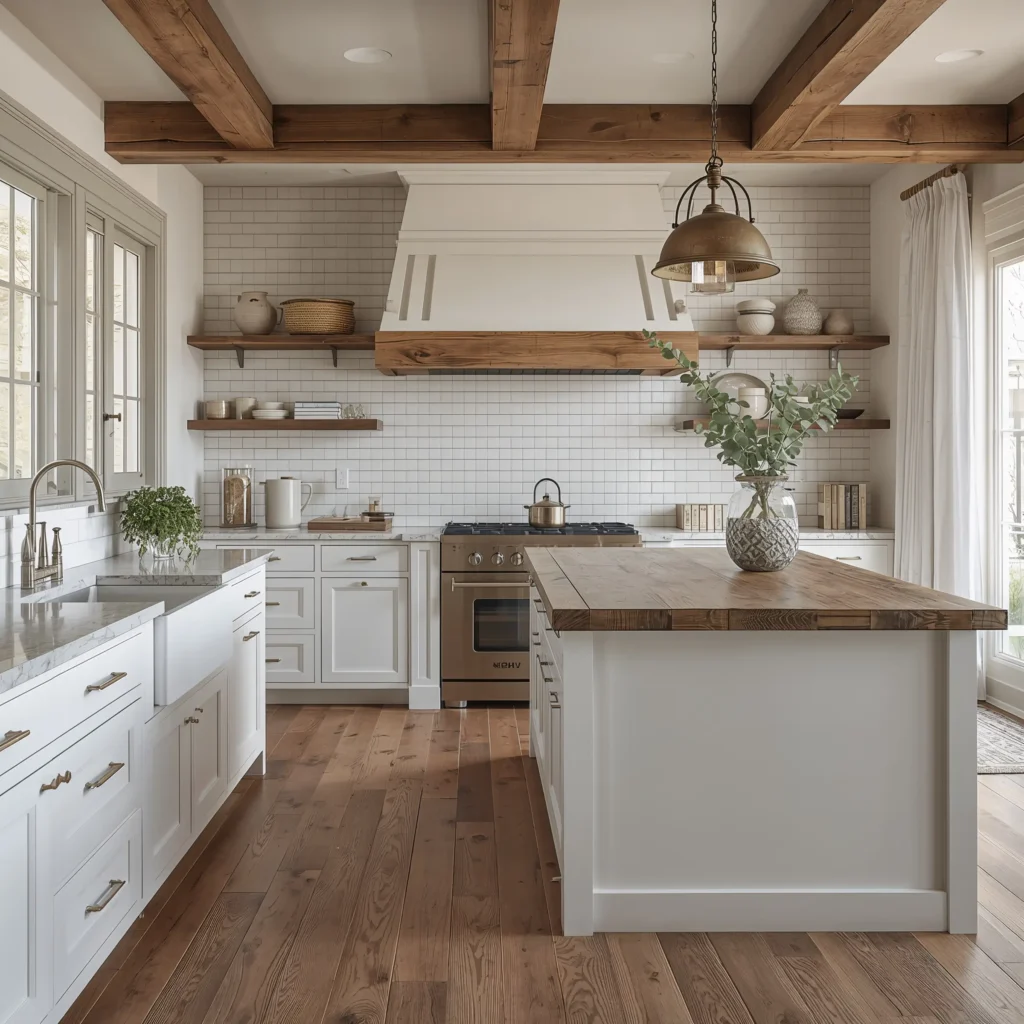
White kitchen islands are like the little black dress of kitchen design – they never go out of style. But add a distressed wood top, and suddenly you’ve got something special. This combination gives you the clean, fresh feeling of white cabinetry with the warmth and character of natural wood.
The distressing technique makes all the difference here. Good distressing looks intentional and lived-in, not like someone took a hammer to perfectly good wood. Look for subtle wear patterns around edges and corners – places where natural aging would occur over time.
White bases are incredibly versatile for styling. They work with virtually any hardware finish, from classic oil-rubbed bronze to trendy matte black. Plus, white reflects light beautifully, making your kitchen feel larger and brighter – especially important if you’re working with limited natural light.
Maintenance-wise, white shows everything (let’s be real), but modern paint finishes are surprisingly durable. Semi-gloss or satin finishes clean easily and resist staining better than flat paint. Just keep some touch-up paint handy for the inevitable dings and scratches.
The wood top brings warmth and texture that prevents the white base from feeling cold or sterile. Choose a wood tone that complements your existing kitchen elements – lighter woods like pine or oak for a bright, airy feel, or richer walnut tones for more dramatic contrast.
Also Read: 10 Charming Rustic Farmhouse Kitchen Ideas to Copy
Rustic Kitchen Island with Open Shelving Storage: Display Meets Function

Open shelving on kitchen islands is either brilliant or completely impractical, depending on who you ask. I’m firmly in the “brilliant” camp, but with some important caveats. Done right, open shelving adds visual lightness while providing accessible storage for your most-used items.
The trick is strategic styling. Your open shelves shouldn’t look like a tornado hit your pantry. Mix practical items like cutting boards and mixing bowls with decorative pieces like vintage jars or small plants. Group items by height and color for a curated look that doesn’t feel fussy.
Adjustable shelving is worth the extra investment. Your storage needs will change over time, and being able to reconfigure shelf heights means your island adapts with you. Look for systems with strong weight capacity – those cast iron skillets are heavier than they look.
Consider your kitchen’s overall visual weight when planning open shelving. If your upper cabinets are solid and closed, an island with open storage creates nice balance. But if you already have open shelving elsewhere, too much can make the space feel cluttered rather than airy.
Practical tip: Reserve the most accessible shelves for items you use daily, and higher or lower shelves for pieces that are more decorative or used less frequently. This keeps your island both beautiful and functional.
Two-Tone Rustic Farmhouse Kitchen Island Design: Bold Contrast Done Right
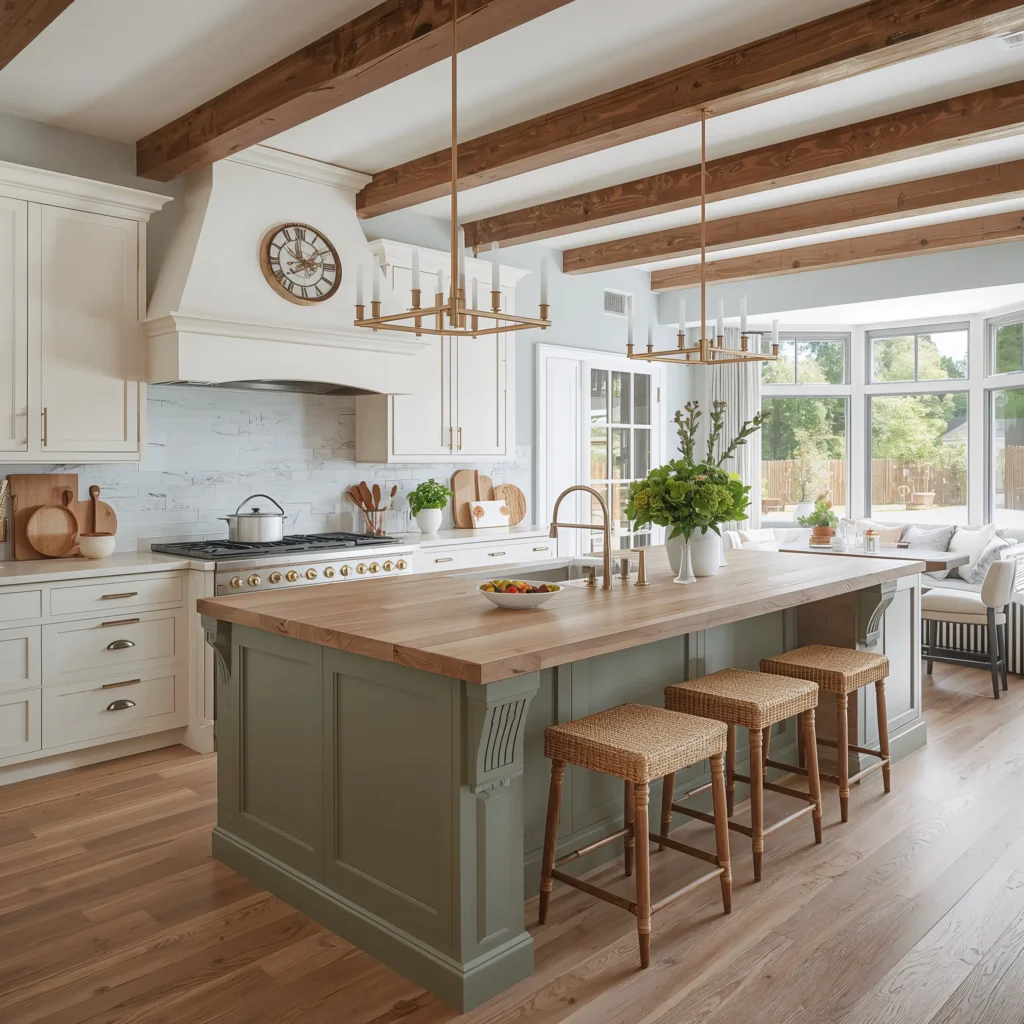
Two-tone kitchen islands are having a major moment, and honestly, it’s about time. Monochromatic kitchens can feel flat, while thoughtful color contrast adds depth and visual interest. The key word here is “thoughtful” – random color choices just look confused.
Classic color combinations never disappoint. Navy blue base with natural wood top? Gorgeous. Sage green with white marble? Stunning. Black base with butcher block? Absolutely timeless. The secret is choosing colors that complement your existing kitchen palette without competing for attention.
Consider your kitchen’s proportions when planning two-tone design. In smaller spaces, keep the lighter color on top to maintain visual balance. Darker colors can make spaces feel smaller, but they also add drama and sophistication when used strategically.
Hardware selection becomes even more important with two-tone designs. Your pulls and knobs need to work with both colors, so stick with finishes that complement rather than match exactly. Brushed brass or matte black work beautifully with most two-tone combinations.
The farmhouse style particularly benefits from two-tone design because it adds complexity without losing the relaxed, unpretentious vibe. Natural wood paired with painted surfaces feels authentic and unforced – like your kitchen evolved over time rather than being designed all at once.
Antique-Inspired Farmhouse Kitchen Island with Vintage Charm
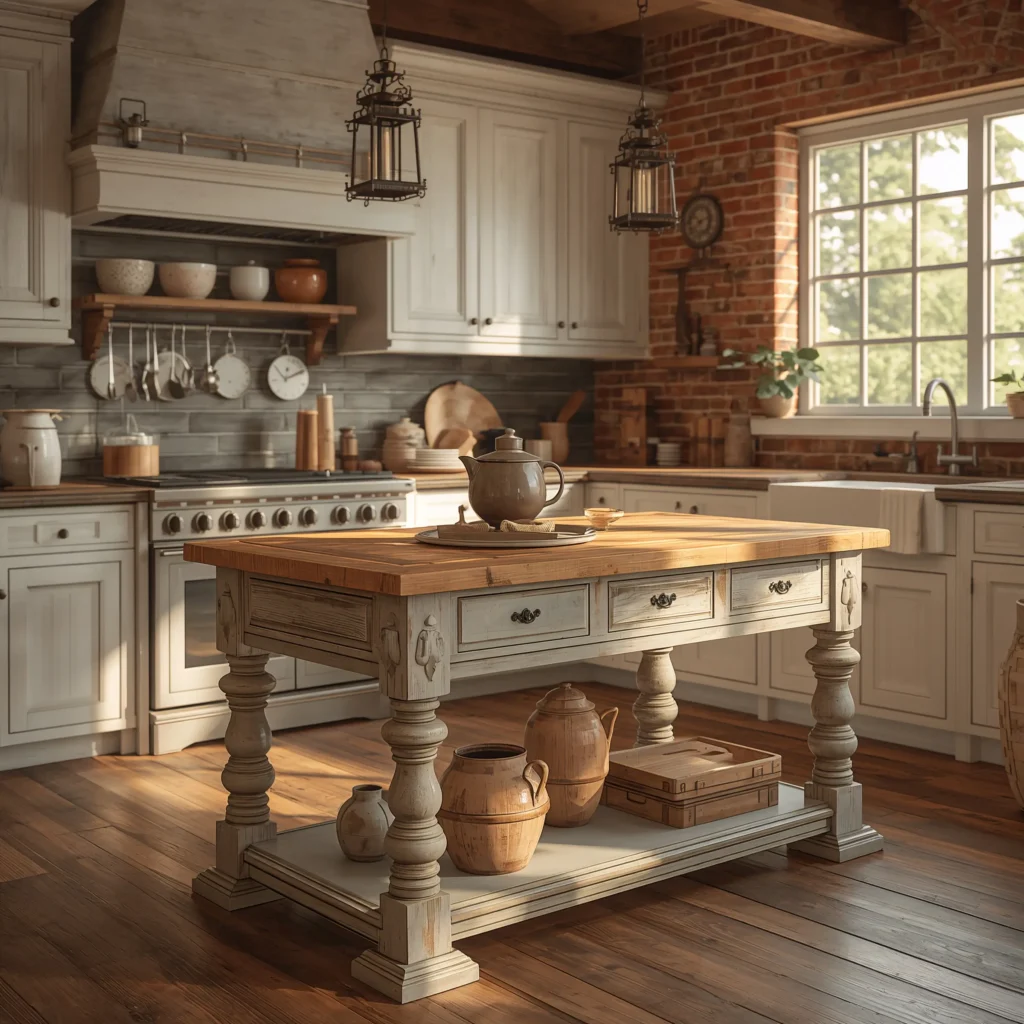
There’s something irresistible about furniture that looks like it has stories to tell. Antique-inspired farmhouse islands capture that vintage charm without the uncertainty of actual antiques (because let’s face it, nobody wants their kitchen island to collapse during dinner prep).
Reproduction pieces often offer the best of both worlds – authentic-looking details with modern construction standards. Look for features like hand-forged iron hardware, mortise and tenon joinery, and milk paint finishes that develop character over time.
Patina and aging details should look natural, not forced. Good reproductions show wear in logical places – edges that would naturally get bumped, surfaces that would see daily use. Avoid pieces that look artificially aged or have random distressing that doesn’t make practical sense.
When shopping for antique-inspired pieces, don’t sacrifice function for form. Your island still needs to work in a modern kitchen. Check that drawers slide smoothly, shelves are sturdy, and the overall construction can handle daily use. Vintage charm shouldn’t mean vintage problems.
Styling antique-inspired islands requires a light touch. Let the piece’s natural character shine rather than overwhelming it with accessories. A few well-chosen vintage pieces – maybe an old scale or some antique crockery – enhance the story without creating clutter.
Also Read: 10 Charming Farmhouse Kitchen Ideas for Every Home
Rustic Farmhouse Kitchen Island with Butcher Block Countertop: Practical Beauty

Let’s talk about butcher block for a hot minute. This isn’t just trendy – it’s genuinely practical. Butcher block provides a fantastic work surface that’s gentle on knives and naturally antimicrobial when properly maintained. Plus, it brings warmth and natural texture that’s hard to beat.
Wood selection matters more than you might think. Maple and oak are traditional choices that offer durability and attractive grain patterns. Walnut brings richer color but requires more maintenance. Cherry develops a beautiful patina over time but can be pricier.
Maintenance isn’t as scary as some people make it sound. Monthly applications of food-safe mineral oil keep the wood healthy and water-resistant. Annual deep conditioning with a mixture of mineral oil and beeswax maintains that gorgeous natural sheen. Yes, it requires more attention than granite, but the payoff is worth it.
End grain versus edge grain is a choice worth considering carefully. End grain butcher block is more durable for heavy chopping but shows knife marks more readily. Edge grain offers a smoother surface that’s easier to clean but may not withstand heavy use as well.
IMO, the beauty of butcher block lies in how it ages. Each scratch and slight discoloration tells the story of meals prepared and memories made. Unlike other countertop materials that show damage, butcher block develops character.
Compact Rustic Farmhouse Kitchen Island for Small Spaces: Big Style, Small Footprint

Small kitchens don’t have to miss out on farmhouse island charm. The key is choosing pieces that maximize function without overwhelming your space. A well-designed compact island can add storage, workspace, and style without making your kitchen feel cramped.
Scale is everything in small spaces. Your island should feel substantial enough to be useful but not so large that it impedes traffic flow. A good rule of thumb is maintaining at least 36 inches of clearance on all sides – more if possible.
Multi-functional design becomes crucial in compact islands. Look for pieces that combine workspace, storage, and possibly seating in a thoughtful package. Rolling islands offer flexibility – you can move them when you need more space or position them where they’re most useful.
Vertical storage makes compact islands work harder. Tall, narrow designs with multiple shelves or drawers pack more function into less floor space. Open shelving can make small islands feel less bulky while providing accessible storage.
Light colors and natural materials help compact islands feel less imposing. White or light gray bases with natural wood tops create visual lightness that works beautifully in small spaces. Avoid dark, heavy finishes that can make small kitchens feel even smaller.
Rustic Farmhouse Kitchen Island with Black Metal Accents: Industrial Meets Country

Black metal accents bring an unexpected edge to traditional farmhouse styling, and the combination is absolutely gorgeous. We’re talking about iron hardware, metal brackets, or industrial-style legs that add contrast and visual interest without overwhelming the rustic charm.
The industrial element prevents farmhouse styling from feeling too sweet or precious. Black iron hardware brings strength and masculinity that balances softer wood tones beautifully. Metal grid panels or mesh inserts add texture while maintaining the functional storage aspect.
Quality matters when it comes to metal accents. Cheap hardware feels flimsy and can actually detract from your island’s overall appeal. Solid iron or steel elements with proper finishes will develop character over time rather than just showing wear.
Balance is key – you want enough metal accent to make an impact without creating visual confusion. Start with hardware and structural elements, then add other metal touches sparingly. Too much can tip the design from farmhouse-industrial to straight industrial.
Maintenance of metal accents is generally straightforward. Quality finishes resist rust and corrosion, while regular cleaning with appropriate products keeps everything looking sharp. Avoid abrasive cleaners that can damage protective finishes.
Also Read: 10 Stylish Green Kitchen Island Ideas to Transform Your Space
Oversized Rustic Farmhouse Kitchen Island for Open-Concept Kitchens: Go Big or Go Home
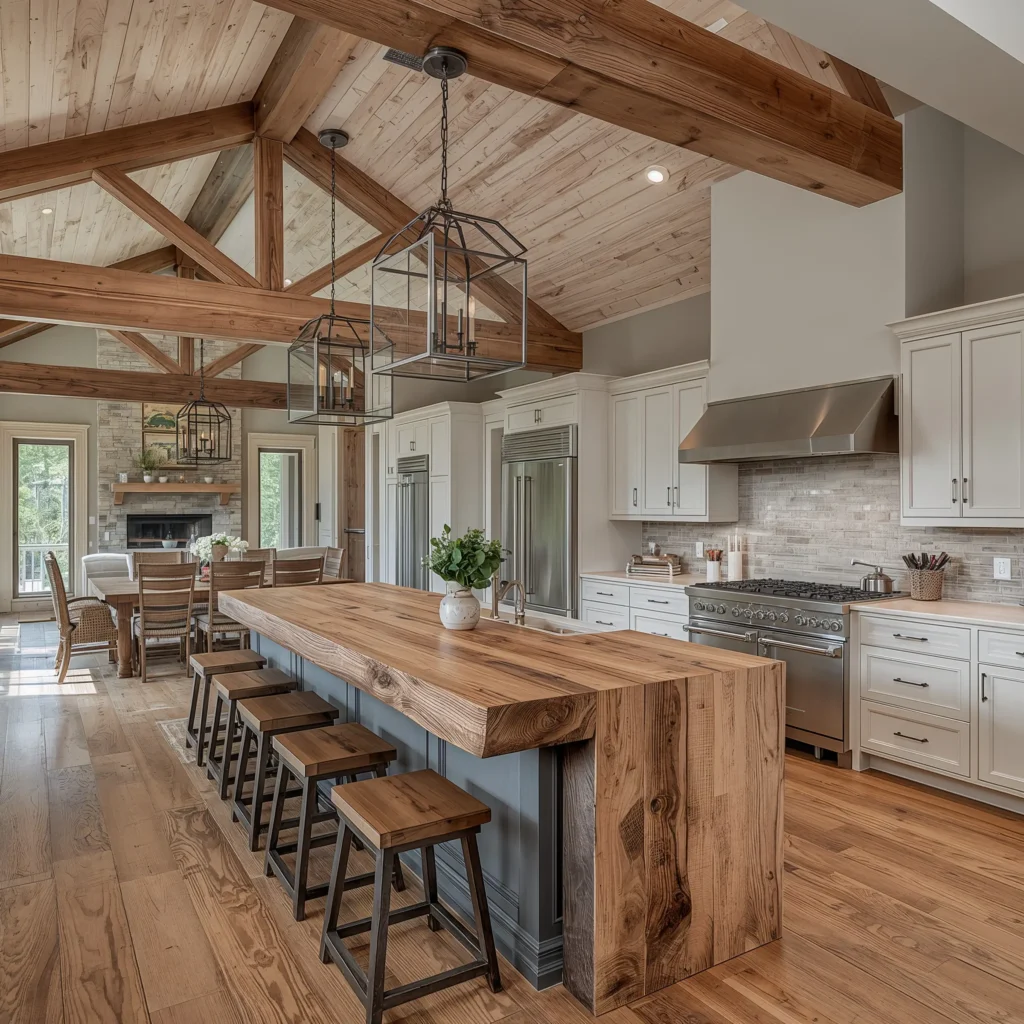
Open-concept kitchens can handle – and actually benefit from – substantial farmhouse islands that make a real statement. In large spaces, small islands can look lost and ineffective. Oversized islands provide the visual weight needed to anchor your kitchen within the larger space.
Proportion remains important even in large spaces. Your island should feel generous without overwhelming the room’s flow. Consider sight lines and traffic patterns when positioning large islands. You want impressive, not obstructive.
Multiple work zones become possible with oversized islands. Dedicated prep areas, cleanup stations, and casual dining spaces can all coexist on one large island. Different counter heights can help define these zones while maintaining visual cohesion.
Storage opportunities multiply with larger islands. Deep drawers, specialized organizers, and even appliance garages become feasible options. Plan storage carefully – just because you have space doesn’t mean you should fill every inch.
Structural considerations become more important with oversized islands. Ensure your floor can support the weight, especially if you’re incorporating stone countertops or multiple appliances. Professional installation is usually worth the investment for large, complex pieces.
FYI, oversized islands work best when they feel intentional rather than excessive. Choose designs that complement your space’s scale and serve your actual cooking and entertaining needs. Bigger isn’t always better – it’s about finding the right balance for your specific situation.
Making Your Farmhouse Island Dreams Come True
After exploring these ten gorgeous options, you’ve probably noticed a theme: the best rustic farmhouse kitchen islands combine authentic charm with practical functionality. Whether you’re drawn to reclaimed wood character, two-tone sophistication, or industrial accents, the key is choosing pieces that reflect your personal style while serving your family’s needs.
Remember that trends come and go, but quality and functionality are forever. A well-made farmhouse island will serve your family for decades, developing character and charm that only improves with time. Don’t rush the decision – this is likely one of the largest investments in your kitchen, and it’s worth taking time to find exactly what you want.
The beauty of farmhouse style lies in its unpretentious authenticity. Your island should feel like a natural part of your home’s story, not a desperate attempt to copy someone else’s Pinterest board. Trust your instincts, prioritize quality, and choose pieces that make you smile every time you walk into your kitchen. After all, the best farmhouse islands aren’t just beautiful – they’re the heart of homes where memories are made, one meal at a time.