Look, I’ll be honest with you – I never thought I’d be the type of person obsessed with farmhouse kitchens. I mean, I grew up in suburbia where the closest thing to “rustic” was my mom’s fake wood grain kitchen table from the ’90s.
But here we are, and I’m completely smitten with the charm of rustic farmhouse kitchens. There’s something about that perfect blend of weathered wood, vintage touches, and modern functionality that just hits different.
Maybe you’ve been scrolling through Pinterest at 2 AM (we’ve all been there), dreaming of trading your cramped galley kitchen for something with actual character. Or perhaps you’re lucky enough to be planning a renovation and want to capture that cozy, lived-in feel without looking like you raided a barn.
Either way, I’ve got you covered with ten killer rustic farmhouse kitchen ideas that’ll transform your space into something straight out of a home and garden magazine.
Rustic Farmhouse Kitchen with Reclaimed Wood Beams
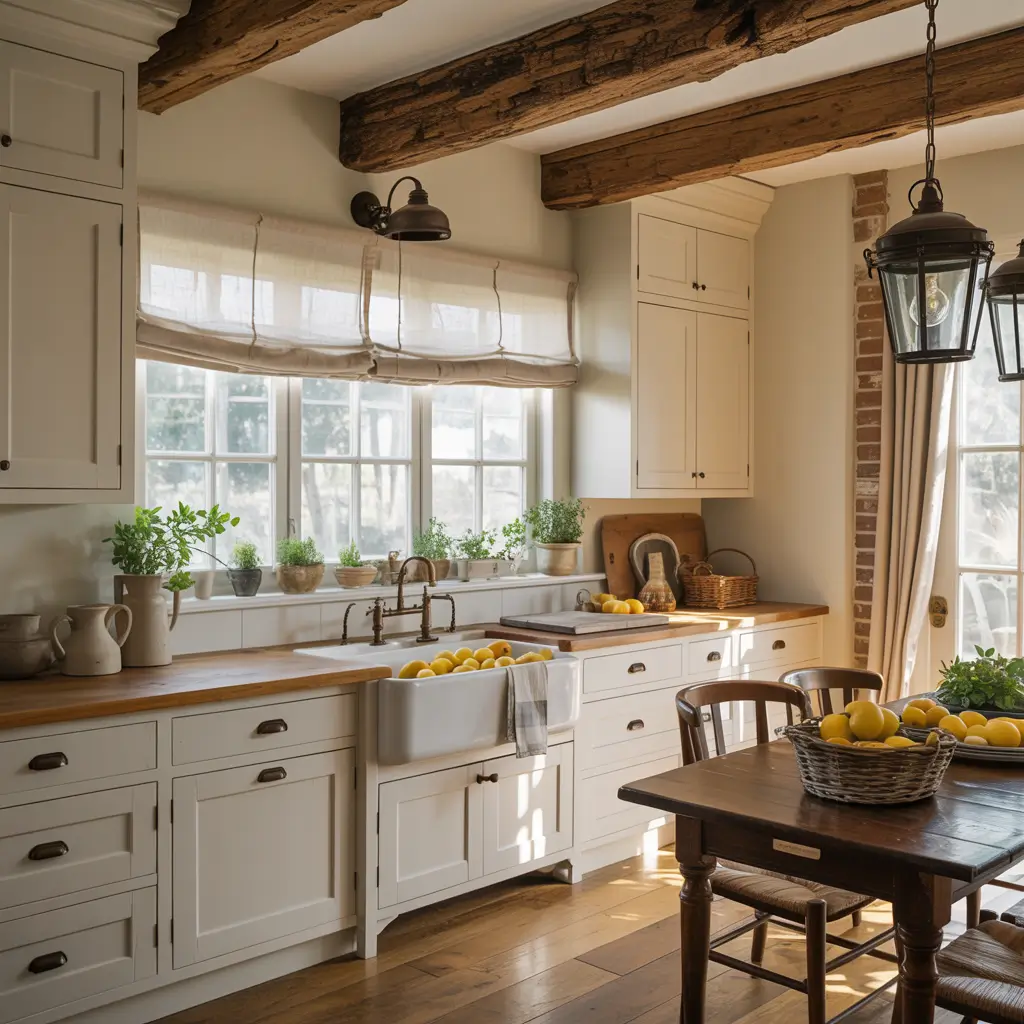
Nothing says “farmhouse chic” quite like exposed reclaimed wood beams stretching across your ceiling. I’m talking about those gorgeous, weathered pieces that tell stories of old barns and forgotten structures. When I first saw this done right, I literally stopped mid-conversation and just stared at the ceiling like some kind of weirdo.
The beauty of reclaimed wood beams lies in their imperfections. Those nail holes, weathering marks, and natural aging create character you simply can’t fake. You’re essentially bringing history into your kitchen, and honestly, isn’t that way cooler than those perfectly uniform faux beams you see everywhere?
Here’s what makes this work so well:
- Instant visual interest – your eyes naturally follow those lines across the ceiling
- Adds warmth to what might otherwise feel like a cold, sterile space
- Creates the illusion of height in rooms with standard ceilings
- Provides a stunning contrast against crisp white or cream walls
The trick is knowing when to stop. You want enough beams to make a statement without turning your kitchen into a log cabin. IMO, spacing them about 4-6 feet apart usually hits that sweet spot. And please, for the love of all things rustic, make sure they’re properly installed – nobody wants a beam falling into their morning coffee 🙂
Cozy Rustic Farmhouse Kitchen with Stone Backsplash

Stone backsplashes are where rustic farmhouse kitchens really start to flex. I’m not talking about those perfectly polished marble situations (save that for your fancy bathroom). We’re going for natural stone that looks like it’s been weathering storms for decades.
My personal favorite? Stacked stone or natural fieldstone. It gives you that authentic farmhouse vibe without looking like you’re trying too hard. The irregular shapes and varying textures create visual depth that makes your kitchen feel like it has actual history, even if you built it last year.
Here’s why stone backsplashes work so beautifully in rustic kitchens:
- Durability that’s practically bulletproof – this stuff has been protecting buildings for centuries
- Natural variation means no two installations look exactly the same
- Heat resistance that laughs at your splashing bacon grease
- Easy maintenance once sealed properly
The key is choosing the right stone for your specific vibe. Limestone gives you that soft, aged look, while slate brings more drama and depth. River rock creates texture that’s almost touchable, and brick (technically not stone, but close enough) delivers that classic farmhouse appeal.
Pro tip: Don’t go crazy with the grout lines. Thin, neutral grout keeps the focus on the stone itself rather than creating a busy grid pattern that fights for attention.
White and Rustic Wood Farmhouse Kitchen Design

This combination is basically the holy grail of farmhouse kitchen design. Crisp white cabinets paired with warm, weathered wood creates a contrast that’s both striking and harmonious. It’s like the kitchen equivalent of a perfectly worn pair of jeans with a fresh white t-shirt – effortlessly stylish.
The white provides that clean, fresh backdrop that keeps things from feeling too heavy or dark, while the rustic wood elements inject personality and warmth. I’ve seen this done with reclaimed wood islands, floating shelves, or even just strategic wood accents, and it works every single time.
What makes this pairing so successful:
- Visual balance between light and texture
- Timeless appeal that won’t look dated in five years
- Flexibility to incorporate colorful accessories and décor
- Reflects light beautifully making spaces feel larger and brighter
The wood doesn’t have to be the same throughout – mixing different tones and textures actually adds more interest. Maybe your island features dark walnut butcher block while your floating shelves showcase lighter reclaimed pine. The white cabinets act as a neutral mediator, letting these different wood tones play nicely together.
And here’s something I learned the hard way: not all whites are created equal. Warm whites with slight cream or gray undertones complement rustic wood much better than stark, cool whites that can make everything feel clinical.
Also Read: 10 Charming Farmhouse Kitchen Ideas for Every Home
Rustic Farmhouse Kitchen with Large Kitchen Island
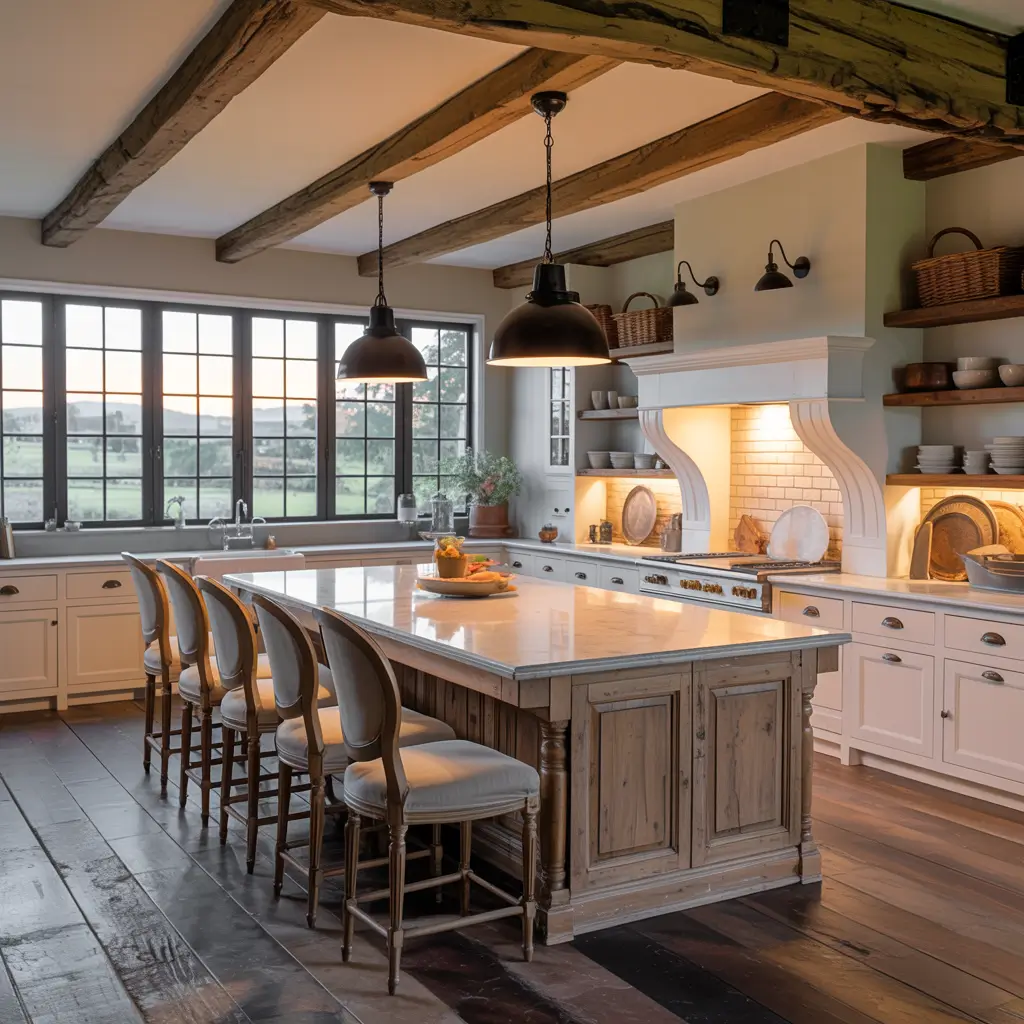
Ever wondered why every farmhouse kitchen worth its salt features a massive island? It’s not just because bigger is better (though sometimes it is). A large kitchen island serves as the heart of farmhouse living – it’s where families gather, where homework gets done, and where you inevitably end up chatting with guests while you cook.
The rustic farmhouse version takes this concept and gives it serious character. We’re talking thick butcher block tops, weathered wood bases, and enough space to prep a Thanksgiving feast without breaking a sweat. I’ve seen islands that were literally repurposed from old farm tables, and they’re absolutely stunning.
Key features that make farmhouse islands special:
- Generous proportions that don’t apologize for taking up space
- Mixed materials combining wood, stone, or metal elements
- Functional storage with open shelving and closed cabinets
- Seating options that encourage gathering and conversation
The beauty of going big with your island is that it anchors the entire space. Everything else in the kitchen can reference back to this central focal point. Plus, let’s be real – when you’re hosting a dinner party, you need somewhere to stage all that food, and a tiny island just isn’t going to cut it.
Size-wise, aim for at least 4 feet by 8 feet if your space allows. Any smaller and you’re basically just talking about a fancy counter extension, which definitely has its place but won’t give you that commanding farmhouse presence.
Small Rustic Farmhouse Kitchen Space-Saving Ideas
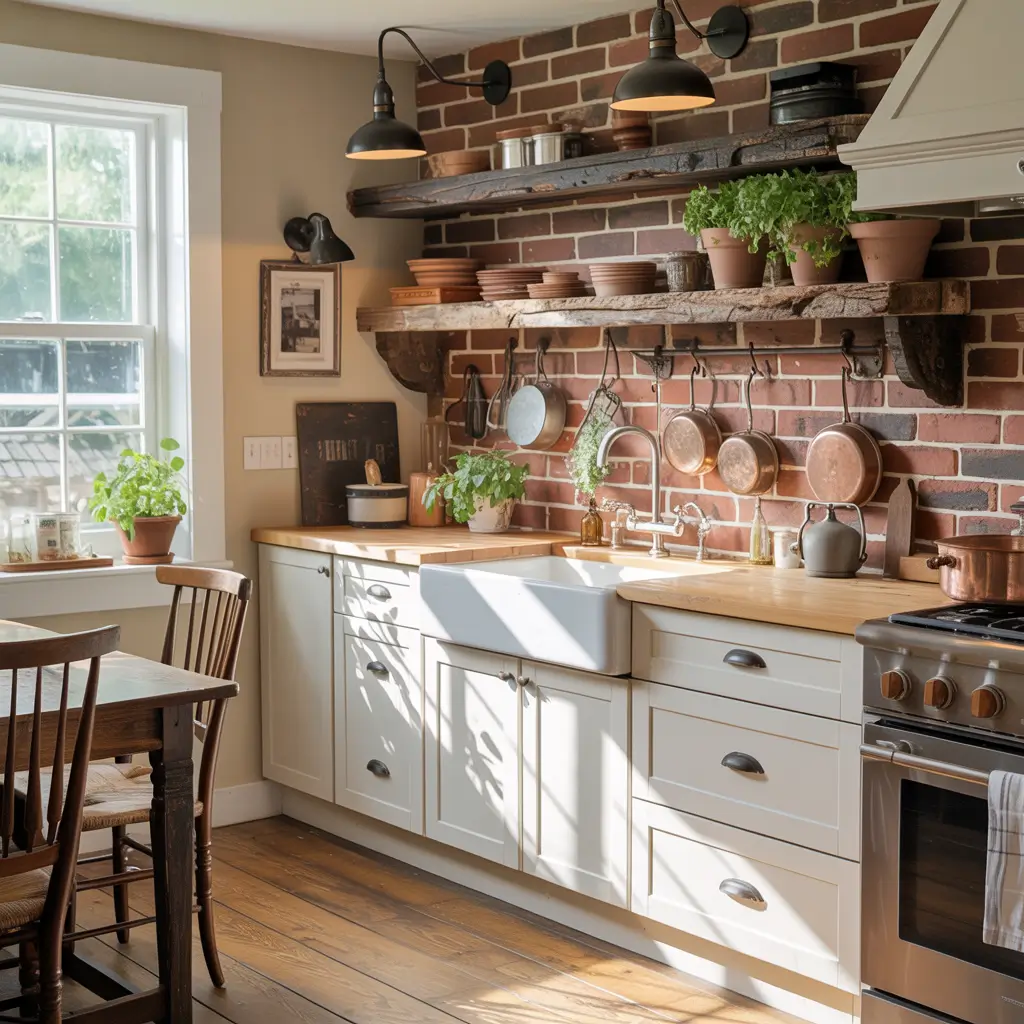
Okay, let’s address the elephant in the room – not everyone has a sprawling country kitchen to work with. But here’s the thing: small spaces can absolutely nail the farmhouse aesthetic with the right approach. It’s all about being smart with your choices and maximizing every square inch.
I learned this lesson in my own tiny kitchen where I had to get creative with farmhouse elements. The secret is focusing on a few high-impact features rather than trying to cram every rustic element into a compact space.
Smart space-saving strategies for small farmhouse kitchens:
- Open shelving instead of upper cabinets creates visual space while displaying dishes
- Light colors keep things feeling airy and open
- Multi-functional furniture like a small island that doubles as a prep area and dining space
- Vertical storage solutions that draw the eye upward
One trick that works incredibly well in small spaces is using a single statement element to establish the farmhouse vibe. Maybe it’s a gorgeous reclaimed wood feature wall, or a vintage farmhouse sink that becomes the focal point. You don’t need to rustic-fy every surface – sometimes less really is more.
FYI, mirrors can be your best friend in small farmhouse kitchens. A well-placed antique mirror or two can reflect light and create the illusion of more space while adding to that vintage farmhouse charm.
Rustic Farmhouse Kitchen with Open Wooden Shelving

Let’s talk about open wooden shelving for a minute. This isn’t just a trend – it’s a fundamental element of authentic farmhouse design that serves both form and function. There’s something beautifully honest about displaying your dishes and everyday items on rustic wooden shelves.
The key is choosing the right wood and styling it properly. Reclaimed barn wood or weathered pine gives you that authentic patina that new wood simply can’t replicate. I’ve seen people try to recreate this look with fresh lumber and some stain, and it just doesn’t hit the same way.
Why open shelving works so well in farmhouse kitchens:
- Creates visual lightness compared to heavy upper cabinets
- Encourages organization because everything is on display
- Adds texture and warmth to the overall design
- Provides easy access to frequently used items
The styling part is crucial, though. You can’t just throw your mismatched collection of mugs up there and call it farmhouse. Think about grouping similar items together, incorporating some greenery with small potted herbs, and mixing in a few vintage pieces that add character.
Pro tip: Leave some breathing room on your shelves. Overcrowded shelving looks messy rather than charming, and you want people to focus on your beautiful dishes, not wonder how you manage to get anything down without causing an avalanche.
Also Read: 10 Stylish Green Kitchen Island Ideas to Transform Your Space
Rustic Farmhouse Kitchen with Vintage Antique Decor
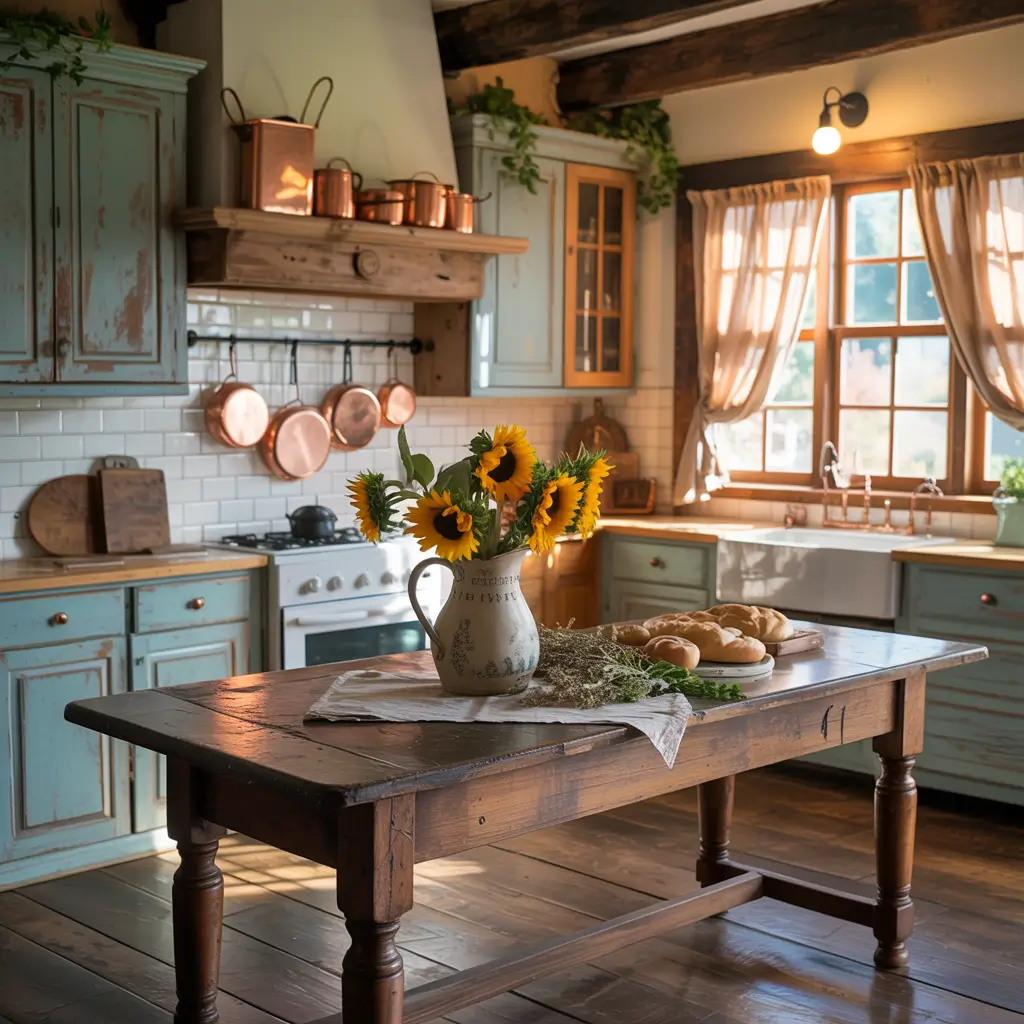
This is where farmhouse kitchens really get to show off their personality. Vintage and antique elements are what separate authentic farmhouse style from generic country kitchens that feel mass-produced and soulless.
I’m talking about those perfect imperfect pieces that have actual history – vintage mason jars, weathered signs, antique kitchen scales, old cutting boards with decades of knife marks. These aren’t just decorative elements; they’re conversation starters that give your kitchen genuine character.
The trick is curating these pieces thoughtfully rather than going overboard. You want your kitchen to feel collected over time, not like you raided an antique store in a single afternoon. Start with a few key pieces that really speak to you, and build your collection gradually.
Essential vintage elements for farmhouse kitchens:
- Antique kitchen tools displayed on open shelving or hung on walls
- Weathered signs with vintage typography and patina
- Vintage canisters and crockery for both storage and display
- Old wooden boxes and crates repurposed for organization
The beauty of incorporating authentic vintage pieces is that they bring stories and soul into your space. That old breadbox wasn’t just mass-produced yesterday – it has history, character, and charm that you simply can’t fake with new reproductions.
Rustic Farmhouse Kitchen with Butcher Block Countertops

Here’s something I learned after living with butcher block countertops for three years: they’re not just beautiful, they’re incredibly functional when properly maintained. There’s a reason professional chefs love working on wood surfaces – they’re gentle on knives, naturally antibacterial when seasoned correctly, and they develop gorgeous patina over time.
Thick butcher block countertops are quintessentially farmhouse. We’re talking about substantial slabs of wood – usually 1.5 to 2 inches thick – that make a statement while providing an excellent work surface. The natural grain patterns and warm tones complement other rustic elements beautifully.
What makes butcher block perfect for farmhouse kitchens:
- Natural warmth that balances cooler elements like stone and metal
- Develops character with use, showing gentle wear patterns
- Can be sanded and refinished if damaged
- Pairs beautifully with farmhouse sinks and vintage hardware
Yes, butcher block requires more maintenance than granite or quartz. You’ll need to oil it regularly and be mindful of water damage. But honestly? The maintenance becomes part of the ritual, and watching your countertops develop their own unique patina is incredibly satisfying.
Choose edge-grain or end-grain construction for the best durability and appearance. End-grain is gentler on knives but shows more wear, while edge-grain offers better water resistance and easier maintenance.
Modern Rustic Farmhouse Kitchen with Black Accents

This might sound like an oxymoron, but hear me out – modern rustic farmhouse is absolutely having a moment, and for good reason. By incorporating sleek black accents into traditional farmhouse elements, you create a space that feels both timeless and completely current.
I’m talking about matte black hardware, black window frames, or even black appliances paired with warm wood tones and classic farmhouse features. The contrast is stunning and prevents the space from feeling too sweet or overly nostalgic.
Modern elements that elevate farmhouse design:
- Black metal accents on lighting fixtures and hardware
- Clean lines balanced with rustic textures
- Contemporary appliances in black or stainless steel
- Geometric patterns in tile work or backsplash design
The key is maintaining that balance between old and new. You want the modern elements to feel intentional rather than like afterthoughts. Black accents work particularly well because they ground the space and add sophistication without competing with the rustic warmth.
This approach works especially well for people who love the farmhouse aesthetic but want something that feels fresh and current rather than like a museum piece. It’s farmhouse for the 21st century, if you will.
Also Read: 10 Stunning Green and Wood Kitchen Ideas You’ll Love
Rustic Farmhouse Kitchen with Cozy Breakfast Nook

Nothing says farmhouse living quite like a built-in breakfast nook where the family gathers for morning coffee and weekend pancakes. This isn’t just about having a place to eat – it’s about creating a cozy corner that encourages lingering and conversation.
The rustic farmhouse version usually features built-in banquette seating with weathered wood details, soft cushions in natural fabrics, and a table that looks like it’s been hosting family meals for generations. Add some throw pillows and you’ve got yourself a spot that’s infinitely more inviting than a formal dining room.
Elements that make breakfast nooks special:
- Built-in seating that maximizes space efficiency
- Natural fabrics in linen or cotton for cushions and pillows
- Weathered wood table with visible character and grain
- Pendant lighting that creates intimate atmosphere
The beauty of a breakfast nook is that it encourages gathering in a way that formal dining spaces often don’t. It’s where kids do homework while you prep dinner, where you linger over coffee on weekend mornings, and where impromptu conversations happen naturally.
Size-wise, you don’t need a huge space to make this work. Even a corner of your kitchen can be transformed into a cozy nook with the right approach. L-shaped banquette seating maximizes space while creating that enclosed, intimate feeling that makes breakfast nooks so appealing.
Bringing It All Together
Look, creating the perfect rustic farmhouse kitchen isn’t about checking every box on some Pinterest list. It’s about choosing elements that speak to you and creating a space that feels authentic to your lifestyle. Maybe you fall head over heels for reclaimed wood beams but couldn’t care less about vintage décor – that’s totally fine.
The best farmhouse kitchens feel collected rather than decorated, lived-in rather than staged. They’re spaces where you actually want to cook, where friends naturally gravitate during parties, and where everyday moments feel a little more special.
Whether you’re working with a sprawling country kitchen or a tiny urban space, these ideas can be adapted and scaled to fit your reality. Start with one or two elements that really excite you, and build from there. After all, the best farmhouse kitchens weren’t created overnight – they evolved over time, just like the real farmhouses that inspired them.
And remember, there’s no farmhouse police coming to check if your aesthetic is “authentic” enough. If it makes you happy to cook breakfast in your space every morning, you’re doing it right 🙂