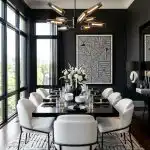

Picture this: You walk into your dining room, and instead of feeling like you stepped into a stuffy museum or your grandmother’s house (no offense to grandma), you get hit with this perfect blend of cozy meets chic.
That’s the magic of modern farmhouse dining rooms, my friend. I’ve been obsessed with this aesthetic for years now, and honestly?
I’ve spent way too many Saturday mornings rearranging furniture and second-guessing paint colors to nail that effortlessly elegant vibe.
Here’s the thing about modern farmhouse dining spaces—they manage to look both lived-in and totally put-together at the same time.
You can spill wine at dinner without having a full-blown panic attack, but your Instagram photos will still make your followers jealous.
So let’s talk about ten different ways you can transform your dining room into a modern farmhouse dream that actually feels like home.
Neutral Wood Farmhouse Dining Elegance

Let me start with what I consider the foundation of any solid farmhouse dining room: neutral wood tones. We’re talking about those gorgeous, understated wood finishes that don’t scream for attention but somehow anchor the entire space.
I recently helped my sister redesign her dining room, and we went all-in on a weathered oak table with this beautiful gray-brown finish. The grain patterns told their own story without being too rustic or distressed. You know what I mean? Not every farmhouse piece needs to look like you dragged it out of an actual barn.
Key elements for nailing this look:
- A substantial wood dining table in light to medium tones (think oak, ash, or whitewashed pine)
- Simple, clean-lined chairs that complement rather than match exactly
- Subtle texture through natural fiber elements like jute rugs or linen curtains
- Minimal metal accents in brushed nickel or matte black
- Plenty of breathing room—don’t overcrowd the space
The beauty of neutral wood is its versatility. You can dress it up with fancy dinnerware for holidays or keep it casual with everyday meals. I’ve found that a good neutral wood table becomes the chameleon of your dining room, adapting to whatever mood you’re going for that day.
Here’s a pro tip I learned the hard way: always test your wood finish in your actual lighting. That “perfect” table I saw at the store looked completely different under my dining room’s pendant lights. Natural light versus artificial light can totally change how wood tones appear, and you don’t want any surprises after delivery.
The neutral approach also means you won’t get tired of it in six months. I’ve seen too many friends go wild with trendy colors only to cringe at their choices a year later. Neutral wood gives you a timeless foundation that you can build on for years to come.
Modern Rustic White Dining Space

Okay, controversial opinion time: white dining rooms don’t have to feel cold or sterile. When you blend white with rustic elements, you create this amazing contrast that feels both fresh and warm. Trust me on this one.
I visited a friend’s house last month, and her all-white farmhouse dining room absolutely blew my mind. She paired crisp white shiplap walls with a chunky reclaimed wood table, and somehow it worked perfectly. The white brightened everything up while the rustic wood kept it from feeling like a hospital cafeteria.
What makes a white farmhouse dining room work:
- Layered whites in different textures (painted wood, plaster, linen, cotton)
- Strategic wood elements to add warmth and visual interest
- Natural materials to prevent that cold, sterile vibe
- Greenery—plants or fresh flowers make all the difference
- Warm-toned lighting to counteract any harshness
The trick with white spaces is understanding that not all whites are created equal. You’ve got warm whites, cool whites, creamy whites, stark whites—the list goes on. For a modern farmhouse look, I always lean toward warmer, creamier whites rather than those blindingly bright options. Your eyes (and your dinner guests) will thank you.
One thing I love about white dining spaces is how they make small rooms feel bigger. My dining room is pretty compact, so when I painted it a soft white and added white chairs, suddenly the whole space felt airier. It’s like interior design magic, honestly.
Ever wondered why white farmhouse dining rooms photograph so well? The light reflection creates this soft, dreamy quality that makes everything look like it belongs in a lifestyle magazine. But here’s the real question: can you actually keep it clean? (Spoiler: wipeable surfaces are your best friend.)
Black Accent Farmhouse Dining Room

Let’s talk about adding some drama, shall we? Black accents in a farmhouse dining room create instant sophistication without losing that cozy, welcoming vibe. This is where modern really meets farmhouse in the best possible way.
I added black Windsor chairs to my dining room last year, and wow, what a difference. Against my light wood table and neutral walls, those black chairs became statement pieces. They grounded the space and gave it this pulled-together look that my previous mismatched seating situation definitely lacked.
Black accent ideas that actually work:
- Matte black dining chairs paired with a light wood or white table
- Black metal light fixtures (industrial-style pendants are chef’s kiss)
- Black window frames or black-framed mirrors
- Black cabinet hardware if you have a dining hutch or buffet
- Black picture frames for a gallery wall
The beauty of black in farmhouse spaces is that it adds weight and balance. All those light, airy elements need something to anchor them, and black does the job without being overwhelming. Use black strategically—you’re adding accents, not painting the entire room like a cave.
Here’s what I’ve learned: matte black beats glossy black every single time in farmhouse design. Glossy feels too modern and slick, while matte black has this softer, more organic quality that fits the aesthetic perfectly. Plus, it hides fingerprints better (you’re welcome).
One of my favorite combinations is black metal chairs with natural woven seats. You get that modern edge from the black framework, but the woven element keeps it farmhouse-appropriate. It’s like the best of both worlds decided to have a beautiful furniture baby.
Also Read: 10 Charming Dining Room Lighting Ideas for Cozy Evenings – Airlucent
Cozy Beige Modern Farmhouse Dining

Can we just acknowledge that beige got a bad rap for way too long? Modern beige—or as the cool kids call it, “greige”—is absolutely killing it in farmhouse dining rooms right now. IMO, it’s the unsung hero of neutral colors.
Beige creates warmth without committing to any particular color story, which means you can change your decor seasonally without clashing with your walls. I painted my dining room a warm beige two years ago, and I’ve cycled through blue, green, and burgundy accent colors without any issues.
Creating a cozy beige farmhouse dining room:
- Start with warm beige or greige walls (try colors with gray-brown undertones)
- Layer in cream and ivory accents to add depth
- Incorporate natural textures like rattan, wicker, or seagrass
- Add warm wood tones in medium to dark finishes
- Include soft textiles—think cushioned seats, table runners, or curtains
The cozy factor in beige dining rooms comes from all those layers. You can’t just slap beige paint on the walls and call it done. You need to build depth through different shades, textures, and materials. I learned this lesson after my first attempt at a beige room looked completely flat and boring.
Lighting is crucial in beige spaces. Warm, ambient lighting makes beige glow in this really inviting way, while cool lighting can make it look drab. I swapped my cool LED bulbs for warm ones, and suddenly my beige dining room went from “meh” to “wow, can I just live in here?”
Here’s a personal confession: I was team white-walls-forever until I tried beige. Now? I’m a complete convert. Beige feels like a warm hug, which is exactly what I want from my dining room.
Open Concept Farmhouse Dining Area

Open concept living has basically taken over modern homes, right? Your dining room isn’t a separate entity anymore—it’s part of this flowing, multi-functional space. So how do you create a distinct farmhouse dining area without actual walls? Let me tell you, it’s totally doable.
I’ve got an open floor plan where my kitchen, dining, and living areas all blend together. At first, I struggled to make the dining zone feel like its own thing. But once I figured out the tricks, everything clicked into place.
Defining your open concept dining area:
- Use a statement light fixture directly over the dining table (this creates a visual boundary)
- Choose a substantial area rug to ground the dining space
- Maintain consistent flooring but vary your furniture styles slightly
- Create subtle separation with a console table or bench behind seating
- Keep color schemes cohesive but allow each zone its own personality
The light fixture trick is seriously game-changing. When you hang a beautiful chandelier or set of pendants over your dining table, it creates this invisible room within a room. Your eyes automatically understand that the space beneath that lighting is designated for dining.
I went with a three-pendant arrangement of black metal and glass fixtures, and honestly? Best decision ever. They define my dining area without blocking sightlines to the kitchen or living room. Open concept is all about balance—you want definition without division.
One challenge with open farmhouse dining areas is keeping the aesthetic consistent with adjoining spaces. You can’t just go full-on rustic in the dining area if your living room is sleek and modern. Find common threads (like wood tones, metal finishes, or color palettes) to tie everything together.
Ever noticed how open concept spaces feel bigger but somehow harder to decorate? Yeah, that’s because you have to think about how everything looks from multiple angles. I can see my dining area from like four different spots in my house, so every side has to look intentional.
Minimal Modern Farmhouse Dining Setup

Here’s where we strip things down to their essentials. Minimal farmhouse dining is for those of us who love the aesthetic but can’t stand clutter. (Raising my hand high on this one.)
I’m naturally a maximalist at heart, but my dining room is where I practice restraint. Too much stuff in a dining space makes it feel chaotic, and nobody wants to eat dinner in chaos. Well, maybe on Thanksgiving, but that’s different.
Achieving minimal farmhouse dining:
- Choose one statement piece—usually the table—and keep everything else simple
- Limit your color palette to 2-3 neutral shades
- Clear surfaces are your friend; resist the urge to cover every inch
- Quality over quantity with decor items
- Functional furniture only—if it doesn’t serve a purpose, it doesn’t belong
The hardest part about minimal design is knowing when to stop. I used to keep adding “just one more thing” until my minimal dining room wasn’t minimal anymore. Now I follow this rule: if something new comes in, something else goes out. It’s tough but effective.
One element I absolutely love in minimal farmhouse dining rooms is negative space. Empty wall space isn’t a problem that needs solving—it’s actually part of the design. That blank wall next to your dining table? Leave it blank. It gives your eyes a place to rest.
I keep exactly three things on my dining table when we’re not eating: a simple vase with fresh greenery, a set of wooden candlesticks, and a small ceramic bowl. That’s it. Everything else lives in my dining buffet, out of sight until I need it. The visual calm this creates is worth the extra effort of putting things away.
Also Read: 10 Spectacular Kitchen and Dining Room Ideas for Elegant Homes – Airlucent
Rustic Wood Beam Dining Room Style

Can we talk about exposed wood beams for a second? Because there’s something absolutely magical about them that elevates a farmhouse dining room from “nice” to “holy cow, I want to live here.” FYI, you don’t need an actual historic farmhouse to pull this off.
My cousin installed faux beams in her dining room ceiling, and I literally couldn’t tell they weren’t original structural beams. The technology for realistic wood beams has come so far that you can achieve this look without major renovation or structural changes.
Wood beam dining room essentials:
- Ceiling beams (real or faux) in natural wood or stained finishes
- Keep the rest of the ceiling simple—usually white or light neutral
- Balance heavy beams with lighter furniture to avoid a dark, cave-like feeling
- Use vertical elements (tall chairs, floor plants) to draw the eye upward
- Add lighting between beams to highlight the architectural detail
The key with wood beams is not going overboard. I’ve seen dining rooms with beams on the ceiling AND wood walls AND dark wood furniture, and it’s just too much. You want those beams to be the star of the show, which means everything else needs to play a supporting role.
I always recommend staining beams 2-3 shades darker than your dining table for contrast. If everything’s the same wood tone, nothing stands out. But when your beams are richer and darker, they create this beautiful canopy effect over your dining space.
Here’s a thought: wood beams make low ceilings feel purposefully cozy rather than just cramped. My dining room has 8-foot ceilings (not exactly grand), but the beams make it feel intentionally intimate instead of accidentally small. Perspective is everything.
One warning though—dust collects on those beams like you wouldn’t believe. I learned this at my friend’s house when I looked up and saw a literal dust bunny highway running across her beautiful beams.
Elegant Cottage Farmhouse Dining Look

Sometimes you want farmhouse vibes with a softer, more refined edge. That’s where cottage farmhouse style comes in, blending rustic elements with elegant, almost romantic touches. This is my personal favorite approach because it feels less rugged and more refined.
Think of this as farmhouse’s prettier cousin who went to finishing school. You keep all the warmth and charm but add touches of sophistication that make everything feel a bit more special.
Elements of elegant cottage farmhouse dining:
- Painted furniture in soft colors (sage green, dusty blue, creamy white)
- Mix of wood and upholstered seating for comfort and style
- Delicate lighting fixtures (crystal chandeliers or glass pendants)
- Floral or botanical elements—fresh flowers are non-negotiable
- Vintage-inspired accessories with patina and character
- Soft, flowing textiles like linen curtains or table runners
I incorporated cottage farmhouse style in my parents’ dining room renovation, and the transformation was stunning. We painted an old oak table a soft sage green, paired it with cream upholstered chairs, and added a vintage-style chandelier. The combination felt elegant without being stuffy.
The magic is in the mix. You’re balancing rustic with refined, old with new, casual with dressy. A weathered wood buffet looks amazing topped with elegant candlesticks and a fresh flower arrangement. See what I’m saying?
Color plays a huge role in cottage farmhouse dining. Instead of stark whites and deep blacks, you’re working with softer, more muted tones. Dusty rose, powder blue, sage green, warm cream—these colors create a gentler, more romantic atmosphere.
One element I absolutely insist on for this style is good china or pretty dishware on display. Whether it’s in a glass-front cabinet or on open shelving, showing off beautiful dishes adds to that cottage elegance. Bonus points if they’re vintage or have a story behind them.
Warm Earth Tone Dining Room Design

Let’s bring it back to nature with warm earth tones that make your dining room feel grounded and organic. We’re talking browns, terracottas, warm grays, olive greens—basically, colors you’d find on a walk through the woods or a pottery studio.
I shifted to earth tones in my dining room last fall, and I swear it changed my entire relationship with the space. Something about those natural colors makes everything feel more peaceful and connected. Maybe I’m being dramatic, but I genuinely feel calmer eating dinner surrounded by earth tones.
Building a warm earth tone palette:
- Start with a terracotta or warm brown as your anchor color
- Layer in olive green, rust, ochre, and warm gray
- Incorporate natural materials (clay pots, ceramic dishware, stone elements)
- Choose wood in medium to warm tones
- Add plants—lots of plants—to reinforce the natural theme
The beauty of earth tones is how forgiving they are. Unlike bright whites that show every mark, earth tones hide imperfections and age beautifully. That terracotta wall I painted? The couple of scuffs it’s gotten over the months actually add to its character rather than detracting from it.
I love mixing different earth tones in varying intensities. Maybe your walls are a soft warm gray, your dining chairs are olive green, and your table runner is terracotta. These colors were literally made to work together—nature already did the hard work of creating a cohesive palette.
Here’s something I discovered: earth tones change beautifully throughout the day as natural light shifts. Morning light makes them feel fresh and energizing, while evening light makes them feel cozy and intimate. It’s like having two different dining rooms in one.
One tip for earth tone dining rooms—don’t skip the greenery. Living plants in earth tone spaces create this incredible connection to nature that completes the whole vibe. I’ve got a fiddle leaf fig in the corner and pothos trailing from a shelf, and they tie the entire earth tone scheme together.
Also Read: 10 Fabulous Boho Dining Room Decor Natural Decor Inspiration – Airlucent
Modern Farmhouse Dining with Bench Seating

Let’s end with one of the most practical and stylish trends in farmhouse dining: bench seating. I resisted this for years because I thought benches were just for kids’ tables or picnic areas. Boy, was I wrong.
Bench seating in modern farmhouse dining rooms is having a major moment, and for good reason. It’s casual, space-efficient, and creates this relaxed, family-style vibe that’s perfect for the farmhouse aesthetic.
Why bench seating works:
- Maximizes seating capacity—you can squeeze more people onto a bench than individual chairs
- Creates visual interest with mixed seating arrangements
- More casual and inviting than all chairs
- Often more budget-friendly than buying 6-8 chairs
- Easier to clean under and around
- Perfect for families with kids (easier to slide in and out)
I finally added a bench to one side of my dining table last year, and it completely changed the room’s dynamic. The bench side feels relaxed and communal, while the chair side offers traditional comfort. Best of both worlds, honestly.
The trick is balancing the bench with other elements. I paired my rustic wood bench with upholstered chairs on the opposite side and at the heads of the table. This mix of textures and styles screams modern farmhouse while keeping everything functional.
Here’s what nobody tells you about bench seating: cushions are essential for comfort. A bare wood bench looks great but feels terrible after more than 20 minutes. I made a simple cushion in a natural linen fabric, and suddenly the bench became everyone’s favorite seat.
Bench placement matters too. I put mine on the side facing the windows, which means people sitting there get natural light and a view. The chair side faces the wall, which is less desirable anyway. Think about sightlines and traffic flow when you’re deciding where to place your bench.
One last thing—bench seating under windows with open storage underneath is absolutely genius. You get seating, storage, and style all in one piece. I built a simple bench with open cubbies underneath for table linens and seasonal decor, and it’s become one of the most functional pieces in my house.
Wrapping It All Up
So there you have it—ten different approaches to creating that perfect modern farmhouse dining room vibe.
Whether you’re Team Minimal or Team Cottage Elegance, the farmhouse aesthetic offers enough flexibility to match your personal style while keeping things warm and welcoming.
What I love most about modern farmhouse dining rooms is how they balance beauty with livability. These aren’t showroom spaces that you’re afraid to use.
They’re real dining rooms for real life—places where you can host Thanksgiving chaos, eat Tuesday night takeout, or help kids with homework without worrying about perfection.
My biggest advice? Start with one element that really speaks to you—maybe it’s those rustic wood beams or a gorgeous earth tone palette—and build from there. You don’t need to nail the entire look overnight. I’ve been tweaking my dining room for three years, and I’m still not “done” (does anyone ever finish decorating?).
Remember that your dining room should reflect how you actually live, not just how pretty rooms look on Pinterest. That bench seating might be gorgeous, but if you hate it, stick with chairs. Those black accents might be trending, but if you prefer all-white, do that instead.
The best modern farmhouse dining room is the one where you actually want to sit down, linger over coffee, and enjoy meals with people you love. Everything else is just details, my friend. Now go create that dining room of your dreams—and maybe send me pictures when you’re done?