
So, you finally got yourself an L-shape sofa — or you’re seriously thinking about it — and now you’re staring at your living room like it’s a puzzle you have no idea how to solve.
Trust me, I’ve been there. That glorious, oversized, corner-hugging beast of a sofa looks incredible in the showroom, but the moment you try to picture it in your actual living room, your brain just… short-circuits.
Here’s the good news: an L-shape sofa is one of the most versatile pieces of furniture you can own. You just need to know how to use it properly.
And that’s exactly what we’re going to talk about today — 10 genuinely creative L-shape sofa living room arrangements that actually work in the real world.
Whether you’re working with a tiny apartment, a sprawling open-concept space, or something in between, I’ve got a layout and style idea that’ll make you want to rearrange your living room this very weekend. Let’s get into it.
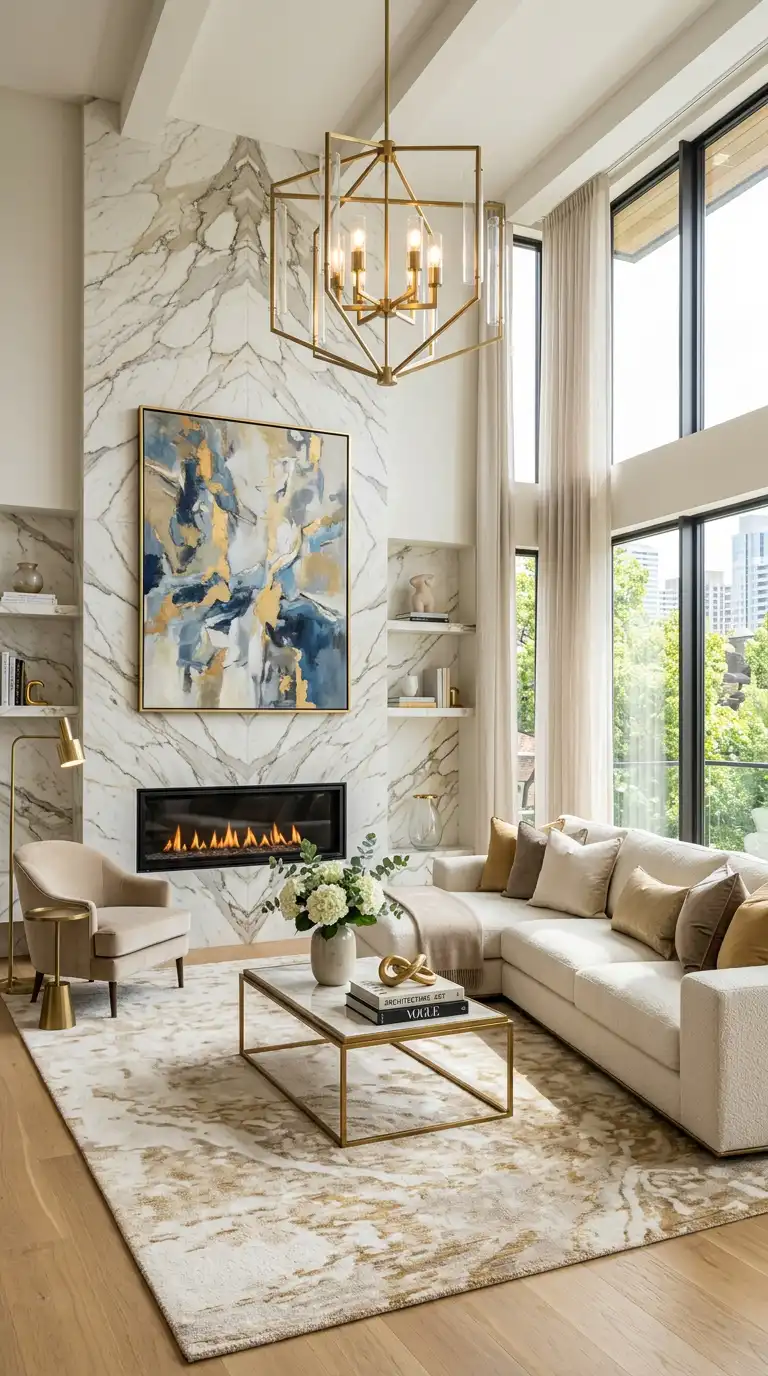
Modern Neutral L Shape Sofa Retreat

The Philosophy Behind the Look
There’s something almost meditative about a well-executed neutral living room. When you strip away all the visual noise — the clashing colors, the over-decorated shelves, the random throw pillows that match absolutely nothing — what you’re left with is a space that actually lets you breathe.
A modern neutral L-shape sofa retreat is built on restraint. Think creamy whites, warm taupes, soft greys, and sandy beige tones working together in harmony.
The L-shape sofa itself — ideally in a light linen or bouclé fabric — becomes the undisputed anchor of the room.
How to Arrange It
Here’s how to nail this layout:
- Position your L-shape sofa along one corner wall, leaving the longer arm pointing toward the center of the room.
- Place a low-profile rectangular coffee table in travertine, light oak, or white marble directly in front of the sofa.
- Add a single accent chair in a complementary neutral tone across from the shorter arm of the sofa.
- Layer a textured area rug in ivory or warm cream beneath the entire seating arrangement.
The key to making this work is texture layering. Since you’re working with a limited color palette, you need variety in materials — think ribbed cushions, a chunky knit throw, a woven rug, and a smooth stone coffee table. These contrasts keep the room from looking flat or boring.
The Finishing Touches
Keep your walls clean — a single oversized abstract piece of art in muted tones does wonders here.
Add a floor lamp with a linen shade, a couple of ceramic vases, and some dried pampas grass, and you’ve officially created a retreat. IMO, this is one of the easiest arrangements to pull off because neutral tones are incredibly forgiving.
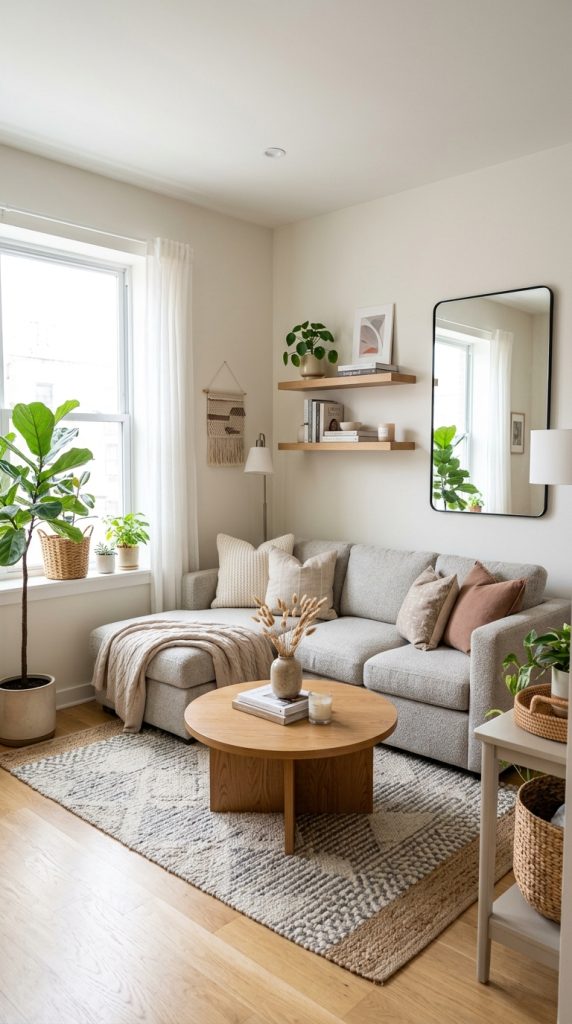
Small Apartment Sectional Layout
Making the Most of Limited Space
Okay, let’s address the elephant — or rather, the oversized sofa — in the room. A lot of people assume L-shape sofas are strictly for big living rooms. That’s absolutely not true, and I will die on this hill.
The secret is choosing the right size sectional. A compact L-shape sofa (think 220–250cm per arm) can actually work brilliantly in a small apartment because it maximizes seating without requiring multiple separate pieces of furniture.
The Smart Layout Strategy
Here’s what actually works in a small apartment:
- Push one arm of the sofa flush against the longest wall to free up floor space.
- Use the corner of the sofa to act as a natural room divider if your apartment is an open-plan studio — this creates visual zones without needing walls.
- Skip the oversized coffee table. Go for a small round ottoman or two nesting tables instead. They’re easier to move and don’t crowd the space.
- Choose a sofa in a light or mid-tone color — it’ll visually expand the room far better than a dark-colored sectional.
Storage and Multifunctionality
In a small apartment, every piece of furniture needs to work hard. Look for L-shape sofas with built-in storage compartments in the chaise section — they’re perfect for stashing blankets, pillows, or whatever else you need to hide when guests come over.
Wall-mounted shelves above the sofa keep the floor clear while giving you storage and display space.
Every square meter counts here, so be ruthless about what you place in the room.
Luxury Marble Accent Living Room

When You Want to Live Like You’re in a Design Magazine
Ever walked into a living room and immediately felt like you needed to take your shoes off out of pure respect? That’s the energy a luxury marble accent living room delivers.
And when you pair it with a plush, deep-seated L-shape sofa, you’ve got something genuinely special.
This arrangement is all about contrast and opulence. A velvet or premium fabric sofa in charcoal, deep navy, or rich emerald green works beautifully against white or grey marble accents.
Building the Arrangement
- Center your L-shape sofa in the room, floating it away from the walls to give the space a grander, more considered feel.
- Place a marble coffee table — waterfall edge or round pedestal style — as the centerpiece.
- Add a marble side table to the shorter arm of the sofa for drinks, a candle, or a small lamp.
- Incorporate a large, plush area rug in a deep tone — navy, forest green, or warm charcoal — to ground the floating furniture arrangement.
Lighting Makes or Breaks This Look
Don’t cheap out on lighting here. A statement pendant light above the coffee table area, combined with two sculptural floor lamps flanking the sofa, creates a layered lighting effect that makes the marble accents literally glow.
This arrangement screams luxury, but it’s more achievable than you think.
You don’t need actual marble — high-quality marble-effect porcelain tiles or even a marble-look table from a mid-range retailer gets you 90% of the way there.
Also Read: 10 Spectacular Accent Walls in Living Room Contemporary Charm – Airlucent
Cozy Farmhouse Corner Sofa Setup
Southern Comfort Meets Stylish Design
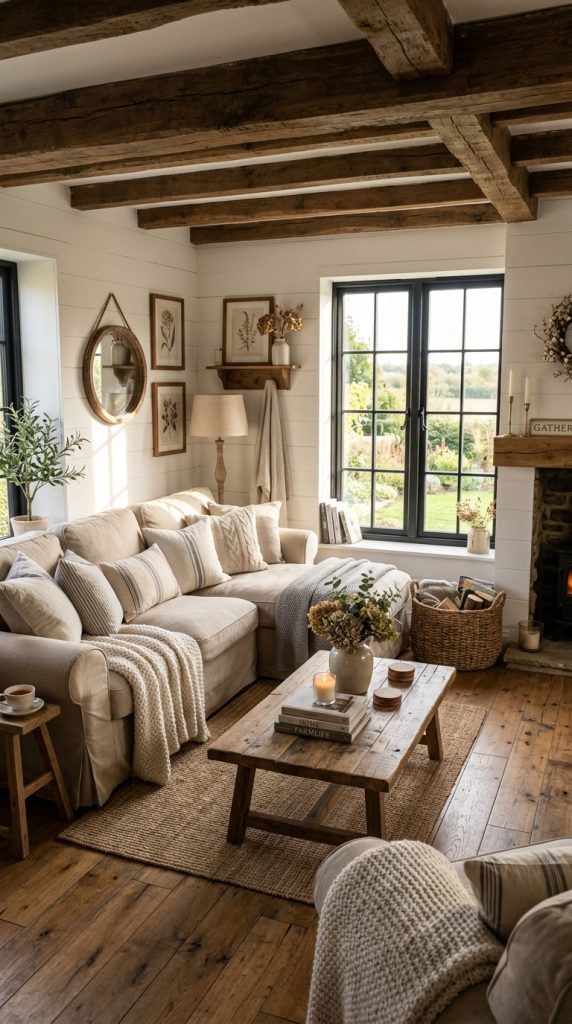
If neutral modern is meditation, farmhouse is a warm hug. A cozy farmhouse living room arrangement celebrates comfort above everything else, and the L-shape sofa is basically the living embodiment of that philosophy.
Think shiplap walls, exposed wood beams, vintage-inspired décor, and a sofa that looks like it was designed specifically for Sunday afternoon naps. Which, honestly, it should be.
The Layout
- Tuck your L-shape sofa into the corner of the room with both arms touching the walls — this maximizes floor space and gives the room a snug, intentional feel.
- Use a solid wood farmhouse-style coffee table, ideally with some character — knots, grain variation, a slightly weathered finish.
- Layer multiple throw blankets in plaids, herringbone, and solid textures across the sofa. Yes, multiple. More is more here.
- Add a woven jute rug underneath the arrangement for that classic farmhouse grounding element.
Accessories That Seal the Deal
Farmhouse style lives and dies by its accessories. Think:
- Mason jar vases with wildflowers or cotton stems
- Lantern-style candle holders on the coffee table
- Wooden trays for organizing books and remotes
- Chunky knit cushion covers in cream and rust tones
The beauty of this setup is that it’s incredibly forgiving. Farmhouse style is meant to look lived-in and comfortable, so you don’t need to stress about perfection. FYI — that’s not permission to be lazy, just permission to relax.
Japandi L Shape Sofa Sanctuary
The Aesthetic That’s Taking Over the Internet (For Good Reason)
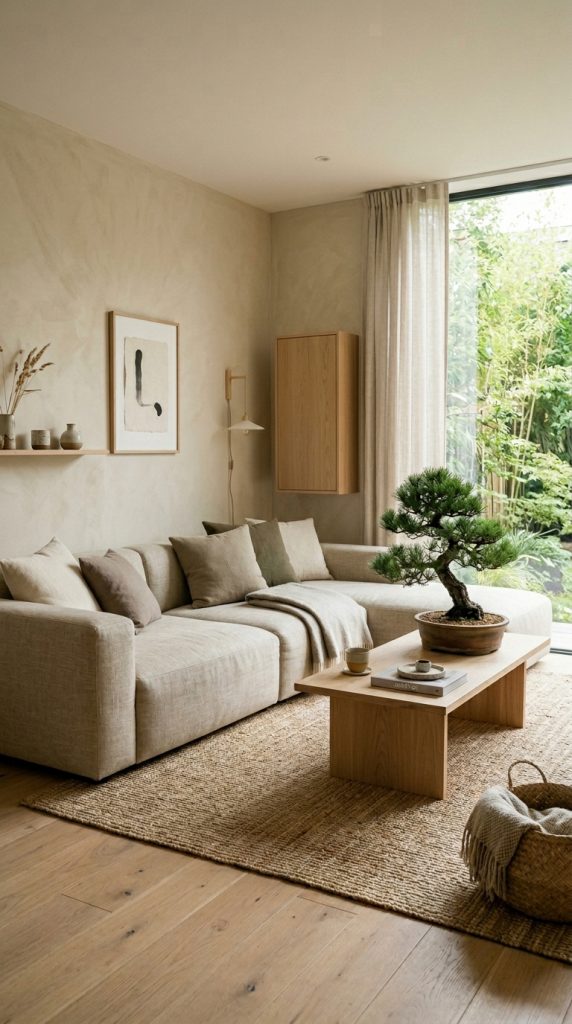
Japandi is the design lovechild of Japanese minimalism and Scandinavian functionality, and honestly, it might be the most satisfying aesthetic to live with day to day. It’s calm, purposeful, and free of anything that doesn’t earn its place in the room.
For an L-shape sofa, Japandi is a genuinely perfect match. The clean lines of a sectional sofa align beautifully with this aesthetic’s core principles.
Nailing the Japandi Layout
- Choose a low-profile L-shape sofa in a natural linen or cotton blend — keep the color in the warm neutral zone (sand, stone, clay).
- Float the sofa slightly away from the wall and align it with the room’s natural architectural lines.
- Use a low Japanese-style coffee table in solid light oak or walnut — simple, clean, no fuss.
- Leave deliberate negative space in the room. The empty corners and bare patches of wall are not mistakes — they’re features.
Plants and Natural Elements
Japandi practically demands the inclusion of natural elements. A single large fiddle-leaf fig or monstera plant in a handmade ceramic pot adds life without clutter.
Opt for natural wood, bamboo, rattan, or washi paper accents throughout.
Keep décor minimal — three carefully chosen objects on the coffee table beat thirty random items on every surface. Quality always wins over quantity in Japandi.
Contemporary Open Concept Lounge
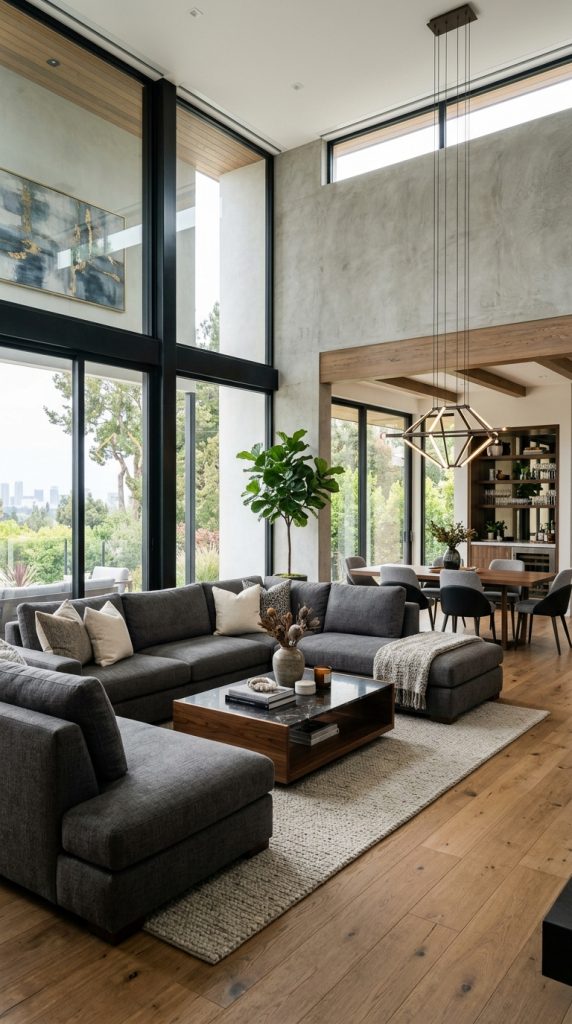
The Challenge of Open-Plan Living
Open concept living rooms are gorgeous — right up until you realize you have no idea where one zone ends and another begins. Without walls to guide you, everything can feel like one big undifferentiated blob of space. Sound familiar?
This is where the L-shape sofa becomes your best friend. Its unique shape allows it to define and anchor a seating zone within a larger open space without requiring any physical dividers.
Creating Visual Zones
Here’s the trick:
- Position the back of the L-shape sofa’s longer arm toward the kitchen or dining area — this creates an invisible boundary between zones.
- Use a large area rug to further define the living zone. The rug should be big enough that all sofa legs sit on it.
- Add a media console or TV unit directly facing the sofa to anchor the entertainment zone.
- Place a couple of bar-height stools or a console table behind the sofa — this fills the gap between zones elegantly.
Cohesive Design Across Zones
In an open concept space, your living room arrangement doesn’t exist in isolation — it has to talk to the kitchen and dining area.
Use a consistent color palette across all zones to create visual coherence.
If your sofa is in warm beige, carry that warmth into your dining chairs or kitchen accessories. It ties the whole space together without making everything look identical.
Also Read: 10 Gorgeous Couches Living Room Aesthetic Decor Ideas – Airlucent
Earth Tone Family Living Space

Designing for Real Life
Here’s the thing about “family living rooms” — they have to actually work for a family. That means accounting for kids, pets, movie nights, homework sessions, and the inevitable Saturday afternoon where everyone just piles onto the sofa and watches something ridiculous together.
Earth tones are perfect for family spaces because they’re warm, welcoming, and incredibly good at hiding the occasional juice spill. Think terracotta, burnt orange, warm brown, olive green, and deep rust tones.
The Family-Friendly Layout
- Choose an L-shape sofa in a performance fabric — something durable and easy to clean. Bouclé looks beautiful but it’s high-maintenance. Consider a stain-resistant velvet or microfibre in a warm clay or chocolate tone.
- Position the sofa centrally, facing the TV wall, with the chaise section angled toward the secondary seating area.
- Add a large, durable ottoman as a coffee table — it doubles as extra seating and soft landing for little feet.
- Use a low-pile, patterned rug in earthy tones underneath. Patterned rugs are strategic — they hide mess better than plain ones. True story.
Making It Functional AND Beautiful
Family spaces don’t have to look chaotic. Use stylish storage baskets in woven rattan or seagrass to hide toys, remotes, and blankets.
Add floating shelves above the sofa for books, plants, and family photos.
Keep the color palette warm and the materials robust, and you’ll have a room that looks great in photos and holds up to real family life.
Minimalist Black and Beige Sectional Room
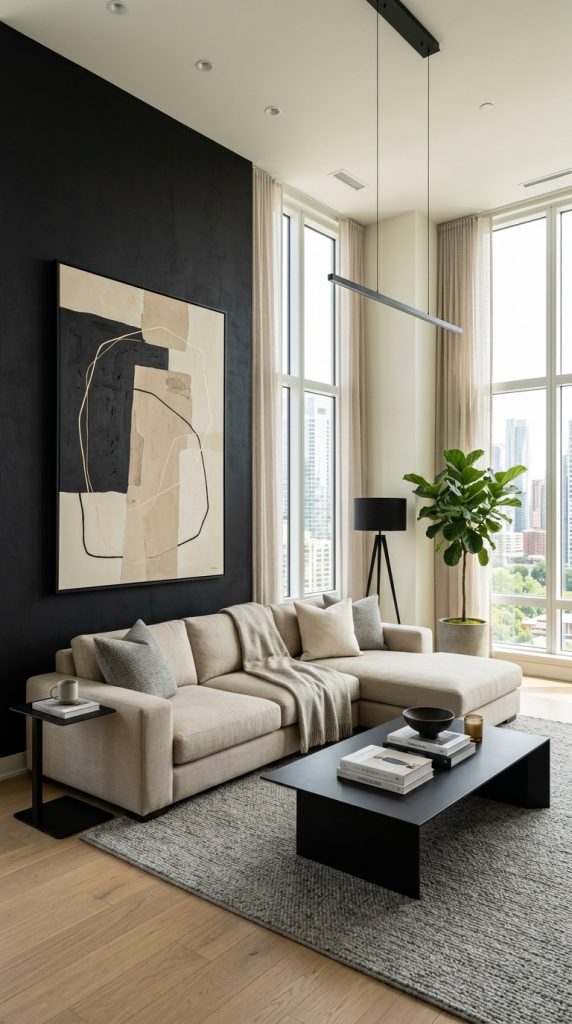
The Power of Just Two Colors
Some people think minimalism means boring. Those people are wrong. A black and beige living room done well is one of the most striking, sophisticated arrangements you can create — and the L-shape sofa is the perfect vehicle for it.
This palette is bold in its simplicity. The contrast between deep, grounding black and soft, airy beige creates a visual tension that’s incredibly satisfying to look at.
Executing the Layout
- Choose a black or charcoal L-shape sofa as the dominant piece in the room — it becomes the dramatic focal point.
- Layer beige and off-white cushions across the sofa to soften the look and add warmth.
- Use a beige or cream area rug beneath the sofa to ground the arrangement and balance the dark tones.
- Add black metal accents — lamp bases, shelf frames, curtain rods — to tie the sofa’s color into the broader room.
Avoiding the “Cave” Effect
The biggest risk with a black sofa in a minimalist room is that it makes the space feel dark and heavy. Here’s how to avoid that:
- Maximize natural light — keep window treatments sheer or minimal.
- Use warm-toned beige rather than cool grey as your secondary color — it prevents the room from feeling cold.
- Incorporate a single large mirror to bounce light around the space.
- Add a tall, leafy plant to bring organic warmth into the sharp contrast palette.
Coastal Blue L Shape Sofa Haven
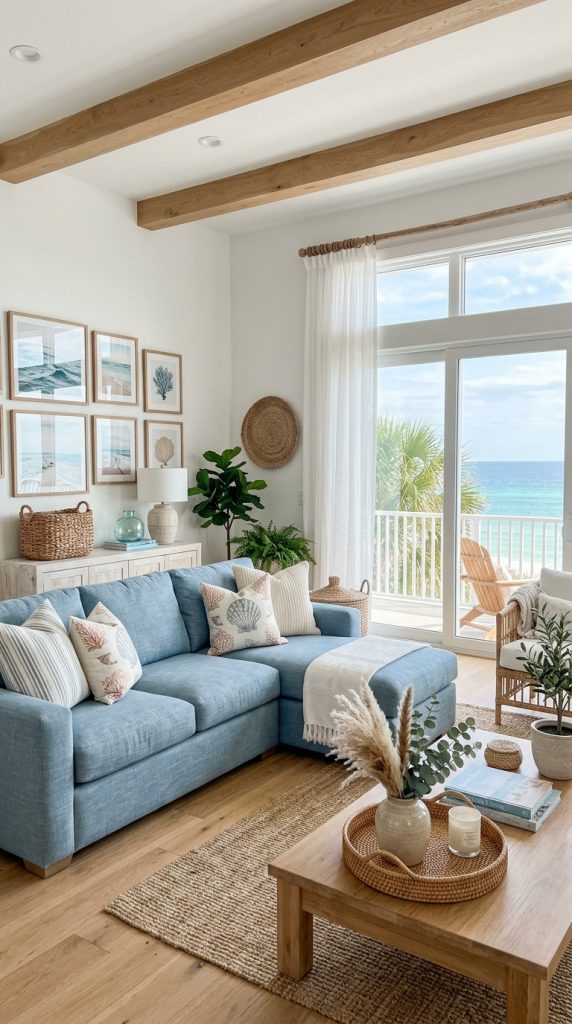
Bringing the Beach to Your Living Room
You don’t need to live oceanfront to bring coastal vibes into your home. A coastal blue L-shape sofa arrangement does exactly that — it delivers that relaxed, breezy, holiday-at-the-beach feeling all year round.
The palette here works around soft blues, sandy neutrals, crisp whites, and natural textures. Think driftwood, linen, woven jute, and sea glass — materials that feel like they belong near the water.
The Layout
- Position your blue L-shape sofa — in navy, sky blue, teal, or dusty blue — with the chaise toward the room’s main window to capture natural light.
- Use a whitewashed or light oak coffee table to keep the beachy, effortless feel.
- Layer a striped jute or sisal rug in navy and cream beneath the arrangement.
- Add woven rattan accents — a basket, a side table, a pendant lampshade — for that natural coastal texture.
Color Balance Is Everything
The blue sofa is the star, so let it shine. Keep surrounding colors light and neutral — too many competing colors will make the room feel chaotic rather than coastal.
White walls work brilliantly here. Add hints of coral, sea green, or sandy beige in your cushions and accessories for visual interest.
And yes — a piece of driftwood or a bowl of shells on the coffee table is completely acceptable. No judgment here. (Okay, just a little judgment if you go overboard with the nautical anchors.)
Also Read: 10 Perfect Earthy Living Room Organic Home Ideas – Airlucent
Elegant TV Wall and Sectional Design

When the TV Wall and Sofa Work Together
Let’s be honest — most of us build our living rooms around the TV wall whether we admit it or not. The key is to make it look intentional rather than accidental.
An elegant TV wall and sectional design turns that relationship into an architectural feature. The L-shape sofa becomes a perfectly calibrated viewing platform, and the TV wall becomes a genuine design statement.
Designing the TV Wall
A great TV wall in this context includes:
- A full-width built-in media unit in painted MDF, oak veneer, or a mix of both — with closed cabinets below and open shelving above.
- Integrated LED strip lighting behind the TV panel for ambient backlighting.
- A floating TV at optimal eye-level height, measured from sofa seated position — not standing.
- Symmetrical decorative elements on either side of the TV — matching vases, stacked books, or small sculptures.
The Sofa Arrangement
- Position the L-shape sofa directly facing the TV wall, with the chaise extending to the side — never pointing away from the screen.
- Calculate your viewing distance carefully — for most TVs in the 55–75 inch range, the sofa should sit 2.5–3.5 meters away from the screen.
- Add a round or oval coffee table between the sofa and TV wall to soften the geometric layout.
- Use matching side tables and lamps on both ends of the sofa for symmetry and visual elegance.
The Details That Elevate This Look
The difference between a nice TV room and an elegant one is in the details. Cable management is non-negotiable — visible cables kill the look immediately.
Use in-wall cable channels or a media unit with integrated cable routing.
Add dimmable overhead lighting so you can adjust the ambiance for movie nights versus daytime lounging.
And please — put some actual books and interesting objects on those shelves, not just the TV box and a random candle.
Final Thoughts: Your L Shape Sofa, Your Rules
Here’s what I want you to take away from all of this: there’s no single “correct” way to arrange an L-shape sofa.
What works brilliantly in a Japandi sanctuary might look completely out of place in a cozy farmhouse setup.
The ten arrangements we’ve covered here give you a seriously wide range of inspiration to pull from — whether you’re starting from scratch or just rethinking what you already have.
The biggest mistakes people make with L-shape sofas?
- Pushing it against the wall when floating it would work better
- Choosing a size that overwhelms the room (or underwhelms it)
- Ignoring the rug — the right rug pulls everything together, always
- Not thinking about traffic flow — you need to be able to move around the sofa comfortably
Start with the arrangement that resonates most with your existing style and space. You don’t need to overhaul everything at once.
Sometimes just repositioning your sofa, swapping out a rug, or adding the right throw blanket can transform how a room feels completely.
And honestly? The best living room is the one that actually fits your life — not some perfectly curated version of it from a design magazine.
So take these ideas, make them your own, and create a space you genuinely want to spend time in. That’s the whole point, isn’t it?
Now go move some furniture.


