Hi, I’m Nathan. I’ve worked as an HVAC technician for over 10 years, and I’ve spent a lot of time in homes that either don’t have air conditioning, can’t run it (cost), or temporarily lose it (breakdowns, power outages). The good news is you can make a house feel dramatically cooler without AC if you use airflow, shading, and moisture control the right way.
I’m going to walk you through the same practical steps I recommend to homeowners in the field, including one fan trick that beats what most people do.
- Why heat feels worse at night (and why sleep suffers)
- The 2-window fan setup (my go-to for bedrooms)
- Daytime strategy: stop heat from entering in the first place
- Use fans the way HVAC airflow works (not the way most people guess)
- Pull heat out fast: kitchen and bathroom exhaust fans
- Reduce indoor heat sources (this is bigger than people think)
- Humidity control: the hidden lever for comfort
- Fast cooling hacks (what works, what’s hype)
- Room-by-room priorities
- A simple “cooling schedule” you can follow today
- Safety notes I tell every homeowner
- Long-term upgrades that make the biggest difference (without “full AC”)
- Frequently asked questions
- My bottom-line recommendation
Why heat feels worse at night (and why sleep suffers)
Heat and sleep don’t mix for a real biological reason. As you fall asleep, your body naturally lowers its core temperature and stays a bit cooler until morning. When the room stays hot, that cooling process gets disrupted, which often means lighter sleep and more wake-ups.
A useful target most people feel comfortable sleeping in is roughly 60 to 67°F in the bedroom, which is why hot nights feel so brutal. Even if you can’t hit those numbers without AC, you can still make a big difference by improving airflow and blocking heat gain during the day.
The 2-window fan setup (my go-to for bedrooms)
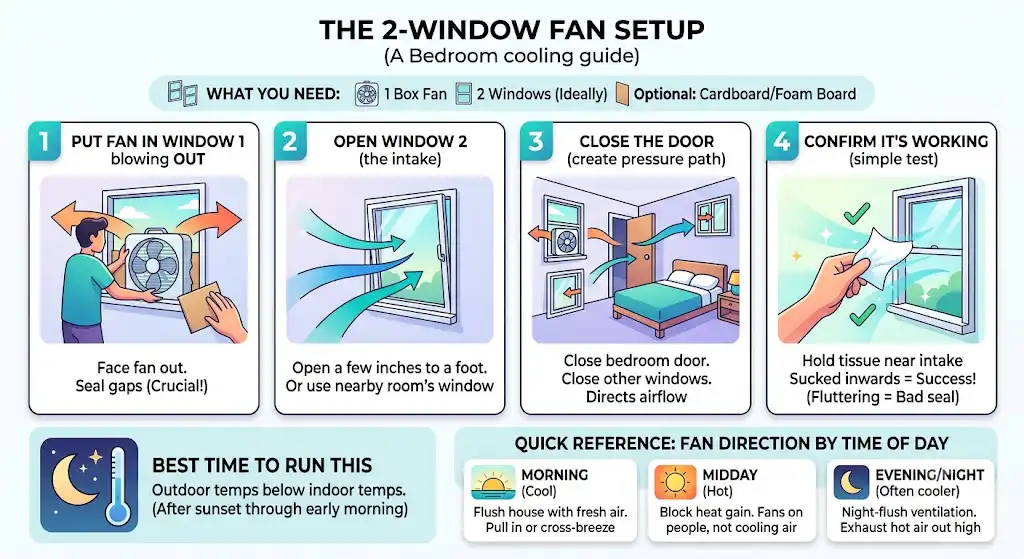
What you need
- 1 box fan (or strong window fan)
- 2 windows (best case) or 1 window plus a nearby room/window
- Optional: cardboard, poster board, or foam board to seal gaps
Step 1: Put the fan in Window 1 blowing OUT
- Face the fan so it blows air out of the room
- Try to seal the remaining open space around the fan (this matters more than most people think)
If there’s open space above or beside the fan, the fan can short-circuit and pull air right back in. A quick cardboard panel makes a noticeable difference.
Step 2: Open Window 2 (the “intake”)
- Open a second window in the same room a few inches to a foot
- If the room only has one window, put the exhaust fan in a nearby room/window and open the target room’s window
Step 3: Close the door (create a pressure path)
To get that strong “cool air streaming in” feeling, you need to reduce random airflow.
- Close the bedroom door
- Close other windows that aren’t part of the airflow path
This is the part most people skip, and it’s why they think the trick doesn’t work.
Step 4: Confirm it’s working (simple test)
Hold a tissue or a thin piece of paper near the intake window:
- If it gets pulled inward steadily, your setup is working.
- If it flutters both ways, you’ve got competing openings or the exhaust window isn’t sealed well.
Best time to run this
Use this setup when outdoor temps drop below indoor temps. In many climates that’s after sunset through early morning.
Quick reference: fan direction by time of day
| Morning (cool) | Cooler than inside | Flush the house with fresh air | Pull air in or exhaust out (cross-breeze) |
| Midday (hot) | Hotter than inside | Block heat gain | Fans on people, not for “cooling air” |
| Evening/night | Often cooler | Night-flush ventilation | Exhaust hot air out of a high window |
Daytime strategy: stop heat from entering in the first place
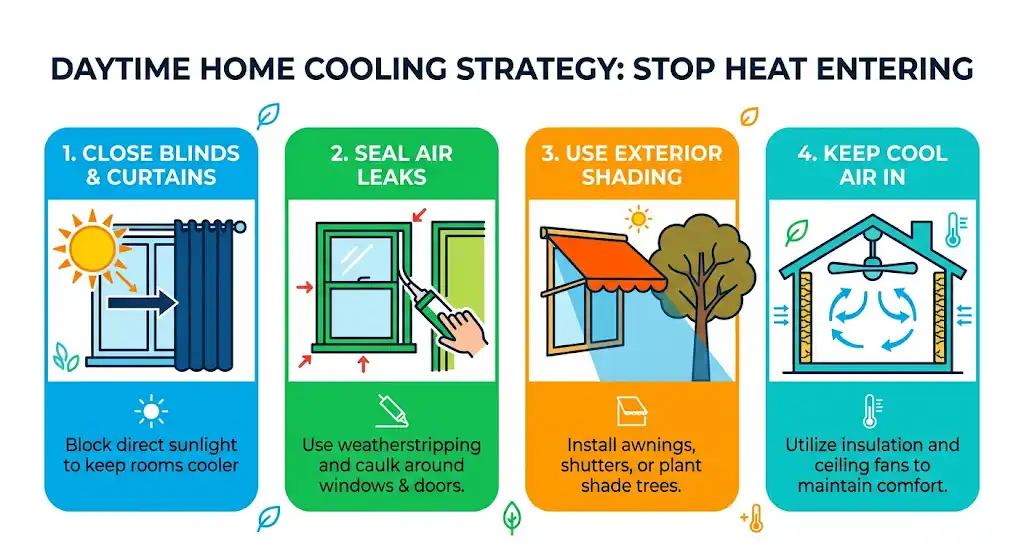
Cooling without AC is much easier if you prevent heat buildup from 10 a.m. to 6 p.m.
1. Close blinds and curtains on the sunny side
Sunlight through glass is basically a space heater. Closing coverings is one of the cheapest, fastest wins.
What I tell homeowners:
- Close east-facing coverings in the morning
- Close south and west-facing coverings midday through sunset
- If you can, use blackout curtains or reflective shades
Even simple shading can noticeably reduce indoor temperature rise.
2. Seal air leaks (yes, even in summer)
Air sealing isn’t only for winter. Hot outdoor air leaking in makes the whole house harder to keep comfortable.
Common leak spots I find on service calls:
- Door weatherstripping that’s flattened or missing
- Window gaps and loose locks
- Attic hatch covers with no gasket
- Recessed light openings into attic cavities
If you feel your house swings to extremes (too hot in summer, too cold in winter), a basic air-sealing and insulation upgrade often pays off in comfort more than people expect.
3. Use exterior shading if possible
Exterior shading works better than interior shading because it stops the sun before it hits the glass.
High-impact options:
- Awnings on west-facing windows
- Shade sails or pergolas over a sunny patio door
- Solar screens
- Trees or tall shrubs (strategically placed)
Use fans the way HVAC airflow works (not the way most people guess)
Fans cool people, not rooms
A fan doesn’t lower the room temperature. It increases evaporation at your skin, so you feel cooler.
Many people feel about 3 to 5°F cooler with direct airflow, depending on humidity and sweat evaporation.
Ceiling fan direction (summer setting)
Set ceiling fans to spin counterclockwise (when you’re looking up). That pushes air down and creates the strongest wind-chill effect.
Window fan placement tips that actually matter
- Put the exhaust fan in the hottest room or highest window (heat rises)
- Pull cooler air from the shaded side of the house
- For a 2-story home, exhaust upstairs and bring air in downstairs for a natural chimney effect
Pull heat out fast: kitchen and bathroom exhaust fans
If your bathroom fan vents properly outdoors (not into the attic), it’s an underrated cooling tool.
Use exhaust fans:
- During showers (humidity makes heat feel worse)
- When cooking indoors
- In the evening while doing your night-flush setup
Think of exhaust fans as “spot ventilation” that removes heat and moisture before it spreads through the house.
Reduce indoor heat sources (this is bigger than people think)
I’ve walked into plenty of homes where the outdoor temperature isn’t extreme, but the indoor heat load is high because of cooking, drying, and lighting.
1. Avoid the oven and stove during peak heat
Cooking can dump a surprising amount of heat into a home.
Try:
- Grill outside
- Microwave or air fryer (still heat, but usually less than a full oven)
- Slow cooker in a shaded area or garage with door open (only if safe and ventilated)
- No-cook meals (salads, sandwiches) on the hottest days
2. Run “hot” appliances at night
- Dishwasher
- Clothes washer
- Clothes dryer (best avoided if you can)
If you can line-dry, you cut both heat and humidity indoors.
3. Switch to LED bulbs
Incandescent bulbs waste a lot of energy as heat. LEDs run much cooler and reduce heat buildup, especially in small rooms.
Humidity control: the hidden lever for comfort
If you live anywhere humid, you already know the same temperature can feel totally different depending on moisture in the air.
When a dehumidifier helps
A dehumidifier won’t “make cold air,” but it can make the house feel significantly more comfortable by lowering indoor humidity.
Practical HVAC targets:
- Many homes feel best around 40 to 55% relative humidity
- If you’re consistently above that, a dehumidifier can help comfort and reduce that sticky feeling
Tip from the field: keep doors closed to the most humid rooms when dehumidifying, so you aren’t trying to dry the entire house at once.
Fast cooling hacks (what works, what’s hype)
DIY “ice fan” setup
Putting a bowl of ice in front of a fan can give you a short-lived cool breeze right in front of the fan. It won’t cool the whole house, but it can make a bedroom or couch spot more tolerable.
Works best:
- In dry climates
- When you’re sitting close to the fan
Cold sheets and bedding changes
If you’re overheating at night, your bedding can trap heat.
What I recommend:
- Cotton or linen sheets (more breathable)
- Lighter blanket
- Consider a cooling mattress topper if your mattress sleeps hot
A simple trick: put your top sheet or pillowcase in a sealed bag in the freezer for 20 to 30 minutes before bed. It’s not magic, but it can help you fall asleep faster.
Room-by-room priorities
Bedroom (sleep is the goal)
- Block sun all day (especially west window)
- Night-flush with the exhaust fan method
- Fan blowing across you, not just into the room
- Lighter bedding and hydrated body
Upstairs rooms (where heat collects)
- Exhaust hot air out an upstairs window in the evening
- Keep doors closed during the day if that room bakes in sun
- Consider reflective window film for problem windows
Kitchen
- Use exhaust hood fan when cooking
- Avoid oven at peak heat
- Run dishwasher at night
A simple “cooling schedule” you can follow today
| 6 a.m. to 9 a.m. | Open windows, create cross-breeze, flush heat out |
| 9 a.m. to 6 p.m. | Close windows, close blinds on sunny sides, limit cooking |
| 6 p.m. to bedtime | Set up exhaust fan method, run bathroom/kitchen exhaust as needed |
| Overnight | Keep airflow going if outdoor air is cooler and safe to do so |
Safety notes I tell every homeowner
Fans and extreme heat
If your indoor temperature is extremely high, airflow helps, but in certain heat and humidity conditions, fans may not be enough to keep you safe. If you or someone in the home is elderly, has medical issues, or you’re seeing heat illness symptoms (dizziness, nausea, confusion), prioritize safety over “hacks.”
Know when to leave and cool off elsewhere
If the house stays dangerously hot, use:
- Cooling centers
- Libraries
- Malls
- Friends or family with AC
Also, never leave kids or pets in hot indoor spaces.
Long-term upgrades that make the biggest difference (without “full AC”)
If you’re routinely miserable every summer, here’s what I’ve seen make the biggest comfort improvement per dollar.
| Air sealing | Stops hot air infiltration | Drafty homes |
| Attic insulation | Reduces heat transfer from roof | Top-floor overheating |
| Exterior shading | Blocks solar gain before windows heat up | West-facing rooms |
| Whole-house fan | Powerful night flushing | Climates with cool nights |
| Dehumidifier | Improves comfort at same temperature | Humid climates |
If you tell me your climate and house type (one-story, two-story, attic access, window layout), I can point you to the best combination.
Frequently asked questions
Should I open windows during the day?
Only if the outdoor air is cooler than the indoor air and you can create a breeze. Most of the time in summer, daytime air is hotter, so opening windows just brings heat in. I typically recommend closing windows and shading during the hottest hours.
Is it better to point the fan in or out of the window?
If it’s cooler outside and you want to cool the home, I usually get the fastest results by exhausting air out of one window and letting cooler air get pulled in from another. If you only have one window and the rest of the house is cooler, you can also aim the fan to pull cooler air from the house into the room.
Why does my upstairs stay hot even at night?
Heat rises and upper floors store heat in ceilings, attic spaces, and roof framing. Night-flushing works best when you exhaust from upstairs windows and pull cooler air from downstairs or shaded sides.
Will closing doors help or hurt?
It depends on your airflow plan. For the exhaust fan setup, closing the door usually helps because it forces air to enter through the intake window instead of wandering in from hallways.
My bottom-line recommendation
If you only do three things, do these:
- Block sun during the day (especially west-facing windows).
- At night, set one fan to blow out of a window and open a second window for intake.
- Close the room/house down to create a real airflow path (doors and extra windows matter).