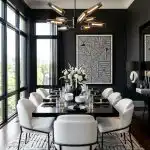

You know that feeling when you walk into someone’s dining room and immediately think, “Wow, they’ve got this figured out”? Yeah, I’m talking about those perfectly curated walls that somehow make even takeout pizza feel fancy.
Your dining room walls are basically a blank canvas screaming for attention, and honestly, plain white walls are doing you zero favors.
I’ve spent way too many hours scrolling through home decor inspiration (don’t judge), and I can tell you that the right wall decor transforms your dining space from “meh” to “magazine-worthy.”
Whether you’re working with a cramped apartment corner or a spacious formal dining room, these ten wall decor ideas will give you that cozy upgrade you’ve been craving. Trust me, your dinner guests will notice.
Modern Dining Room Gallery Wall with Mixed Frames

Let’s start with the crowd favorite that somehow never goes out of style. Gallery walls are like the Swiss Army knife of wall decor – versatile, functional, and they work in pretty much any space. The secret sauce? Mixed frames in different sizes, colors, and textures.
I learned this the hard way after creating my first gallery wall with matching black frames. It looked fine, but fine isn’t what we’re going for here.
The magic happens when you throw together gold frames with black ones, add some natural wood, maybe a floating frame or two. Suddenly, you’ve got visual interest that keeps people actually looking at your wall instead of just glancing past it.
Here’s what actually works for a dining room gallery wall:
• Start with your largest piece as an anchor – usually positioned slightly off-center
• Mix photography with artwork – family photos next to abstract prints create personal storytelling
• Include different textures – canvas prints, framed sketches, maybe even a small mirror
• Keep a consistent color palette even with mixed frame styles
The beauty of this approach is flexibility. You can swap out pieces seasonally or add new memories without starting from scratch. Plus, it’s budget-friendly since you’re not committed to one expensive statement piece.
Planning Your Gallery Wall Layout
Before you start hammering nails into your wall (please don’t), trace each frame on paper and tape the templates to your wall.
This saves you from the “oops, that’s crooked and now I have seventeen holes to patch” situation.
Aim for 2-3 inches between frames, and remember that odd numbers typically look more natural than even arrangements.
Minimalist Wall Art Above Dining Table Setup

Sometimes less really is more, especially when you want your dining table to be the star of the show. Minimalist wall art creates breathing room while still adding personality to your space. Think clean lines, simple shapes, and a restrained color palette that doesn’t compete with your table setting.
I’m talking about one or two carefully chosen pieces that make a quiet statement. Maybe it’s an oversized black and white photograph or a simple line drawing that speaks to you. The key is selecting pieces that complement your dining room’s overall vibe without screaming for attention.
Minimalist doesn’t mean boring, though. You can still create impact with:
• Large-scale single pieces that fill the wall space appropriately
• Monochromatic color schemes that feel sophisticated and timeless
• Simple geometric shapes or abstract forms that add visual interest
• Quality over quantity – one amazing piece beats five mediocre ones
The positioning matters more than you might think. Your artwork should sit about 6-8 inches above your dining table, and the width should be roughly two-thirds of your table’s width. This creates visual balance without making the space feel top-heavy.
Choosing the Right Minimalist Pieces
Photography works beautifully in minimalist dining rooms, especially architectural shots or nature images with clean compositions. Abstract art in neutral tones gives you flexibility as your decor evolves. Just avoid anything too busy or colorful if you’re committed to the minimalist aesthetic.
Rustic Farmhouse Wood Accent Wall Decor Style

Okay, I’ll admit it – farmhouse style got a bit overdone for a while there. But when it’s executed thoughtfully, wood accent walls bring warmth and texture that’s hard to beat. I’m not talking about slapping shiplap everywhere and calling it a day (though shiplap has its place).
The trick is choosing wood treatments that feel authentic to your space. Reclaimed barn wood tells a story, while clean horizontal planks give you that farmhouse feel without looking like you raided a construction site. The natural variations in wood grain add visual interest that you just can’t get with paint.
Consider these wood accent wall options:
• Vertical shiplap for traditional farmhouse vibes
• Horizontal planks for a more modern farmhouse approach
• Reclaimed wood with natural weathering and character marks
• Wood beam details that add architectural interest
The color choice makes or breaks this look. Natural wood stain lets the grain speak for itself, while painted wood (think soft whites or muted grays) gives you farmhouse charm with more flexibility.
Darker stains create drama, while lighter finishes keep the space feeling open and airy.
Installation and Maintenance Tips
Wood accent walls aren’t just about aesthetics – they need proper installation to avoid warping and gaps. Use a moisture meter to check your wood, and allow pieces to acclimate to your room’s humidity before installation.
Regular dusting keeps the natural beauty intact, and occasional conditioning maintains the wood’s integrity.
Also Read: 10 Trendy Dining Room Light Fixtures Stunning Room Upgrade – Airlucent
Luxury Gold Mirror Dining Room Wall Design

Want to make your dining room feel instantly more expensive? Strategic mirror placement is your secret weapon. Gold-framed mirrors catch and reflect light, making your space feel larger and more luxurious without actually spending luxury money.
I’ve seen mirrors transform cramped dining spaces into rooms that feel twice their actual size. The reflective surface bounces light around, brightening dark corners and creating depth. Gold frames add warmth that’s more interesting than silver but not as bold as copper or brass.
Mirror placement strategies that actually work:
• Opposite windows to maximize natural light reflection
• Behind or adjacent to your dining table for space expansion
• Clustered in odd numbers for visual interest
• Different shapes and sizes to avoid the “hotel lobby” look
The key is choosing mirrors that feel intentional, not just thrown up because someone told you mirrors make rooms look bigger.
Vintage gold mirrors have character that new ones often lack. Antique shops and estate sales are goldmines for unique pieces that give your dining room personality.
Mixing Mirror Shapes and Styles
Round mirrors soften angular dining furniture, while rectangular mirrors can emphasize horizontal or vertical lines in your room.
Sunburst mirrors add drama, but use them sparingly – they’re statement pieces that need breathing room.
Convex mirrors create interesting reflections but work best as accent pieces rather than primary focal points.
Boho Macrame Dining Room Wall Inspiration

Macrame made a comeback, and honestly, I’m here for it. Textile wall hangings add texture and softness that hard surfaces can’t provide. In dining rooms, macrame creates a relaxed, welcoming atmosphere that makes long dinner conversations feel natural.
The bohemian aesthetic works particularly well in dining spaces because it’s inherently social and welcoming. Natural fibers like cotton rope or jute bring organic textures that balance harder surfaces like wood tables and ceramic dishes.
Macrame pieces that work in dining rooms:
• Large wall hangings as focal points above buffets or sideboards
• Smaller pieces grouped together for layered texture
• Macrame plant hangers that bring greenery to eye level
• Mixed textile art combining macrame with woven pieces
Size matters with macrame. Oversized pieces make bold statements but need adequate wall space to breathe. Smaller pieces work better when grouped, creating texture zones rather than single focal points.
Styling Macrame with Other Decor Elements
Macrame plays well with natural materials like wood and stone, but it also softens modern spaces beautifully. Pair cream-colored macrame with black and white photography for contrast, or use it alongside plants to enhance that natural, organic feeling. Just don’t go overboard – macrame should enhance your space, not overwhelm it.
Floating Shelves Dining Room Decor Arrangement

Floating shelves are the multitaskers of dining room wall decor. They provide storage for dishes and glassware while giving you display space for decorative objects. Plus, they’re way more interesting than cabinets and much more accessible than high shelving.
I love how floating shelves let you change your display seasonally or whenever you get new pieces you want to show off. They’re particularly useful in smaller dining rooms where every surface needs to work double duty.
Strategic floating shelf arrangements:
• Staggered heights create visual rhythm and prevent monotony
• Mixed lengths add architectural interest
• Grouped in threes for balanced asymmetry
• Different depths accommodate various objects
The styling makes all the difference. You’re not creating a museum display – you want the arrangement to feel lived-in and personal. Mix functional items like beautiful bowls or glasses with decorative objects like small plants, books, or art objects.
What to Display on Dining Room Floating Shelves
Think about the items you actually use and enjoy looking at. Beautiful dishware serves double duty as functional storage and decoration.
Books add color and personality, especially if you group them by color or size. Small plants bring life to the arrangement, while candles add warmth and ambiance for evening meals.
Keep some empty space on each shelf – overcrowding makes everything look chaotic rather than curated.
Also Read: 10 Breathtaking Chandelier Dining Room Ideas for Every Home – Airlucent
Black and White Abstract Wall Art Dining Style

There’s something timeless about black and white artwork that just works everywhere. Abstract pieces give you the sophistication of fine art without requiring art history knowledge to appreciate them. They’re neutral enough to work with changing decor but interesting enough to hold attention.
Black and white photography also fits this category beautifully. Whether it’s architectural shots, nature photography, or abstract compositions, monochromatic images create cohesion while adding visual interest.
Black and white art advantages in dining rooms:
• Neutral palette works with any color scheme
• Creates sophistication without overwhelming the space
• Photography and abstract art offer endless variety
• Budget-friendly options available at all price points
The framing matters more with black and white pieces since you don’t have color to create impact. Simple black or white frames keep focus on the artwork, while natural wood frames add warmth. Avoid ornate frames that compete with the clean aesthetic.
Creating Cohesion with Black and White Art
Stick to similar tones – pure black and white versus softer grays create different moods. Group pieces by style (all photography or all abstract) for cohesion, or mix styles with consistent framing. The key is creating intentional arrangements that feel curated rather than random.
Cozy Nature-Inspired Green Wall Decor Dining Room

Plant walls and nature-inspired decor bring life into dining spaces literally and figuratively. Whether you go full living wall or opt for nature-themed artwork, green elements create a fresh, welcoming atmosphere that makes meals feel more relaxed.
I’ve found that dining rooms often lack the natural light ideal for many plants, but that doesn’t mean you can’t embrace the green trend. Low-light plants like pothos or snake plants thrive in dining rooms, while nature photography and botanical prints give you greenery without the maintenance.
Nature-inspired wall decor options:
• Living plant walls or vertical gardens for dramatic impact
• Botanical prints and nature photography
• Preserved moss walls for texture without maintenance
• Mixed plant displays on floating shelves or wall-mounted planters
The psychology behind green in dining spaces is real – natural elements reduce stress and create a more enjoyable dining experience. Plus, plants improve air quality, which is always a bonus.
Maintaining Nature-Inspired Wall Decor
Real plants need consistent care, so choose varieties that match your commitment level and lighting conditions. Preserved moss and faux plants have come a long way and can look incredibly realistic with proper selection. Botanical prints offer the visual benefits of greenery with zero maintenance requirements.
Statement Clock Dining Room Wall Feature Idea

Oversized wall clocks serve as functional art pieces that anchor your dining room wall. They’re conversation starters that actually serve a purpose – perfect for timing those elaborate dinner parties or just keeping track of how long you’ve been lingering over coffee.
The key is choosing clocks that complement your dining room’s style rather than competing with it. Industrial metal clocks work in modern spaces, while vintage-inspired pieces suit traditional rooms. Wooden clocks bring warmth, and minimalist designs maintain clean aesthetics.
Statement clock considerations:
• Size proportional to wall space – too small disappears, too large overwhelms
• Style consistency with existing decor elements
• Readable numbers from dining table distance
• Quality movement mechanisms to avoid annoying ticking
Position your clock at eye level when seated at your dining table. This usually means centering it around 60 inches from the floor, but adjust based on your specific furniture heights and ceiling lines.
Choosing the Right Statement Clock Style
Farmhouse clocks with weathered finishes suit rustic dining rooms, while sleek metal designs work in contemporary spaces.
Roman numeral clocks add classical elegance, but make sure they’re actually readable – decorative is great until you can’t tell time. FYI, oversized clocks work best as solo pieces rather than part of gallery wall arrangements.
Also Read: 10 Lavish Luxury Dining Room Sophisticated Home Ideas – Airlucent
Elegant Wall Paneling Dining Room Luxury Look

Decorative wall paneling instantly elevates dining rooms from casual to sophisticated. Whether you choose traditional wainscoting, modern geometric panels, or classic board and batten, paneling adds architectural interest that paint alone can’t achieve.
I’ve seen paneling transform basic builder-grade dining rooms into spaces that look custom and expensive. The texture creates visual depth, while the craftsmanship suggests attention to detail that sets your space apart.
Popular paneling styles for dining rooms:
• Traditional wainscoting with chair rail details
• Board and batten for farmhouse or transitional styles
• Geometric panel designs for contemporary sophistication
• Picture frame molding for classic elegance
The height matters significantly. Wainscoting typically extends one-third up the wall, while full-height paneling makes bold statements. Consider your ceiling height – low ceilings benefit from paneling that doesn’t cut the wall in half visually.
Installation and Color Considerations
Professional installation ensures clean lines and proper proportions, but DIY kits have made paneling more accessible. Paint color choices dramatically affect the final look – white or cream paneling feels fresh and classic, while darker colors create drama and sophistication.
Two-tone approaches with different colors above and below the paneling add visual interest without overwhelming the space.
Bringing It All Together
Your dining room walls don’t have to choose just one personality. The best spaces often combine elements – maybe floating shelves styled with plants and black-and-white photography, or a gallery wall that includes a statement mirror.
The key is maintaining some visual consistency through color palette, materials, or style elements.
Remember that your dining room should reflect your lifestyle. If you’re hosting formal dinner parties, elegant paneling or sophisticated artwork sets the right tone. If your dining room is where kids do homework and families gather for pizza night, choose durable, family-friendly options that still look intentional.
Budget considerations matter too. Gallery walls can start small and grow over time, floating shelves offer immediate impact without major investment, and paint treatments like accent walls transform spaces for the cost of a gallon of paint and some elbow grease.
The wall decor you choose should make you happy every time you walk into your dining room. Whether that’s the warmth of wood paneling, the sophistication of black and white art, or the life that plants bring to your space, trust your instincts.
After all, you’re the one who has to live with it – and hopefully love it – every single day.
Your dining room walls are ready for their upgrade. Which of these ideas is calling your name?