So, your living room is… cozy. Let’s call it cozy. You know that feeling when you move the coffee table and suddenly you’ve “rearranged the entire room”? Yeah, I’ve been there.
Working with a small living room is genuinely one of the trickiest interior puzzles out there — but here’s the thing nobody tells you: small spaces have enormous potential.
I’ve spent way too many hours obsessing over small-space design, rearranging furniture, watching before-and-after reels, and testing ideas in real-life tiny rooms.
What I found is that the right design approach doesn’t just make a small room functional — it makes it feel like the best room in the house. Ready? Let’s get into it.
Minimalist Beige Tiny Living Room
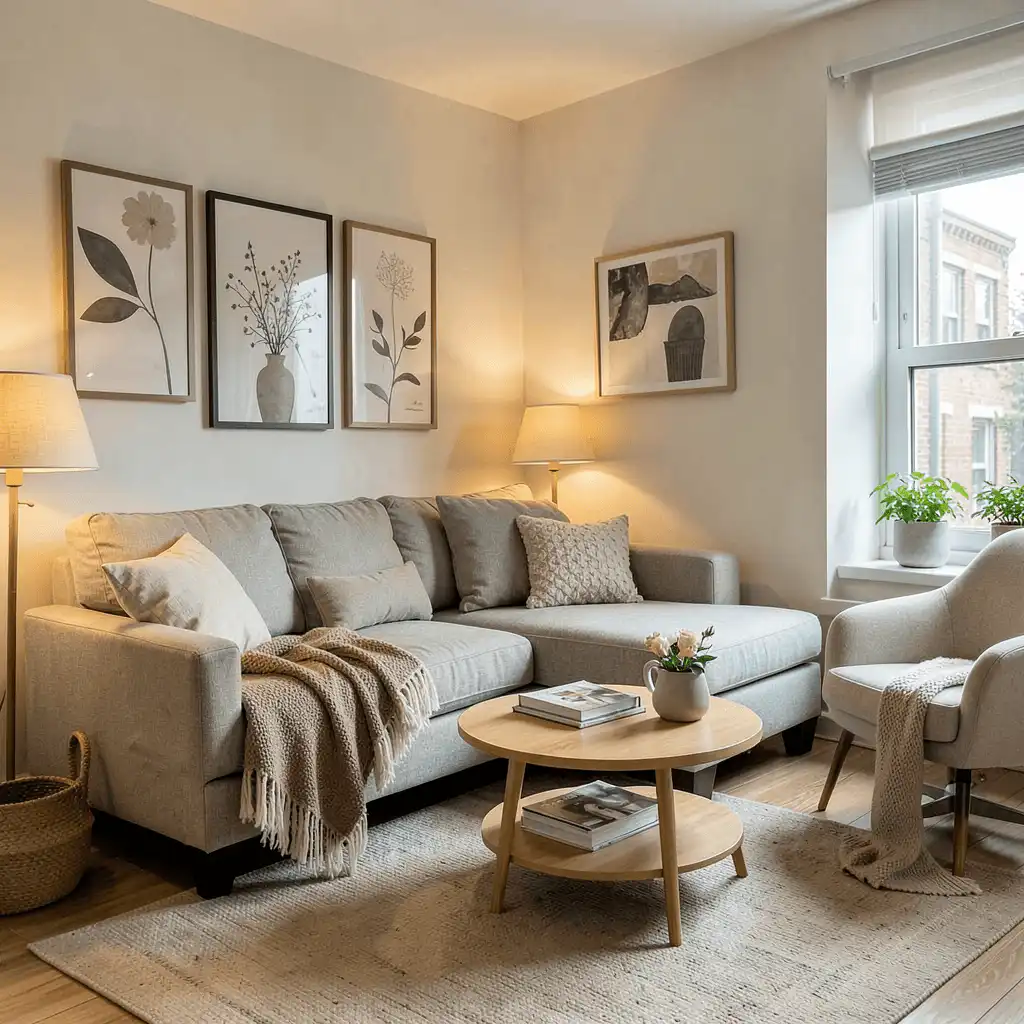
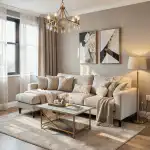
If there’s one style that was practically invented for small spaces, it’s minimalism — and beige is its best friend. Neutral, warm beige tones visually expand a room because they reduce the contrast between walls, furniture, and floors, tricking your eye into perceiving more continuity and space.
The idea here isn’t boring. It’s intentional. A minimalist beige living room means every piece of furniture earns its place. A slim, low-profile sofa in oat or cream. A wooden coffee table with clean lines. Maybe one textured throw blanket for warmth. That’s it. No clutter. No visual noise.
What actually makes it work
- Tone-on-tone layering — pair beige walls with cream upholstery and sandy rugs for depth without chaos
- Natural textures — linen, jute, and light wood keep the palette from looking flat
- Fewer, better pieces — one quality sofa beats three mediocre chairs every single time
Pro tip: Keep your skirting boards and ceiling the same shade as your walls. It eliminates visual breaks and the room instantly feels taller and wider.
Minimalism also means easier cleaning, and FYI — that’s a benefit small-room living constantly undervalues. Less stuff, less chaos. I’m personally obsessed with this look for tiny spaces.
Cozy Apartment Corner Living Room

Ah, the corner room. That awkward L-shaped situation where you’re basically working with a hallway that got ideas above its station. Sound familiar? Here’s what most people miss: corners are your biggest asset in a small space, not your biggest obstacle.
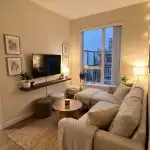
The key move is anchoring the room in the corner itself. A corner sofa (or two loveseats placed at a right angle) defines the space and creates a natural focal point. You’re no longer fighting the architecture — you’re working with it.
Corner setup essentials
- A corner sectional that fits the angle — measure twice, buy once
- A small round coffee table (no sharp corners eating into walkways)
- Floor lamp in the corner behind the sofa — soft, upward light makes the room feel larger
- A floating shelf or TV unit on the adjacent wall to balance the composition
Layer in soft textures — chunky knit throws, velvet cushions, a low-pile rug — and the corner transforms from cramped into genuinely inviting. Cozy is a choice, not a compromise 🙂
Modern Small Living Room with Floating Shelves

Ever wondered why so many small-space designers are obsessed with floating shelves? Because they do something no floor-standing unit can: they use vertical space without taking up floor space. In a tiny living room, that’s basically magic.
A modern setup with floating shelves keeps everything clean and intentional. Go for shelves in a light wood or white finish, mounted at varying heights on a single wall. Use them for books, plants, small art objects, and smart storage boxes — but resist the urge to fill every inch. Breathing room on shelves makes the whole wall feel considered, not chaotic.
Modern floating shelf styling rules
- Mount shelves above eye level to draw attention upward and make ceilings feel higher
- Group odd numbers of items — threes and fives look more natural than pairs
- Mix heights: one tall vase, one short candle, one medium plant — variety is visual interest
- Keep one shelf deliberately sparse — the “white space” shelf makes everything else look intentional
Design note: A floating media unit paired with floating shelves above creates a full wall feature that stores everything while grounding the room without using an inch of floor space.
Scandinavian Tiny Living Room Design

If minimalism and functionality had a baby and that baby also had impeccable taste, it would be Scandinavian design. And for small living rooms, it genuinely might be the most practical aesthetic on this entire list. Scandi design is built around the idea that every object should be useful AND beautiful. No wasted pieces.
The Scandi palette for tiny rooms is simple: white walls, light wood floors or rugs, a muted grey or navy sofa, and a few warm black accents (light fixtures, picture frames, table legs). It’s clean. It’s fresh. It works almost everywhere.
Core Scandi small-room principles
- Light wood furniture — birch, pine, or beech keep things airy
- Low-profile pieces — furniture close to the ground opens up visual space above
- Functional textiles — a sheepskin throw or wool rug adds warmth without visual clutter
- Plants — one or two well-placed green plants connect the space to nature and add life
The trick with Scandi styling is restraint. Resist the urge to add more. The first time you walk into a well-executed Scandi tiny room and it feels spacious despite being 12 square meters, you’ll understand why this style has taken over the internet for a decade.
Neutral Small Living Room with Hidden Storage
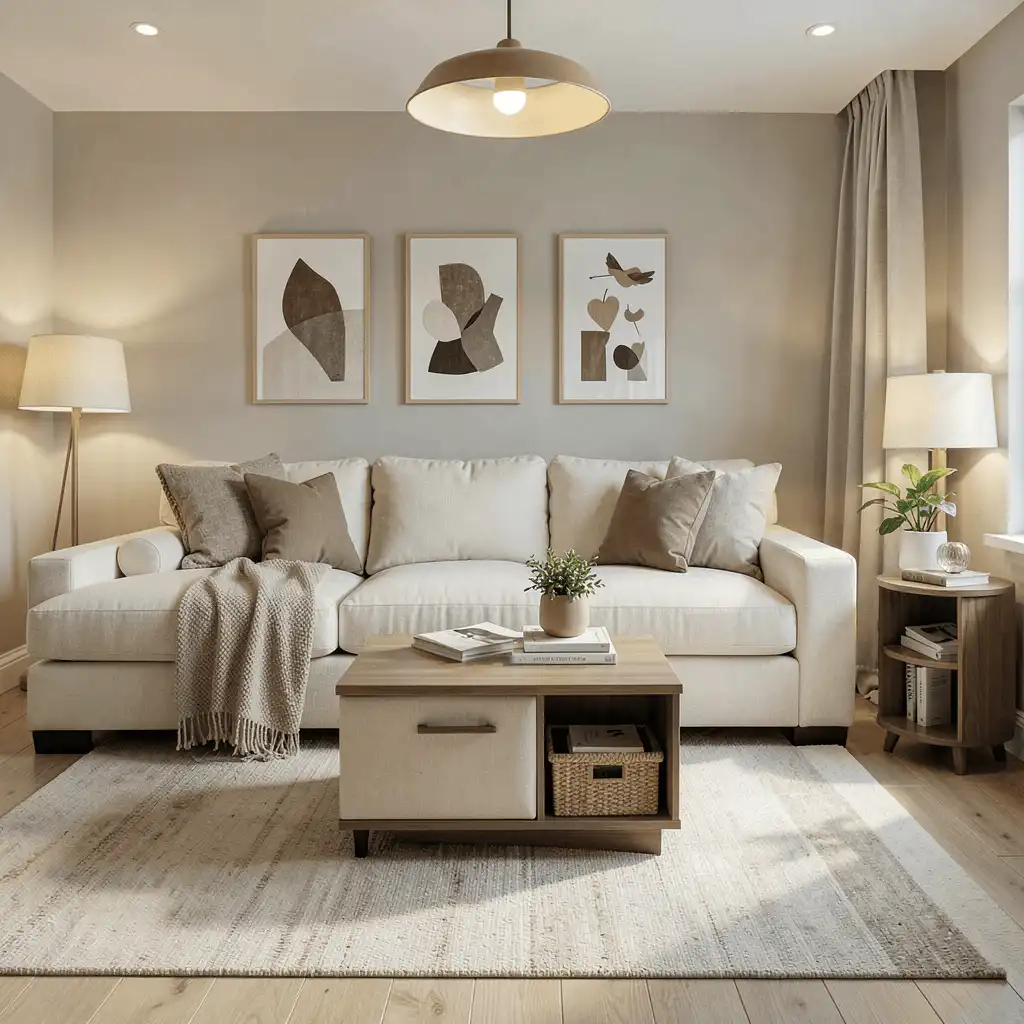
Let’s talk about storage — specifically the kind nobody can see. Because if your small living room is doing double duty as a storage room, that’s the first battle to win. Hidden storage is the secret weapon of every great small-space interior.
The neutral palette here is strategic. Soft whites, warm greys, and greige tones keep the eye calm while your furniture does serious heavy lifting underneath. Think ottomans that open up, sofas with built-in drawers, coffee tables with lower shelves, and built-in bench seating along walls.
Best hidden storage moves for tiny living rooms
- Storage ottoman — replace your coffee table with a large upholstered ottoman that opens for blankets, remotes, and everything else
- Built-in window seat — if you have a bay window or alcove, bench seating with lift-up storage underneath is one of the highest-ROI design decisions you can make
- Sofa with storage base — some modern sofas have full drawer systems underneath the seat cushions
- Media console with closed doors — everything off the floor, nothing on display
Reality check: Hidden storage only works if you actually put things away. IMO, having fewer things is still more powerful than having clever places to hide the things you don’t need.
Boho Style Very Small Living Room
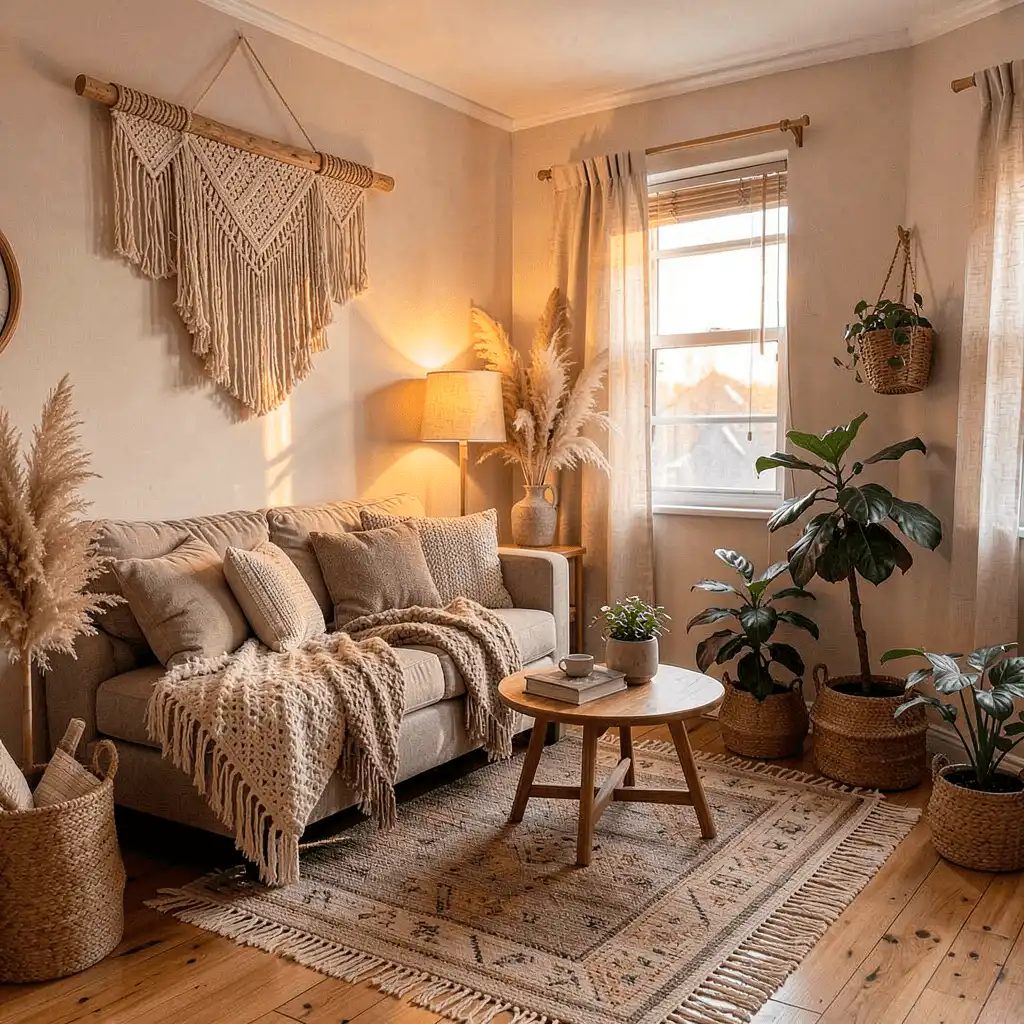
Okay, hear me out. Boho in a small room sounds like a recipe for visual disaster — and honestly? In the wrong hands, it can be :/. But done right, a bohemian tiny living room is one of the warmest, most personal spaces you can create. The trick is editing ruthlessly.
Boho style in a small space means layered textiles, earthy tones, natural materials, and intentional global touches — but every single item needs to earn its place. You’re going for curated, not collected. Think a macramé wall hanging on one feature wall (not every wall), a woven rug in terracotta or rust, rattan side chairs instead of bulky armchairs, and low floor cushions for extra seating that stores flat.
Small-space boho rules
- One feature wall — pick the main wall for your textiles, art, or hanging plants. Leave the other walls calm.
- Rattan and cane furniture — visually lighter than solid upholstered pieces, and packed with character
- Plants as decor — trailing pothos or a fiddle-leaf fig in a terracotta pot adds vertical interest without taking floor space
- Layered rugs on bare floors — defines the seating zone and adds texture without closing in the space
The secret? Let the room feel like it has a personality. In a small boho living room, the space isn’t trying to look bigger — it’s trying to feel like somewhere genuinely worth sitting in. There’s a difference, and it shows.
Japandi Tiny Living Room Layout

Japandi is the design world’s best-kept secret for small spaces — and if you haven’t heard of it, pay attention. It’s the fusion of Japanese minimalism and Scandinavian hygge, and the result is possibly the most intentional, peaceful aesthetic you can create in a compact space.
The Japandi palette is low-contrast and deeply calming: muted sage, warm charcoal, off-white, and natural wood. Furniture sits low to the ground. Lines are clean and simple. Every object has purpose. Negative space isn’t something you tolerate in Japandi — it’s something you celebrate.
Japandi layout for a tiny living room
- Floor-level seating — platform sofas or low Japanese-style seating visually raise the ceiling
- Natural materials only — bamboo, rattan, stone, linen, unfinished wood
- One art piece, placed intentionally — a single print or handmade ceramic is more powerful than a gallery wall in a small room
- Closed storage — anything that creates visual noise is behind a door
- Asymmetric balance — don’t centre everything. One tall plant on one side, a low table on the other. Japanese design is about harmony, not symmetry.
Walking into a well-done Japandi room feels like taking a breath. In a tiny apartment, that feeling is genuinely priceless.
Luxury Small Living Room on a Budget

Who says small can’t be luxurious? (Spoiler: nobody with good taste.) The secret to a luxury-looking small living room on a budget comes down to one principle: invest in the pieces that get the most visual attention, and save everywhere else.
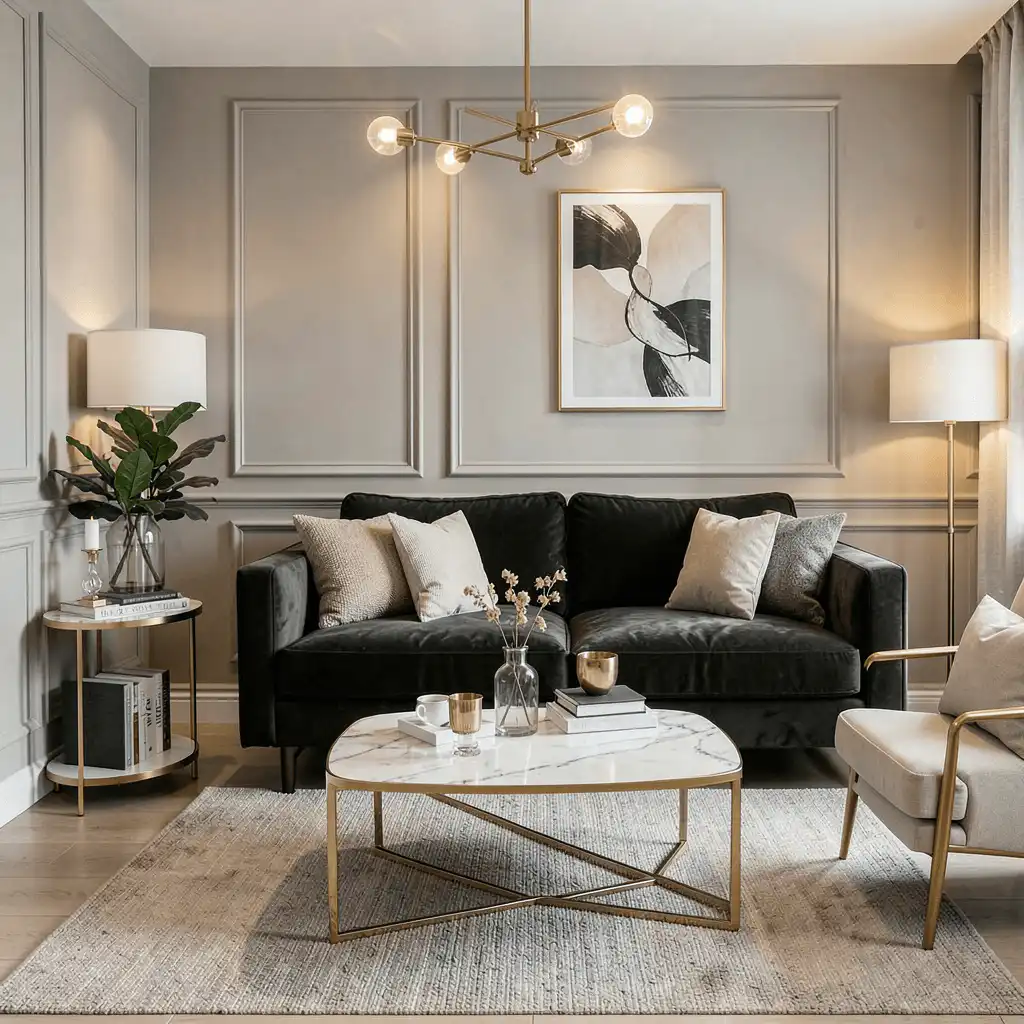
The focal points in a living room are the sofa, the rug, and the lighting. If those three things look quality, the rest of the room follows. A velvet sofa in deep jewel tone — forest green, navy, or dusty rose — immediately signals luxury. Pair it with a thick, textured area rug (you can find great ones affordably) and one statement pendant light, and the room punches way above its price point.
Where to spend and where to save
- Spend on: sofa fabric and silhouette, lighting, and one hero rug
- Save on: side tables (thrifted wood looks better than cheap new), cushion covers (swap seasonally), art (prints in good frames beat expensive originals every time)
- Free upgrades: declutter, rearrange furniture so nothing touches the walls, add a large mirror on the longest wall
Mirror trick: A full-length or oversized mirror placed on the wall opposite a window doubles your natural light and makes the room look genuinely twice the size. It costs almost nothing and the effect is dramatic.
Luxury in a small room is about atmosphere, not price tags. Get the lighting right — warm bulbs, dimmable switches, layered sources — and even the most budget room starts to feel special.
Compact Living Room with Multifunction Furniture

If you’re going to survive — and thrive — in a genuinely tiny living room, multifunction furniture isn’t optional. It’s the whole game. Every piece of furniture in a compact room should ideally do at least two things. That’s not a design philosophy, that’s physics.
The market for smart, multifunction furniture has exploded in the last five years. You have options now that look genuinely good AND work incredibly hard. We’re not talking about the wobbly fold-out table from a student flat. We’re talking about sleek, design-forward pieces that transform, stack, nest, and expand.
Best multifunction furniture for tiny living rooms
- Sofa bed — obvious, but modern versions have come a long way. Look for a Day Dreamer or click-clack style for easy daily use
- Nesting coffee tables — two or three tables that tuck together; spread them out for guests, stack them away for space
- Storage bench at the entry edge — seat, storage, and visual room divider in one
- Wall-mounted fold-down desk — if your living room doubles as a home office, this is non-negotiable
- Extendable dining table — compact at 2 seats, expands to 6 for guests
The art is making the room feel relaxed and intentional, not like a showroom of clever gadgets. Choose pieces with consistent finishes and tones so the multifunction furniture blends seamlessly into the design.
Bright White Very Small Living Room Design
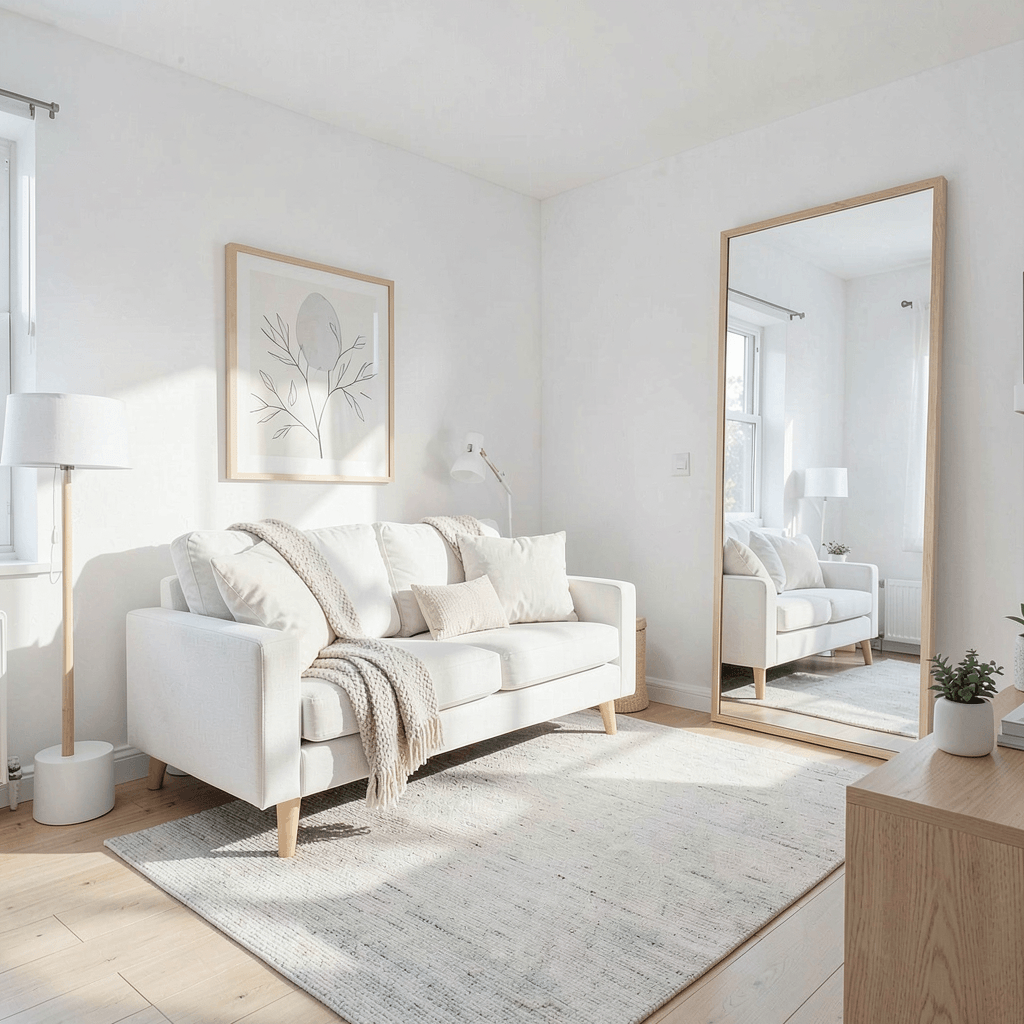
White gets a bad reputation — people call it cold, clinical, impractical. But for a tiny living room that needs light and airiness above all else, a bright white room done well is genuinely transformative. The key word is “done well.”
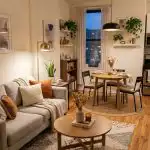
An all-white living room doesn’t mean sterile. It means layered whites — warm white walls, crisp white ceiling, off-white linen sofa, and ivory textured rugs. The variation in texture is what stops it looking like a hospital. Add in natural wood accents (a coffee table, shelf brackets, a picture frame) and a few lush green plants and the room feels alive, bright, and twice its actual size.
Making white work in a small living room
- Vary the white tones — pure white walls with warm white (cream/ivory) soft furnishings prevents the cold, flat effect
- Maximise natural light — keep window treatments sheer or opt for no curtains at all on south-facing windows
- Use texture to add interest — boucle, linen, knit, and wicker in white and off-white create visual depth
- Add one warm accent — a terracotta pot, a warm wood shelf, or a single rattan lampshade introduces warmth without breaking the palette
Ceiling tip: Paint your ceiling the same white as your walls — or even lighter. Most people default to a stark brilliant white ceiling regardless of wall colour. Matching them visually removes the “lid” from the room and makes it feel taller.
White rooms need upkeep, sure. But the payoff — that airy, sun-filled, open feeling every morning — is hard to match with any other palette, especially in a small space.
The Bottom Line
Small living rooms ask more of you as a designer — more intentionality, more creativity, more willingness to break the “rules.” But the best small-space rooms I’ve ever walked into had one thing in common: they felt completely on purpose. Nothing was accidental. Nothing was apologetic.
Whether you go minimalist beige, boho-layered, Japandi-calm, or bright white, the principles stay the same: keep the floor clear, go vertical, use light strategically, choose furniture that works hard, and edit ruthlessly. The style is yours to choose.
Now — stop rearranging in your head and start actually moving some furniture. Your tiny living room’s best version is closer than you think. Go find it.