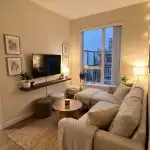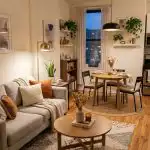
So, you’ve got a small living room. Welcome to the club — a very large, very cramped club. 🙂
Here’s the thing though: a tiny living room doesn’t have to feel like a punishment. With the right ideas, it can feel intentional, stylish, and honestly even more cozy than a sprawling space you don’t know what to do with. I’ve spent a ridiculous amount of time rearranging furniture, testing color palettes, and obsessing over storage solutions in compact spaces, and I’m sharing everything that actually works.
Let’s get into it.
Cozy Neutral Apartment Living Room

If you’ve ever walked into a room and immediately felt your shoulders drop in relief, chances are it was a neutral space done right. Neutral tones aren’t boring — they’re breathing room.
Why Neutrals Work in Small Spaces
The science (and the eye) is simple: light, muted tones make walls visually recede. When your walls feel farther away, your room feels bigger. Creams, warm whites, soft taupes, and sandy beiges all do this beautifully without making your space feel like a sterile hospital room.
Here’s how to nail the cozy neutral look:
- Layer your textures. A chunky knit throw, a linen sofa, a jute rug — all neutral, all different textures. This stops the room from looking flat.
- Warm up with wood accents. Natural wood tones (light oak, walnut) add warmth without visual clutter.
- Use varying shades of the same neutral family. Mix ivory, cream, and soft tan rather than painting everything the same color.
- Bring in greenery. A single potted plant adds life and contrast without disrupting the palette.
The trick with neutral rooms is contrast through texture, not color. Once you master that, even a 200-square-foot apartment living room can look like it belongs in an interiors magazine.
Minimalist Tiny Living Room Setup

Let’s be real — minimalism is both an aesthetic choice and a survival strategy when you’re working with a tiny living room. When you don’t have space, every single item you add has to earn its place.
Less Really Is More Here
The minimalist approach works because it eliminates the visual noise that makes small rooms feel chaotic. Fewer pieces, more intentional placement, clean lines. That’s the formula.
What makes a minimalist tiny living room work:
- Choose furniture with legs. Sofas and chairs raised off the floor create visual breathing space underneath, making the room feel less packed.
- Stick to a tight color palette. Two or three colors maximum. Everything else is clutter.
- Go vertical with decor. A tall, slim bookshelf or vertical art draws the eye upward and emphasizes ceiling height.
- Ditch the coffee table (or swap it). An ottoman does double duty — seating AND a surface. A nesting table set is another brilliant swap.
Here’s the minimalist mindset shift: you’re not depriving yourself of things, you’re curating your space. Every item is there because it genuinely adds something. IMO, that’s actually more luxurious than having a room stuffed with furniture.
Scandinavian Small Space Living Room

Scandinavian design was basically invented for small spaces. The Scandinavians have been living through long, dark winters in compact apartments for centuries — they figured out how to make cozy efficient spaces an art form.
The Scandi Formula
The core of Scandinavian style is something they call hygge — that warm, snug, contented feeling you get from a well-lit room with a good book and nowhere to be. Here’s how to translate that into your small living room:
- Light is everything. Maximize natural light with sheer curtains or no curtains at all. Add warm-toned lamps (not overhead lights) for evening ambiance.
- Use white as your base. White walls reflect light beautifully. Pair with pale grays and warm wood tones.
- Add soft textiles generously. Wool throws, sheepskin rugs, cushions in muted tones. Scandi rooms feel warm because they’re deeply textured.
- Keep decor purposeful. A few carefully chosen pieces — a ceramic vase, a single piece of art, a potted succulent — rather than cluttered shelves.
The result is a room that feels calm, bright, and surprisingly spacious. Plus, anyone walking in will immediately think you have impeccable taste. That’s always a bonus.
Modern Boho Compact Living Room

Modern boho is arguably the most fun style to decorate in — and surprisingly, it works incredibly well in small spaces when you approach it strategically.
Boho Without the Chaos
The danger with boho in a small room is that it tips from “eclectic and curated” to “what is happening in here” very quickly. The key is modern boho — boho energy with a structured backbone.
Here’s how to pull it off:
- Ground the room with a statement rug. A large, patterned rug (think Moroccan or Persian-inspired) anchors the space and gives the eyes a focal point.
- Use a neutral sofa as your base. A cream or tan sofa lets you pile on colorful cushions and throws without looking chaotic.
- Layer plants of different heights. A tall fiddle-leaf fig in the corner, smaller plants on shelves, trailing pothos on a high shelf. Instant boho mood.
- Mix natural materials. Rattan, bamboo, macramé, linen, wood — the boho look lives in the texture of natural materials.
- Limit your color palette to 3-4 tones. Rust, terracotta, warm white, and olive green make a gorgeous boho palette that doesn’t overwhelm a small room.
Ever wondered why some boho rooms feel wild and free while others feel chaotic? The difference is almost always scale and restraint — knowing when to stop adding things.
Small Living Room With Hidden Storage

If your small living room looks messy no matter how much you clean it, chances are it’s a storage problem masquerading as a cleaning problem. Hidden storage is basically magic for compact spaces.
Where to Hide Everything
The philosophy here is simple: everything needs a home, and that home should be out of sight whenever possible.
Smart hidden storage ideas that actually work:
- Lift-top coffee table. Opens to reveal a hollow interior. Perfect for remotes, chargers, board games, and all the things that end up on every surface.
- Storage ottomans. Use as a footrest, extra seating, and a place to store throws, pillows, or anything you want off the floor.
- Built-in shelving around the TV. Use lower cabinets with doors for actual storage and open upper shelves for curated decor only.
- Sofas with storage underneath. Many modern sofas lift to reveal under-seat storage — great for extra bedding or seasonal items.
- Floating shelves with baskets. Open shelving looks airy; wicker or fabric baskets tucked on the lower shelves hide the stuff you don’t want on display.
The golden rule: for every decorative item you display, everything else should have a hidden storage spot. Your living room will feel instantly cleaner and less cluttered without you actually having to get rid of anything.
Japandi Style Tiny Living Space

Japandi is the design world’s favorite hybrid right now, and honestly, it deserves the hype. It blends Japanese minimalism with Scandinavian warmth — and the result is a small room that feels simultaneously serene, intentional, and beautifully livable.
The Japandi Aesthetic
Where pure minimalism can feel cold, Japandi adds warmth through natural materials and imperfect beauty (the Japanese concept of wabi-sabi — finding beauty in imperfection). Here’s the breakdown:
- Low furniture. Japandi interiors favor low-profile sofas, floor cushions, and low coffee tables. This visually lowers the room’s “center of gravity” and makes it feel expansive.
- A muted, earthy palette. Warm grays, mushroom, clay, dark charcoal, dusty sage. Think of colors found in nature — stones, bark, dried grass.
- Clean lines, no ornament. Every piece of furniture should have simple, unadorned lines. Nothing fussy, nothing decorative for its own sake.
- Natural materials throughout. Bamboo, raw linen, stone, unfinished wood. The texture and imperfection of natural materials are the decor.
- Negative space is purposeful. An empty corner isn’t a mistake — it’s breathing room. Resist the urge to fill every space.
The Japandi approach is deeply calming because it removes decisions from your visual field. There’s nothing competing for your attention. For a small living room, that clarity makes it feel larger and far more restful.
Luxury Small Living Room on a Budget

Who said small had to mean cheap-looking? You can absolutely create a high-end, luxurious small living room without spending a fortune. It’s all about knowing which details signal “expensive” to the human eye.
What Actually Reads as Luxury
FYI — luxury isn’t always about the price tag. It’s about proportion, finish quality, and intention. Here’s where to spend and where to save:
Spend on:
- One hero piece of furniture. A well-proportioned sofa in a quality fabric elevates the entire room. It doesn’t have to be designer — just look for clean lines and a neutral color.
- Good lighting. A beautiful floor lamp or pendant light instantly transforms a room. Light fixtures are disproportionately impactful for their cost.
- Large-scale art. One oversized, well-framed piece of art signals luxury more than a gallery wall of small prints.
Save on:
- Side tables, storage ottomans, and decorative accessories — thrift these without guilt.
- Cushion covers — an inexpensive sofa looks expensive with quality cushion covers in linen or velvet.
- Plants — genuinely one of the cheapest ways to make a room feel alive and styled.
Tricks that read as expensive:
- Curtains hung close to the ceiling. Hang your curtain rod 6-10 inches above the window and let the curtains fall to the floor. This makes ceilings look higher and windows look larger.
- Matching hardware and metal finishes. Keep everything in the same metal family (brass, matte black, brushed nickel). Mixed metals look like an afterthought; matched metals look curated.
- Declutter ruthlessly. Nothing reads as budget like a room full of stuff.
Bright and Airy Small Living Room
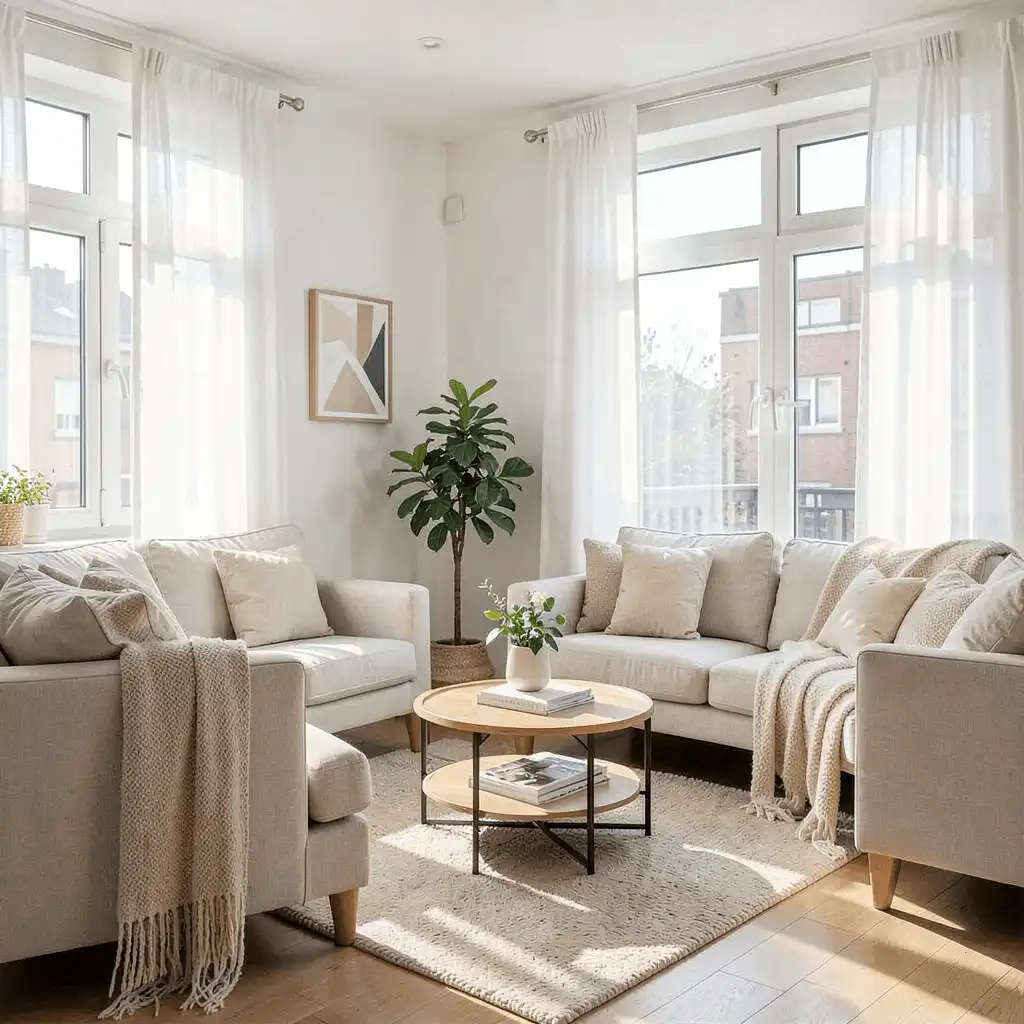
A bright, airy living room is the antidote to that “cave” feeling small rooms can sometimes have. The goal is to maximize light — both natural and artificial — and use color and material strategically to bounce it around the room.
Maximizing Light in a Small Space
Natural light is your most powerful tool. Here’s how to make the most of what you have:
- Mirror placement is everything. A large mirror on the wall opposite your main window reflects the entire window, effectively doubling your natural light.
- Swap heavy curtains for sheers. Heavy drapes block light and make walls feel closer. Sheer linen or cotton panels let light pour through while still providing softness.
- Use glass and lucite furniture. A glass coffee table or a clear acrylic side table takes up visual space without blocking light.
- Choose light-reflective finishes. Glossy tiles, metallic accents, and lacquered furniture all bounce light around the room.
- Paint walls AND ceiling the same light color. When ceiling and walls are the same pale tone, the room feels like one continuous airy space rather than a box.
For artificial lighting, layer your sources. A central overhead light alone creates harsh shadows. Instead, use a combination of floor lamps, table lamps, and wall sconces to create pools of warm light throughout the room. The difference is dramatic.
Multifunctional Studio Living Room Design

When your living room is also part bedroom, part home office, part dining room, and part everything-else, you need a design strategy that handles all of it without making the space look like a storage unit explosion. Multifunctional design is where smart furniture choices genuinely change your life.
The Art of Doing More With Less Space
Every piece of furniture in a studio living space should ideally serve two purposes. This isn’t just about cleverness — it’s about preserving the floor area you have.
Essential multifunctional furniture for studio living:
- Sofa bed or daybed. The obvious choice, but choose wisely — a good sofa bed should look like a proper sofa when folded up. Avoid anything that screams “I sleep here.”
- Desk that doubles as a console/sideboard. A slim desk behind the sofa works as a workspace AND a surface for lamps or decor.
- Dining table with fold-down leaves. Compact when not in use, full-sized when you need it. Some styles tuck against the wall and become a shelf when folded.
- Storage bench at the “bedroom” area foot. Serves as a visual room divider, seating, and storage.
- Room dividers that add function. A bookshelf used as a room divider creates a library AND separates zones. A curtain on a ceiling track is another excellent, flexible divider.
Zone your studio thoughtfully:
- Use rugs to define zones (living area rug, working area rug).
- Keep each zone’s lighting separate and controllable — bright task lighting for work, warm ambient for living/sleeping.
- Consistent color throughout creates cohesion and prevents the studio from looking like multiple rooms crammed together.
Cute Corner Sofa Small Living Room
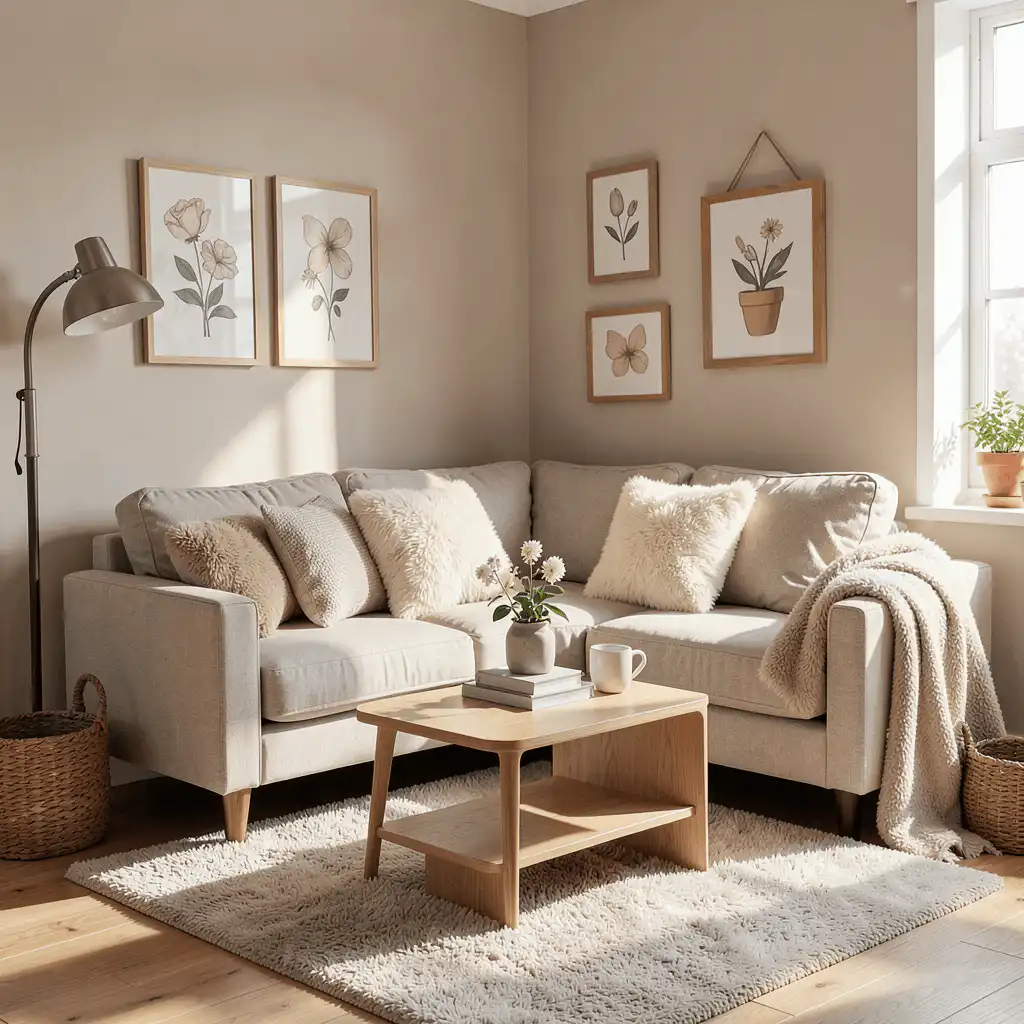
Here’s a hot take: a corner sofa (L-shaped sofa) is actually one of the best things you can put in a small living room. :/ I know — counterintuitive, right? A big sofa in a small room sounds like a terrible idea. But done correctly, it works brilliantly.
Why Corner Sofas Work in Small Rooms
The key insight is that a corner sofa uses the corners and walls of your room rather than floating in the middle. It hugs the perimeter, leaving the center floor area open. That open center is what makes the room feel spacious.
Here’s how to make a corner sofa work in a small living room:
- Measure twice, buy once. Before you do anything else, know your room dimensions. A corner sofa needs at least 2-3 feet of walkway in front of it and shouldn’t block natural light sources.
- Choose a sofa with a chaise rather than a full L-shape. A sofa with an extended chaise lounge end is often a better fit for small rooms than a full square L-shape.
- Keep everything else minimal. With a corner sofa, you don’t need much else. A slim console table, a single floor lamp, a small coffee table — that’s it. The sofa is the statement.
- Light upholstery makes the sofa feel less heavy. A light gray, cream, or warm beige corner sofa visually recedes. Dark sofas in small rooms dominate the space in a way that can feel oppressive.
- Use the corner sofa to define the living zone. In a studio or open-plan space, a corner sofa is one of the best natural room dividers you can use.
The right corner sofa arrangement turns an awkward small room into a defined, intentional seating space that genuinely fits how people actually live — gathered together, comfortable, with plenty of room for everyone.
Wrapping It Up
There you have it — ten genuinely workable small living room ideas that don’t require a renovation budget or a complete furniture overhaul. Whether you go full Japandi serenity, cozy neutral heaven, or strategic multifunctional studio mode, the underlying principle is the same: work with your space, not against it.
Small rooms force you to be intentional. And honestly? Intentional rooms almost always look better than big rooms filled with stuff collected without purpose. So maybe your small living room is actually your stylistic superpower.
Start with one idea, see how it feels, and build from there. You don’t have to do everything at once — and you absolutely don’t have to spend a fortune. The most transformative things (decluttering, rearranging furniture, hanging mirrors strategically) cost nothing at all.
Now go make your living room the coziest spot in the building.