
Let’s be real—your wardrobe situation probably needs some serious help. Maybe you’re stuck with that ancient wooden monster that’s been hogging your bedroom real estate since the dawn of time, or perhaps you’re dealing with a cramped space that makes organizing clothes feel like solving a Rubik’s cube blindfolded. Either way, I’ve got your back.
After years of battling cluttered closets and experimenting with different storage solutions, I’ve discovered that the best wardrobe designs aren’t always the most expensive or elaborate ones.
Sometimes, the simplest ideas pack the biggest punch. Ready to turn your chaotic clothing situation into something that actually makes sense? Let’s jump into these game-changing wardrobe designs that’ll make your space look like it belongs in a home design magazine.
Minimalist Floating Simple Wardrobe Design Ideas

Ever walked into a room and felt like it could breathe? That’s the magic of floating wardrobes. These bad boys literally hover off the floor, creating an illusion of space that’ll make even the tiniest bedroom feel more expansive.
I installed my first floating wardrobe about three years ago, and honestly, it changed everything. The visual lightness it brings to a room is incredible. Your floor space opens up completely, making cleaning underneath a breeze—no more wrestling with vacuum cleaners around bulky furniture legs.
The beauty of floating designs lies in their versatility. You can mount them at any height that works for your space and lifestyle. Got high ceilings? Mount them higher and use the space below for a reading chair or workspace. Dealing with awkward radiators or skirting boards? Float your wardrobe above them without any hassle.
Key benefits of floating wardrobes:
- Creates visual space and makes rooms feel larger
- Easy floor cleaning and maintenance
- Customizable height placement
- Modern, sleek aesthetic
- Works brilliantly in small spaces
Pro tip from personal experience: invest in quality wall fixings. Trust me on this one—you don’t want your entire wardrobe collection crashing down at 3 AM because you skimped on proper mounting hardware.
Modern Sliding Door Simple Wardrobe Design Ideas

Sliding doors are honestly a game-changer, especially if you’re working with limited space. Remember those old hinged wardrobe doors that would swing out and practically knock you over? Yeah, sliding doors said “not today” to that nonsense.
The space efficiency is unbeatable. You can position furniture right up against a sliding door wardrobe without worrying about clearance space. I’ve got mine positioned just inches from my bed, and it works perfectly—no more awkward shuffling around swinging doors every morning.
Modern sliding doors come in materials that’ll make your head spin with possibilities. Mirrored panels are fantastic for smaller bedrooms because they double your visual space while serving their primary function. Frosted glass creates a sophisticated, hotel-like vibe, while matte finishes give you that contemporary edge that screams “I have my life together.”
The hardware has come a long way too. Gone are the days of doors that would stick, jump off tracks, or sound like freight trains. Today’s soft-close mechanisms glide like butter, and the track systems are designed to handle daily use without throwing tantrums.
What makes sliding doors brilliant:
- Zero swing-out space required
- Smooth, quiet operation with modern hardware
- Multiple material options for different aesthetics
- Easy access to your entire wardrobe width
- Perfect for tight spaces and awkward room layouts
Small Bedroom Simple Wardrobe Design Ideas

Small bedrooms require strategic thinking—every square inch counts, and your wardrobe can’t be a space hog. The trick is working vertically rather than horizontally. Think of your walls as valuable real estate that’s going unused.
I learned this lesson the hard way in my first apartment. I tried cramming a massive wardrobe into a shoebox bedroom, and it dominated the entire space. The solution? Tall, narrow wardrobes that draw the eye upward and make the ceiling feel higher.
Corner utilization is your secret weapon. Those awkward corner spaces that usually collect dust? Perfect for slim wardrobe units. You can fit surprising amounts of storage into corner configurations without making the room feel cramped.
Multi-functional designs work wonders in small spaces. Look for wardrobes with built-in drawers at the bottom, shoe storage compartments, or even integrated seating. Every element should pull double duty.
Color psychology plays a huge role here. Light colors and glossy finishes reflect light and make spaces feel larger. I swapped my dark wardrobe for a white one with a glossy finish, and the difference was night and day—the room felt like it doubled in size.
Small bedroom wardrobe strategies:
- Prioritize height over width
- Utilize corner spaces efficiently
- Choose light colors and reflective finishes
- Integrate multiple functions into one unit
- Consider door-mounted storage solutions
Also Read: 10 Stunning L Shape Wardrobe Design Ideas for Modern Bedrooms
Wooden Finish Simple Wardrobe Design Ideas

Wood never goes out of style—it’s like the little black dress of interior design. But not all wooden wardrobes are created equal, and the finish you choose can completely transform your space’s personality.
Oak finishes bring that classic, timeless feel that works with virtually any décor style. I’ve got an oak-finished wardrobe in my guest room, and guests constantly comment on how warm and welcoming it makes the space feel. There’s something about natural wood grain that just makes a room feel more alive.
Walnut finishes are where sophistication meets modern design. The rich, dark tones work brilliantly in contemporary settings, and the natural grain patterns create visual interest without being overwhelming. Perfect for those who want elegance without flashiness.
For a more budget-friendly approach, engineered wood with quality veneers gives you the wooden aesthetic without the premium price tag. The key is choosing finishes that complement your existing furniture rather than fighting against it.
Maintenance reality check: wooden finishes require a bit more love than laminate alternatives. Regular dusting and occasional conditioning keep them looking fresh. But honestly, the warmth and character they bring to a space make the extra effort worthwhile.
Wood finish considerations:
- Natural oak for timeless appeal
- Walnut for sophisticated modern looks
- Light woods for Scandinavian vibes
- Dark woods for dramatic contrast
- Proper maintenance extends lifespan significantly
Built-In Simple Wardrobe Design Ideas

Built-ins are the ultimate space optimization solution—they’re like custom-tailored clothing for your room. Every awkward angle, weird corner, and architectural quirk becomes an opportunity rather than an obstacle.
I had built-ins installed in my master bedroom last year, and the seamless integration completely transformed the space. Instead of furniture that sits in the room, you get storage that becomes part of the room’s architecture. The result? A cleaner, more cohesive look that feels intentional rather than thrown together.
Customization possibilities are endless with built-ins. Need extra shoe storage? Done. Want specific compartments for accessories? Easy. Require different hanging heights for various clothing types? No problem. Everything gets designed around your actual wardrobe and lifestyle needs.
The cost consideration is real though—built-ins typically require a bigger upfront investment than standalone wardrobes. But here’s the thing: they add genuine value to your property and last significantly longer than furniture-store alternatives.
Planning is crucial for built-in success. Measure everything twice, consider your current and future storage needs, and think about how your lifestyle might change. You can’t exactly move a built-in wardrobe when you decide you need more drawer space.
Built-in advantages:
- Perfect fit for any space configuration
- Seamless architectural integration
- Maximum storage efficiency
- Adds property value
- Long-term durability and stability
Space-Saving Corner Simple Wardrobe Design Ideas

Corners are the unsung heroes of small space design. Most people treat them like dead zones, but smart corner wardrobes can unlock storage potential you didn’t know existed.
Triangular corner units fit snugly into 90-degree angles without protruding into your room’s main traffic flow. I installed one in my daughter’s bedroom, and it holds an impressive amount of clothing while barely impacting the room’s usable floor space.
Rotating corner systems are absolutely genius for accessibility. Instead of struggling to reach items in the back corner depths, these systems bring everything to you with a simple rotation. It’s like having a lazy Susan for your clothes—practical and oddly satisfying to use.
L-shaped configurations work brilliantly when you’ve got two walls meeting at a corner. You get the storage capacity of two wardrobes while using space that would otherwise go unused. The key is ensuring both sides remain easily accessible.
Door considerations matter hugely for corner wardrobes. Sliding doors work best because hinged doors can interfere with each other or bump into adjacent walls. Bi-fold doors offer a good compromise when sliding isn’t feasible.
Corner wardrobes often come with internal lighting options, which is practically essential since corners tend to be darker than other areas. LED strip lighting or small internal spotlights make finding specific items much easier.
Corner wardrobe benefits:
- Utilizes otherwise wasted space
- Maintains room traffic flow
- Surprising storage capacity
- Works in irregular room shapes
- Often includes clever internal organization
Also Read: 10 Elegant Wardrobe Design Bedroom Sliding Ideas for Stylish Spaces
Scandinavian Style Simple Wardrobe Design Ideas

Scandinavian design is basically the poster child for “simple done right.” Clean lines, natural materials, and functional beauty—it’s like Marie Kondo had a baby with IKEA, and the result was absolutely perfect 🙂
Light wood tones dominate Scandinavian wardrobes, typically in birch, pine, or light oak. These finishes create that bright, airy feeling that makes even small spaces feel spacious and welcoming. I switched to a Scandinavian-style wardrobe in my bedroom, and the difference in how the room feels is remarkable.
Functionality reigns supreme in Scandinavian design. Every element serves a purpose, and decoration comes through thoughtful details rather than excessive ornamentation. Think simple metal handles in brushed steel or matte black, clean geometric lines, and well-proportioned compartments.
Color palettes stick to whites, light grays, and natural wood tones. This isn’t about being boring—it’s about creating a calming, cohesive environment where your mind can relax. The simplicity is actually quite sophisticated when done properly.
Sustainability is often built into Scandinavian design philosophy. Look for wardrobes made from responsibly sourced materials with durable construction that’ll last for decades rather than needing replacement every few years.
The beauty of Scandinavian style is its adaptability. Whether your space is modern, traditional, or somewhere in between, these clean, functional designs tend to integrate seamlessly without clashing with existing décor.
Scandinavian design elements:
- Light, natural wood finishes
- Clean, geometric lines
- Minimal hardware and detailing
- Neutral color palettes
- Focus on functionality over decoration
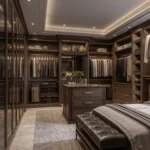
Luxury Minimal Simple Wardrobe Design Ideas

Luxury minimalism sounds like an oxymoron, but it’s actually about quality over quantity—fewer elements, but each one absolutely perfect. Think of it as the difference between a cluttered jewelry box and a single, stunning piece.
Premium materials make all the difference in luxury minimal wardrobes. Solid wood construction, high-grade hardware, and flawless finishes create that expensive look without unnecessary embellishments. I splurged on a luxury minimal wardrobe for my master suite, and the quality difference is obvious every time I open it—smooth, silent operation and materials that feel substantial and well-crafted.
Hidden hardware is a hallmark of luxury minimal design. Push-to-open doors, invisible hinges, and integrated handles create clean surfaces without visible mechanical elements. It’s like magic—everything works beautifully, but you can’t see how.
Interior organization in luxury minimal wardrobes often includes custom compartments, velvet-lined drawers, LED lighting systems, and adjustable shelving made from premium materials. The goal is making your wardrobe interior as beautiful and functional as the exterior.
Color schemes typically stick to monochromatic palettes—whites, grays, or natural wood tones—but the richness comes from texture and finish quality rather than color variety. Matte lacquers, brushed metals, and natural stone elements add visual interest through subtle variation.
Luxury minimal features:
- Premium material construction
- Hidden or integrated hardware
- Flawless surface finishes
- Custom interior organization
- Subtle lighting integration
Open Shelf Simple Wardrobe Design Ideas

Open shelving for wardrobes? I know, I know—it sounds like a recipe for chaos. But hear me out. When done right, open shelf wardrobes can be incredibly stylish and functional, plus they force you to keep things organized (which, let’s face it, most of us need).
Visual accessibility is the biggest advantage. You can see everything at a glance, which eliminates those “I know I have a blue shirt somewhere” moments that usually end with tearing apart your entire wardrobe. Everything has a designated spot, and everything stays in its designated spot because it’s all visible.
Styling opportunities abound with open shelving. Your wardrobe becomes part of your room’s décor rather than hidden storage. Coordinated hangers, neat folding, and organized color schemes turn your clothing into a design element. It’s like having a boutique-style display in your bedroom.
Cost effectiveness is another major plus. Open shelf systems are typically much more affordable than enclosed wardrobes, and they’re often modular, so you can expand or reconfigure as your needs change.
The organization challenge is real though. Open shelving demands discipline—you can’t just shove things wherever and close a door to hide the mess. But IMO, this accountability actually helps maintain better organization long-term.
Dust management requires attention with open systems. Regular cleaning becomes more important, but modern anti-dust treatments and strategic placement can minimize this issue.
Open shelf benefits:
- Complete visual accessibility
- Lower cost than enclosed systems
- Modular and expandable
- Forces good organization habits
- Creates boutique-style displays
Also Read: 10 Amazing Wardrobe with Study Table Design Ideas Modern Homes
Two-Tone Simple Wardrobe Design Ideas

Two-tone wardrobes are having a major moment right now, and for good reason—they add visual interest without overwhelming a space. It’s like adding personality to your storage without going full rainbow explosion.
Classic combinations like white and wood create that perfect modern farmhouse vibe that works in virtually any setting. I used this combination in my guest bedroom, and it strikes that sweet spot between contemporary and timeless. The white keeps things fresh and bright, while the wood adds warmth and character.
Bold contrasts like black and white or navy and light gray make strong design statements while maintaining sophistication. These combinations work particularly well in modern or industrial-style spaces where clean lines and dramatic contrasts are welcomed.
Color placement strategy matters hugely. Generally, lighter colors work better on top because they don’t feel heavy or overwhelming. Darker colors on the bottom create visual grounding and hide wear better in high-use areas.
Hardware coordination becomes more important with two-tone designs. Brushed gold handles work beautifully with warm wood tones, while matte black hardware complements cooler color schemes. The hardware acts as a bridge between the two tones.
Proportion considerations affect how successful two-tone designs look. Equal splits can feel too rigid, while 70/30 or 60/40 ratios create more dynamic, pleasing proportions that feel intentional rather than accidental.
Two-tone design tips:
- Choose colors that complement your existing décor
- Consider light placement for optimal visual balance
- Coordinate hardware to bridge color differences
- Use proportions that feel intentional
- Test combinations in small doses first
Final Thoughts: Your Wardrobe, Your Rules
Here’s the thing about wardrobe design—there’s no one-size-fits-all solution. What works brilliantly in my space might be completely wrong for yours, and that’s perfectly okay. The key is understanding your specific needs, space constraints, and personal style preferences.
Whether you go with sleek minimalist floating units, cozy Scandinavian wood tones, or bold two-tone statements, the best wardrobe design is the one that makes your daily routine easier and your space more enjoyable. Don’t get caught up in trends that don’t serve your lifestyle—a beautiful wardrobe that doesn’t function for your needs is just expensive decoration.
Remember that good organization systems matter more than fancy designs. The most gorgeous wardrobe in the world won’t help if it doesn’t accommodate your actual clothing and accessories. Think about what you own, how you like to organize things, and what would make getting dressed each morning more pleasant.
Start small if you’re feeling overwhelmed by the options. Maybe begin with better internal organization in your existing wardrobe, then consider upgrades when you have a clearer picture of what works for your lifestyle. Sometimes the simplest changes make the biggest difference.
Your wardrobe should work for you, not against you. When you find a design that truly fits your space and lifestyle, getting dressed becomes less of a chore and more of a pleasant start to your day. And honestly? That’s worth every bit of effort you put into getting it right.