
PEX Radiant Floor Heating Calculator
Calculate material requirements and loop layouts for your project.
Project Estimates
Trusted by HVAC designers for preliminary radiant sizing
Why Accurate PEX Estimates Matter
Getting accurate pex pipe estimates helps beginners avoid stress before they even start. When your numbers stay precise, you prevent mid-project shortages that cause costly delays.
That kind of accuracy supports smooth project execution and steady workflow continuity.
Check out List of our Popular Calculators
- R-404A Refrigerant PT Chart Tool
- Attic/Wall Insulation R-Value Tool Calculator
- Blower Door & Air Leakage Calculator
- ASHRAE 62.2 Ventilation Calculator
- VOC Exposure Risk Assessment Tool
- General Energy Savings Calculator
- Duct Insulation (R-Value) Savings Calculator
- Smart Thermostat Savings Calculator
- Humidifier Sizing Tool
- Mold Growth Risk Assessment Tool
- Dehumidifier Sizing Tool
- Air Changes per Hour (ACH) Calculator
- MERV Rating Efficiency & Airflow Trade-off Tool
- Furnace/AC Filter Replacement Cost & Size Finder Tool
- Air Purifier Sizing (CADR) Tool
- Psychrometric Chart Tool
- HVAC Load Calculation (Manual J) Tool
- Ductwork CFM & Static Pressure Diagnostic Tool
- Heating & Cooling Cost Comparison Tool Calculator
- AC BTU Tonnage Calculator | HVAC Sizing Tool
How to Use the Calculator
Total Heated Area (sq ft)
Total heated area means only the floor space where tubing will run. Do not include closets, walls, or areas without radiant tubing.
Accurate square footage improves tubing length and loop count results.
Tube Spacing (inches)
Tube spacing controls how close the tubing lines sit under the floor. Tighter spacing increases heat output while wider spacing reduces material use. The calculator adjusts tubing length automatically based on your spacing choice.
Max Loop Length (ft)
Max loop length protects water flow and system balance. Most systems use 300 feet to avoid pressure loss.
Shorter limits increase loop count and change the manifold size instantly.
Heat Load (BTU per sq ft)
Heat load estimates how much warmth each square foot needs. Many homes fall between 20 and 30 btu per sq ft.
Real-World Radiant Floor Heating Examples
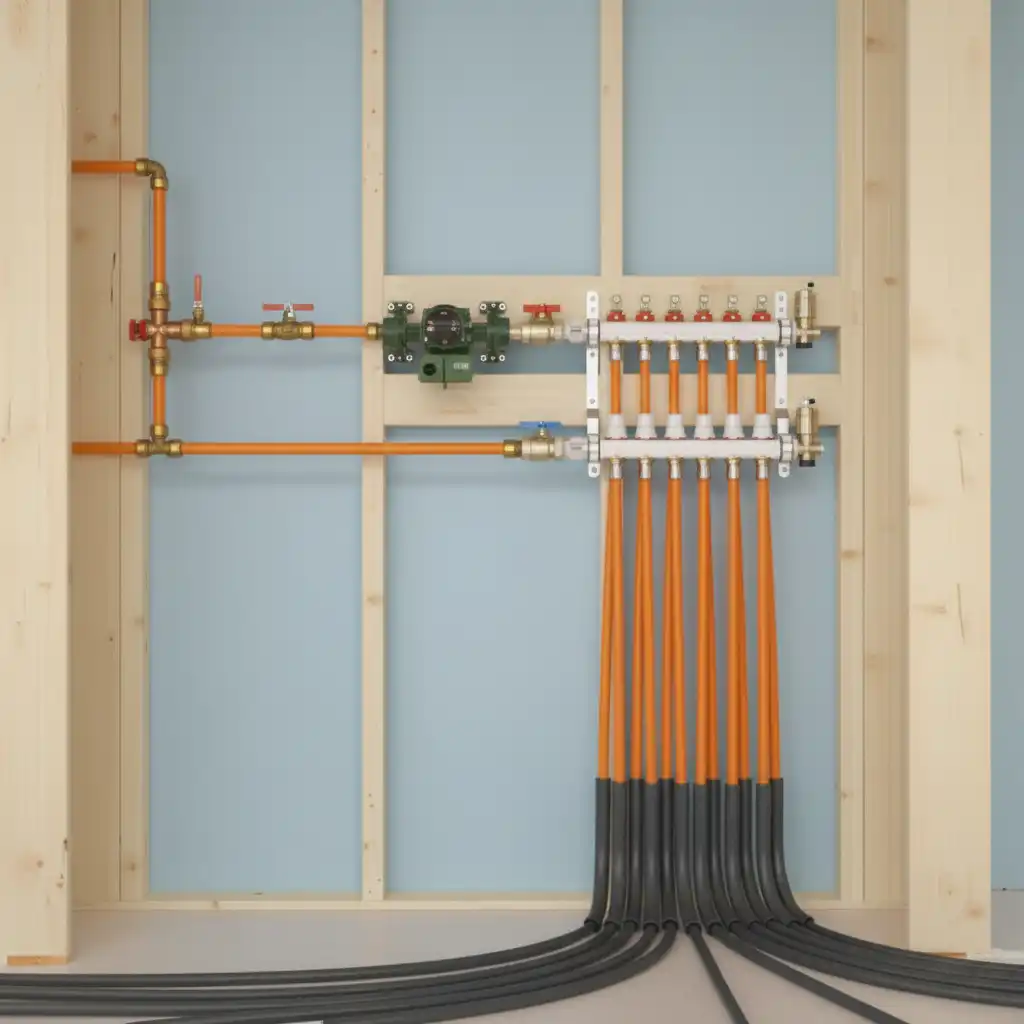
This type of manifold distributes heated water to multiple PEX loops, each serving a separate zone or room.
During planning, loop length limits and zone counts must be considered to maintain balanced flow and even heat delivery. Early calculations help estimate tubing quantities and loop counts before final manifold selection.
#2
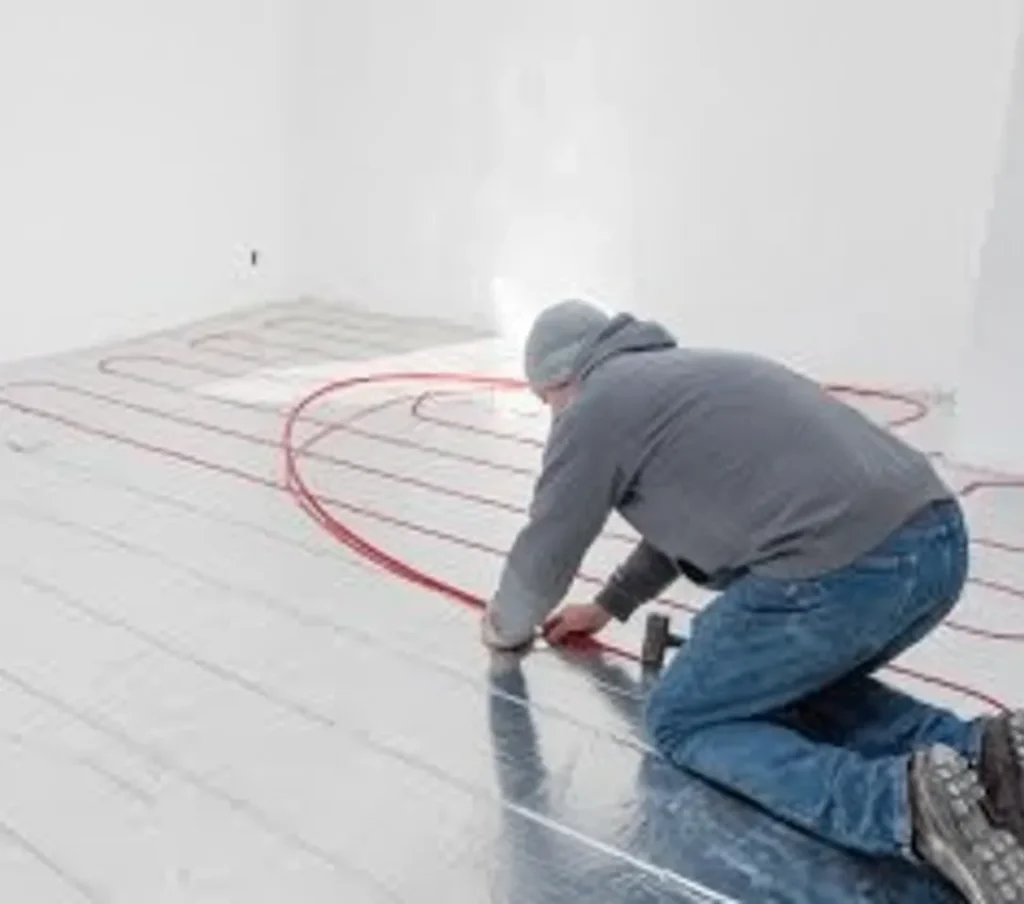
At the installation stage, tubing spacing and loop layout are adjusted based on room size, insulation levels, and expected heat loss.
Early calculations help estimate total tubing length and spacing so installation can proceed efficiently and within practical loop limits.
Understanding Your Results
Total PEX Tubing Required
Total pex tubing shows the full tubing length needed for your layout. The calculator adds a 10 percent margin to cover waste and leader lines.
This number helps prevent underbuying materials.
Required Loops
Required loops tell you how many separate tubing circuits your floor needs. More loops keep flow balanced and improve system performance.
The tool divides tubing based on your loop length limit.
BTU Capacity
BTU capacity reflects the estimated heating output for your floor area. This value helps you understand comfort potential. It does not replace a full heat loss study.
Suggested Manifold
Suggested manifold matches the number of loops calculated. Each loop needs one port on the manifold.
How Accurate Is This Calculator
This underfloor heating calculator uses standard residential assumptions to deliver fast estimates. It does not include insulation depth, outdoor temperature, or window loss.
Use the results for planning and verify final designs with a professional.
Common Use Scenarios
DIY Homeowners
You can estimate tubing before visiting a supply store. This reduces overspending and return trips.
Contractors and Installers
You can generate quick estimates during early planning. The tool speeds up material takeoffs.
Remodels and New Construction
Results work best for open layouts and new floors. Complex remodels may need deeper analysis.
What to Do After Using the Calculator
- Save the tubing length and loop count.
- Confirm manifold size with your supplier.
- Recalculate using different spacing to compare options.
This tool provides estimates only. Final system design should always be reviewed by a local hvac professional.
Answer To Common Questions
Is this calculator useful for both DIY and professionals?
Yes, beginners can use it to understand material needs, while professionals use it for quick planning and early budgeting. It works as a starting point before detailed system design.
How does loop spacing affect total PEX length?
Tighter spacing increases tubing length but improves heat coverage and comfort. Wider spacing reduces tubing needs but may create cooler spots in rooms with high heat loss.
Does room shape change how much PEX I need?
Yes, irregular room layouts often require more tubing than simple square or rectangular spaces. Extra length gets used when loops must curve or avoid fixtures, walls, or built-ins.
Does floor type impact PEX tubing estimates?
Yes, but indirectly. The tubing length itself does not change just because of the floor material, but the loop spacing often does. Floors like tile or concrete transfer heat well, so they can use wider spacing, while wood, laminate, or carpet usually need tighter spacing, which increases the total PEX tubing required.