
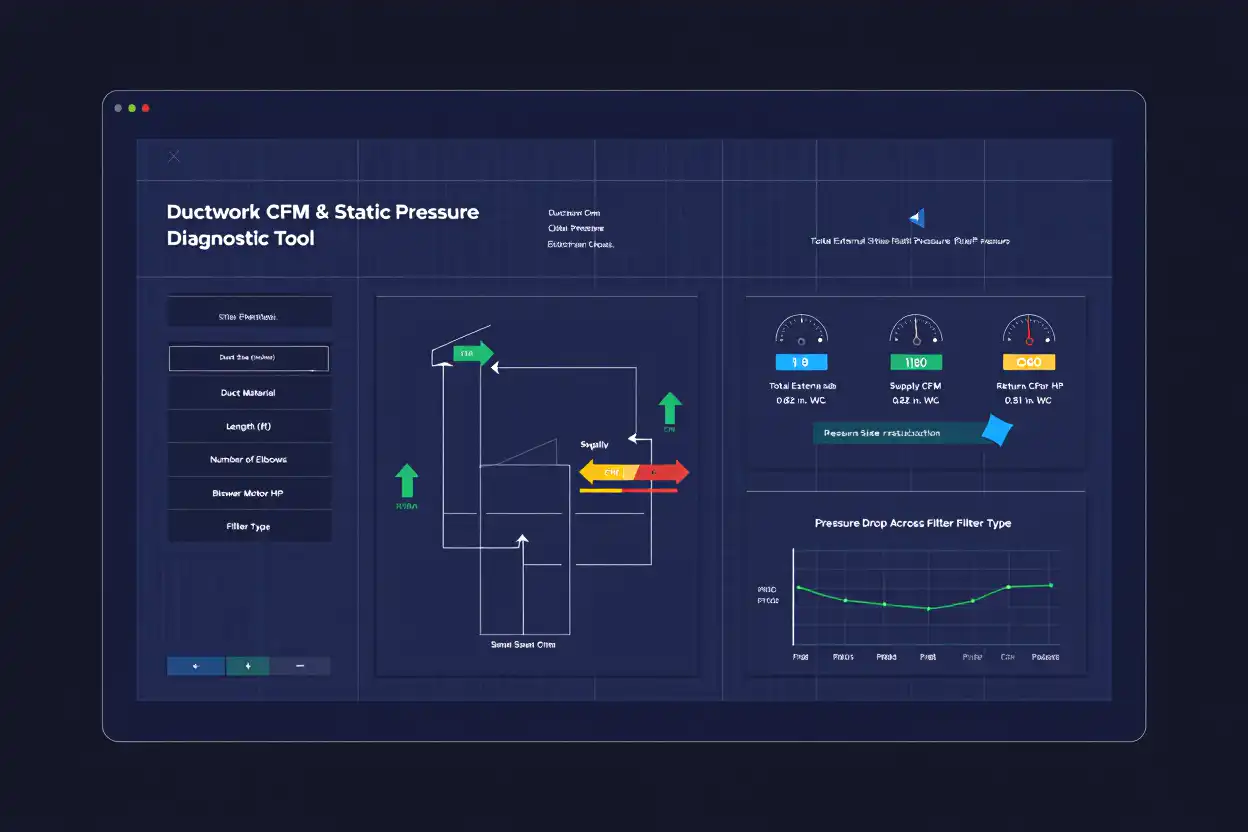
Ductwork CFM & Static Pressure Calculator | HVAC Airflow Diagnostic Tool
📐 Ductwork CFM & Static Pressure Tool
✨ Required Airflow based on Air Changes per Hour (ACH)
Why Use This Ductwork CFM & Static Pressure Tool?
Proper duct sizing and airflow are critical for HVAC efficiency, comfort, and indoor air quality. This tool helps you determine the necessary CFM (cubic feet per minute) based on room size and desired air changes per hour (ACH), plus estimate static pressure loss in duct runs.
Key Features
- CFM Calculator – uses formula: CFM = (Room Volume × ACH) ÷ 60
- Static Pressure Estimator – accounts for length, diameter, material, and fittings
- Visual feedback with progress bars and status indicators
- Real‑time adjustments – move sliders, get instant results
Frequently Asked Questions (FAQ)
What is ACH and why does it matter?
Air Changes per Hour (ACH) measures how many times the air in a room is replaced each hour. For residential spaces, 3–5 ACH is typical; for commercial or high‑occupancy areas, 6–12 ACH is recommended. Higher ACH improves IAQ but may increase energy use.
What is static pressure in ductwork?
Static pressure is the resistance to airflow within the duct system. High static pressure (above 0.5 inches w.c. for residential) indicates undersized ducts, too many elbows, or blockages, leading to reduced airflow and higher energy bills.
How accurate is this static pressure calculator?
This tool uses simplified friction loss models based on ASHRAE fundamentals. For exact Manual D calculations, always consult an HVAC professional. It's excellent for quick diagnostics and educational purposes.
What CFM do I need per room?
Typical values: bedroom (100-200 CFM), living room (200-400 CFM), kitchen (150-300 CFM). Our calculator helps you fine‑tune based on room volume and desired air changes.
Can I use this tool for my home or commercial building?
Yes. Both homeowners and HVAC technicians can use it to evaluate existing systems or design new ductwork.
Disclaimer: This tool provides estimates only. Always verify with on‑site measurements and local codes.