You know that moment when you walk into your kid’s room and realize their wardrobe looks like it survived a clothing apocalypse? Yeah, we’ve all been there.
Between the toys spilling out, clothes hanging on for dear life, and that one sock that’s somehow made friends with a random crayon – kids’ wardrobes can be a real challenge.
But here’s the thing: your little one’s wardrobe doesn’t have to be a daily battle zone. With the right design, it can actually become the room’s superstar while keeping everything organized.
I’ve spent way too much time researching (okay, obsessing over) kids’ wardrobe designs, and trust me, some of these ideas will blow your mind. Ready to transform that chaos into something Pinterest-worthy? Let’s jump right in!
Modern Pastel Kids Room Wardrobe Design Ideas
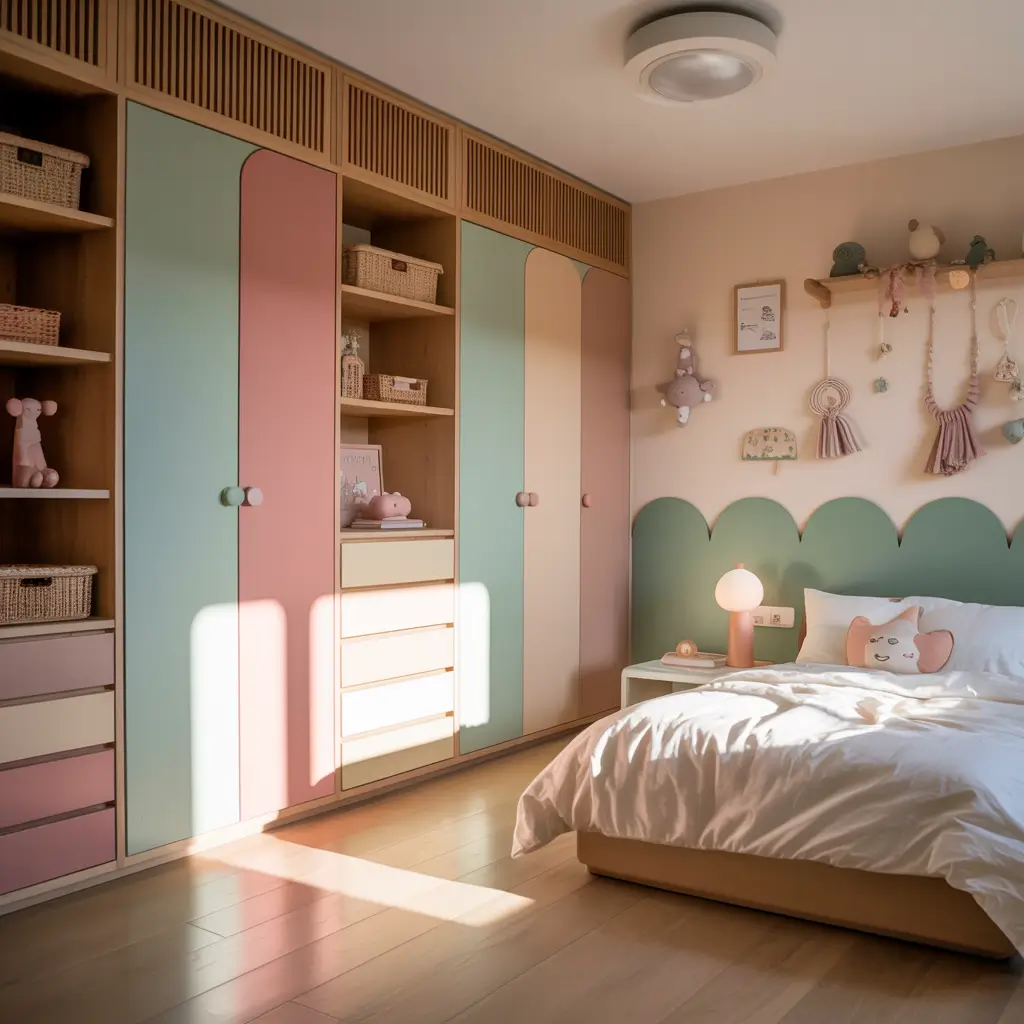
Pastels are having a major moment right now, and honestly, I’m here for it. There’s something magical about soft mint greens, dusty pinks, and gentle lavenders that makes any space feel instantly calmer – and let’s face it, we all need more calm in our kids’ rooms.
What makes pastel wardrobes work so well? They’re like the Switzerland of colors – neutral enough to grow with your child but interesting enough to add personality. I’ve seen some stunning examples where parents use soft sage green as the main color and accent it with natural wood handles. The result? Sophisticated enough for Instagram but kid-friendly enough for daily chaos.
The beauty of pastel designs lies in their versatility. You can mix and match different pastel shades for a dreamy, cloud-like effect, or stick to one color family for a more cohesive look. Pro tip: pair pastels with white or cream interiors to keep things bright and airy. Your kids will love the gentle colors, and you’ll appreciate how they photograph beautifully when family visits 🙂
One clever trick I’ve noticed in modern pastel designs is the use of gradient effects. Imagine a wardrobe that transitions from pale pink at the top to a slightly deeper rose at the bottom – subtle but absolutely gorgeous. It adds depth without overwhelming the space.
Space Saving Built-In Kids Room Wardrobe Ideas
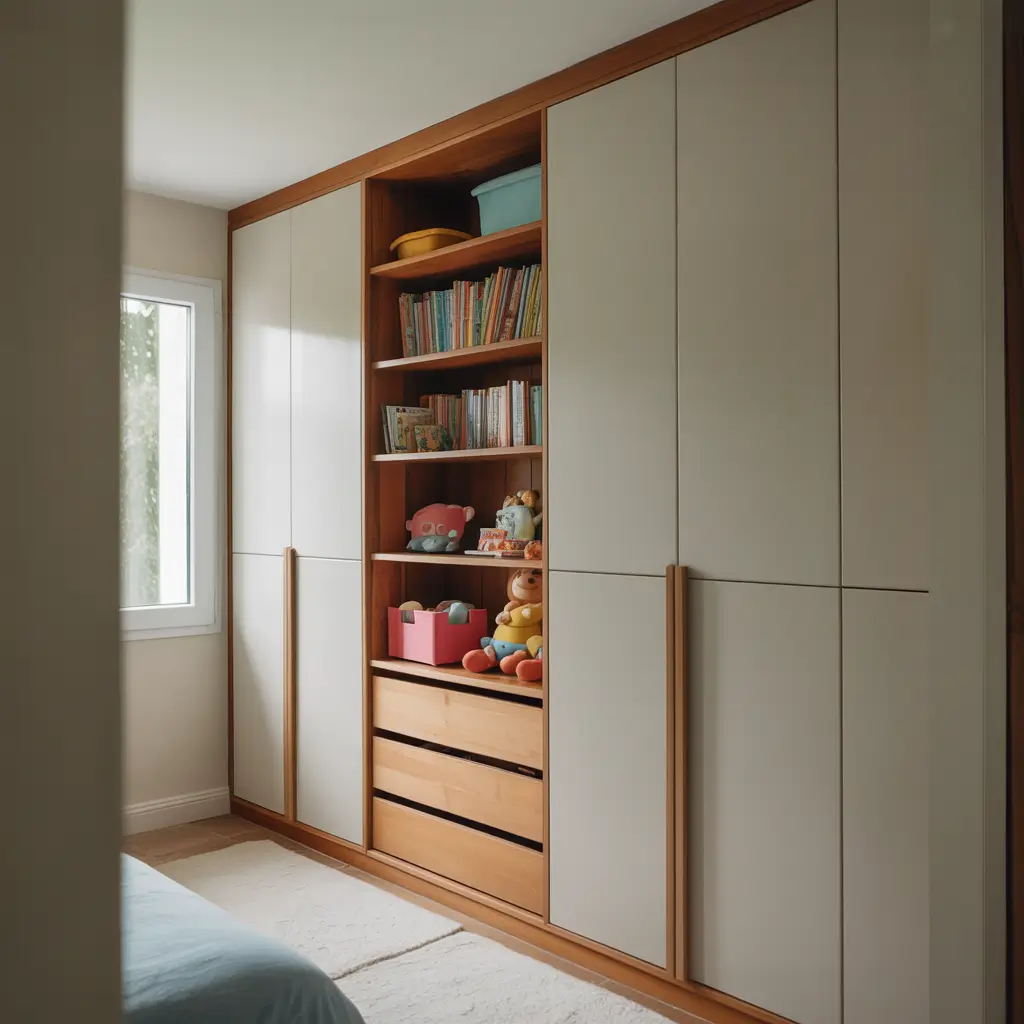
Small rooms and kids’ stuff – it’s like trying to fit an elephant in a smart car, right? Built-in wardrobes are basically the superheroes of space-saving solutions. They use every single inch of available space, including those weird corners and awkward ceiling angles that would otherwise collect dust bunnies.
What I love about built-ins is how they can be customized to fit your exact space. Got a slanted ceiling? No problem. Weird architectural features? They’ll work around them. Built-in wardrobes maximize vertical space like nothing else can, often reaching from floor to ceiling without wasting precious real estate.
The key to successful built-in designs is smart internal organization. Think adjustable shelving that grows with your child, double-height hanging sections for shorter clothes, and designated spots for shoes and accessories. I’ve seen designs where they incorporate a small desk area or reading nook – talk about multi-functional!
Here’s something most people don’t consider: built-ins can actually make a room feel larger because they don’t protrude into the space like freestanding furniture. The clean, streamlined look creates visual flow and makes the room feel more spacious. Plus, you can paint them to match the walls for an almost invisible storage solution.
Installation considerations: While built-ins require more upfront investment and planning, they often add value to your home and last for decades. Just make sure to plan for growth – what works for a 5-year-old might need tweaking for a teenager.
Colorful Rainbow Theme Kids Wardrobe Designs
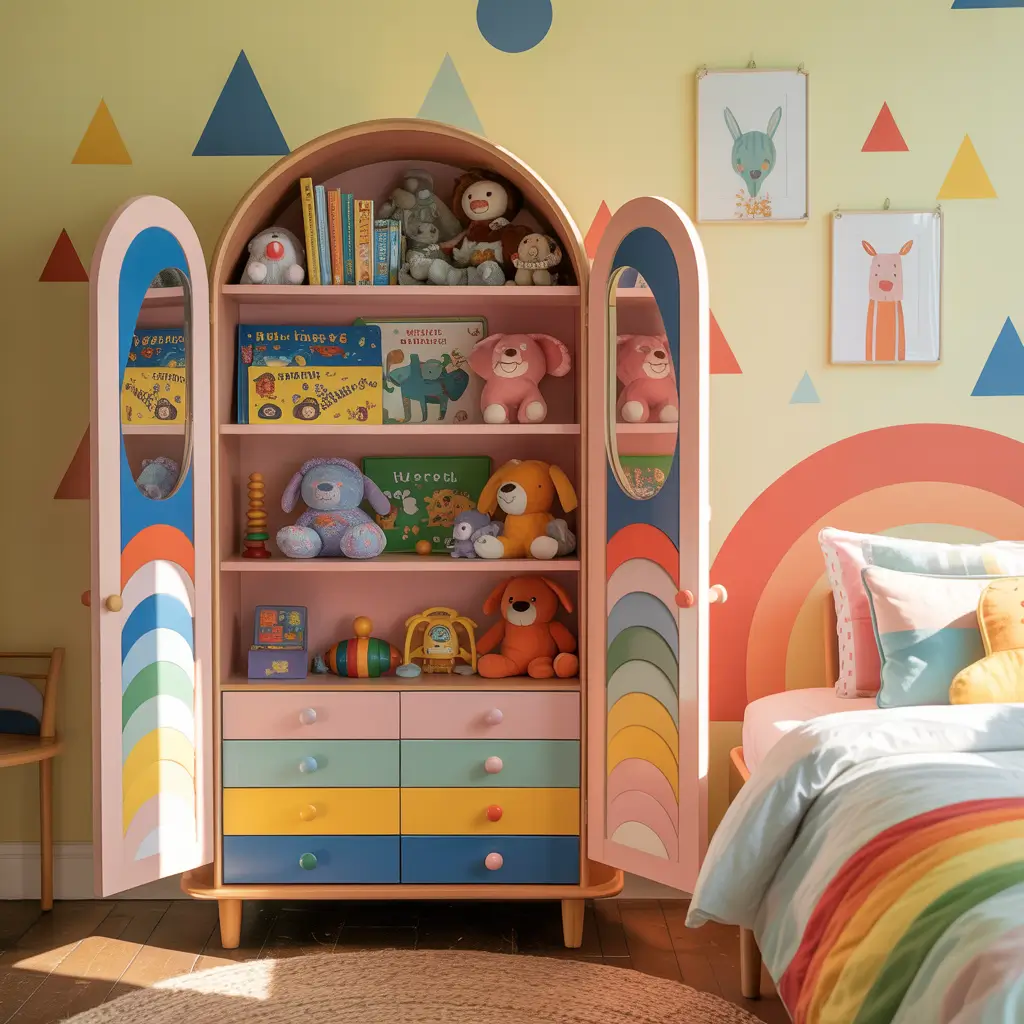
Ever seen a kid’s face light up when they spot a rainbow? That’s the magic we’re going for here. Rainbow-themed wardrobes aren’t just storage – they’re daily doses of happiness wrapped in functional furniture.
The trick with rainbow designs is finding the right balance. You don’t want something that’ll give you a headache every morning (trust me, parenting is hard enough without furniture-induced migraines). The best rainbow wardrobes I’ve seen use subtle color gradients rather than bold, primary colors that scream “circus tent.”
One approach that works beautifully is the ombre rainbow effect – where colors flow seamlessly from one to the next. Picture a wardrobe with drawers that transition from soft coral to peachy orange to gentle yellow to mint green. It’s rainbow-inspired but sophisticated enough that you won’t want to hide it when guests come over.
Internal organization tip: Match the interior colors to the exterior theme. Use rainbow-colored bins, hangers, or drawer dividers to carry the theme throughout. Kids love organizing their clothes by color, and this makes it easy and fun.
Some parents worry that rainbow themes are too childish and won’t age well. Here’s the thing – you can always tone it down later by changing handles or adding neutral accessories. But honestly? Most kids (and let’s be real, most adults) never really outgrow the joy of rainbows.
Also Read: 10 Elegant Wardrobe Design Modern Ideas For Stylish Spaces
Minimalist Scandinavian Kids Room Wardrobe Ideas
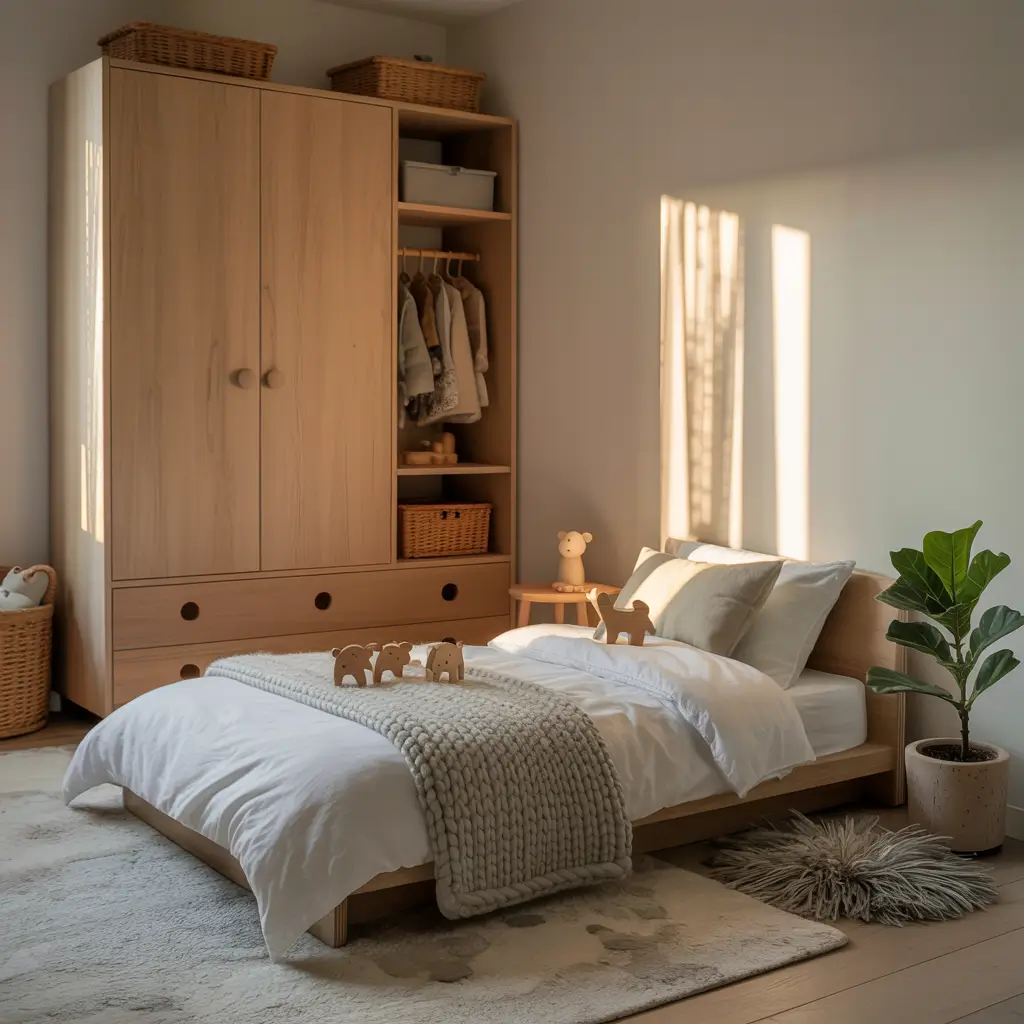
Ah, Scandinavian design – where “less is more” meets “hygge” and somehow creates the perfect storm of cozy minimalism. If you’re tired of visual clutter and want something that’ll photograph beautifully for years to come, Scandinavian-inspired wardrobes might just be your answer.
The Scandinavian approach focuses on clean lines, natural materials, and functional beauty. Think light woods like birch or pine, simple geometric shapes, and a color palette that consists mainly of whites, grays, and natural wood tones. It’s like meditation for your eyeballs.
What makes these designs so appealing is their timeless quality. A well-designed Scandinavian wardrobe looks just as good in a nursery as it does in a teenager’s room. The secret sauce? Focusing on quality materials and craftsmanship rather than trendy details that’ll look dated in five years.
Key elements of Scandinavian kids’ wardrobes:
- Natural wood finishes (no staining or heavy treatments)
- Simple, geometric hardware in brushed metals
- Clean, handleless designs or minimal wooden knobs
- Plenty of white space and breathing room
- Functional design that prioritizes usability
The beauty of minimalist design is that it forces you to be intentional about what you keep. Kids learn early that everything has its place, and the calm visual environment actually helps reduce stress and improve focus. IMO, that’s worth its weight in gold when you’re dealing with homework battles and bedtime routines.
Smart Sliding Door Kids Wardrobe Designs
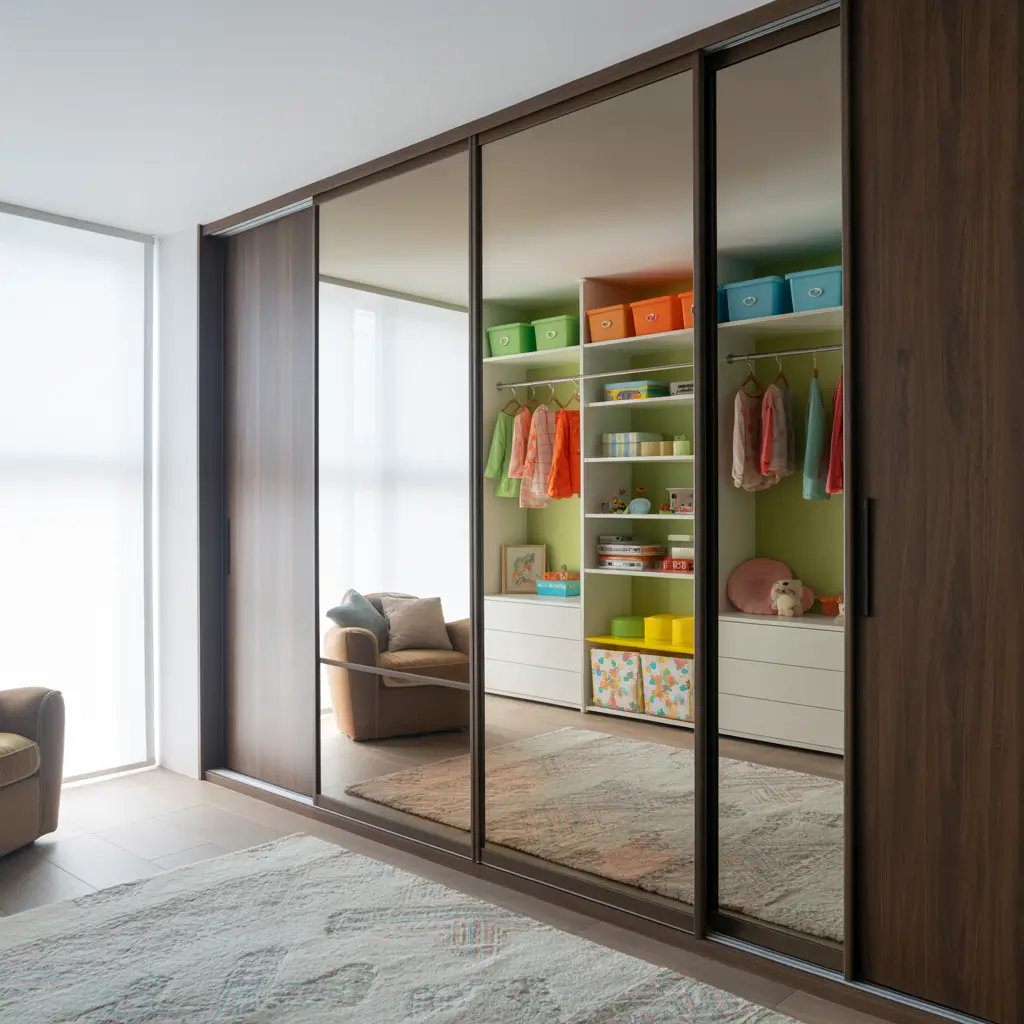
Sliding doors are like the ninjas of the wardrobe world – they get the job done without taking up any extra space. In kids’ rooms where every square foot matters, sliding doors can be absolute game-changers.
Traditional hinged doors need clearance to open, which can eat up valuable play space or make room layouts awkward. Sliding doors eliminate this problem completely. Plus, there’s something satisfying about that smooth gliding motion – kids love operating them, which might actually encourage them to use the wardrobe properly (we can dream, right?).
Modern sliding door systems offer some seriously cool features:
- Soft-close mechanisms that prevent slamming
- Mirror panels that make rooms look bigger
- Frosted glass inserts for a contemporary look
- Customizable panel materials and colors
- Easy-glide tracks that even small hands can operate
One trend I’m absolutely loving is the barn door style slider – it adds rustic charm while being super functional. You can paint the door in a fun color or even use chalkboard paint so kids can draw and personalize their space.
Safety consideration: Make sure sliding systems have proper guides and can’t be lifted off their tracks easily. The last thing you want is a heavy door becoming a safety hazard during an enthusiastic play session.
The internal organization opportunities are endless with sliding doors. You can create different zones – one side for hanging clothes, another for folded items and toys. Some designs even incorporate a full-length mirror on one panel, making morning routines easier and rooms feel larger.
Montessori Inspired Kids Room Wardrobe Ideas
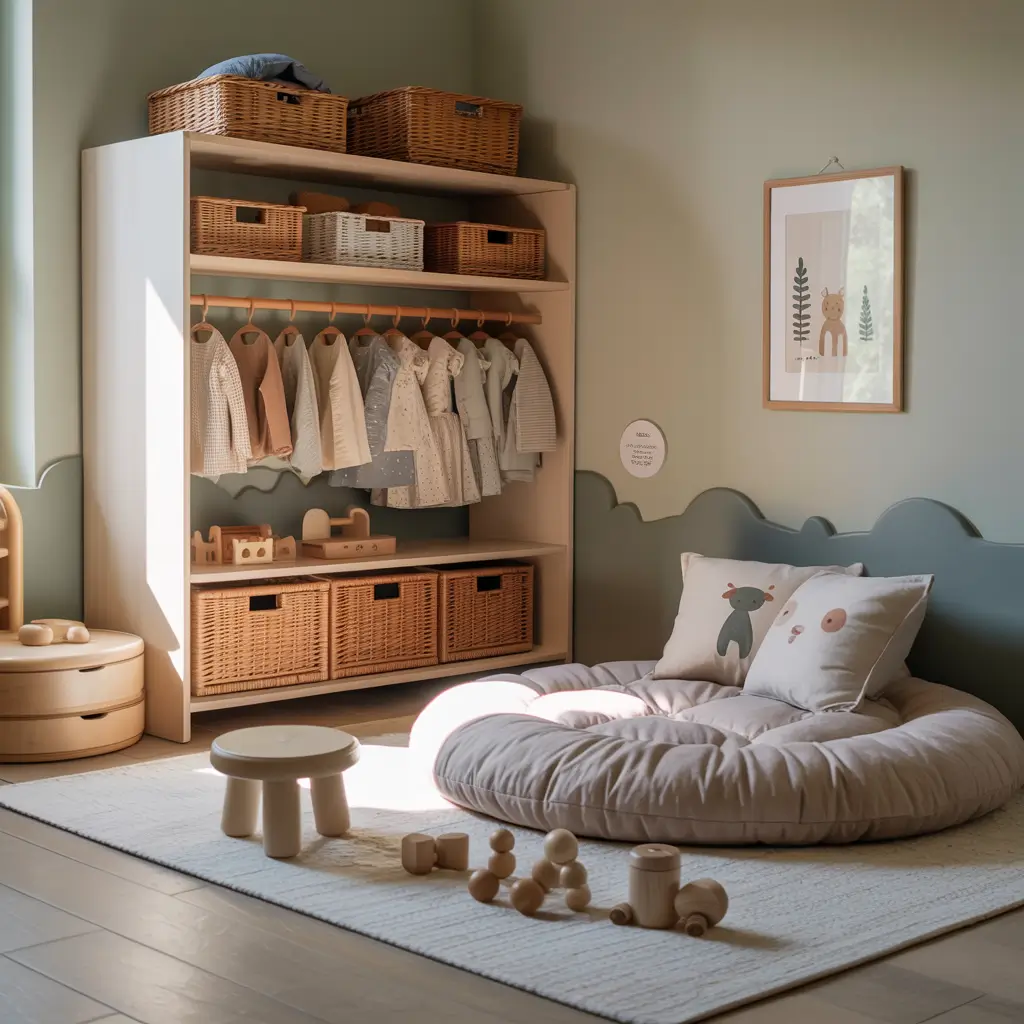
The Montessori approach isn’t just about education – it’s a whole philosophy that extends beautifully into furniture design. Montessori-inspired wardrobes prioritize independence, accessibility, and child-sized functionality. Basically, everything is designed so kids can actually use it without needing a stepladder or parental assistance every five minutes.
Core principles of Montessori wardrobe design:
- Everything at child height
- Open storage for easy visibility
- Natural materials and neutral colors
- Simple, uncluttered organization systems
- Child-accessible hanging rods and shelving
What I find brilliant about this approach is how it encourages independence from an early age. Instead of clothes being stored in high, unreachable places, everything is at a level where kids can see their options and make choices. This builds decision-making skills and self-reliance – pretty impressive for a piece of furniture, right?
The aesthetic tends to be clean and natural, focusing on wood tones and simple lines. You won’t find cartoon characters or bright primary colors here – instead, the beauty comes from the natural grain of the wood and the thoughtful functionality of the design.
Practical Montessori features include:
- Lower hanging rods (around 36-48 inches high)
- Open cubbies instead of closed drawers
- Basket storage for easy access
- Child-sized hooks and pegs
- Clear sight lines to all storage areas
One thing that surprised me about Montessori wardrobes is how they actually reduce morning battles. When kids can see and access their clothes easily, they’re more likely to participate in getting dressed rather than melting down because they can’t reach their favorite shirt.
Also Read: 10 Beautiful Sliding Door Wardrobe Designs Ideas To Inspire You
Luxury Custom Kids Room Wardrobe Designs
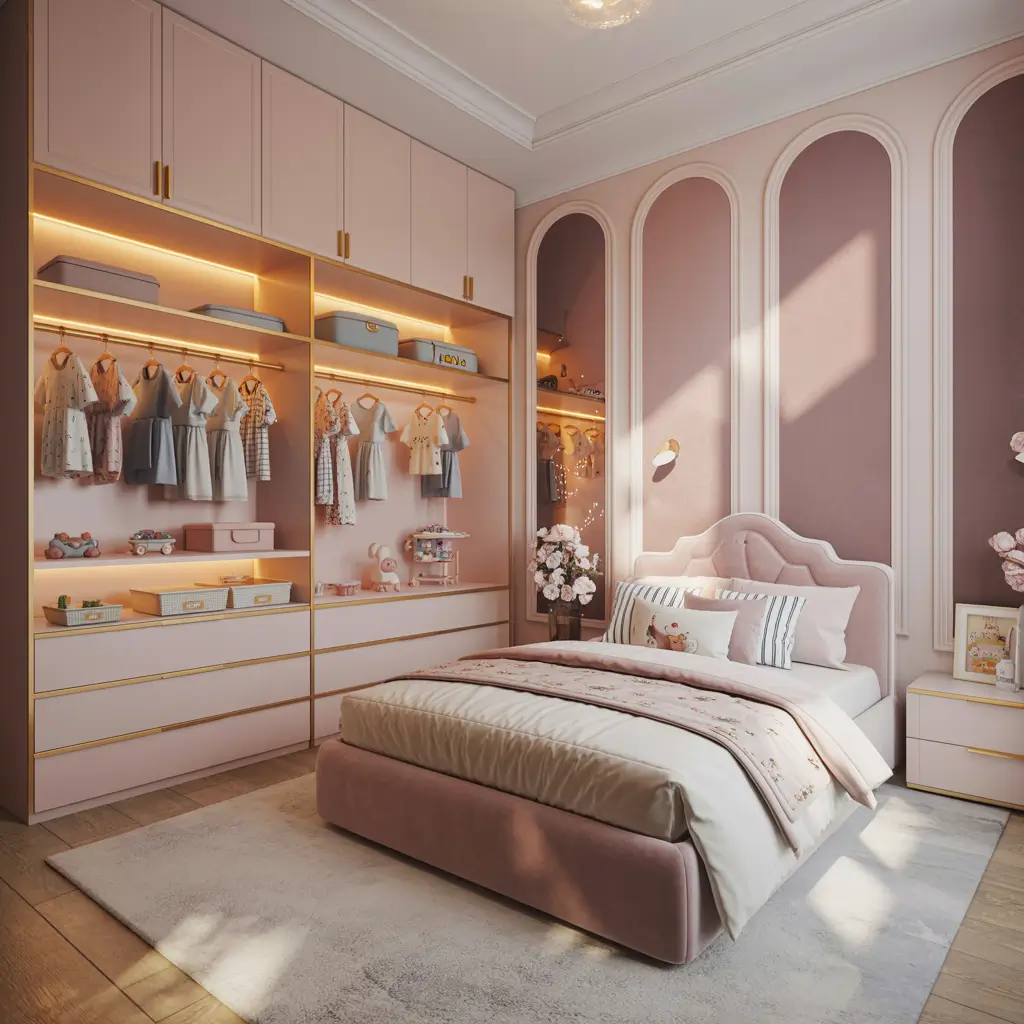
Sometimes you want to go all out – and honestly, why shouldn’t kids get to experience a little luxury too? Custom luxury wardrobes for kids’ rooms are like regular wardrobes that went to finishing school and came back with impeccable manners and style.
What sets luxury custom wardrobes apart:
- Premium materials like solid hardwoods or high-quality veneers
- Sophisticated hardware and finishing details
- Advanced organizational systems with specialized compartments
- Integrated lighting systems
- Custom sizing and configuration options
- High-end paint finishes and color matching
I’ve seen some absolutely stunning custom pieces that incorporate features like built-in jewelry organizers (yes, even for kids – they love having special places for their treasures), LED strip lighting that automatically turns on when doors open, and even integrated charging stations for tablets and devices.
The beauty of going custom is that you can create exactly what your family needs. Got a kid who’s obsessed with art supplies? Build in a dedicated craft storage zone. Dealing with a young athlete? Create specialized compartments for gear and equipment.
One luxury trend that’s really caught my attention is the boutique-style display approach. Instead of hiding everything away, these designs showcase clothes and accessories like they’re in a high-end children’s boutique. Open hanging areas, beautiful display shelves, and even small seating areas for trying on shoes.
Investment consideration: Yes, luxury custom pieces cost more upfront, but they’re built to last through multiple children and often add significant value to your home. Plus, there’s something to be said for teaching kids to appreciate quality and craftsmanship from an early age.
Corner Wardrobe Ideas For Small Kids Rooms
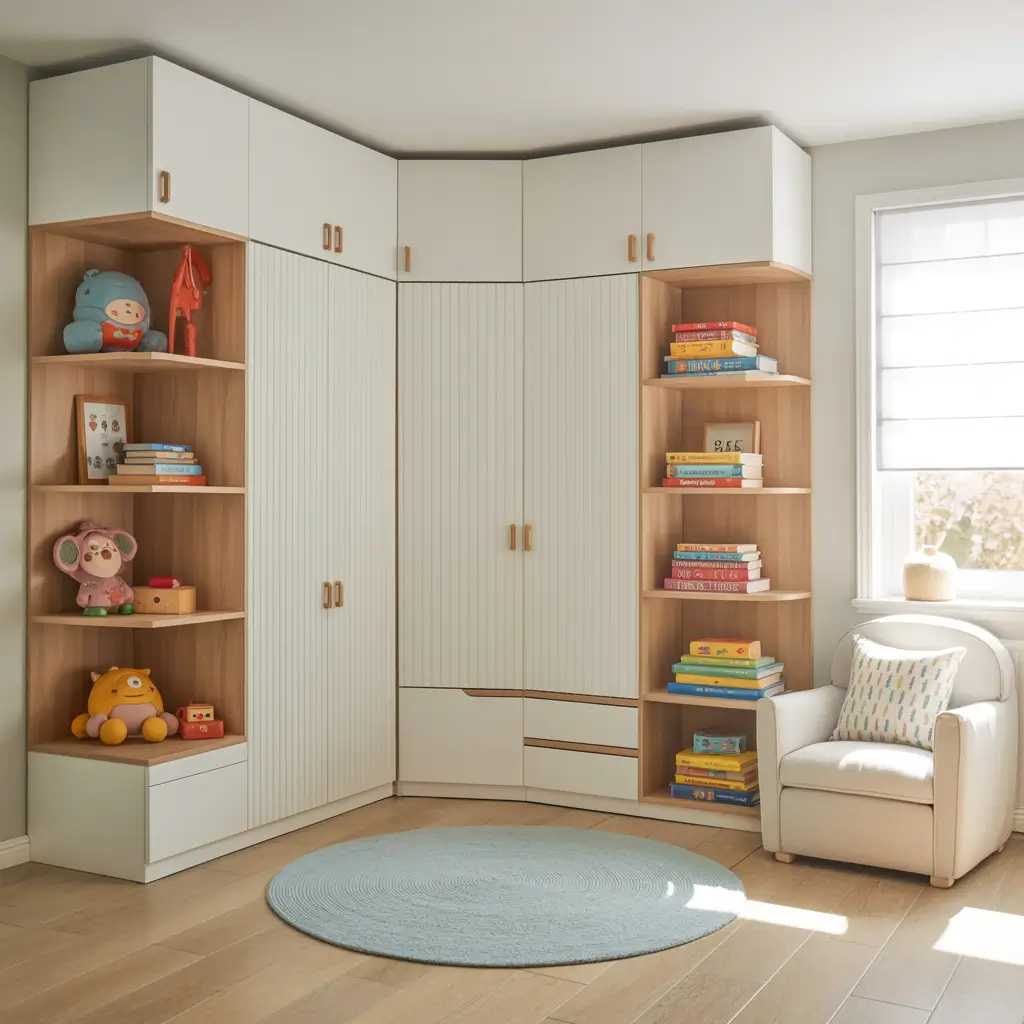
Corners are like the forgotten real estate of kids’ rooms – everyone knows they’re there, but nobody quite knows what to do with them. Corner wardrobes are brilliant solutions that turn these awkward spaces into storage powerhouses.
Why corner wardrobes work so well in small spaces:
- They utilize space that’s often wasted
- Create interesting visual angles that add character
- Can actually make rooms feel larger by drawing the eye upward
- Offer surprising amounts of internal storage
- Leave central floor space free for play
The key to successful corner wardrobe design is maximizing the internal space while maintaining easy access. L-shaped hanging systems work particularly well, allowing you to hang longer items on one side and shorter pieces on the other. Rotating corner hardware (yes, that’s a real thing!) can bring items from the deep corners right to the front for easy access.
I’ve seen some clever corner designs that incorporate triangular shelving systems – these make use of the corner’s natural shape rather than fighting against it. The result is storage that feels intentional rather than like an afterthought.
Design tip: Use the top of corner wardrobes for seasonal storage or items that aren’t needed daily. The height makes them perfect for storing off-season clothes, extra bedding, or toys that are rotated periodically.
Lighting becomes especially important in corner wardrobes since they can feel darker than straight-wall installations. Battery-operated LED strips or small wireless lights can make all the difference in visibility and usability.
Playful Cartoon Theme Kids Wardrobe Designs
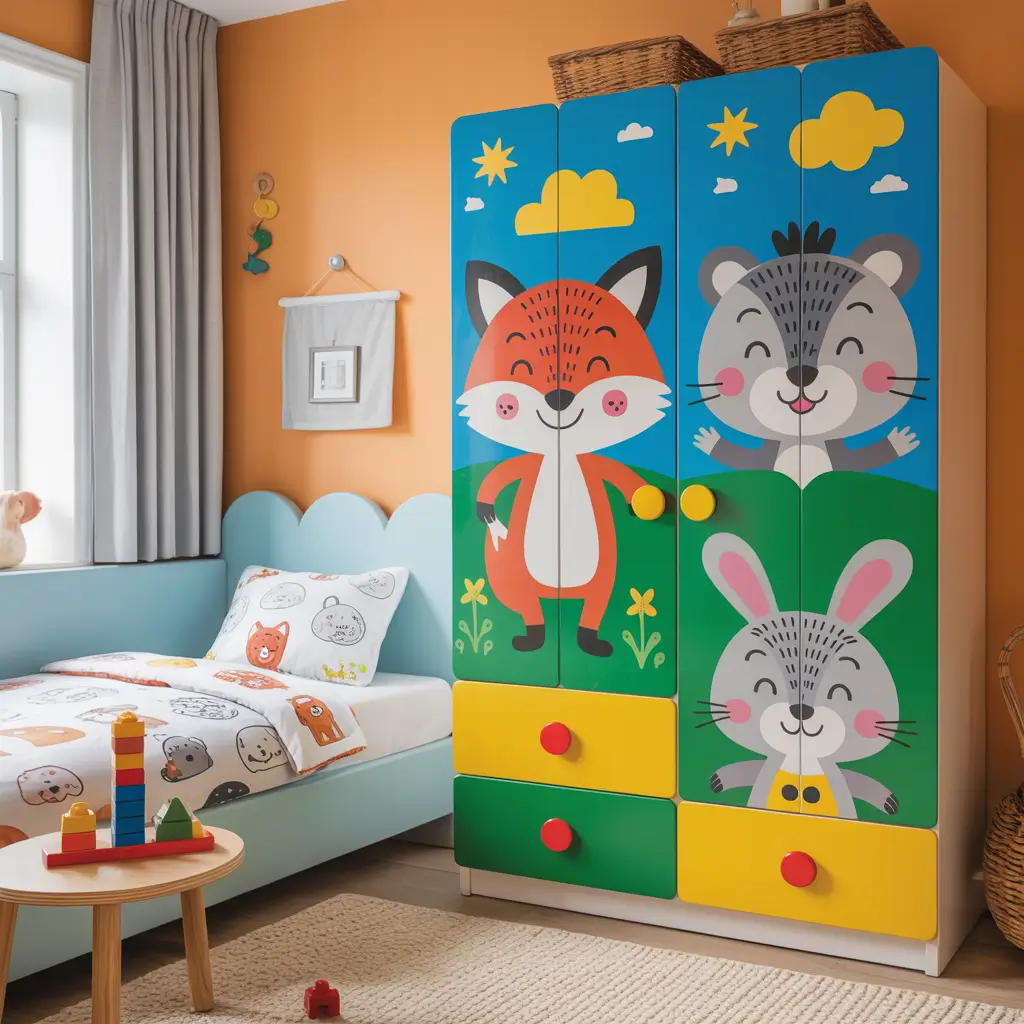
Let’s be honest – sometimes kids just want their furniture to be fun, and there’s absolutely nothing wrong with embracing that. Cartoon-themed wardrobes can be incredible focal points that make kids excited about their space while still providing serious storage functionality.
The trick with cartoon themes is choosing characters or styles that have staying power. Classic characters like Mickey Mouse or timeless themes like safari animals tend to age better than whatever’s trending on kids’ YouTube channels this month (trust me on this one – I’ve seen some regrettable Peppa Pig installations :/).
Smart approaches to cartoon theming:
- Use removable vinyl decals that can be changed as interests evolve
- Focus on color schemes inspired by characters rather than literal representations
- Incorporate themed hardware (like paw-print handles or star-shaped knobs)
- Create subtle nods to favorite characters through color and pattern
What I’ve learned from watching kids interact with themed furniture is that sometimes the simplest touches have the biggest impact. A wardrobe painted in superhero colors with a few themed accessories can be just as exciting as one covered in character graphics – but it’ll photograph better for family memories and age more gracefully.
Practical consideration: If you’re going full cartoon theme, balance it with neutral elements elsewhere in the room. This prevents the space from feeling overwhelming and gives you flexibility to update the theme without redoing everything.
Some of the most successful cartoon-themed wardrobes I’ve seen use modular elements that can be mixed, matched, and updated. Think interchangeable door panels, swappable hardware, and removable decorative elements that let kids participate in refreshing their space as they grow.
Also Read: 10 Stunning Sliding Wardrobe Design Ideas for Dream Bedrooms
Convertible Growing Kids Room Wardrobe Ideas
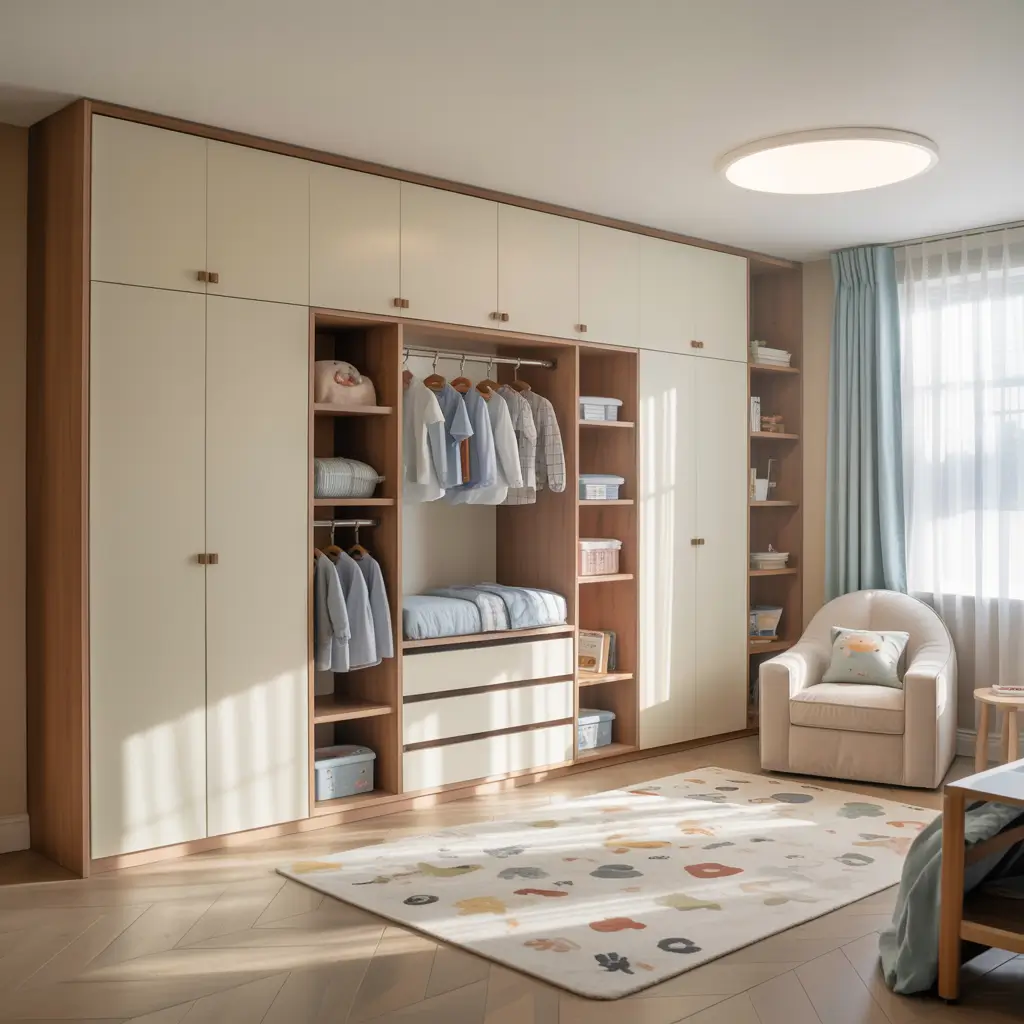
Kids grow faster than you can say “did you already outgrow those jeans?” – and their storage needs evolve just as quickly. Convertible wardrobes are like the Swiss Army knives of children’s furniture: adaptable, practical, and surprisingly sophisticated.
What makes a wardrobe truly convertible:
- Adjustable internal components that move as kids grow
- Modular design that allows adding or removing sections
- Multi-height hanging rods that accommodate different clothing lengths
- Convertible spaces that transform from toy storage to teen organization
- Removable or adjustable shelving systems
I’ve seen some brilliant convertible designs that start as toy storage and nursery organization in the baby years, transition to school-age clothing and activity storage, and then evolve into sophisticated teen organization systems. The secret is planning for flexibility from the beginning.
Key convertible features to look for:
- Height-adjustable hanging rods
- Modular shelf systems
- Interchangeable drawer configurations
- Adaptable door and panel options
- Expandable organizational accessories
One approach that really works is the zone-based system. Instead of thinking about the entire wardrobe as one unit, design it in sections that can be reconfigured. A lower section might start as toy bins for toddlers, become sports equipment storage for school-age kids, and transform into shoe and accessory organization for teens.
The investment in a well-designed convertible system pays off over time. Instead of buying multiple pieces of furniture as kids grow, you’re adapting one high-quality piece that evolves with your family’s needs. Plus, kids feel ownership over their space when they can participate in reconfiguring it for their changing needs.
Future-proofing tip: Choose convertible systems with timeless aesthetics that won’t look dated as trends change. Neutral colors with high-quality materials and hardware will serve you well through multiple configurations and style evolutions.
Making the Right Choice for Your Family
After diving deep into all these wardrobe options, you might feel a bit overwhelmed. Here’s the truth: the best wardrobe design is the one that fits your family’s specific needs, space constraints, and lifestyle.
Consider your child’s personality – are they organized by nature or more of a “stuff everything in one drawer” type? Think about your space limitations, budget considerations, and how long you plan to stay in your current home. The perfect wardrobe solution balances functionality, aesthetics, and practicality in a way that works for your unique situation.
Remember, you don’t have to choose just one approach. Some of the most successful kids’ room storage solutions combine elements from multiple design philosophies. Maybe you love the clean lines of Scandinavian design but want to incorporate the accessibility principles of Montessori. Or perhaps you’re drawn to the space-saving benefits of built-ins but want to include some playful cartoon elements.
The most important thing is creating a space that makes your child feel happy and organized while making your life as a parent a little bit easier. Because let’s face it – any wardrobe design that reduces the daily clothing battle is a win in my book! FYI, whatever you choose, your kids will probably still manage to turn it into creative chaos within a week, and that’s perfectly normal too.
Your kid’s wardrobe should grow with them, support their