Let’s be honest—scrolling through Instagram and seeing those dreamy Italian farmhouse kitchens makes us all a little jealous, doesn’t it? There’s something about those sun-drenched spaces with their rustic charm and effortless elegance that just screams “la dolce vita.”
Well, you don’t need to relocate to the Italian countryside to capture that magic. I’ve spent way too many hours (and let’s not talk about the money) obsessing over Italian design, and I’m here to share the secrets that’ll transform your kitchen into something straight out of a Tuscan villa.
These aren’t your typical Pinterest-perfect ideas that look great but fall apart in real life. These are tried-and-true elements that actually work in modern homes while keeping that authentic Italian farmhouse soul intact.
Ready to turn your kitchen into the heart of your home? Let’s dive into these 10 Italian farmhouse kitchen ideas that’ll have your guests thinking you’ve got a direct line to Italian design gods.
1. Tuscan Stone Italian Farmhouse Kitchen
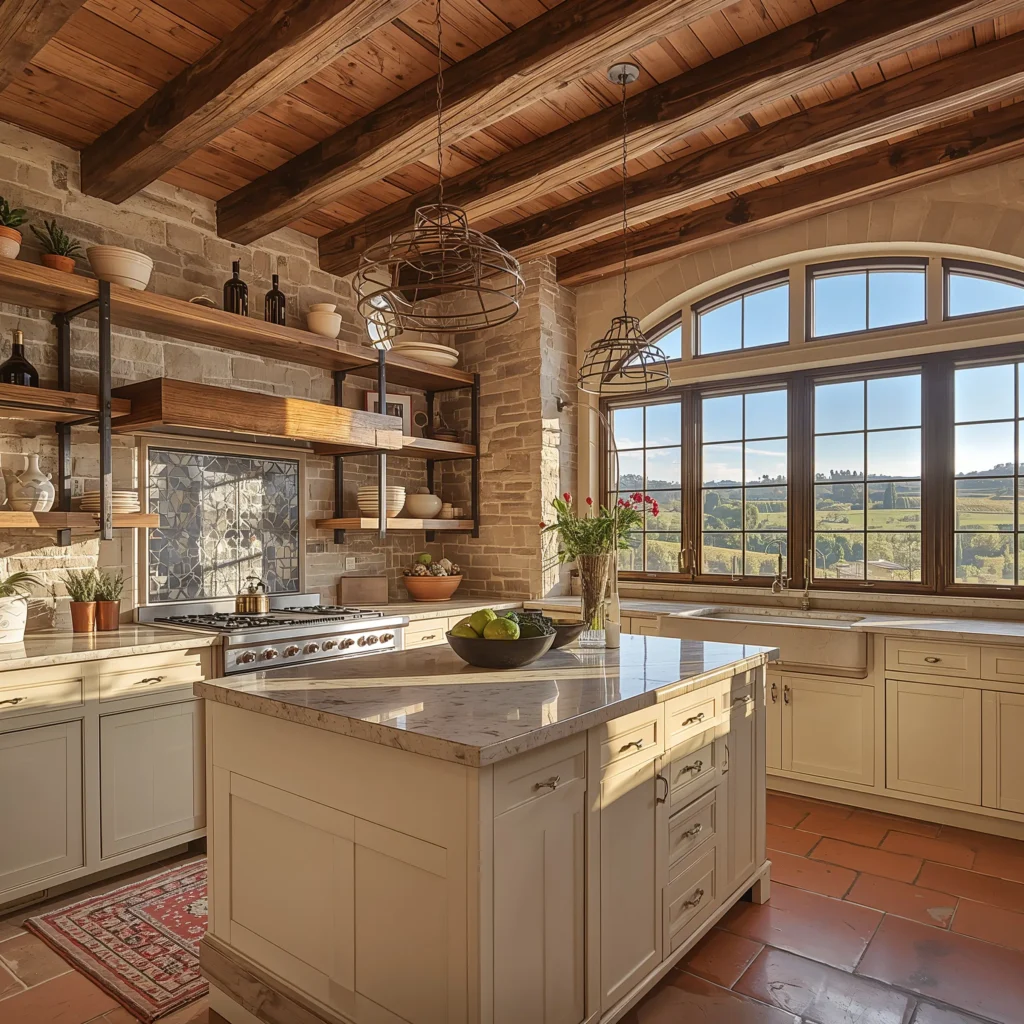
Nothing says “authentic Italian farmhouse” quite like natural stone, and trust me, this isn’t just about aesthetics—though the visual impact is absolutely stunning. Tuscan stone brings that raw, earthy quality that you simply can’t fake with modern materials.
I’ve seen homeowners transform their sterile kitchens by incorporating limestone or travertine backsplashes, and the difference is night and day. The natural variations in color and texture create depth that makes your kitchen feel like it’s been weathered by centuries of Italian sun. You want that lived-in authenticity, not the cookie-cutter perfection of suburban developments.
The beauty of Tuscan stone lies in its imperfections. Those little chips, the subtle color variations, the way light plays across the uneven surface—that’s what gives your kitchen character. For countertops, consider honed limestone or even reclaimed stone from old buildings. Yes, it requires a bit more maintenance than quartz, but the payoff in terms of atmosphere is incredible.
Pro tip from my own kitchen renovation: don’t go crazy with the stone everywhere. Use it strategically as a backsplash or kitchen island base, then balance it with warmer materials. You want rustic charm, not a cave 🙂
2. Whitewashed Rustic Italian Farmhouse Kitchen
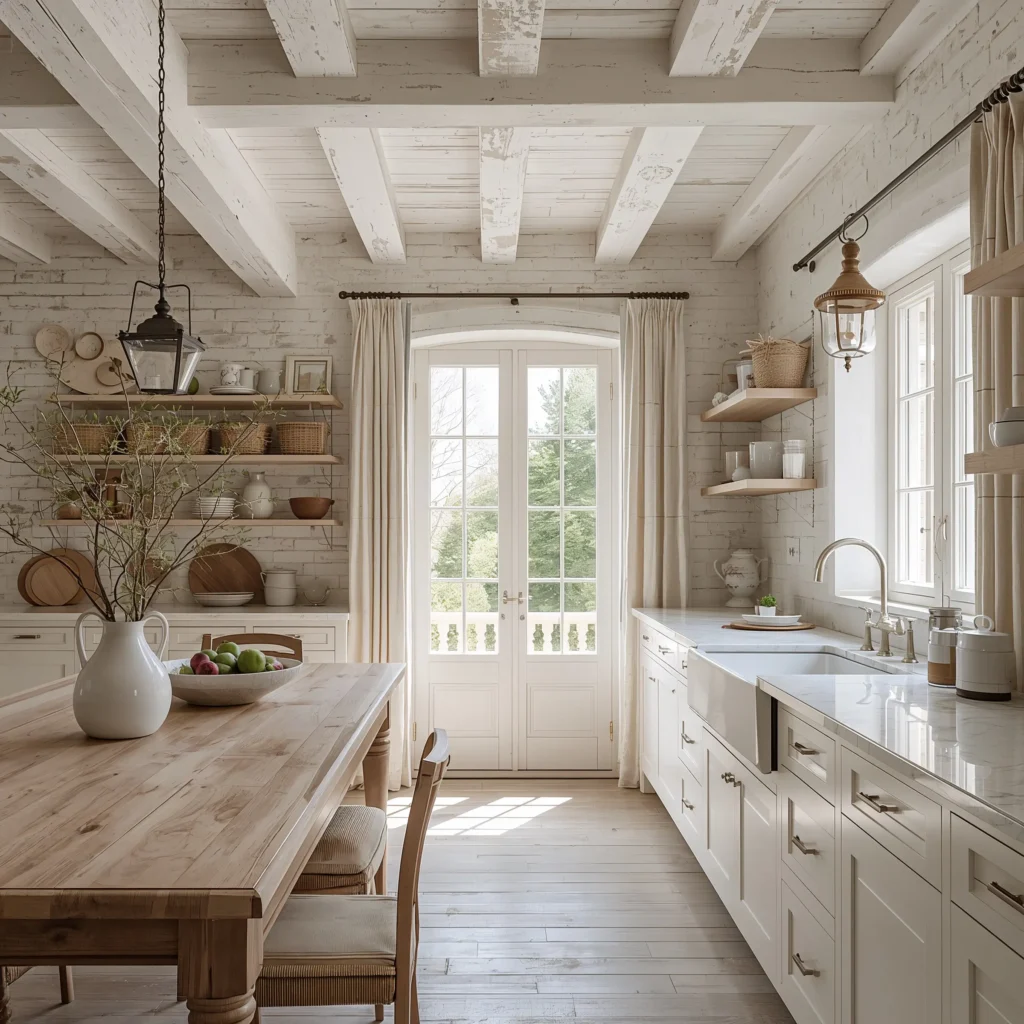
Ever wonder why whitewashed kitchens never go out of style? It’s because they capture that breezy Mediterranean light that makes everything feel fresh and timeless. The Italian approach to whitewashing isn’t about stark, clinical white—it’s about creating layers of texture and warmth.
The secret sauce here is in the technique. Real Italian farmhouses often feature lime-based whitewash that’s been applied and reapplied over generations, creating this beautiful, slightly translucent finish that lets the underlying texture peek through. You can achieve something similar with chalk paint or specialty lime wash products.
I’ve noticed that the most successful whitewashed Italian kitchens combine multiple textures within that white palette. Think exposed brick painted white, rough-hewn wooden beams left natural, and smooth plaster walls. The contrast keeps things interesting while maintaining that cohesive, sun-bleached look.
Here’s what makes it work in modern homes:
- Layered whites: Use warm whites, not cool ones
- Textural variety: Mix smooth and rough surfaces
- Natural accents: Add warmth with wood and metal details
- Strategic wear: Don’t make everything perfect—embrace some distressing
The key is making it look effortless, like the sun and time did all the work for you.
3. Olive Green Italian Farmhouse Kitchen
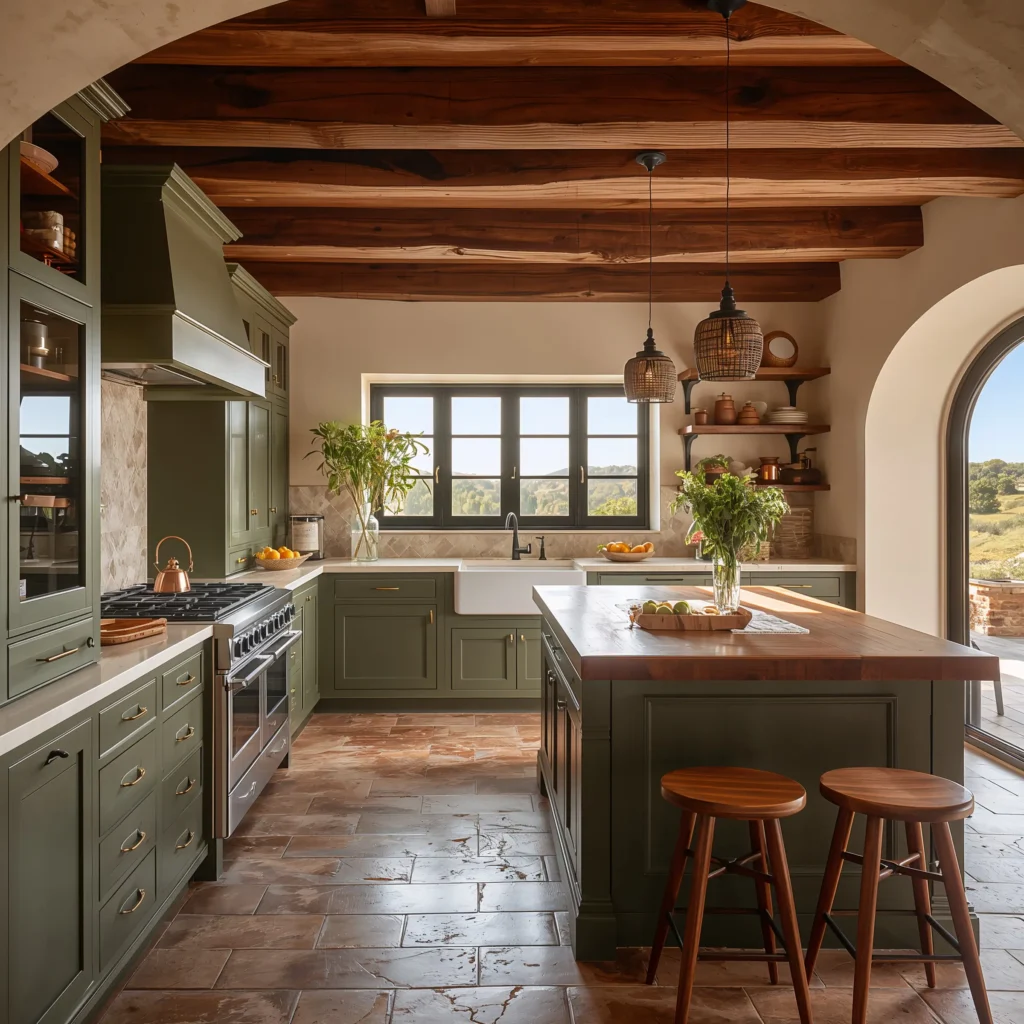
Okay, can we talk about how olive green is probably the most underrated color in kitchen design? While everyone’s obsessing over navy and black cabinets, olive green captures that authentic Italian countryside vibe in a way that feels both sophisticated and earthy.
This isn’t your grandmother’s avocado green from the ’70s (though honestly, that’s having a moment too). Italian olive green is more muted, more complex—it’s the color of ancient olive groves and weathered shutters. When you pair it with natural materials like warm wood and stone, it creates this incredible sense of being connected to the landscape.
I’ve seen this color work beautifully on lower cabinets while keeping upper cabinets in cream or natural wood. The two-tone approach prevents the space from feeling too dark while still giving you that rich, grounding color that makes the kitchen feel like a cozy retreat.
Color combinations that nail the Italian farmhouse look:
- Olive green + warm cream + natural brass hardware
- Sage green + weathered wood + copper accents
- Deep olive + limestone + wrought iron details
The trick is choosing the right undertones. You want greens that lean toward gray rather than yellow—they’re more sophisticated and easier to live with long-term.
Also Read: 10 Charming Country Farmhouse Kitchen Ideas for Every Style
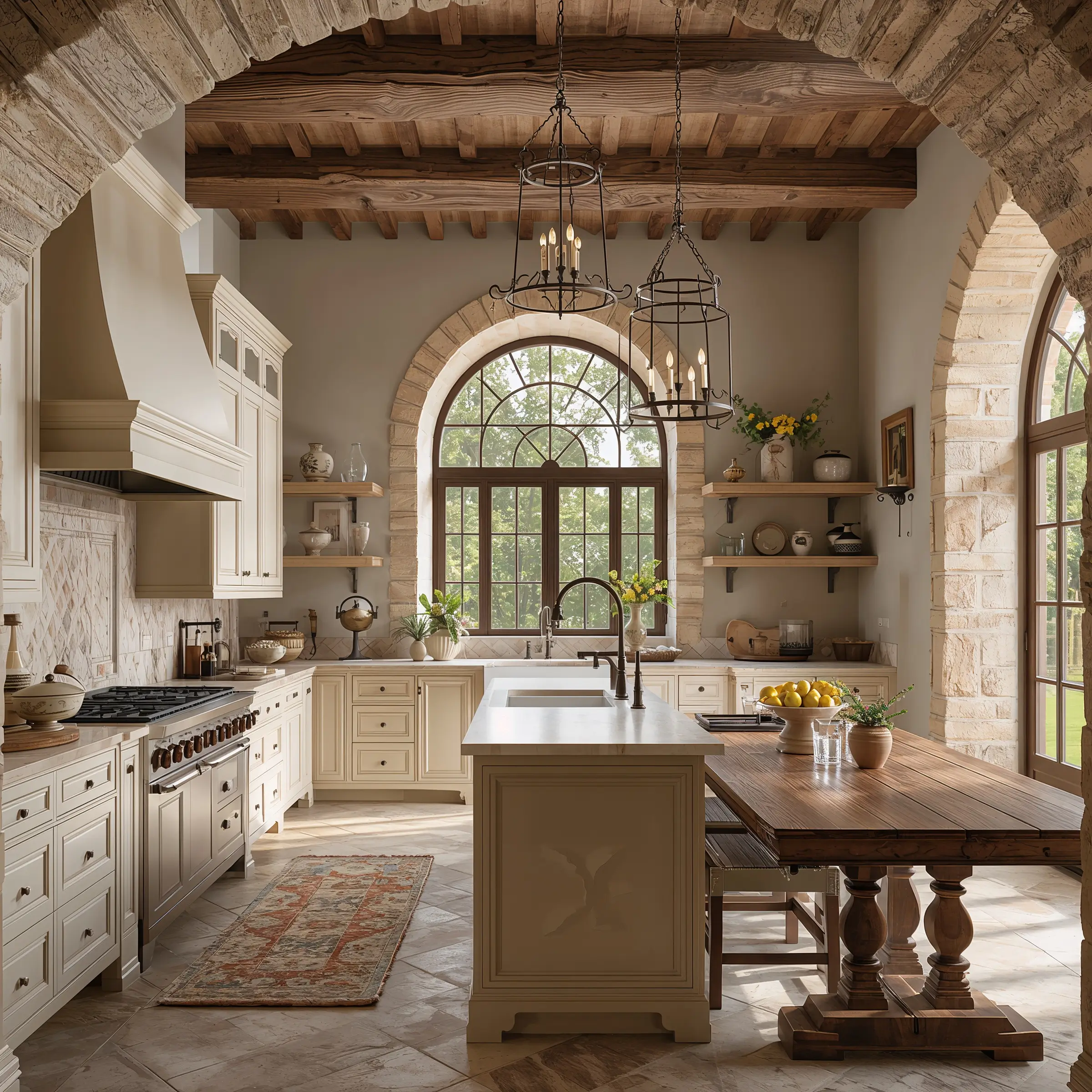
4. Arched Doorway Italian Farmhouse Kitchen
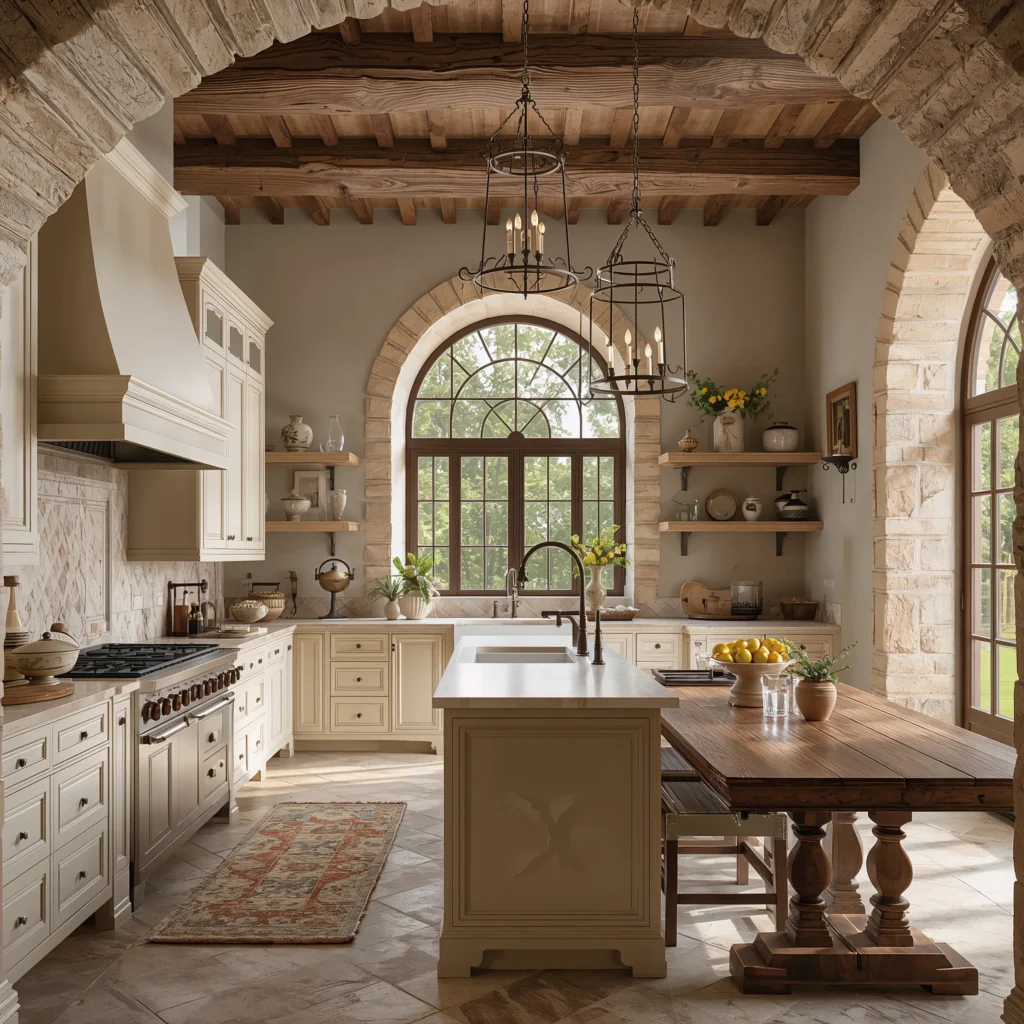
Nothing transports you to an Italian villa quite like a graceful archway, and honestly, this might be the single most impactful architectural element you can add to create that farmhouse feel. I’ve watched homeowners completely transform their kitchen’s character just by replacing a standard rectangular opening with an arched one.
The Italian approach to arches isn’t about perfect symmetry—it’s about creating that sense of age and craftsmanship. Traditional Italian farmhouses often feature slightly irregular arches that look like they were carved by hand (because they probably were). You don’t need to hire a master stonemason, though. Even drywall arches can capture this essence when done thoughtfully.
The magic happens in how you treat the arch. Exposed stone or brick around the archway creates instant authenticity, while a simple painted arch can still add that Mediterranean flair without major construction. I’ve even seen homeowners use decorative molding to create the illusion of stone archwork.
Consider these arch applications:
- Kitchen to dining room transitions
- Pantry or butler’s pantry entrances
- Window openings (even interior ones)
- Built-in nook openings
The key is making it feel intentional and proportioned to your space, not like you stuck a random arch somewhere because Pinterest told you to.
5. Exposed Wood Beam Italian Farmhouse Kitchen
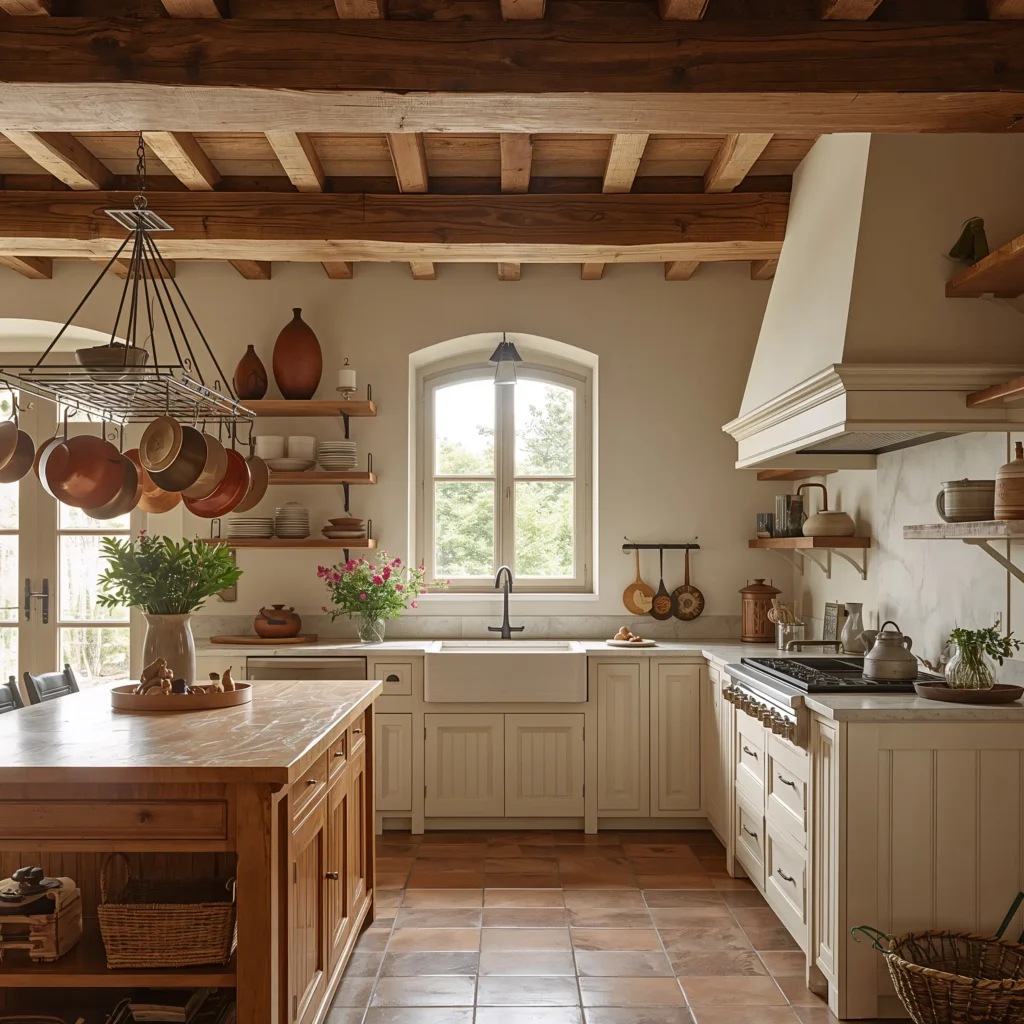
Let me tell you something about exposed wooden beams—they’re not just decorative eye candy. In authentic Italian farmhouses, these beams tell the story of the building’s construction and age, and that’s exactly the kind of character you want to capture in your kitchen.
Real reclaimed beams bring incredible texture and warmth to a space, but here’s the thing: you don’t always need authentic 200-year-old chestnut beams (though if you can find them, go for it!). I’ve seen stunning results with new wood that’s been properly aged and treated to look like it’s been supporting roofs for generations.
The placement matters enormously. Parallel beams across the ceiling create rhythm and draw the eye through the space, while a single statement beam can define different zones within an open floor plan. The size should feel proportional—massive beams in a small kitchen will overwhelm, while tiny beams in a grand space will look silly.
What makes Italian-style beams special:
- Natural wood tones: Skip the painted beams—you want that rich wood character
- Irregular shapes: Perfect lumber looks too new—embrace some character
- Strategic placement: Use them to define space and add visual interest
- Proper proportions: Bigger spaces can handle chunkier beams
FYI, if structural beams aren’t in the budget, you can achieve a similar look with decorative beam wraps around existing ceiling elements.
6. Terracotta Floor Italian Farmhouse Kitchen
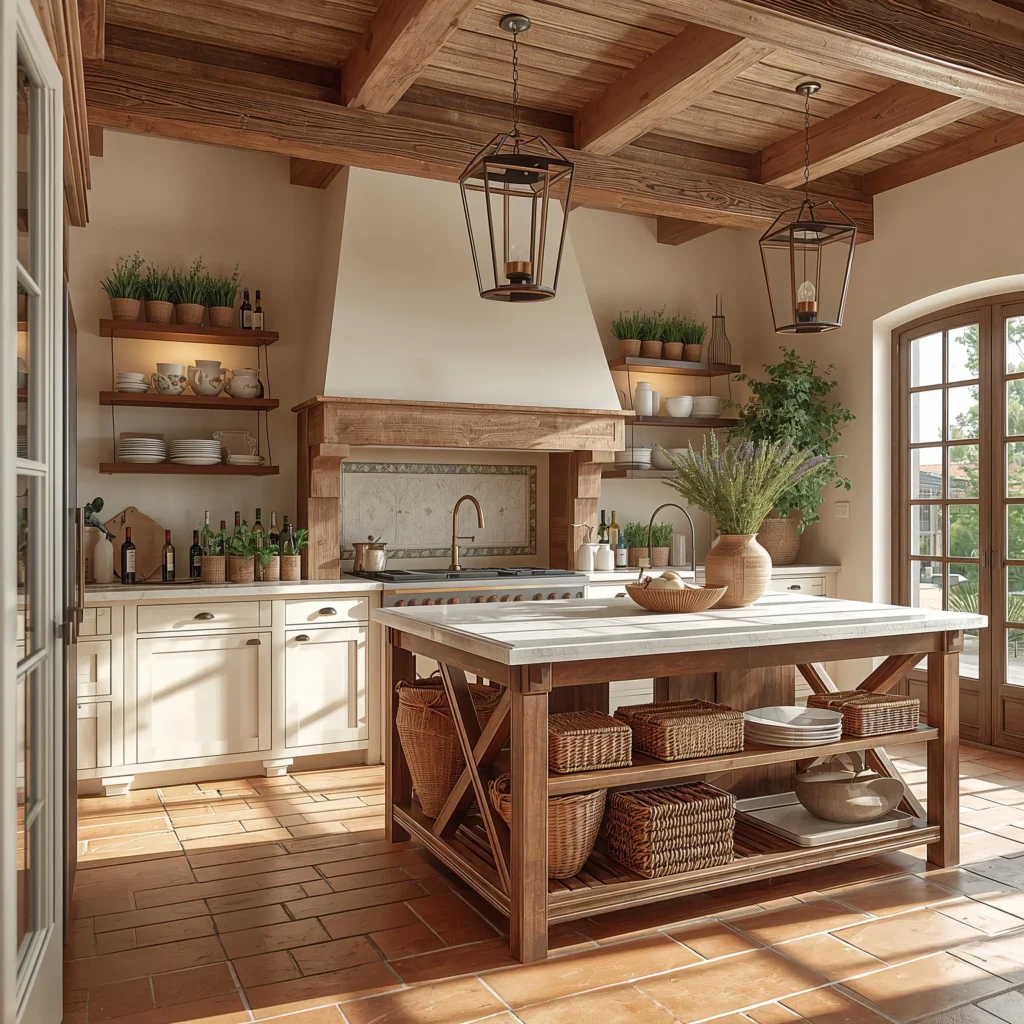
Terracotta flooring is like the secret weapon of Italian farmhouse design—it instantly grounds your space with that warm, earthy quality that’s impossible to replicate with other materials. I’ve walked on original terracotta floors in Tuscan farmhouses that are literally centuries old, and they still feel perfect underfoot.
The beauty of terracotta lies in its natural variation. Each tile is slightly different in color and texture, creating this organic pattern that feels completely natural. Modern reproductions can capture this look, but you want to avoid anything too uniform or perfect-looking. The goal is that hand-made, time-worn appearance that suggests generations of family meals and gatherings.
Here’s what to look for in authentic-style terracotta:
- Hand-formed irregularities: Perfectly uniform tiles look too modern
- Natural color variation: From pale salmon to deep rust tones
- Sealed but not glossy: You want protection without losing the matte, natural finish
- Appropriate scale: Larger format tiles feel more authentic than small ones
One thing I learned the hard way—terracotta requires proper sealing, especially in kitchen areas. But don’t let that scare you off. The maintenance is worth it for the incredible warmth and authenticity these floors bring to your space.\
Also Read: 10 Gorgeous White Farmhouse Kitchen Ideas with Rustic Charm
7. Vintage Copper Italian Farmhouse Kitchen
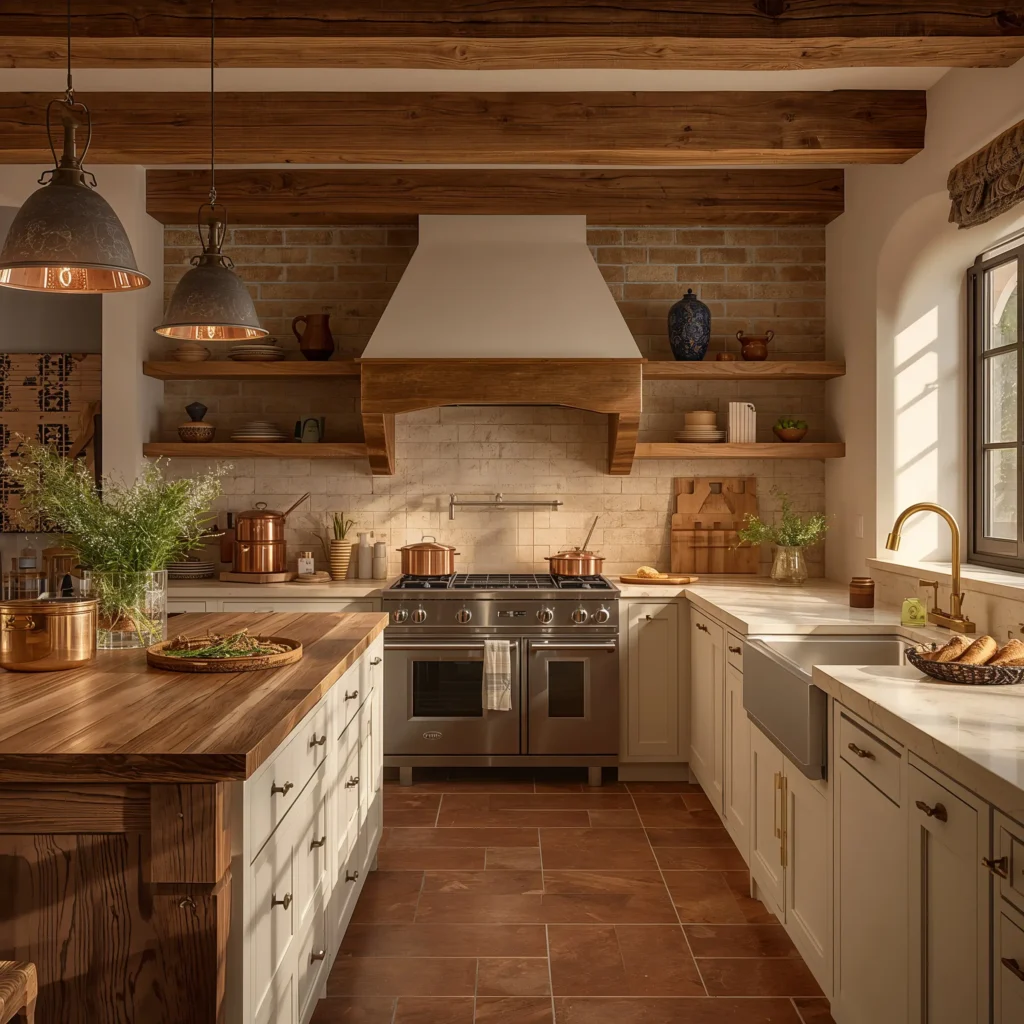
There’s something magical about copper in Italian kitchens—it’s both practical and beautiful, developing this incredible patina over time that tells the story of countless meals prepared with love. I’m talking about real copper here, not the faux-finish stuff that screams “craft store makeover.”
Traditional Italian farmhouse kitchens often feature copper pots hanging from pot racks, copper sinks that have developed gorgeous patinas, and copper range hoods that become the focal point of the entire space. The key is mixing different copper elements without going overboard—you want authentic charm, not a copper theme park.
Copper elements that add authentic Italian character:
- Hammered copper farm sinks with natural patina
- Copper pot racks with hanging cookware
- Copper range hoods with hand-forged details
- Vintage copper scales and kitchen accessories
The patina is everything with copper. That bright, shiny penny look screams “new,” while aged copper with its green and brown tones whispers “authentic Italian farmhouse.” If you’re starting with new copper pieces, be patient—the patina will develop naturally, or you can speed up the process with patina solutions.
IMO, the most impactful way to incorporate copper is through a statement piece like a range hood or farmhouse sink, then echo it with smaller accessories throughout the space.
8. Cozy Cottage Italian Farmhouse Kitchen
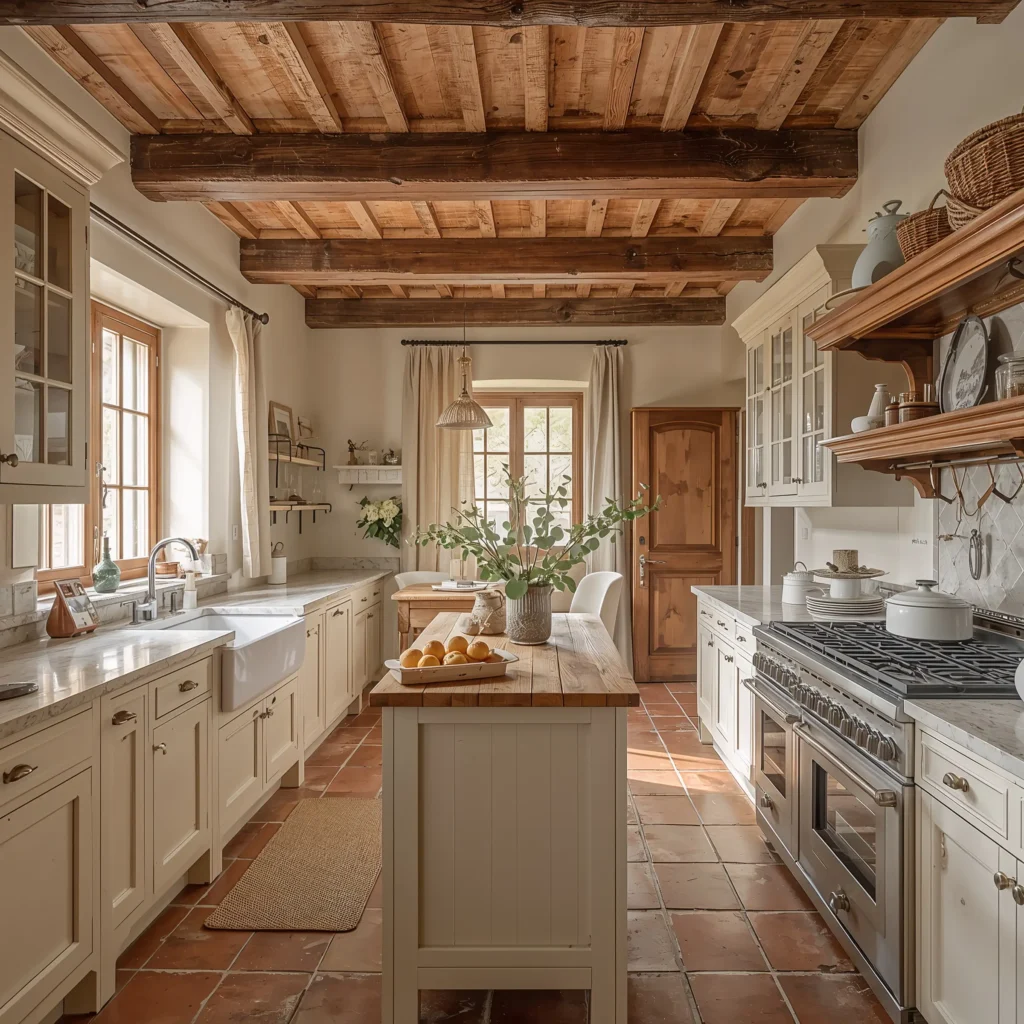
Sometimes the most beautiful Italian farmhouse kitchens are the smallest ones—those intimate, cottage-style spaces that feel like warm hugs rather than grand statements. These kitchens prove that you don’t need vast square footage to capture that Italian farmhouse magic.
The cozy cottage approach is all about maximizing charm in a smaller footprint. Think compact layouts with every inch thoughtfully designed, windows that frame views like artwork, and storage solutions that double as decorative elements. I’ve seen tiny Italian farmhouse kitchens that feel more inviting than sprawling modern ones because they nail the fundamentals of warmth and functionality.
Key elements that make small Italian farmhouse kitchens work:
- Open shelving instead of upper cabinets to avoid feeling closed in
- Multiple light sources including pendant lights and under-cabinet lighting
- Warm color palettes that make the space feel larger and more inviting
- Multi-functional furniture like kitchen islands with seating and storage
The secret to cozy cottage style is creating intimacy without claustrophobia. Natural materials, warm lighting, and thoughtful proportions can make even the smallest kitchen feel like a charming Italian retreat.
9. Luxury Marble Italian Farmhouse Kitchen
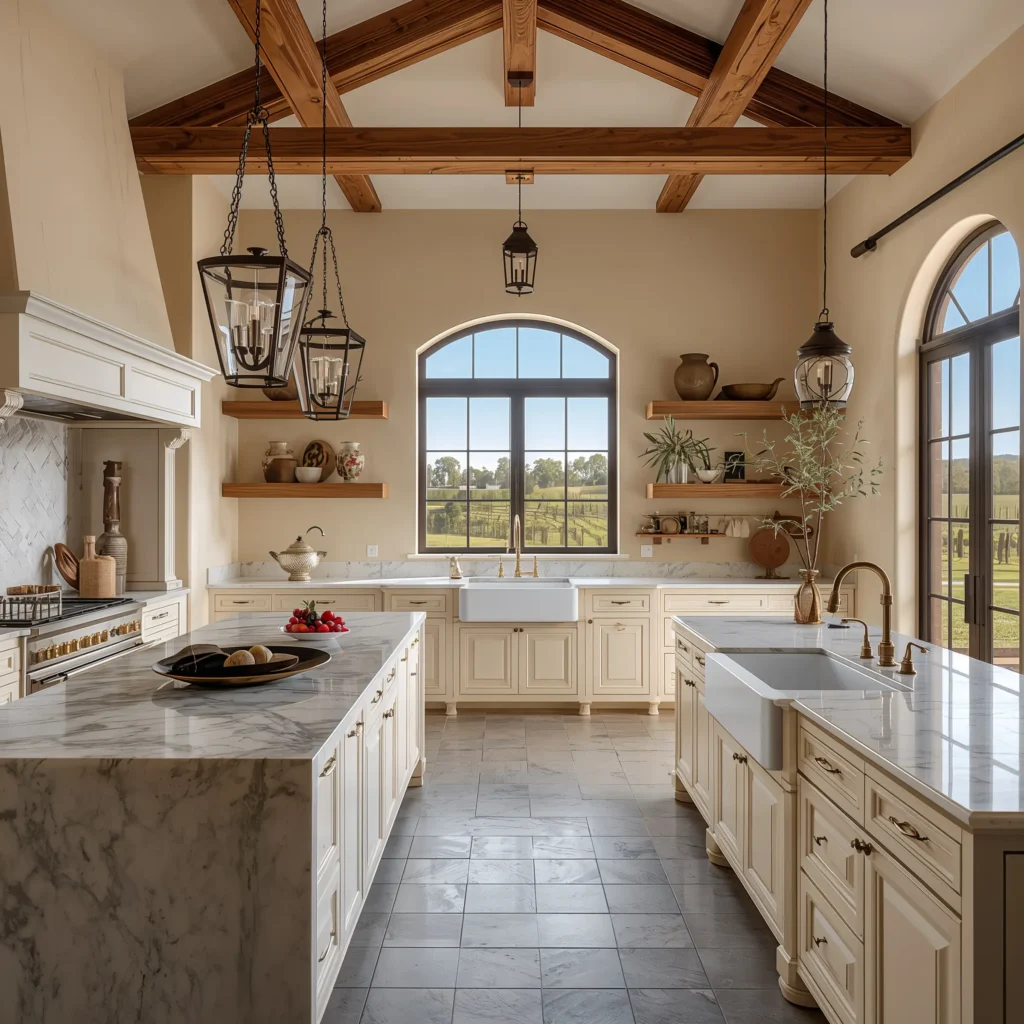
Now, I know what you’re thinking—marble and farmhouse style don’t exactly go together, right? Wrong! Italian farmhouse luxury is a real thing, and when it’s done right, it’s absolutely breathtaking. We’re talking about the kind of sophisticated rusticity you’d find in a restored Tuscan villa that costs more than most people’s houses.
The key to luxury Italian farmhouse is balancing opulent materials with rustic elements. Carrara marble countertops paired with rough-hewn beams, or a stunning marble backslab behind a vintage-style range. It’s about bringing in those high-end materials while maintaining the authentic, lived-in feeling that makes farmhouse style so appealing.
Marble choices that work in Italian farmhouse kitchens:
- Carrara marble: Classic white with gray veining
- Calacatta marble: More dramatic veining for statement pieces
- Travertine: More rustic and farmhouse-appropriate than polished marble
- Aged marble: Pieces with natural wear and patina
The trick is not going overboard. Choose one or two areas for marble—maybe the island countertop and a statement backsplash—then balance with warmer, more rustic materials throughout the rest of the space.
Also Read: 10 Beautiful Farmhouse Kitchen Backsplash Ideas for Cozy Style
10. Open Shelf Italian Farmhouse Kitchen
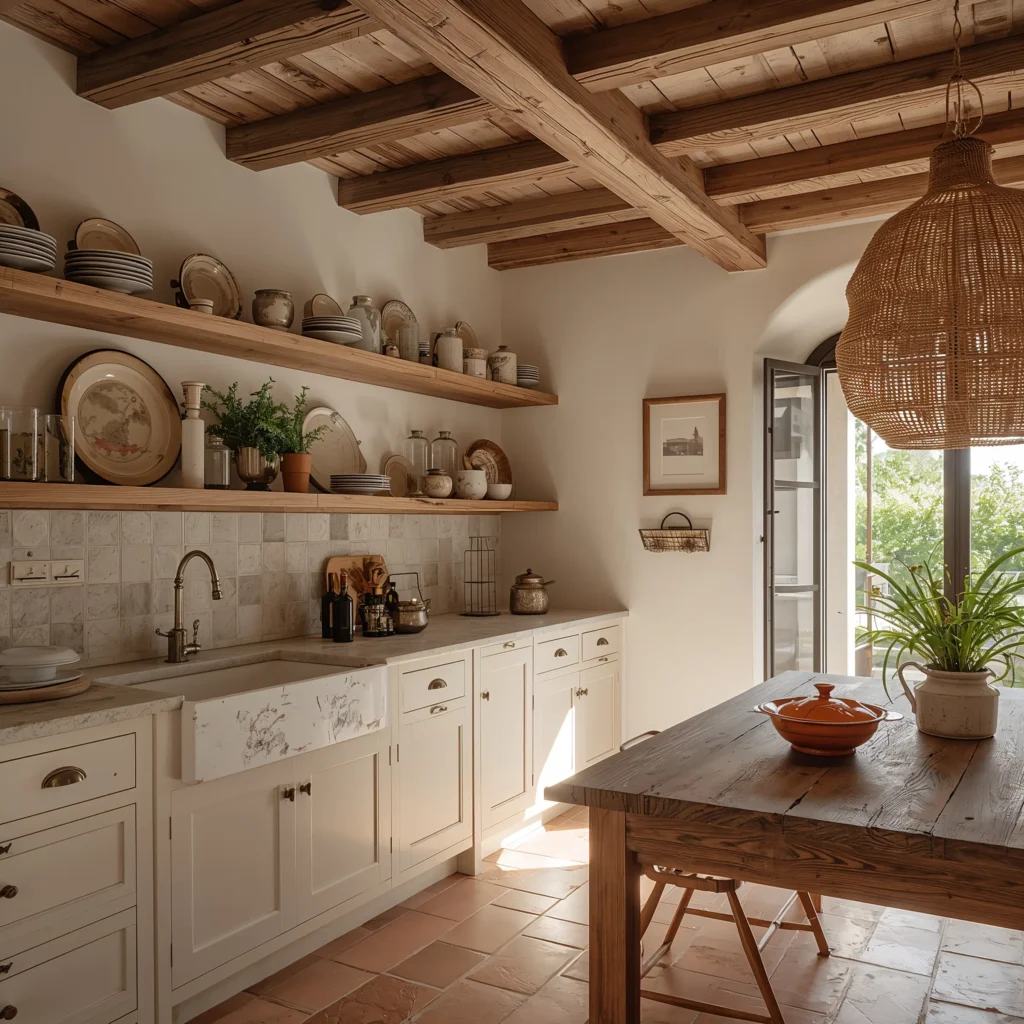
Let’s end with one of my absolute favorite elements of Italian farmhouse design: open shelving. There’s something so honest and functional about displaying your dishes, glassware, and everyday cooking tools where you can see them. It’s the opposite of our modern tendency to hide everything behind closed doors.
Italian farmhouse open shelving isn’t about perfect styling (though Instagram might have you believe otherwise). It’s about functionality and accessibility. These shelves hold the dishes you actually use, the glasses you drink from daily, and the olive oil you drizzle on everything. The beauty comes from the natural arrangement of functional objects.
What makes Italian farmhouse open shelving work:
- Thick, substantial shelves: Think reclaimed wood or natural stone
- Practical storage: Display what you actually use
- Mixed materials: Combine wood, ceramic, glass, and metal
- Natural arrangements: Less styled, more lived-in
The secret sauce is in the styling—or rather, the lack of over-styling. Group similar items together, but don’t obsess over perfect symmetry. Let your beautiful dishes and glassware be the decoration. After all, the best Italian kitchens are about bringing people together over good food, not creating museum displays.
Bringing It All Together
Creating an authentic Italian farmhouse kitchen isn’t about following a strict formula—it’s about capturing a feeling. Whether you choose one of these ideas or combine several, the goal is creating a space that feels warm, welcoming, and connected to the timeless traditions of Italian cooking and gathering.
The best part? You don’t need to renovate everything at once. Start with one element that speaks to you—maybe those gorgeous copper pots you’ve been eyeing, or that terracotta tile you bookmarked months ago. Italian farmhouse style is forgiving and flexible, which means you can build your dream kitchen piece by piece.
Remember, the most beautiful Italian farmhouse kitchens aren’t perfect—they’re authentic. They tell stories, show wear, and invite you to make more memories. So embrace those imperfections, choose materials that will age beautifully, and create a space where your family and friends will want to gather for years to come. Because at the end of the day, that’s what Italian farmhouse design is really about—creating a heart for your home where life’s best moments happen.