Ever walked into someone’s home and been completely blown away by their entryway before you even made it past the front door? Yeah, me too.
And honestly, it’s kind of annoying because suddenly you’re standing there wondering why your own hallway looks like a forgotten afterthought 🙂
Here’s the thing—your entry hallway is literally the first impression people get of your home. It’s where the magic happens, where guests decide whether you’ve got your life together or if you’re secretly living in controlled chaos.
After redesigning my own entryway three times (don’t judge), I’ve learned that creating a stunning hallway doesn’t require a mansion-sized space or a trust fund. It just needs the right approach.
So grab your coffee and let’s talk about ten entry hallway ideas that’ll transform your space from “meh” to “how did you even do this?” Whether you’re working with a tiny apartment corridor or a grand foyer, there’s something here that’ll work for you.
Statement Entry Hallway with Fluted Wood Wall
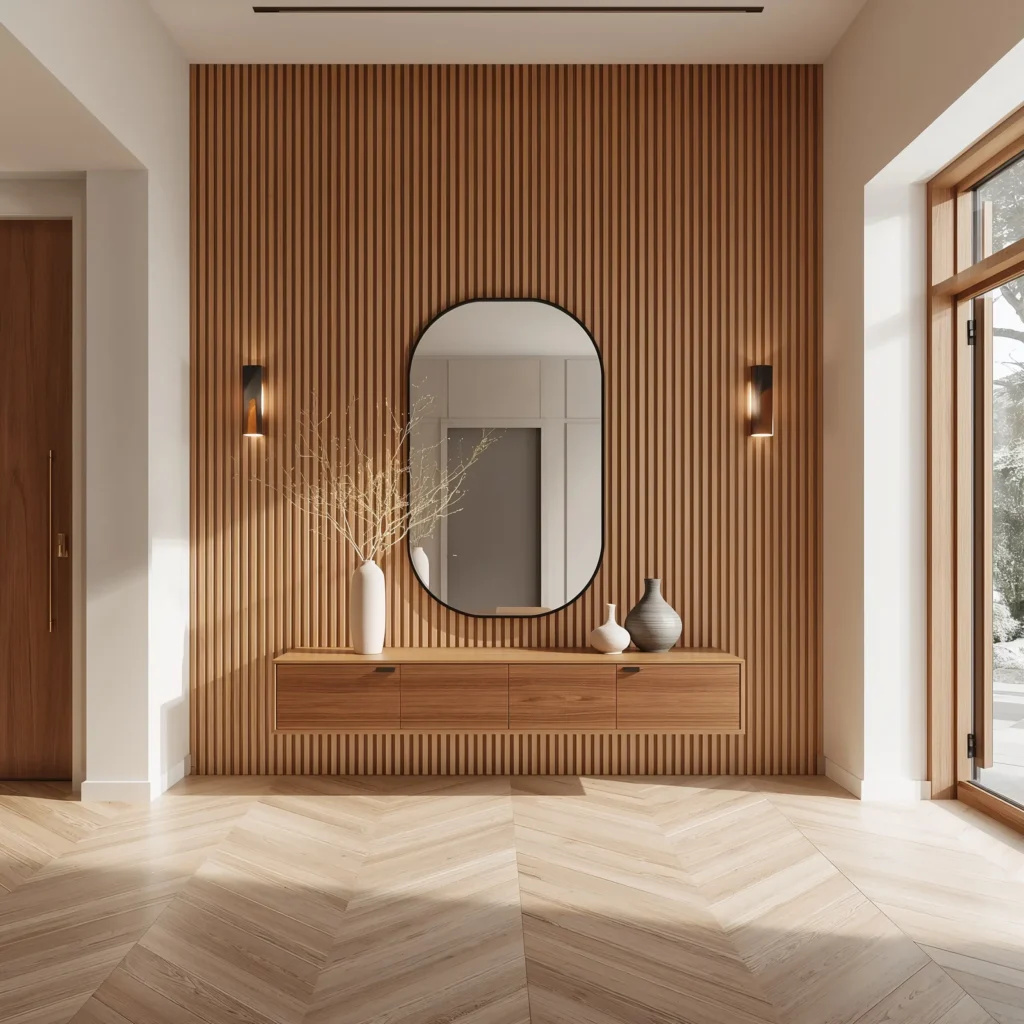
Let me start with my personal favorite—the fluted wood wall. This design choice screams sophistication without trying too hard, and trust me, your guests will notice.
I installed fluted wood paneling in my own entryway last year, and the transformation was absolutely ridiculous. The vertical grooves create this amazing texture that catches light throughout the day, making even the smallest hallway feel dynamic and intentional.
What makes this work so well:
- The vertical lines draw the eye upward, making your ceiling feel taller
- Natural wood adds warmth that balances out harsh lighting
- It’s surprisingly versatile—works with both modern and traditional decor
The key here is choosing the right wood tone for your space. Darker walnut creates drama, while lighter oak keeps things fresh and airy. I went with a warm honey oak that complements my existing flooring, and honestly? Best decision ever.
You can install fluted wood panels yourself if you’re handy with tools, or hire a contractor for a more polished finish. Either way, this feature wall becomes an instant conversation starter. FYI, expect to spend anywhere from $15 to $40 per square foot depending on the wood quality you choose.
Pro tip: Don’t cover the entire wall if you’re working with a smaller space. A partial fluted accent behind a console table or mirror creates the same impact without overwhelming the area.
Cozy Entry Hallway with Built-In Bench Storage
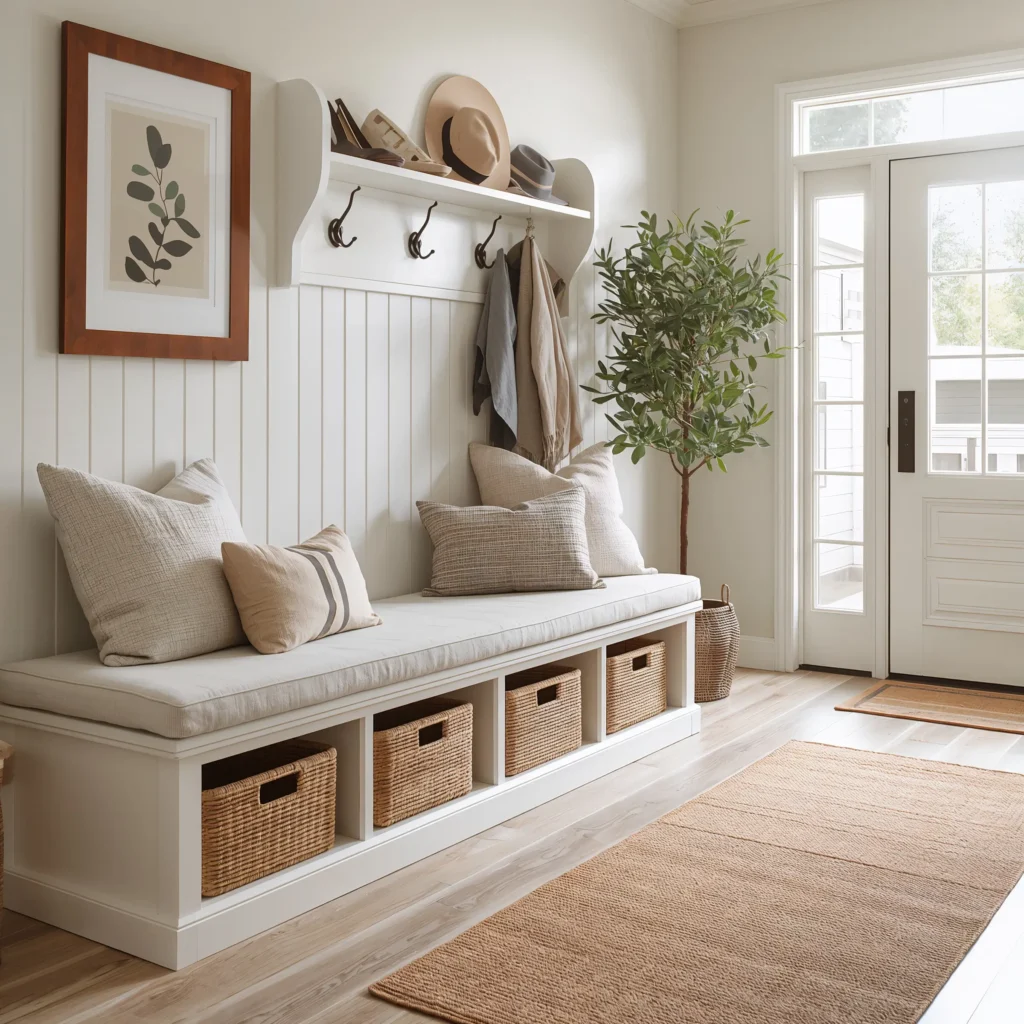
Nothing says “welcome home” quite like a built-in bench that actually serves a purpose beyond looking pretty. This idea combines functionality with style in a way that makes perfect sense.
I’ve always been jealous of those homes with mudroom vibes right at the front door. You know the ones—where you can actually sit down to put on your shoes instead of doing that weird one-legged dance we’re all guilty of. A built-in bench with hidden storage underneath solves this problem beautifully.
Here’s why this setup works:
- Provides seating for putting on and taking off shoes
- Hidden storage keeps clutter out of sight
- Creates a natural spot for bags, keys, and daily essentials
- Adds architectural interest to an otherwise boring wall
The beauty of built-in storage is that it doesn’t eat up floor space like standalone furniture would. You can customize the height and depth to fit your specific needs. Most built-in benches work best at around 18 inches high and 15-18 inches deep.
Consider adding cushions or pillows that tie into your home’s color scheme. I’ve seen some gorgeous examples with tufted upholstery that elevate the whole look. And if you’re renting? Don’t worry—there are some amazing freestanding bench options that create a similar effect.
Modern Entry Hallway with Floating Console Table
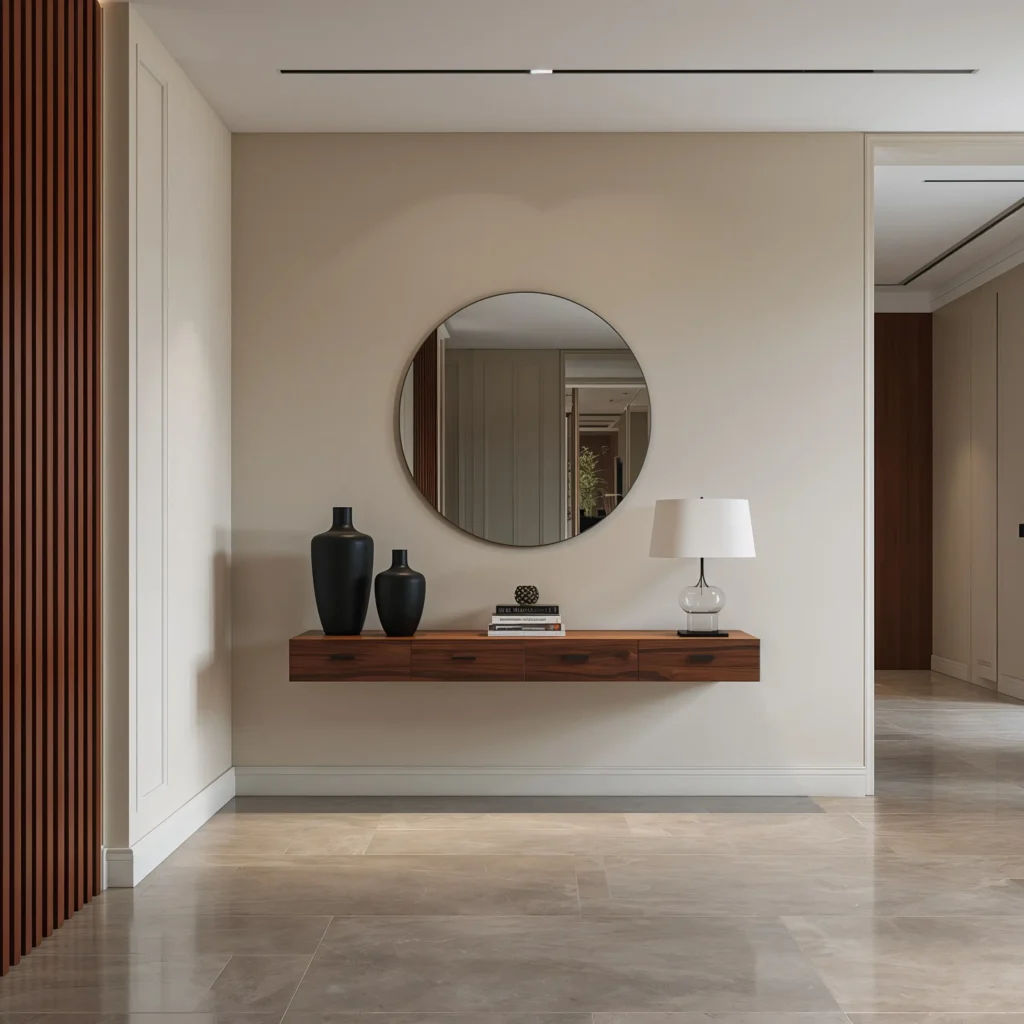
Want to create the illusion of more space while adding serious style points? A floating console table is your answer.
This approach works especially well in narrow hallways where traditional furniture would make things feel cramped. The floating design keeps sight lines clear while providing that essential surface space for keys, mail, and decorative elements.
What I love about floating consoles:
- They make small spaces feel larger and less cluttered
- Easy to clean underneath (no more dust bunny hiding spots)
- Creates a sleek, contemporary look
- Perfect height for displaying artwork or mirrors above
The mounting process is crucial here—you want to make sure it’s properly anchored to wall studs, especially if you plan to place anything heavy on top. I learned this the hard way when my first attempt came crashing down with a very expensive vase on it :/
Choose a console that complements your home’s style. Sleek lacquer for ultra-modern spaces, reclaimed wood for industrial vibes, or marble for luxury appeal. The key is keeping the proportions right—your console should be roughly two-thirds the width of the wall space it occupies.
Also Read: 10 Brilliant Tiny Hallway Ideas to Maximize Every Inch
Bright Entry Hallway with Oversized Round Mirror

Never underestimate the power of a seriously oversized mirror to transform an entryway. I’m talking about those statement pieces that make you do a double-take.
Round mirrors have this magical ability to soften harsh lines and create visual flow. Plus, they reflect light like nobody’s business, which is exactly what most entry hallways need. Mine reflects light from the living room windows, making the whole space feel twice as bright.
Why oversized mirrors work so well:
- Reflect natural light to brighten dark hallways
- Create the illusion of more space
- Serve a practical purpose for last-minute appearance checks
- Act as artistic focal points
The “oversized” part is important here. We’re not talking about those dinky 24-inch mirrors you see everywhere. Think 36 inches and up. Bold choices create bold results.
I’ve seen stunning examples with brass frames for warmth, sleek black frames for drama, and natural wood frames for organic appeal. The frame choice should complement your overall design scheme, but don’t be afraid to let the mirror be the star of the show.
Placement tip: Hang your mirror at eye level or slightly higher. If you’re placing it above a console table, leave about 6-8 inches between the table surface and the bottom of the mirror.
Scandinavian Entry Hallway with Natural Wood Accents

There’s something undeniably calming about Scandinavian design, and it translates beautifully to entry hallways. This approach focuses on natural materials, clean lines, and functional beauty.
The Scandinavian aesthetic embraces the concept of “lagom”—not too much, not too little, just right. In an entryway, this means choosing pieces that serve a purpose while maintaining that effortless, uncluttered look.
Key elements of Scandinavian entryway design:
- Light wood tones (think birch, ash, or light oak)
- Neutral color palette with whites and soft grays
- Functional storage that doesn’t look like storage
- Natural textures and organic shapes
- Minimal but impactful decorative elements
I love how this style incorporates wooden hooks, floating shelves, and simple bench seating without feeling cluttered. The wood should feel raw and natural—avoid anything too polished or artificial looking.
Add warmth with a simple woven rug, maybe some greenery in a ceramic planter, and you’ve got that coveted Scandinavian vibe that everyone’s trying to achieve. The best part? This approach works in both large and small spaces because it’s all about intentional simplicity.
Elegant Entry Hallway with Wainscoting Panels
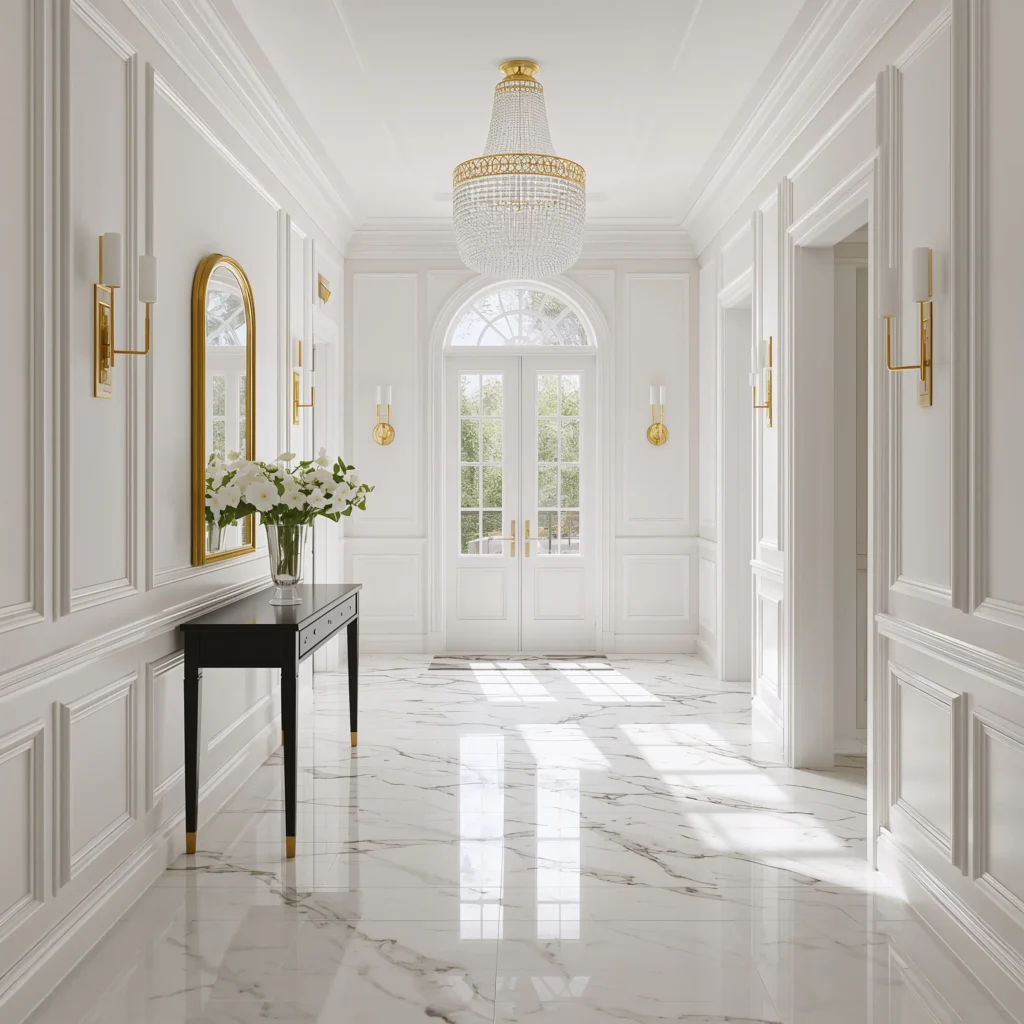
Wainscoting instantly adds architectural character to any space, but it’s particularly stunning in entry hallways where it creates immediate visual impact.
This classic wall treatment has been around forever, but modern applications feel fresh and sophisticated. I’ve seen everything from traditional raised panel designs to contemporary flat-panel versions, and honestly, they all work when executed properly.
What wainscoting brings to your entryway:
- Adds architectural detail and visual interest
- Protects walls from daily wear and tear
- Creates opportunities for color contrast
- Increases perceived value of your home
The height matters here. Traditional wainscoting typically extends one-third of the way up the wall, but you can adjust this based on your ceiling height and personal preference. Higher panels can make a space feel more formal and grand.
Color combinations make a huge difference. White wainscoting with a soft gray upper wall creates a classic, timeless look. Darker panels with lighter walls above add drama and sophistication. I’ve even seen bold navy wainscoting that creates an incredibly striking first impression.
Installation note: This is definitely a project where proper measurement and installation matter. Take your time with the planning phase, and don’t rush the cutting and mounting process.
Also Read: 10 Beautiful Hallway Paint Colors Ideas You’ll Love
Small Entry Hallway with Hidden Shoe Cabinet
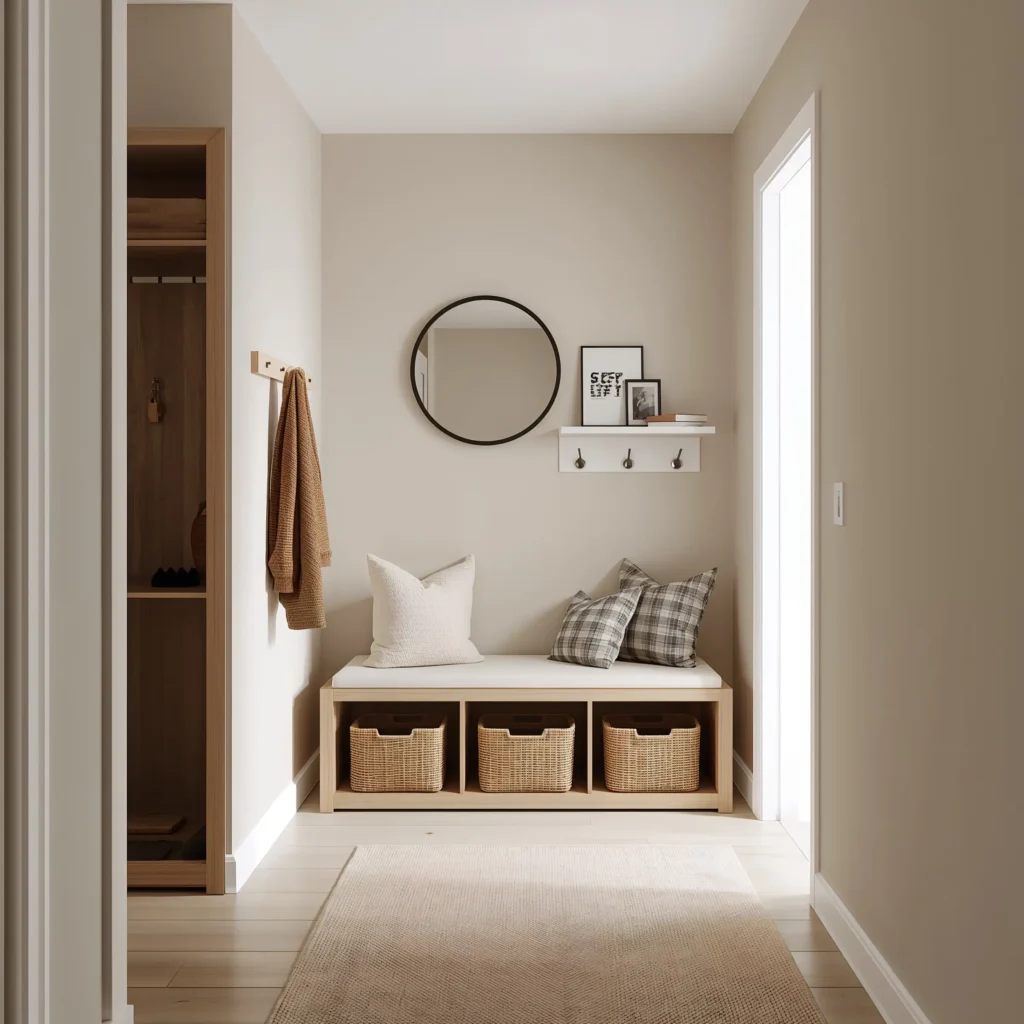
Small entryways present unique challenges, but they also offer opportunities to get creative with storage solutions. A hidden shoe cabinet is one of those genius ideas that makes you wonder why everyone doesn’t have one.
The key word here is “hidden.” We’re not talking about obvious shoe racks that scream “look at all our footwear!” Instead, think sleek cabinets that blend seamlessly into your design while keeping everything organized.
Smart solutions for small spaces:
- Ultra-slim shoe cabinets that fit against narrow walls
- Tip-out drawers that maximize vertical storage
- Multi-level storage that accommodates different shoe heights
- Cabinets with tops that double as console surfaces
I’ve seen some incredibly clever designs where the shoe storage is built into a bench or incorporated into wainscoting panels. The goal is maintaining a clean, uncluttered appearance while solving the very real problem of where to put everyone’s shoes.
Ventilation is important with any shoe storage—nobody wants their entryway smelling like a gym locker. Look for cabinets with slatted shelves or ventilation holes to keep air circulating.
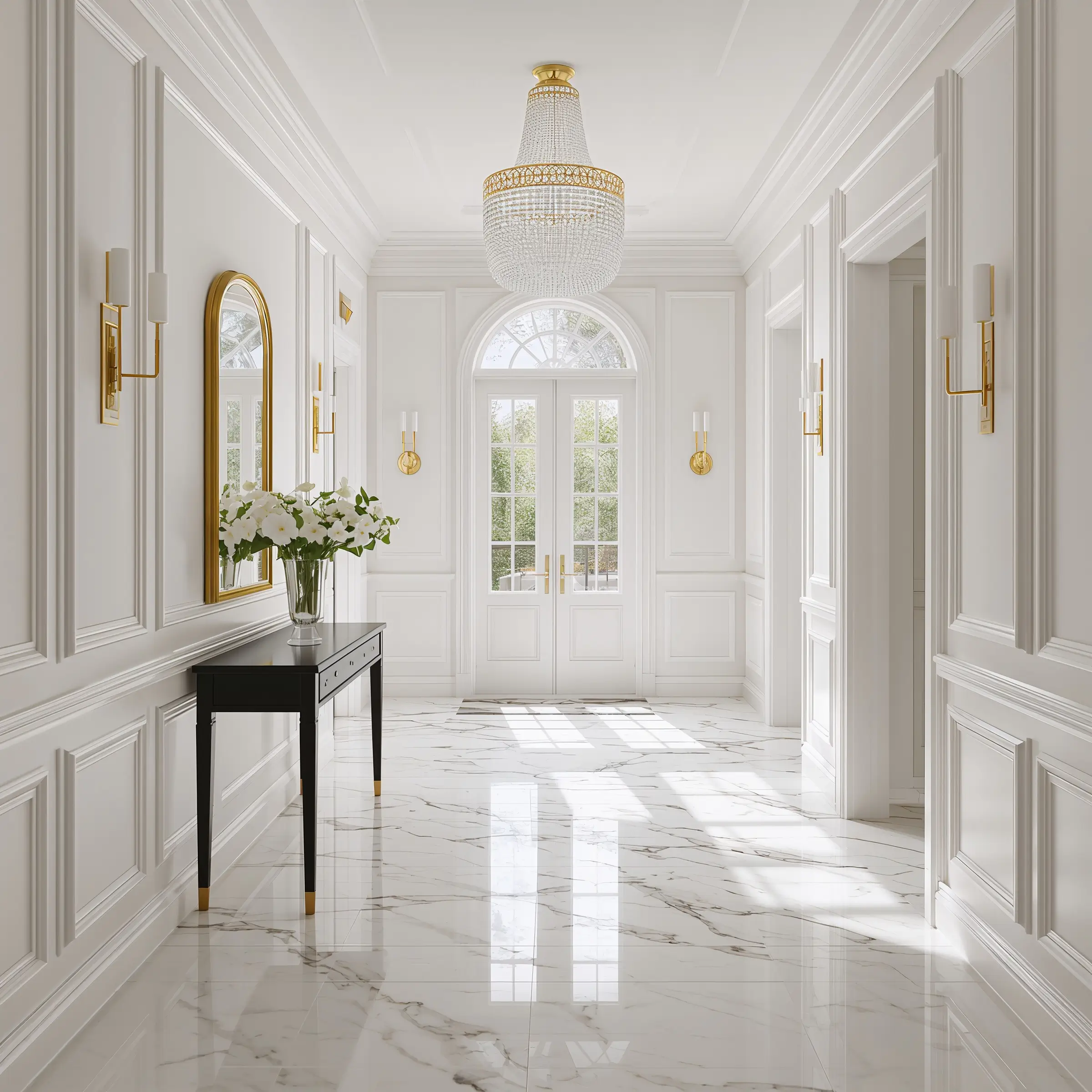
Luxury Entry Hallway with Marble Flooring and Gold Details
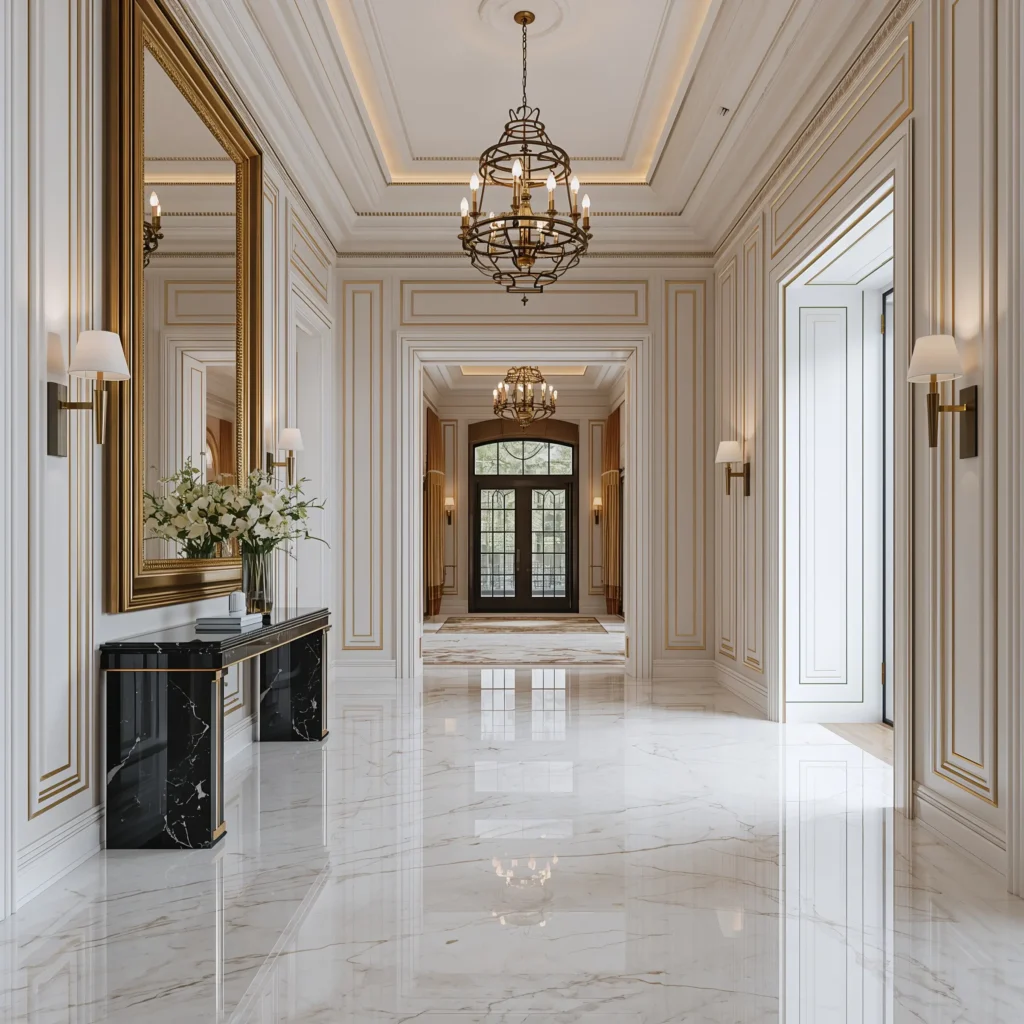
Sometimes you just want to go full luxe, and there’s absolutely nothing wrong with that. Marble flooring with gold accents creates an entryway that feels like a high-end hotel lobby—in the best possible way.
The combination of marble and gold has been sophisticated for centuries, and it’s not going anywhere. But modern applications feel fresh rather than stuffy when you balance the elements correctly.
Creating luxury without going overboard:
- Choose marble with subtle veining rather than busy patterns
- Use gold accents sparingly—think hardware, mirror frames, or lighting fixtures
- Balance cool marble tones with warm lighting
- Add soft textures through rugs or upholstered seating
The practical considerations are real here. Marble requires maintenance and can be slippery when wet, so consider your climate and lifestyle. Polished finishes look stunning but show every water spot, while honed finishes are more forgiving for daily use.
Gold details should feel intentional, not random. Pick one or two elements—maybe the light fixture and cabinet hardware—and keep the rest neutral. Too much gold quickly crosses into gaudy territory, and nobody wants that first impression.
Rustic Entry Hallway with Vintage Coat Rack and Baskets
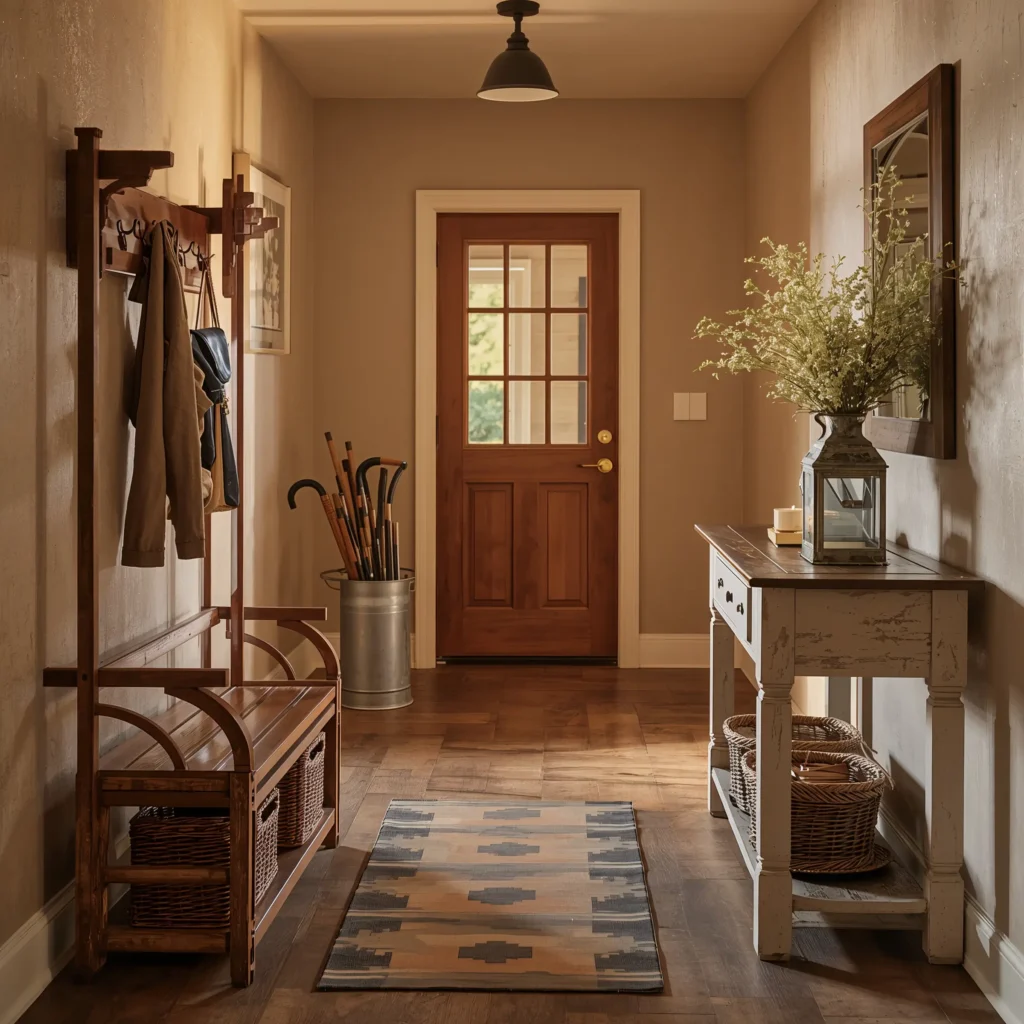
Rustic design brings warmth and character that makes guests feel immediately welcome. This approach works especially well if your home has farmhouse or cottage vibes, but it can add interesting contrast to more modern spaces too.
The beauty of rustic design lies in its imperfection. Weathered wood, vintage finds, and natural textures create a collected-over-time feeling that’s incredibly appealing.
Essential rustic entryway elements:
- Reclaimed or distressed wood pieces
- Vintage or antique-style coat racks
- Natural fiber baskets for storage
- Weathered finishes and patina details
- Organic shapes and textures
I’m particularly fond of those old-school coat racks with multiple hooks and maybe a small bench at the bottom. They serve a practical purpose while adding serious character. Pair this with woven baskets for storing scarves, gloves, or random daily items, and you’ve got functional storage that looks intentional.
The key to pulling off rustic without looking messy is choosing pieces with character while maintaining some organization. Everything should have a purpose, even if it looks casually arranged.
Also Read: 10 Gorgeous Hallway Light Fixtures Ideas You’ll Love
Minimalist Entry Hallway with Soft Neutral Decor
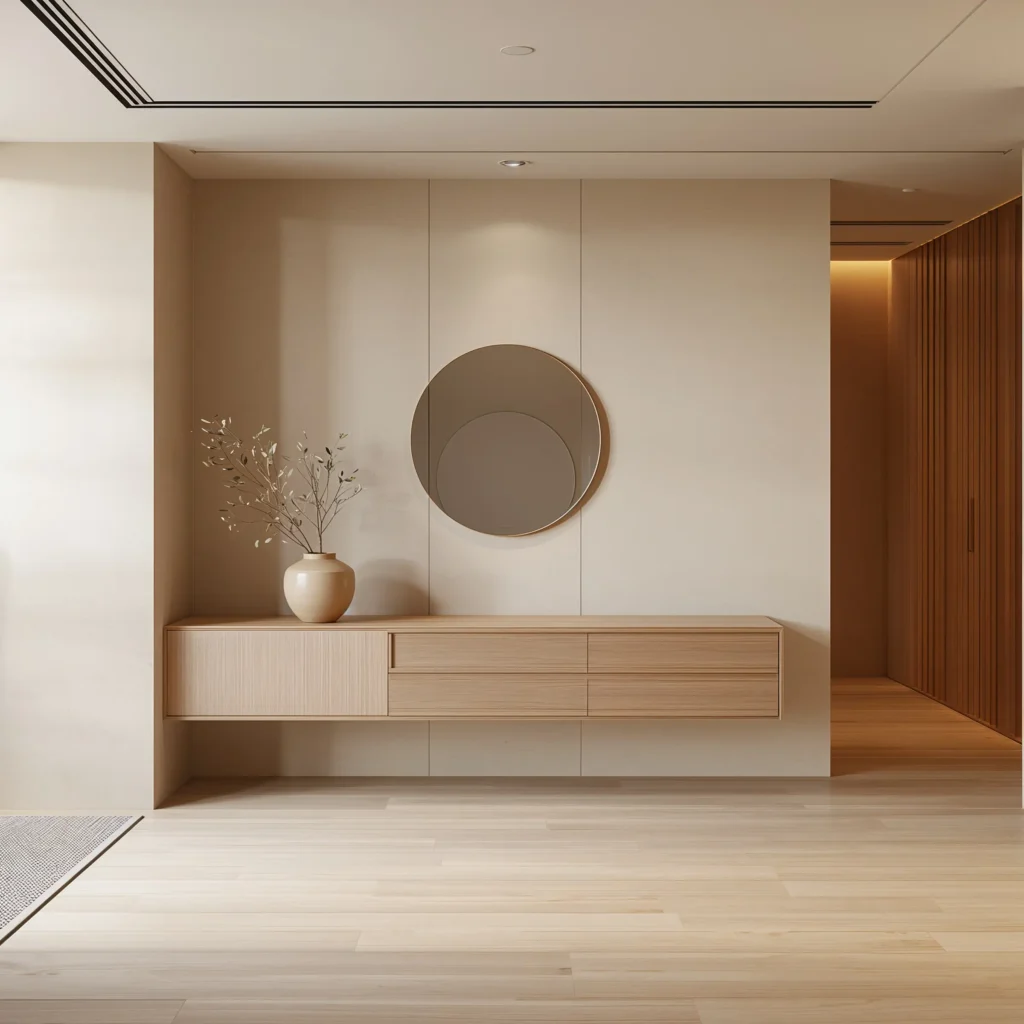
Sometimes the most impactful approach is the most understated one. Minimalist design creates calm, uncluttered spaces that feel like a breath of fresh air.
The minimalist aesthetic isn’t about having nothing—it’s about having exactly what you need and making sure every element serves a purpose. In an entryway, this approach can be incredibly soothing after a long day.
Minimalist entryway principles:
- Neutral color palette with subtle variation
- Clean lines and simple shapes
- Functional pieces that don’t feel utilitarian
- Plenty of negative space
- Quality over quantity in every choice
Soft neutrals work beautifully here—think warm whites, gentle grays, and natural beiges. These colors create a serene backdrop that doesn’t compete for attention. Add interest through texture rather than color: a nubby wool rug, smooth ceramic vessels, or natural wood grain.
The challenge with minimalist design is making it feel warm rather than sterile. Incorporate organic elements like plants or natural materials to add life to the space. Even a single, well-chosen piece of artwork can provide the perfect focal point without cluttering the aesthetic.
Making Your Choice Work for You
Here’s what I’ve learned after trying several of these approaches: the best entryway design is the one that actually fits your lifestyle. Love the luxury marble look but have three kids and two dogs? Maybe consider the rustic approach with more forgiving materials.
Your entryway should reflect your personality while solving your real-world problems. Do you need serious shoe storage? Don’t prioritize the floating console. Is natural light an issue? Make that oversized mirror your focal point.
The good news is that many of these ideas can be combined or adapted. Maybe you love the Scandinavian aesthetic but need the storage solutions from the built-in bench idea. There’s no rule saying you can’t mix approaches to create something uniquely yours.
Whatever direction you choose, remember that your entryway sets the tone for your entire home. It’s worth investing some time and thought into getting it right. After all, first impressions matter—and you’ll appreciate coming home to a space that makes you smile every single day.
IMO, the best entryways are the ones that make both you and your guests feel immediately at ease. Whether that means dramatic fluted wood walls or serene minimalist vibes depends entirely on you. The important thing is choosing something that feels authentically yours and actually works for your daily life.