Let’s be real—white kitchens are everywhere. Scroll through Pinterest for five minutes, and you’ll see the same bright, airy spaces over and over again.
Don’t get me wrong, they’re gorgeous, but sometimes you want something with a little more… attitude. That’s where black kitchens come in, and trust me, once you go dark, you’ll never want to go back.
I’ve been obsessing over black kitchen designs for the past year (my partner thinks I’ve lost it), and I’m here to share the most stunning ideas that prove black doesn’t mean boring or claustrophobic.
These designs range from cozy and warm to sleek and dramatic, so whether you’re working with a tiny galley or a sprawling open-plan space, there’s something here that’ll make your heart skip a beat.
Matte Black Kitchen with Warm Oak Accents
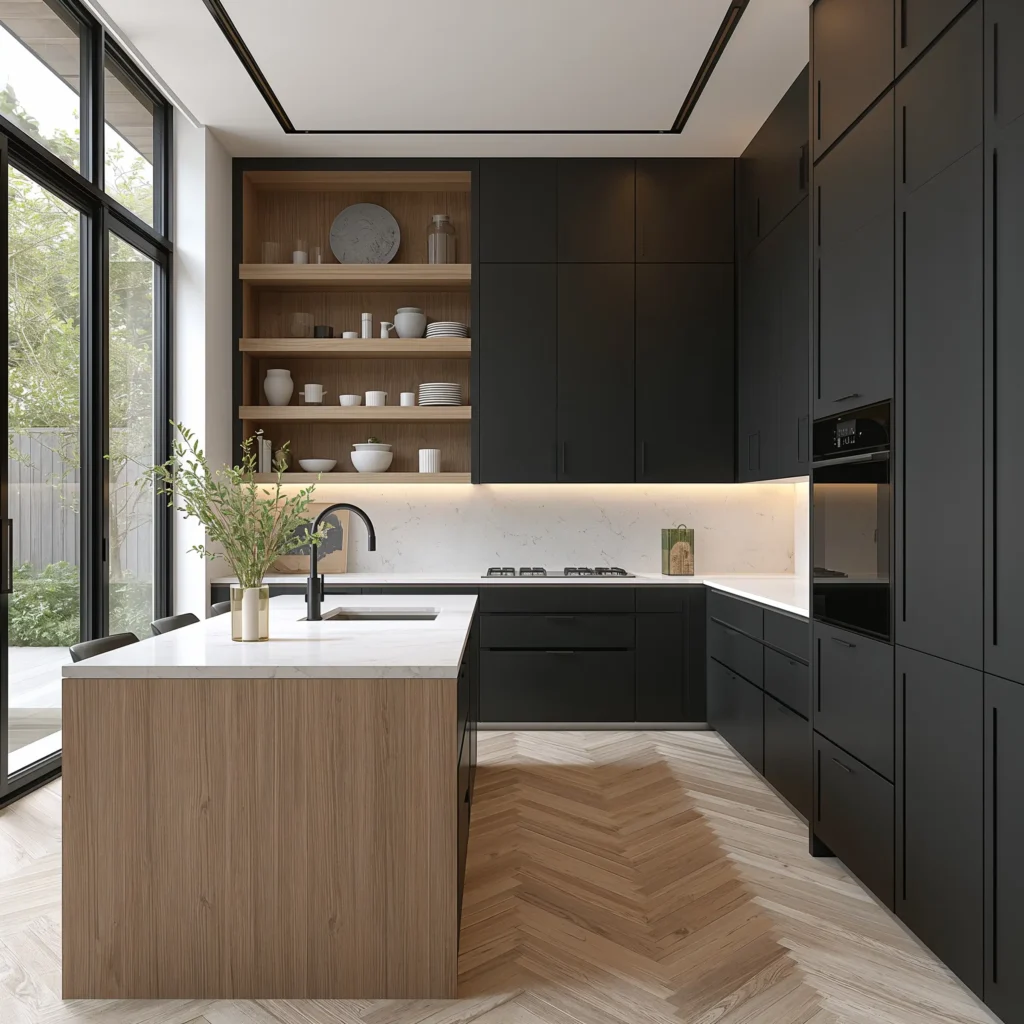
Ever walked into a room and felt instantly at home? That’s exactly what happens with a matte black and warm oak combination. This pairing is like the perfect coffee blend—rich, sophisticated, but somehow comforting at the same time.
The magic happens when you pair matte black cabinets with warm oak elements. I’m talking about floating shelves, butcher block countertops, or even a stunning oak kitchen island. The contrast creates this incredible visual depth that makes your kitchen feel both modern and timeless.
Here’s what makes this combo work so well:
- Visual balance: The dark cabinets ground the space while oak adds warmth
- Texture play: Matte finishes absorb light while wood grain adds natural texture
- Versatility: Works with both traditional and contemporary design elements
- Timeless appeal: Unlike trendy finishes, this combination ages beautifully
The key is getting the proportions right. I’ve seen kitchens where they went overboard with the oak, and it ended up looking like a cabin fever dream. Start with black as your dominant color, then use oak strategically—maybe on upper shelving, a breakfast bar, or accent details.
Pro tip: If you’re nervous about committing to full black cabinets, try starting with a black island and warm oak perimeter cabinets. It’s a safer entry point that still gives you that dramatic contrast without feeling overwhelming.
Luxury Black Marble Kitchen Design

Nothing—and I mean nothing—screams luxury quite like black marble with dramatic veining. We’re talking Nero Marquina, Black Forest, or if you’re feeling really fancy, Belvedere marble. These stones don’t just look expensive; they transform your entire kitchen into a high-end showpiece.
Black marble works differently than white marble. Instead of that clean, fresh vibe, you get something much more mysterious and sophisticated. The veining becomes artwork, especially when you book-match slabs on a kitchen island. It’s like having a custom sculpture as your centerpiece.
What I love about black marble kitchens:
- Natural drama: Each slab tells its own story through unique veining patterns
- Heat resistance: Perfect for serious cooking (though you’ll still want trivets)
- Age gracefully: Develops character over time rather than looking worn
- Pairs beautifully: Works with brass hardware, warm lighting, and natural textures
The downside? Black marble shows water spots and fingerprints more than lighter stones. But honestly, that’s a small price to pay for something this stunning. Plus, it gives you an excuse to keep your counters spotless 🙂
Consider extending the marble up the backsplash for maximum impact. When you create that continuous surface from counter to ceiling, it becomes this incredible focal wall that makes your kitchen feel custom and intentional.
Modern Black Kitchen with Gold Hardware

Gold hardware on black cabinets is basically the design equivalent of a perfect red lip—classic, confident, and impossible to ignore. This combination has been trending for good reason: it strikes the perfect balance between modern sophistication and warm elegance.
The trick is choosing the right gold tone. We’re not talking about that brassy builder-grade stuff from the ’90s. Think warm brass, aged bronze, or even champagne gold finishes. These metals add just enough warmth to prevent your black kitchen from feeling cold or sterile.
Hardware placement makes all the difference:
- Cabinet pulls: Long brass pulls on lower cabinets create clean lines
- Knobs vs. pulls: Mix both for visual interest (pulls on drawers, knobs on doors)
- Faucet coordination: Match your sink faucet to cabinet hardware
- Light fixtures: Extend the gold theme through pendant lights or chandeliers
I’ve noticed that gold hardware photographs beautifully, which might explain why this combo is all over social media. But beyond being Instagram-worthy, it’s genuinely functional and timeless. The contrast makes it easy to spot handles (surprisingly important when your hands are full), and gold doesn’t show fingerprints the way chrome or stainless steel does.
One word of caution: resist the urge to add gold everything. A little goes a long way, and too much can tip from elegant into gaudy faster than you’d expect,
Also Read: 10 Elegant Hotel Bathroom Design Luxury Ideas To Inspire
Small Black Kitchen That Feels Bright
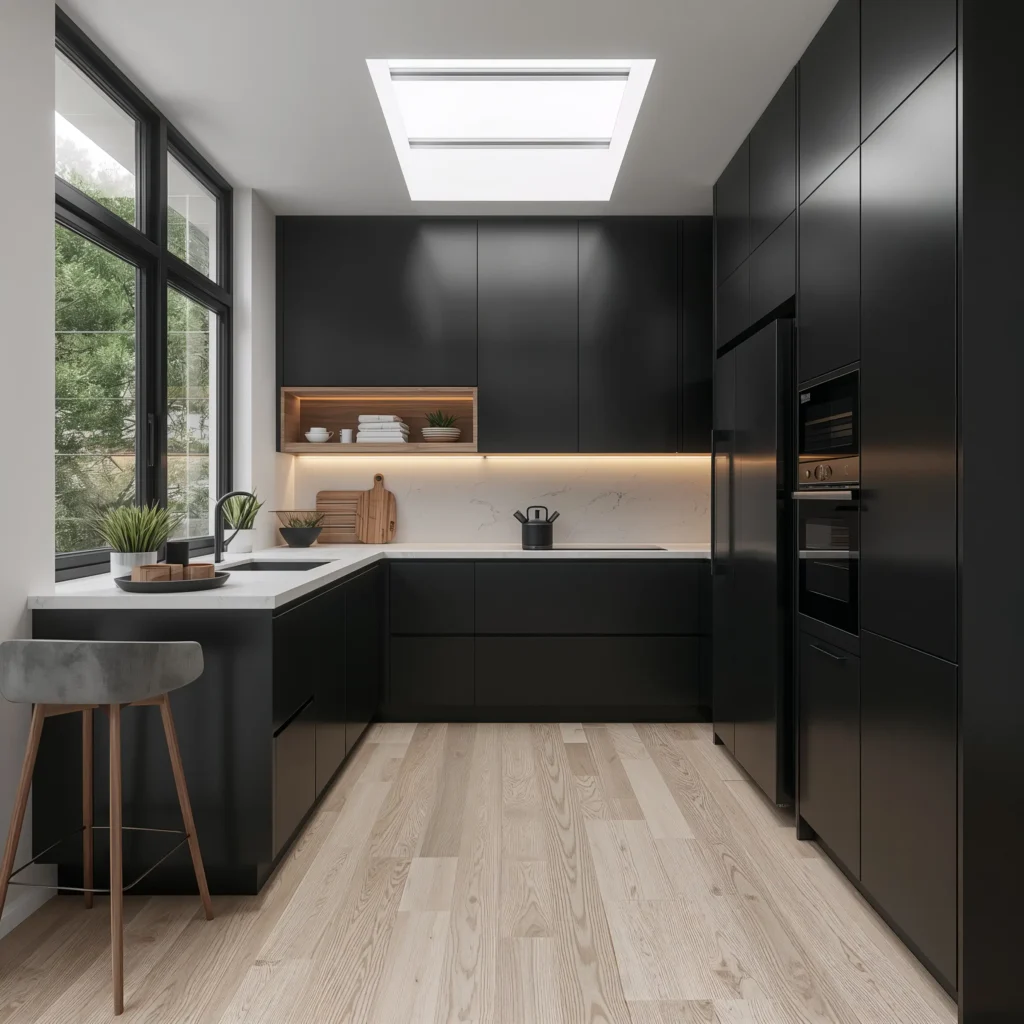
“But won’t a black kitchen make my small space feel even smaller?” I hear this concern constantly, and honestly, it’s time to bust this myth. Dark colors can actually make small kitchens feel more spacious when you design them thoughtfully.
The secret lies in what I call the “disappearing act.” Dark cabinets tend to recede visually, especially when you eliminate upper cabinets or use handle-less designs. Instead of seeing individual cabinet boxes, your eye reads the space as one continuous surface, which creates a surprisingly clean and open feeling.
Strategies that make small black kitchens work:
- Maximize natural light: Keep window treatments minimal or skip them entirely
- Add reflective surfaces: Glossy backsplashes, polished counters, or mirror accents
- Use vertical storage: Floor-to-ceiling cabinets draw the eye upward
- Light-colored flooring: Creates contrast and reflects light upward
I visited a tiny Brooklyn apartment last month where the owner had installed matte black cabinets throughout her galley kitchen. Instead of feeling cramped, it felt like a sophisticated wine bar. The key was pairing the dark cabinets with white quartz counters, subway tile backsplash, and plenty of under-cabinet lighting.
The psychological effect is real too. Small spaces often feel more intentional and designed when you embrace bold choices rather than playing it safe with all-white everything.
Black Kitchen with Floor-to-Ceiling Cabinets
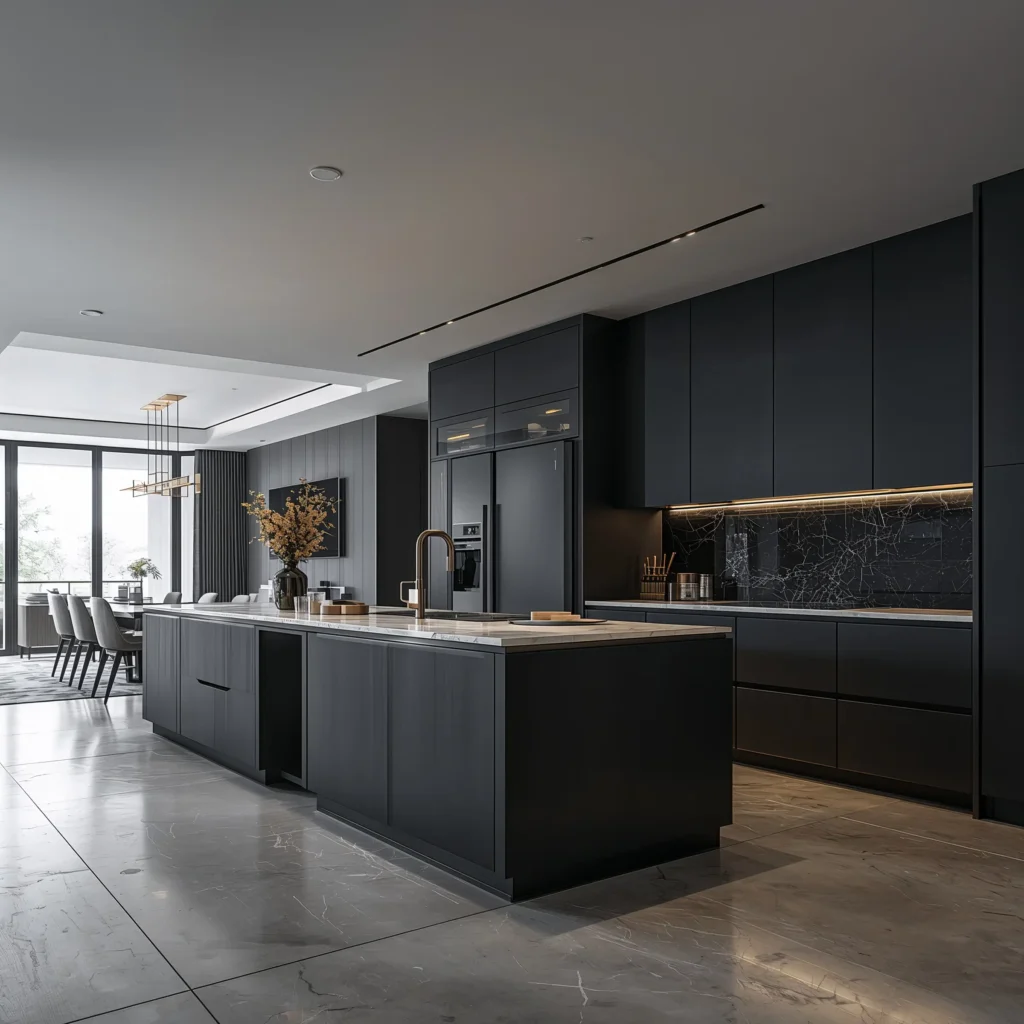
Want to know the fastest way to make any kitchen feel custom and expensive? Floor-to-ceiling cabinets. When you take black cabinets all the way to the ceiling, you create this incredible sense of height and grandeur that’s usually reserved for high-end custom kitchens.
This approach works especially well in homes with standard 8-foot ceilings. Instead of that awkward gap between your cabinets and ceiling (you know, the one that collects dust and makes your kitchen feel choppy), you get clean lines that make the room feel taller and more finished.
The storage benefits are obvious, but the visual impact is what really sells this idea:
- Creates architectural interest: Acts like built-in millwork
- Eliminates visual clutter: No more decorative items gathering dust up top
- Makes ceilings appear higher: Vertical lines draw the eye upward
- Provides massive storage: Perfect for storing seasonal items or rarely-used pieces
The challenge with floor-to-ceiling cabinets is accessibility. Those top shelves are definitely ladder territory, so plan accordingly. I recommend using upper zones for items you only need occasionally—holiday dishes, small appliances you rarely use, or bulk storage.
Consider adding interior lighting in upper cabinets. When you can illuminate those high shelves, it prevents the space from feeling cave-like and makes finding items much easier.
Scandinavian Black Kitchen with Natural Wood
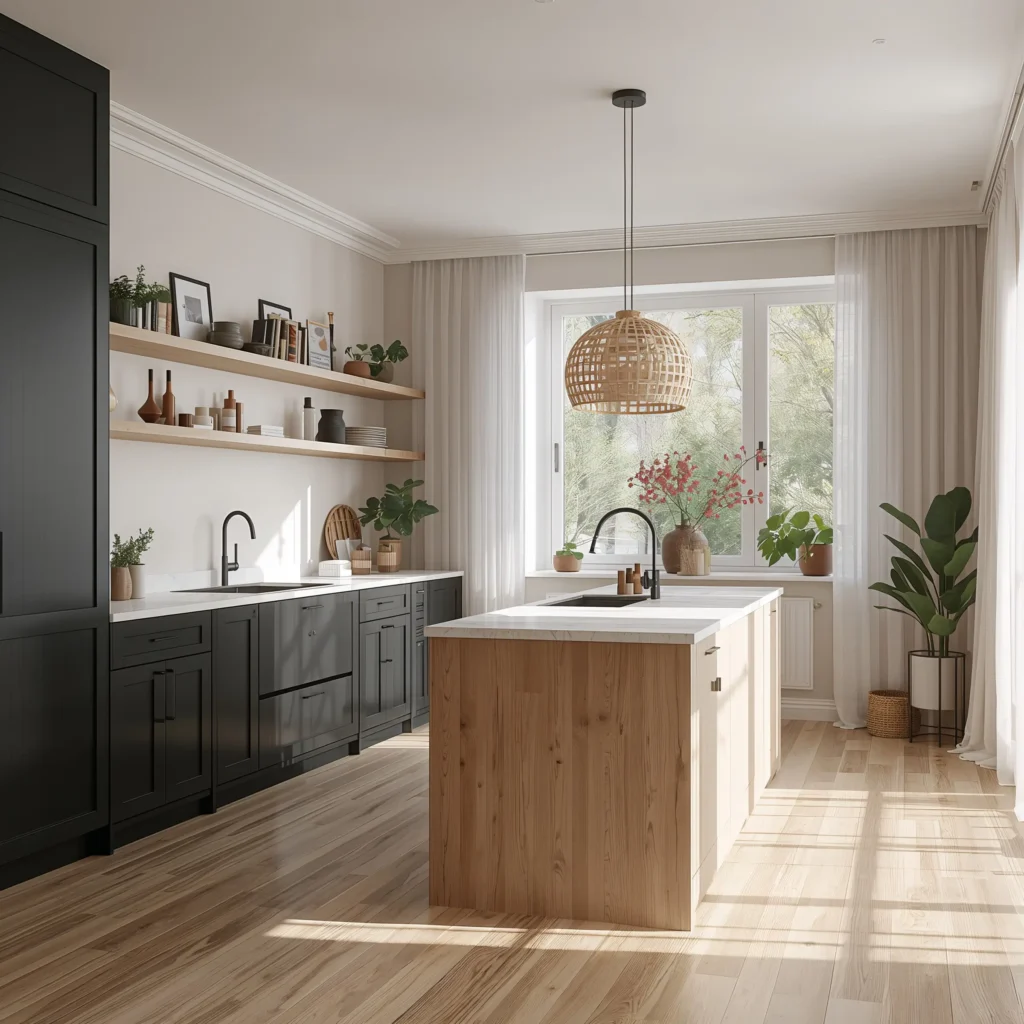
Scandinavian design meets dramatic black cabinetry—sounds contradictory, right? Actually, this combination creates some of the most beautiful, livable kitchens I’ve ever seen. The hygge-meets-modern aesthetic somehow manages to be both cozy and sophisticated.
Traditional Scandinavian kitchens focus on light woods, white surfaces, and minimal clutter. Add black cabinets to this mix, and you get something unexpected: a space that feels grounded and warm rather than stark and cold. The natural wood elements—whether it’s birch, ash, or light oak—provide the perfect counterbalance to deep black surfaces.
Key elements of this style include:
- Light wood accents: Open shelving, cutting boards, or wooden stools
- Minimal hardware: Clean lines with simple pulls or handle-less designs
- Natural textures: Linen dish towels, woven baskets, ceramic accessories
- Plenty of plants: Greenery adds life and softens the contrast
The beauty of this approach is how functional it feels. Scandinavian design prioritizes daily life over perfect styling, so these kitchens actually get better with use. The black surfaces hide everyday wear while natural materials develop character over time.
I love how this style photographs too. There’s something about the contrast between dark cabinets and light wood that creates incredible depth in photos, making even modest kitchens look magazine-worthy.
Also Read: 10 Stunning Dark Luxury Bathroom Ideas for Elegant Living
Black and White Kitchen with Statement Island

Sometimes the best approach is the most obvious one. Black and white kitchens are classic for a reason—the contrast is striking, the palette is timeless, and you have endless flexibility in styling and accessories.
The key to making this combination feel fresh rather than predictable lies in the proportions and where you place each color. I’m particularly obsessed with designs that use a dramatic black island as the focal point while keeping perimeter cabinets white or light-colored.
This approach gives you the best of both worlds:
- Visual anchor: The black island becomes a natural gathering point
- Balanced contrast: Prevents either color from overwhelming the space
- Flexible styling: Easy to change accessories and decor seasonally
- Timeless appeal: Never goes out of style like more trendy color combinations
The island becomes your statement piece—this is where you can go bold with different materials, interesting shapes, or unique storage solutions. Consider waterfall edges, mixed materials, or even different cabinet styles to really make it stand out.
Don’t feel limited to pure black and white either. Warm whites, cream tones, or even soft grays can soften the contrast while maintaining that classic appeal. The goal is creating a space that feels intentional rather than stark.
Industrial Black Kitchen with Concrete Finishes
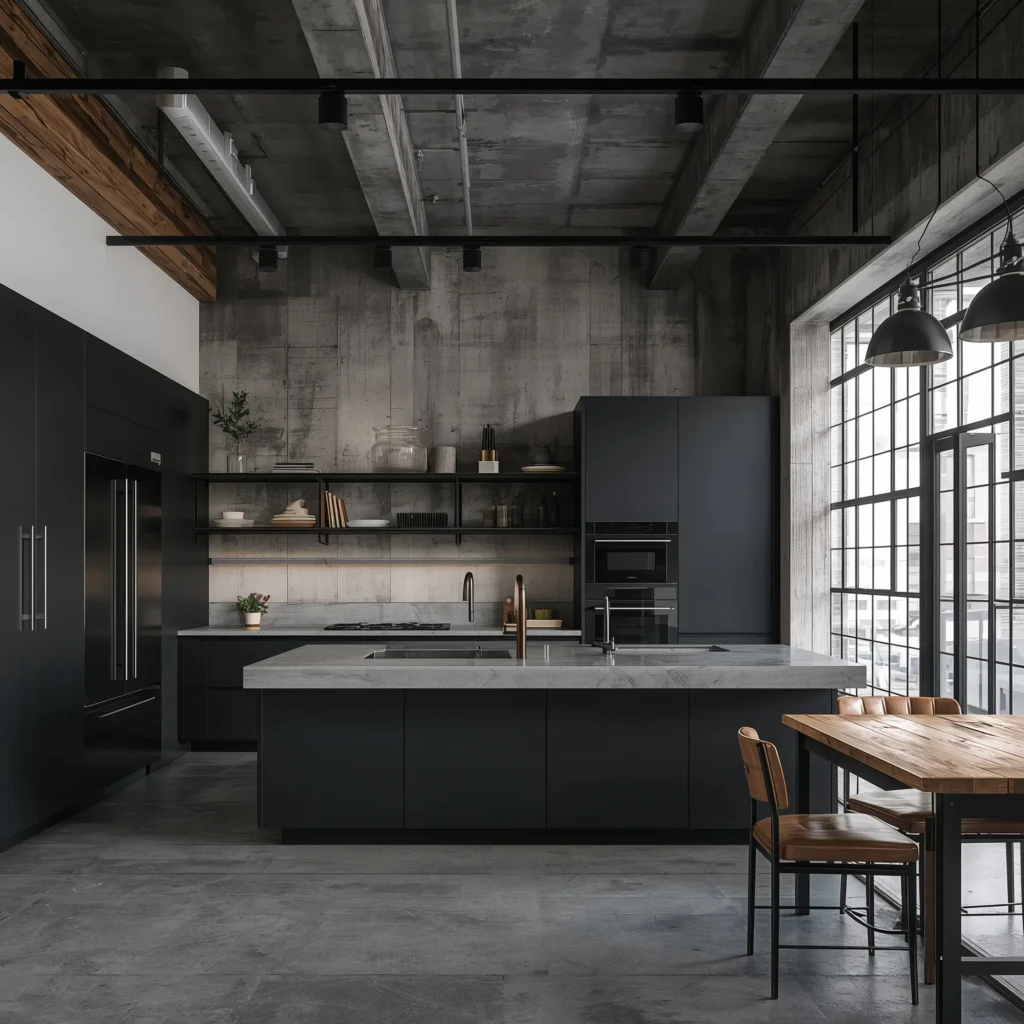
Industrial design isn’t going anywhere, and black kitchens with concrete elements represent this style at its absolute best. We’re talking exposed brick, concrete countertops, steel accents, and all those raw materials that make a space feel authentically urban and lived-in.
Concrete countertops deserve special mention here. Unlike marble or quartz, concrete develops character over time. Small scratches, subtle stains, and natural patina become part of the story rather than flaws to hide. Pair this with matte black cabinets, and you get a kitchen that feels like it belongs in a converted warehouse—in the best possible way.
Industrial elements that work beautifully with black cabinets:
- Exposed shelving: Metal brackets with reclaimed wood shelves
- Pendant lighting: Black iron fixtures or exposed bulb designs
- Mixed metals: Steel appliances with brass or copper accents
- Raw textures: Subway tiles, exposed brick, or corrugated metal backsplashes
The industrial aesthetic works especially well in loft-style homes or open floor plans where the kitchen flows into living areas. The raw materials and dark colors help define the cooking zone without needing walls or traditional room divisions.
FYI, industrial doesn’t have to mean cold or masculine. Adding warm wood accents, plants, or textured textiles can soften the look while maintaining that edgy, urban vibe.
Minimalist All-Black Kitchen with Hidden Storage
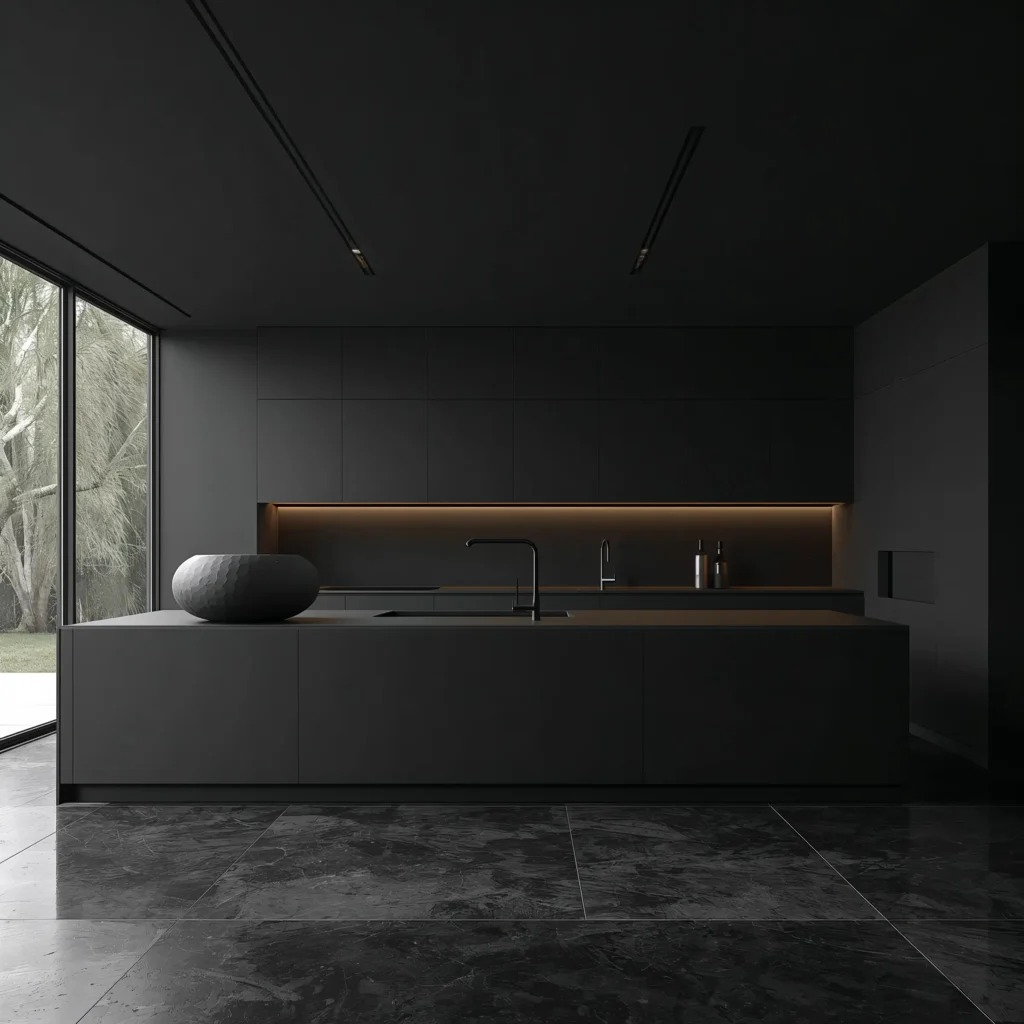
Minimalism gets a bad rap for being boring or impractical, but a well-designed all-black minimalist kitchen is anything but boring. We’re talking about spaces so clean and intentional that every surface, every line, every detail has been carefully considered.
The magic happens in the details—or rather, the lack of visible details. Handle-less cabinets, integrated appliances, and hidden storage solutions create surfaces so clean they almost look computer-generated. It’s like living inside a beautifully designed piece of technology.
Essential elements of minimalist black kitchens:
- Push-to-open cabinets: Eliminates hardware for seamless surfaces
- Integrated appliances: Panels that match cabinetry exactly
- Hidden storage: Pull-out pantries, built-in trash bins, concealed small appliances
- Consistent materials: One finish throughout for visual continuity
The key to making minimalism work is having a place for everything and keeping counters completely clear. This requires serious planning during the design phase—you need enough hidden storage to accommodate all your kitchen essentials without any visible clutter.
I know what you’re thinking: “Sounds sterile and impossible to maintain.” But when done right, these kitchens are incredibly calming and surprisingly functional. Everything has its place, cleaning is a breeze, and the space always looks photo-ready.
Also Read: 10 Amazing Luxury Spa Bathroom Ideas for Ultimate Comfort
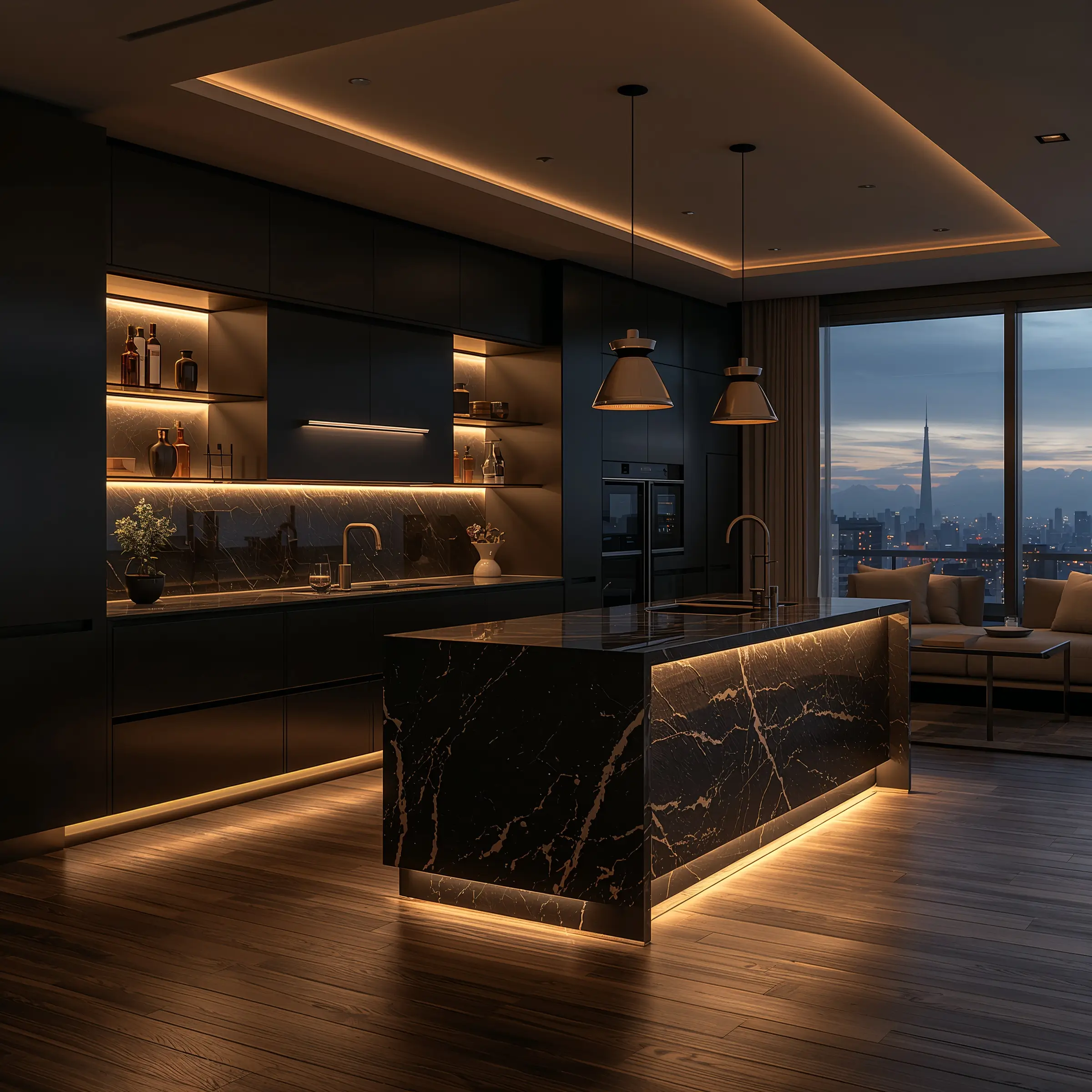
Black Kitchen with Dramatic Ambient Lighting
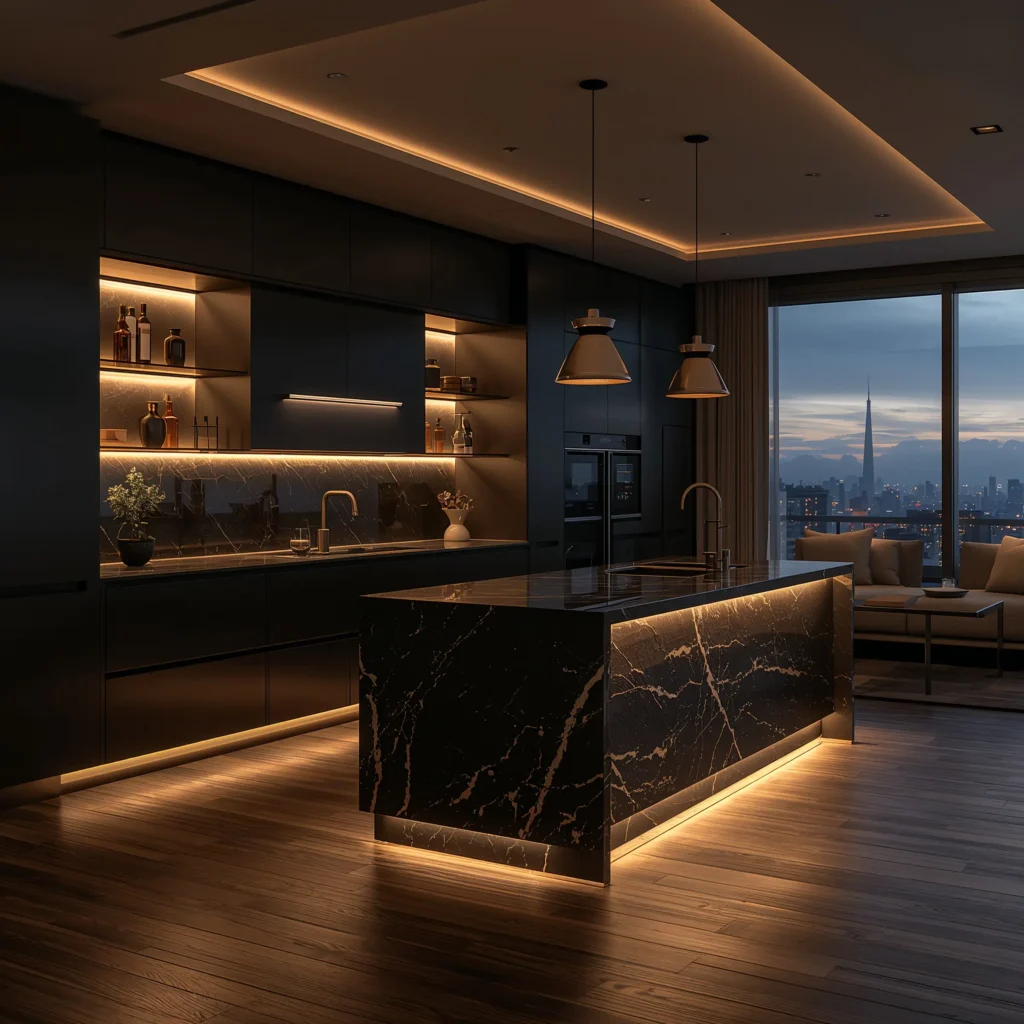
Here’s something most people don’t consider when planning a black kitchen: lighting becomes exponentially more important. Dark surfaces absorb light rather than reflecting it, which means you need to be much more strategic about both task and ambient lighting.
But here’s the thing—this isn’t a limitation; it’s an opportunity. Black kitchens with thoughtful lighting design become some of the most atmospheric, restaurant-quality spaces you’ll ever cook in. Think warm pools of light, dramatic shadows, and fixtures that become sculptural elements in their own right.
Lighting strategies that make black kitchens shine:
- Layered approach: Combine ambient, task, and accent lighting
- Under-cabinet strips: Essential for food prep and adds a floating effect
- Statement pendants: Large-scale fixtures become artwork
- Toe-kick lighting: Subtle floor lighting creates drama and safety
- Internal cabinet lighting: Makes dark interiors functional and beautiful
The color temperature of your bulbs matters tremendously in black kitchens. Cool white light can make the space feel stark and commercial, while warm light (2700K-3000K) creates that cozy, intimate atmosphere that makes you want to linger over dinner.
Consider installing dimmer switches on everything. The ability to adjust lighting throughout the day—bright for cooking, dim for entertaining—transforms how your kitchen feels and functions.
Conclusion
Black kitchens aren’t just a trend—they’re a commitment to living with intention and style. Whether you’re drawn to the warmth of matte black with oak accents, the luxury of dramatic marble, or the clean lines of minimalist design, there’s a black kitchen approach that’ll work for your space and lifestyle.
The best part? You don’t have to choose just one of these ideas. Mix elements from different styles to create something uniquely yours. Maybe you love the industrial concrete counters but want Scandinavian wood accents, or perhaps you’re feeling the gold hardware but prefer minimalist hidden storage.
IMO, the biggest mistake people make is being afraid to commit. Black kitchens require confidence—in your design choices, in your lighting plan, and in your willingness to live with something that makes a statement. But trust me, once you experience cooking in a space this intentional and dramatic, you’ll wonder why you ever considered playing it safe with basic white cabinets.
Ready to embrace the dark side? Your future self (and dinner guests) will thank you.