Let me ask you something — when was the last time you walked into your living room and actually felt calm? Not that fake calm where you just shove everything into a drawer before guests arrive. I mean genuinely, deeply relaxed the moment you stepped through the door.
If you’re anything like I was a few years ago, your living room is probably doing the most. Too many throw pillows, a coffee table that moonlights as a storage unit, and approximately seventeen remote controls for things you don’t even use anymore. Sound familiar?
Minimalist living rooms fix all of that — and they do it without making your space feel cold, sterile, or like you accidentally wandered into a showroom.
The right minimalist design gives you breathing room, visual peace, and honestly, a home that’s just easier to live in.
I’ve spent years obsessing over this stuff, testing ideas in my own home, and I’m here to share the ten best minimalist living room concepts that actually work in real life — not just on Pinterest boards.
Let’s get into it.
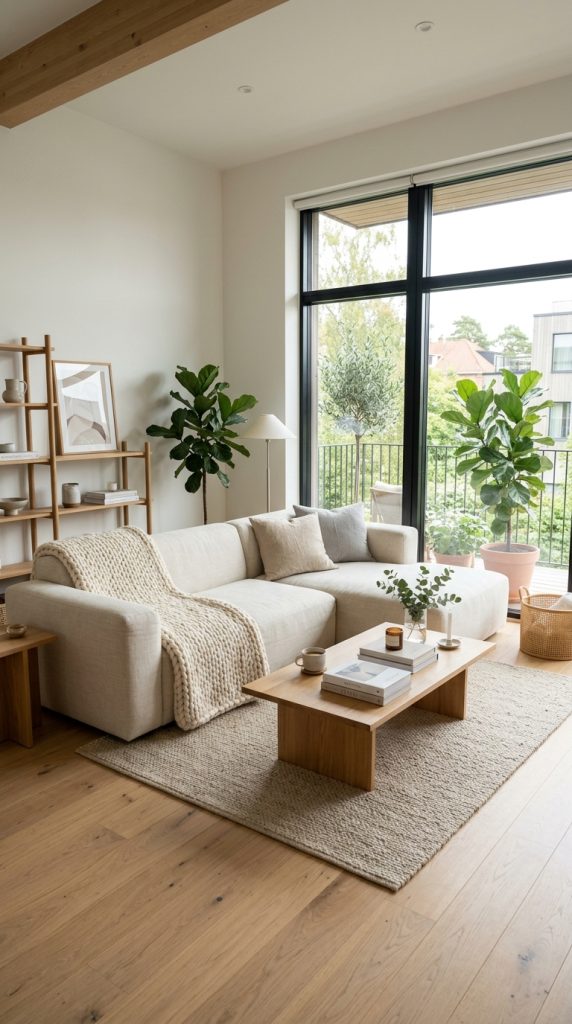
Scandinavian Serenity Living Room
Why Scandi Design Hits Different
There’s a reason Scandinavian interior design has been having a moment for the last decade — and honestly, it doesn’t look like that moment is ending anytime soon.
Scandinavian design is built on the idea that beauty and function should coexist, and your living room is the perfect place to prove that theory right.
Think light-washed wood floors, white or pale grey walls, and furniture with clean, simple lines. Nothing flashy. Nothing extra. Just a beautifully curated space that feels like a permanent Sunday morning.
What Makes It Work
The secret sauce of Scandinavian minimalism is its commitment to purposeful simplicity. Every item in the room earns its place. A sleek sofa in a soft oatmeal fabric, a low-profile coffee table, maybe a single abstract art print on the wall — that’s it. The room breathes.
Here’s what to focus on when building a Scandinavian serenity space:
- Color palette: Stick to whites, off-whites, soft greys, and pale natural wood tones
- Furniture: Choose pieces with tapered legs, low profiles, and clean edges — no bulky upholstery
- Lighting: Maximize natural light; add pendant lights with simple geometric shades for evenings
- Textiles: Layer in cozy textures — think chunky knit throws, a simple wool rug, linen cushions
- Decor: Keep it minimal — one or two carefully chosen plants, a single piece of wall art
The trick is restraint. Every time you want to add something, ask yourself: does this serve a purpose, or am I just filling space? If it’s the latter, put it back.
Personal Note
When I first reworked my living room using Scandinavian principles, the hardest part was editing down my book collection. I had stacks everywhere.
But once I paired it down to a small, curated display on a floating shelf, the whole room shifted. It felt intentional instead of chaotic.
That one change honestly changed how I felt walking into the room every day.
Japandi Harmony Living Space
The Best of Two Worlds
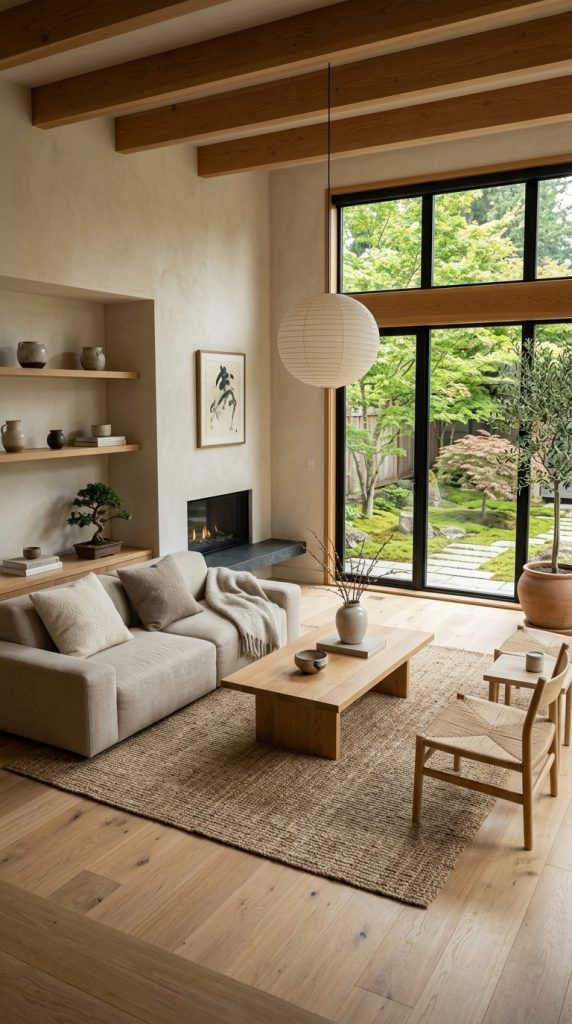
Japandi is basically the design world’s best collaboration — Japanese minimalism meets Scandinavian simplicity, and the result is something quietly magnificent. Japandi spaces feel grounded, intentional, and effortlessly elegant. If Scandi is your cool, breezy friend, Japandi is the wise, centered one who always seems at peace.
The philosophy behind Japandi pulls from wabi-sabi — the Japanese concept of finding beauty in imperfection — combined with the Scandinavian emphasis on warmth and coziness (hygge). Together, these ideas create living rooms that feel deeply human.
Building Your Japandi Space
Japandi isn’t about buying specific furniture — it’s about adopting a mindset. The room should feel balanced, low, and grounded, with natural materials doing most of the visual heavy lifting.
Key elements to incorporate:
- Low furniture: Floor-level sofas, platform-style seating, and low coffee tables create that signature grounded feeling
- Natural materials: Bamboo, rattan, linen, stone, and raw wood are your best friends here
- Muted color palette: Charcoal, warm beige, sage green, dusty rose, and natural wood — all soft, all earthy
- Negative space: Leave walls mostly bare; let the room breathe
- Handmade or artisanal decor: A hand-thrown ceramic vase, a woven wall hanging — these imperfect pieces are intentional and beautiful
The golden rule of Japandi? If it doesn’t bring genuine calm, it doesn’t belong in the room.
Why This Works for Modern Homes
Japandi is particularly brilliant for modern city apartments where square footage is precious. By keeping furniture low and lines clean, the space feels larger and less cramped. You’re not fighting the room — you’re working with it.
Neutral Texture Haven
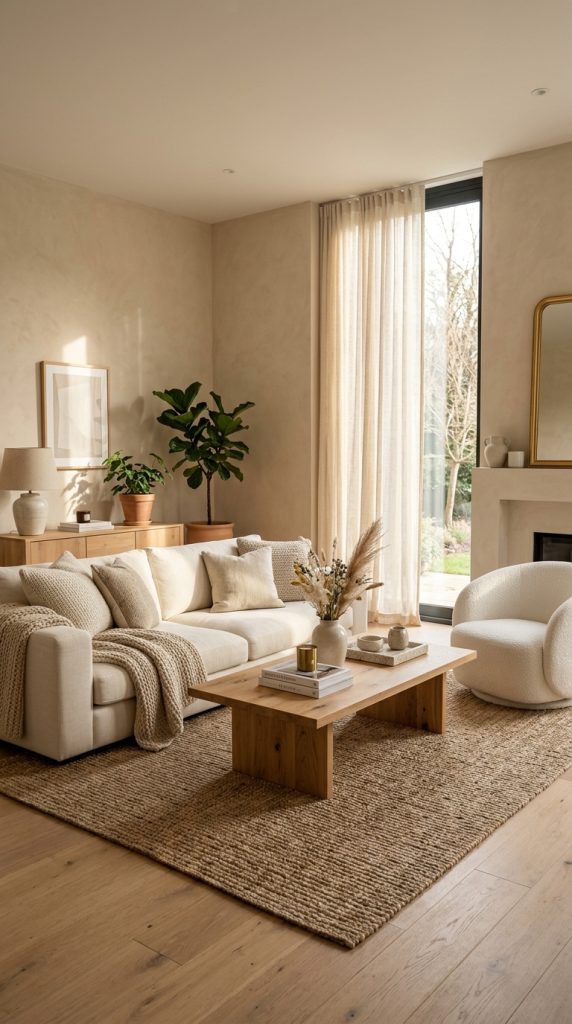
Texture Is the New Color
Here’s a design truth that took me embarrassingly long to figure out: a room doesn’t need color to feel rich and layered — it needs texture. A neutral texture haven is proof of that. Imagine a living room dressed entirely in creams, warm whites, and soft taupes — but with so much tactile variety that it never feels flat or boring.
This is the minimalist approach for people who love a cozy, collected look but want to keep things clean and cohesive.
How to Layer Texture Without Adding Clutter
The key here is working with the same family of neutral tones but varying the materials constantly. Your sofa might be in a boucle fabric, your rug in a low-pile wool, your cushions in linen and velvet — all neutrals, all different textures.
Here’s a simple layering strategy:
- Foundation: A large, textured wool or jute rug in cream or warm sand
- Seating: A boucle or linen upholstered sofa — boucle is particularly incredible for this concept
- Cushions: Mix materials — smooth velvet cushions alongside rougher linen ones in similar tones
- Throws: A chunky knit or waffle-weave throw draped casually over the sofa arm
- Walls: Consider a subtle limewash paint or plaster finish to add texture even to your vertical surfaces
- Accent pieces: Stone candle holders, a woven rattan tray, raw clay pottery
What you’re doing is creating visual interest without visual noise. The room has depth and warmth, but your eye never feels overwhelmed because the color palette stays tight and consistent.
Also Read: 10 Exclusive Luxury Living Room Ideas: Soft Luxe Living – Airlucent
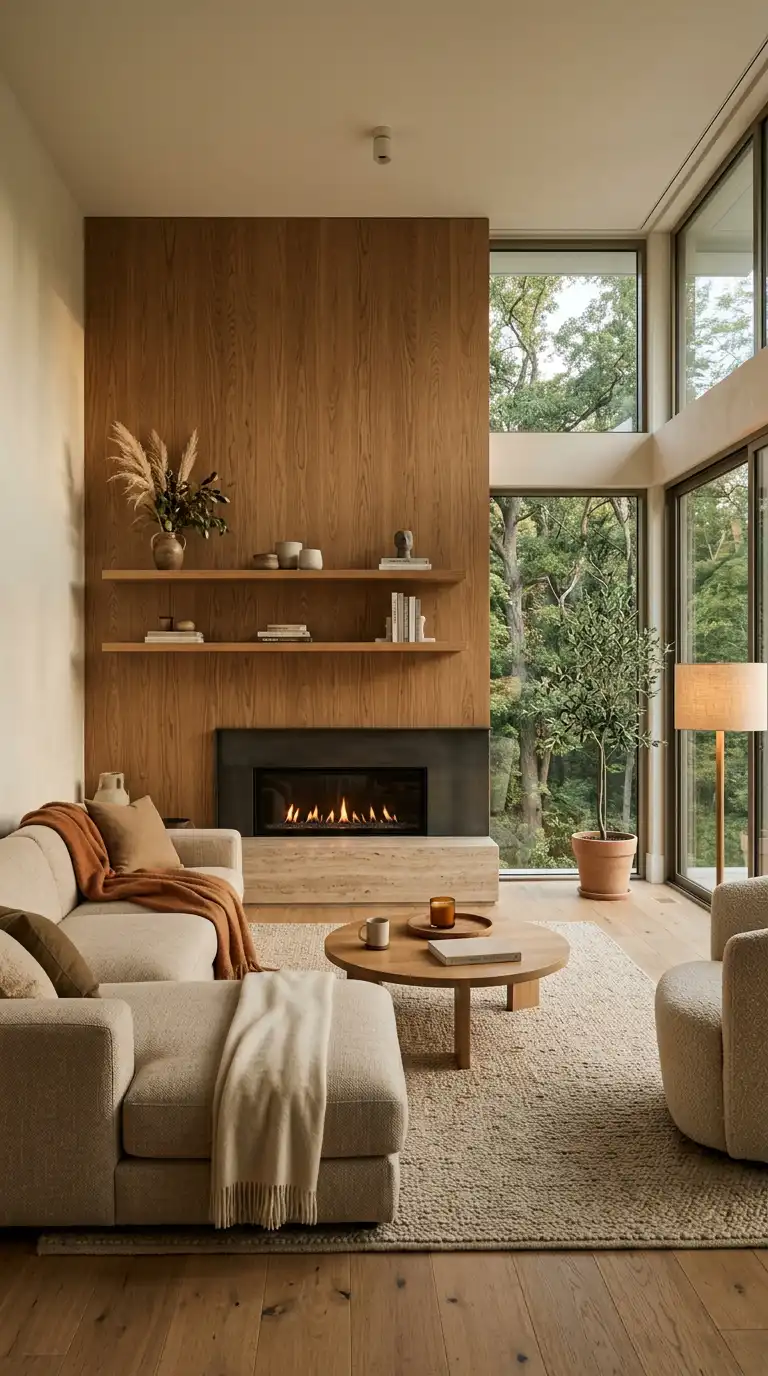
Warm Wood Minimalist Retreat
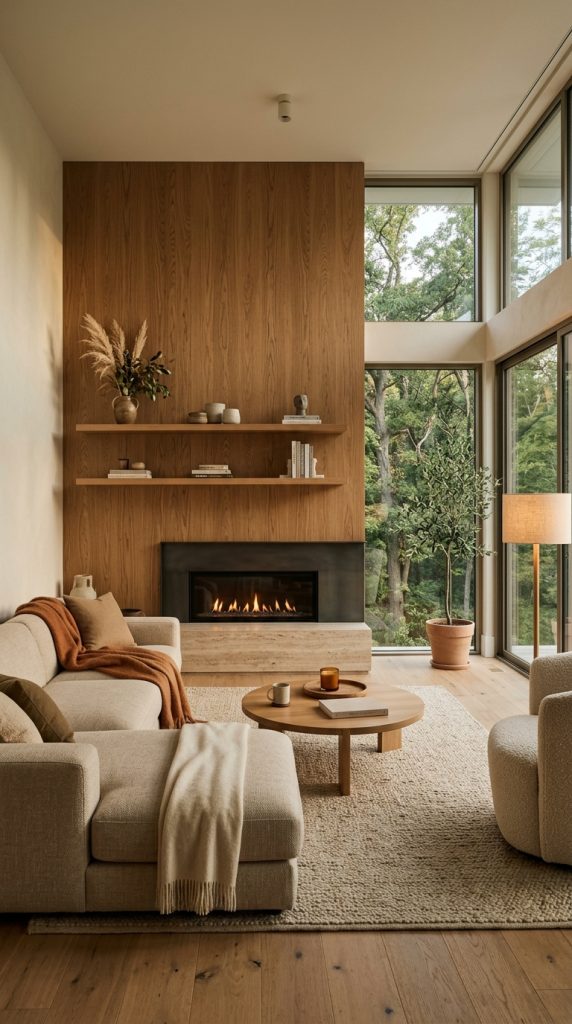
Give Me All the Wood
IMO, nothing beats the warmth that natural wood brings into a living room. And if you do it right, a wood-forward minimalist space feels like a permanent cozy retreat — the kind of room where you genuinely never want to leave.
Warm wood minimalism uses the natural beauty of timber as the room’s primary design statement. Instead of leaning on color or pattern, you let the grain, tone, and texture of wood carry the visual weight of the space.
Choosing the Right Wood Tones
Not all wood tones work equally well in a minimalist space. You want warmth without darkness, so aim for mid-tone woods with golden or amber undertones:
- Oak — a timeless choice; its grain is beautiful and its tone stays warm without going orange
- Walnut — richer and darker, best used in accent pieces rather than throughout
- Pine — lighter and more rustic; works beautifully in relaxed, cabin-style minimalist rooms
- Teak — golden and smooth; excellent for a more refined, contemporary look
Putting the Room Together
Build the room around your wood pieces — perhaps a gorgeous solid oak media unit as the focal point, a coffee table with a live-edge detail, or wide plank wood flooring that commands attention the moment you walk in.
Balance the warmth of the wood with:
- Soft white or warm linen walls to keep the space feeling light
- Plants — greenery looks stunning against warm wood and brings life to the room
- Simple, unfussy seating in neutral tones — your sofa should complement the wood, not compete with it
- Minimal decor — a few carefully placed objects on a shelf, nothing more
The wood is the star. Let it be.
Monochrome Modern Lounge
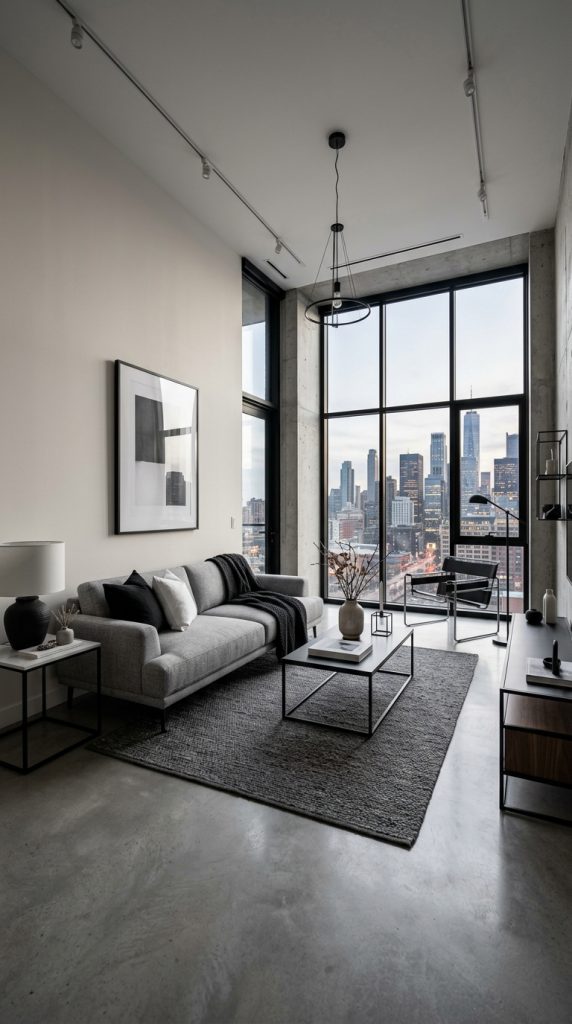
Black, White, and Bold All Over
Now here’s a minimalist direction that surprises people — because when done well, a monochrome living room is anything but boring. A monochrome modern lounge uses a single-color palette (typically black and white, or varying shades of one hue) to create a room that feels striking, sophisticated, and effortlessly cool.
Ever wondered how some rooms can feel incredibly dramatic without a single splash of color? This is how.
Making Monochrome Work
The danger with monochrome is that it can tip into feeling flat or harsh. The fix? Variation in tone and texture. A pure white wall next to an off-white sofa next to a cream rug — those subtle tonal differences keep the room feeling rich and dimensional.
For a black and white scheme:
- Walls: Crisp white or warm off-white
- Sofa: Deep charcoal or black velvet — yes, it’s bold, but it grounds the room beautifully
- Rug: A large, textured rug in white, cream, or a bold geometric black-and-white pattern
- Art: Black-and-white photography or abstract prints are perfect here
- Accents: Black metal lamp bases, white ceramic vases, matte black hardware on furniture
- Plants: The only color you need — a single large fiddle-leaf fig or monstera adds just enough life
The monochrome palette forces you to be intentional about every single item in the room. There’s nowhere to hide behind colorful distractions — everything must earn its place through form and texture.
Airy Small Space Living Room
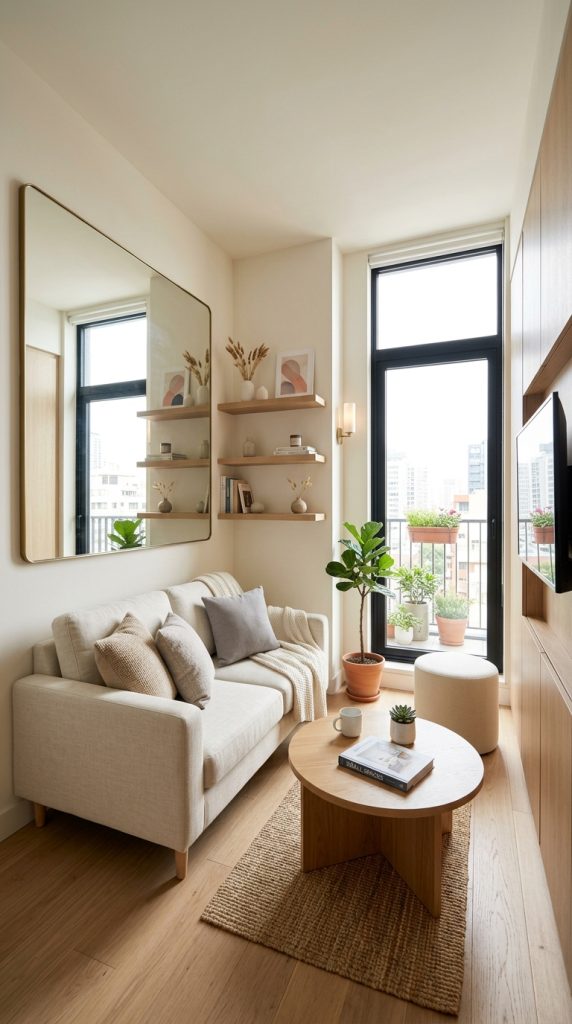
Small Room, Big Personality
Here’s the deal — minimalism isn’t just for people with sprawling open-plan spaces. In fact, minimalist design is arguably most powerful in small rooms, because it transforms tight, claustrophobic spaces into rooms that feel twice their actual size.
FYI, if you’ve been telling yourself you’ll embrace a beautiful living room once you move somewhere bigger, you’re doing yourself a disservice. The small room you have right now? It can be stunning.
Small Space Strategies That Actually Work
The key to an airy small space living room is ruthless editing combined with smart spatial decisions. Here’s what makes the biggest difference:
- Go light on the walls: Pale, cool whites or very soft grey make walls feel like they’re receding, instantly creating a sense of more space
- Choose furniture with legs: Raised sofas and chairs allow you to see the floor beneath them, which makes the room feel less crowded
- Use mirrors strategically: A large mirror on one wall doubles the visual depth of the room — it’s basically free square footage
- Multi-functional furniture: A storage ottoman, a coffee table with hidden compartments — keep surfaces clear by hiding storage inside furniture
- Limit your seating: In a small room, one sofa and one accent chair is enough — resist the urge to fill every corner
- Vertical storage: Float shelves high on the walls to draw the eye upward and use wall space instead of floor space
- Keep the floor as clear as possible: The more visible floor space, the larger the room feels
A small minimalist living room isn’t about compromise — it’s about precision. Every decision is deliberate, and that intentionality is exactly what makes the room feel special.
Also Read: 10 Amazing Black and White Living Room Decor Ideas Modern Vibes – Airlucent
Cozy Minimalist Reading Corner
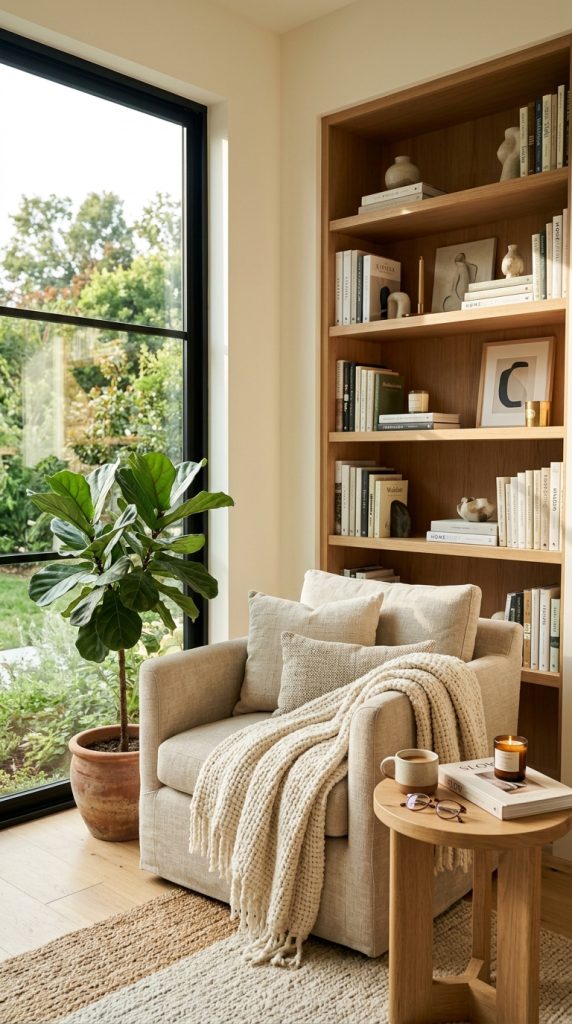
The Room Within the Room
Okay, this one is my personal favorite — and I may be slightly biased because I’ve built and rebuilt my own reading corner about four times trying to get it perfect. But a cozy minimalist reading corner is one of those design concepts that genuinely improves your quality of life, not just your Instagram feed.
The idea is simple: carve out a dedicated, intentional corner of your living room that functions as a sanctuary for quiet reading. No screens, no clutter — just you, a great book, and a space that makes you want to slow down.
Designing the Perfect Reading Corner
You don’t need a lot of space or a lot of money. You need the right pieces working together:
- The chair: This is the hero. Choose something genuinely comfortable — a low, wide accent chair, an egg chair, a classic wingback in a soft fabric. Avoid anything that feels like it belongs in an office.
- Lighting: A dedicated floor lamp positioned over your shoulder is non-negotiable. Warm-toned bulbs only — cool white light is the enemy of cozy.
- A small side table: Just enough room for your current book, a cup of tea, and maybe a small plant or candle. Nothing more.
- A throw blanket: Draped over the arm of the chair, always ready.
- A small bookshelf or curated stack: Keep only the books you genuinely love and intend to read. Edit ruthlessly.
- Soft rug underfoot: Define the corner space with a small rug — it signals that this area has a specific purpose.
The minimalist reading corner works because it’s deliberately limited. By choosing what’s there very carefully, you create a space that feels purposeful and inviting rather than cluttered.
Organic Modern Living Room
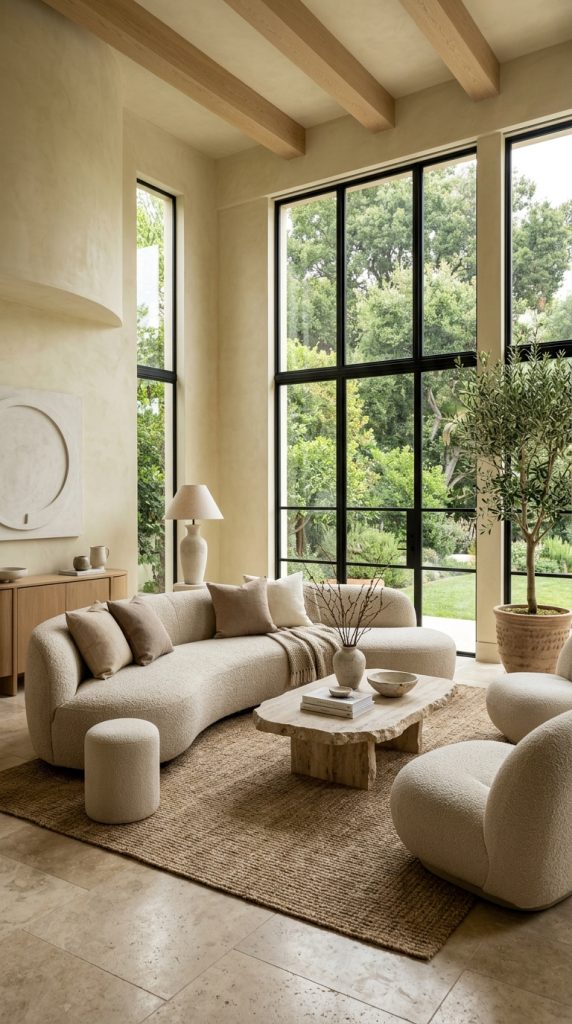
Where Minimalism Meets Nature
Organic modern design is minimalism’s warmer, earthier cousin — and it’s been absolutely everywhere in interior design circles lately, for very good reason. Organic modern living rooms blend clean architectural lines with natural, imperfect materials to create spaces that feel contemporary but deeply grounded.
Think sculptural furniture in natural shapes, raw materials like stone and unfinished wood, and a color palette drawn directly from the natural world. It feels luxurious without feeling cold.
The Organic Modern Formula
Getting this aesthetic right is about balancing structure with softness:
- Sculptural furniture: Choose sofas and chairs with curves and organic silhouettes — rounded edges, curved backs, irregular forms
- Natural stone: A stone coffee table or fireplace surround immediately elevates the organic quality of the space
- Plants as architecture: In organic modern design, plants aren’t just accessories — large statement plants like fiddle-leaf figs, olive trees, or bird of paradise become structural elements of the room
- Undyed and raw textiles: Linen, raw silk, undyed cotton — materials that feel like they came straight from nature
- Earthy tones: Warm terracotta, sage green, warm sand, camel, and rich chocolate brown
- Handcrafted accents: Pottery, woven baskets, hand-carved wooden objects — imperfect by design and beautiful for it
The organic modern room feels like the natural world decided to move indoors — and honestly, can you blame it?
Luxury Minimalist Open Concept
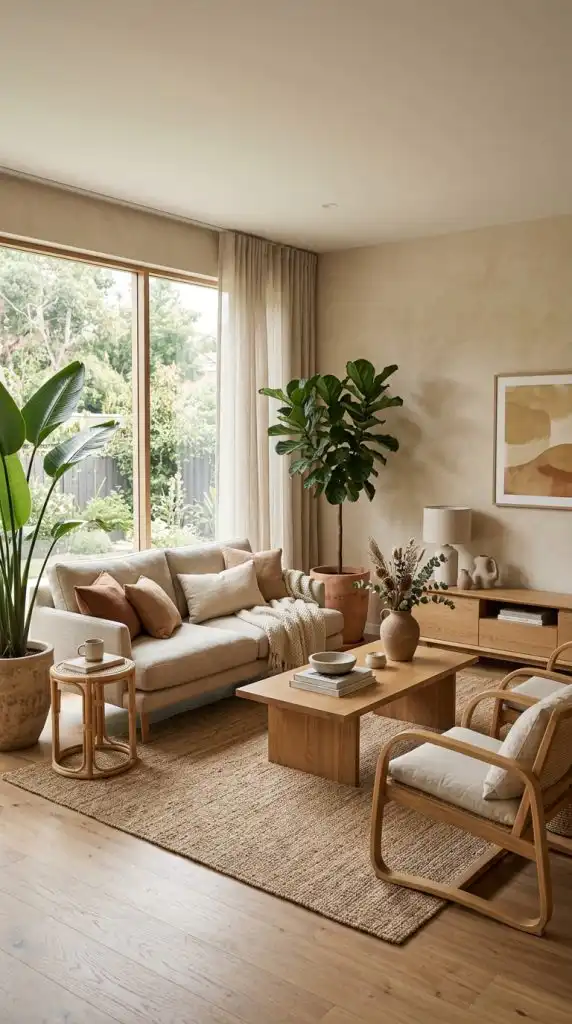
When Minimalism Goes Premium
There’s a version of minimalism that feels aspirational — not because it’s unattainable, but because every single choice is elevated. The luxury minimalist open concept living room takes the core principles of minimalism — restraint, intentionality, negative space — and executes them with premium materials and considered craftsmanship.
This is the kind of room where less really does feel like more, and where the quality of what’s there speaks louder than any quantity of decorative objects ever could.
What Sets Luxury Minimalism Apart
The difference between a basic minimalist space and a luxury minimalist space isn’t always immediately obvious — but you feel it the moment you walk in. It’s in the materials, the proportions, and the level of detail.
Key elements:
- Premium upholstery: A custom sofa in a high-quality, performance bouclé or Italian linen — not from a big-box store
- Statement lighting: A sculptural pendant light or a dramatic floor lamp becomes the room’s focal point
- Marble or stone accents: A marble coffee table or stone-topped console table adds instant luxury
- Art that commands attention: One large-scale piece of original or high-quality art rather than a gallery wall of smaller prints
- Built-in storage: Seamless, handle-less cabinetry that disappears into the wall keeps the open space completely uncluttered
- High ceilings and large windows: If you have them, don’t block them — let the architecture be part of the design
- Monochromatic luxury palette: Deep cream, warm ivory, stone grey, and soft black — kept tight and cohesive
In luxury minimalism, the edit is everything. You’re not just choosing the right things — you’re choosing the best version of the right things, and letting them shine.
Also Read: 10 Smart Black Couch Living Room Decor Ideas: Elegant Comfort – Airlucent
Earth Tone Minimalist Sanctuary
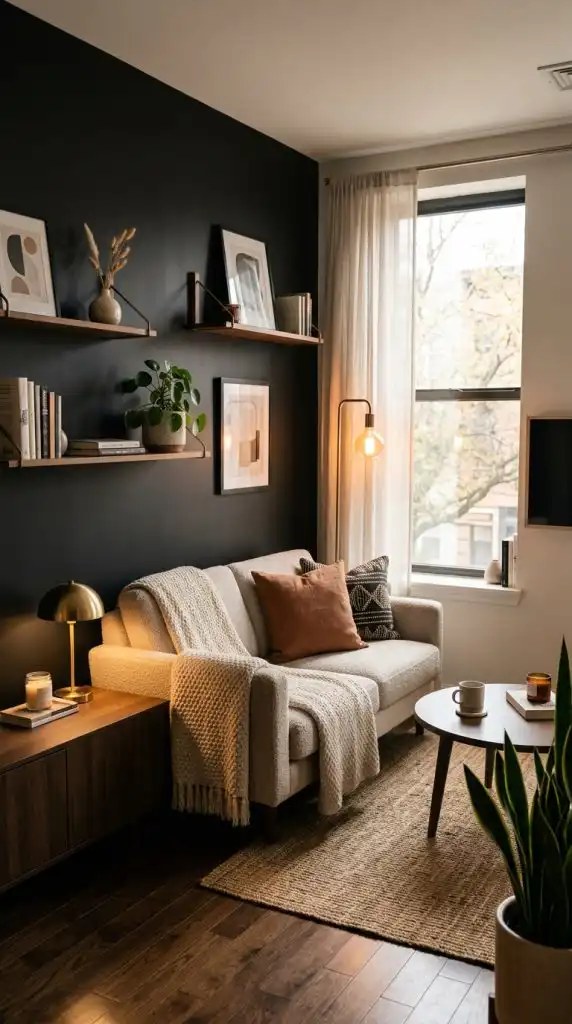
Grounded, Warm, and Deeply Human
We end where we really should — with the earth tone minimalist sanctuary, which is perhaps the most universally loved of all these concepts because it feels so inherently human and welcoming. Earth tones — terracotta, warm sand, rust, olive, chocolate brown, clay — connect us to the natural world in a way that feels instinctively comforting.
This is the minimalist living room that feels like a hug. Not stark, not cold, not clinical — just warm, grounded, and genuinely beautiful. :/ (That face is my expression when I see this done wrong with too many things — trust me, restraint still matters here.)
Building Your Earth Tone Sanctuary
The earth tone palette gives you a lot of warmth to work with, so the minimalist discipline becomes even more important. The risk is tipping from “warm and grounded” into “overwhelming and busy.” Here’s how to stay on the right side of that line:
- Choose two to three anchor tones: Perhaps terracotta, warm sand, and olive. Build the entire room around this trio.
- Layer your tones intentionally: Lighter earthy tones on the walls, medium tones in the upholstery, darker accents in accessories and plants
- Natural materials are mandatory: Rattan, jute, raw clay pottery, linen, natural wood — these materials carry earth tones naturally and authentically
- Introduce botanical elements: Trailing plants, dried grasses, branches with leaves — the natural world in miniature
- Textural richness: A jute rug, a terracotta throw, a rough-hewn wooden bowl — texture is what keeps the earth tone palette from feeling flat
- Warm, low lighting: Amber-toned bulbs, candles, and woven lampshades keep the room feeling golden and enveloping
The earth tone minimalist sanctuary isn’t just a design choice — it’s a lifestyle choice. You’re saying that your home is a place of rest, of grounding, of genuine comfort. And who doesn’t want that?
Bringing It All Together
So, which of these ten ideas spoke to you? Whether you’re drawn to the cool precision of a monochrome modern lounge, the quiet philosophy of a Japandi harmony space, or the earthy warmth of a terracotta sanctuary and the common thread running through every single one of these concepts is intentionality.
Minimalist living rooms work because every choice is deliberate. You’re not defaulting to “more is more” — you’re asking harder questions about what you actually need, what genuinely brings you joy, and what’s just noise.
And once you start asking those questions, it becomes surprisingly easy (and addictive) to edit your space down to only what truly matters.
Here’s my honest advice: don’t try to do everything at once. Pick one concept that resonates, choose one room, and start with the edit.
Remove before you add. Breathe before you buy. The best minimalist rooms I’ve ever seen weren’t designed in a weekend shopping spree — they were refined slowly, thoughtfully, and with genuine love for the space.
Your living room should feel like a sanctuary — not a storage unit with a sofa in it. You deserve a space that calms you down the moment you walk in.
These ten ideas give you the roadmap. Now it’s your turn to make it happen.
Start small. Stay intentional. And for goodness’ sake, put down the throw pillow you just added to your cart — you already have five.