You know that feeling when you walk into a kitchen and instantly feel like you’re home? That’s the magic of a vintage farmhouse kitchen. I’ve been obsessed with these cozy, lived-in spaces for years, and honestly, there’s something about the combination of weathered wood, creaky cabinets, and that perfect imperfection that just hits different.
Whether you’re planning a complete kitchen overhaul or just want to sprinkle some farmhouse charm into your current space, these ten vintage farmhouse kitchen ideas will have you reaching for your Pinterest board faster than you can say “shiplap.”
Let’s dig into some seriously swoon-worthy kitchen inspiration that proves sometimes the best things really do get better with age.
Antique White Vintage Farmhouse Kitchen
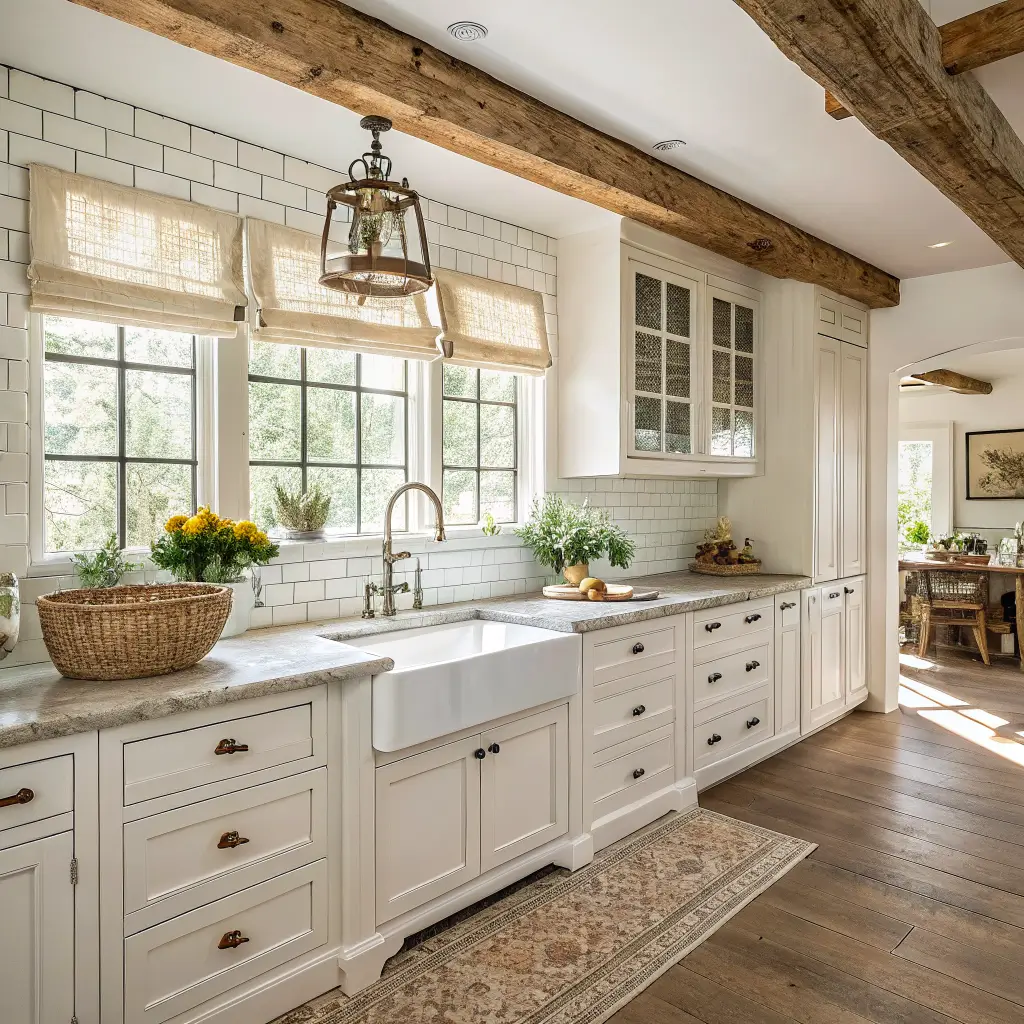
The classic that never goes out of style – that’s what I call the antique white farmhouse kitchen. This look is like that perfect white t-shirt in your closet; it goes with everything and always looks effortlessly chic.
I’ve seen countless antique white kitchens, and the secret sauce isn’t just slapping white paint everywhere and calling it a day. The magic happens in the details. Think creamy, slightly off-white cabinets with subtle undertones that prevent that stark, sterile feeling. You want your whites to have personality, not look like a hospital cafeteria.
The beauty of antique white lies in its versatility. You can pair it with virtually any accent color and it’ll work. Want to add some drama? Throw in black hardware and countertops. Feeling soft and romantic? Blush pink accessories and brass fixtures will do the trick.
Here’s what makes an antique white kitchen truly shine:
- Glazed cabinet finishes that show off subtle aging and character
- Vintage-inspired hardware in oil-rubbed bronze or aged brass
- Natural wood accents like butcher block counters or floating shelves
- Subway tile backsplashes with dark grout for that authentic farmhouse feel
The key is layering different shades of white and cream to create depth. I once helped a friend transform her builder-grade kitchen with antique white cabinets, and the difference was night and day. The space went from boring to breathtaking just by embracing that perfectly imperfect vintage vibe.
Weathered Wood Vintage Farmhouse Kitchen
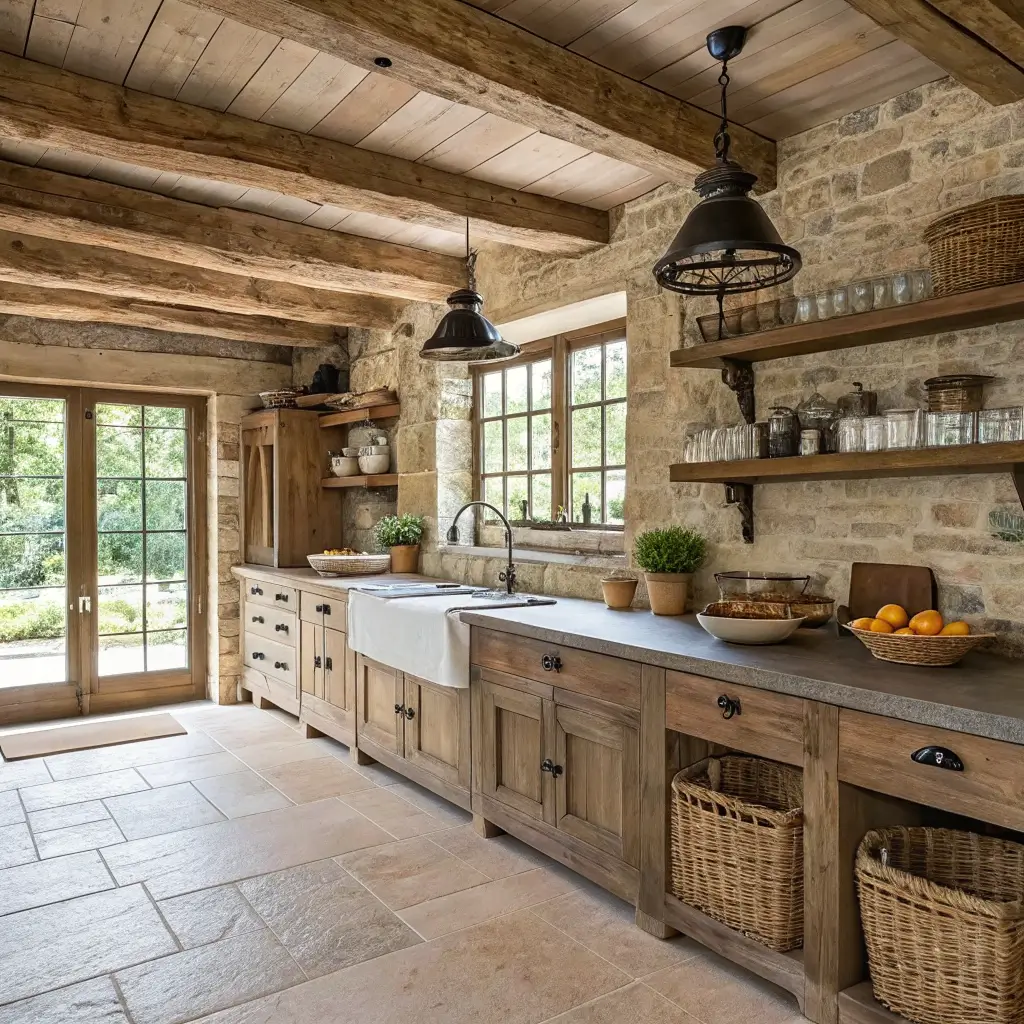
Ever walked into a kitchen and felt like you’d stepped back in time to your grandmother’s house? That’s the power of weathered wood done right. This style celebrates the beauty of imperfection, where every scratch, ding, and fade mark tells a story.
Weathered wood kitchens aren’t about buying brand-new cabinets and beating them up (though distressing techniques can work if done thoughtfully). The real deal involves sourcing authentic reclaimed materials or using finishing techniques that create genuine-looking wear patterns.
I’m talking about wood that looks like it’s lived a life – maybe it was a barn door in its previous existence, or perhaps it weathered decades of family dinners. The patina and character marks aren’t flaws; they’re features that add soul to your space.
What makes weathered wood kitchens irresistible:
- Varied wood tones that create visual interest without looking busy
- Open grain patterns that showcase the wood’s natural texture
- Mix of finishes – some pieces more weathered than others for authenticity
- Natural imperfections like knots, nail holes, and color variations
The trick with weathered wood is balance. You don’t want your kitchen looking like a tornado hit a lumber yard. Mix your weathered elements with cleaner, more polished pieces. Maybe your island sports that gorgeous weathered finish while your upper cabinets keep things a bit more refined.
Pro tip: Pay attention to the undertones in your weathered wood. Some lean gray, others pull more brown or even have subtle green notes. Pick a direction and stick with it throughout your space for cohesion.
Cozy Cottage Vintage Farmhouse Kitchen
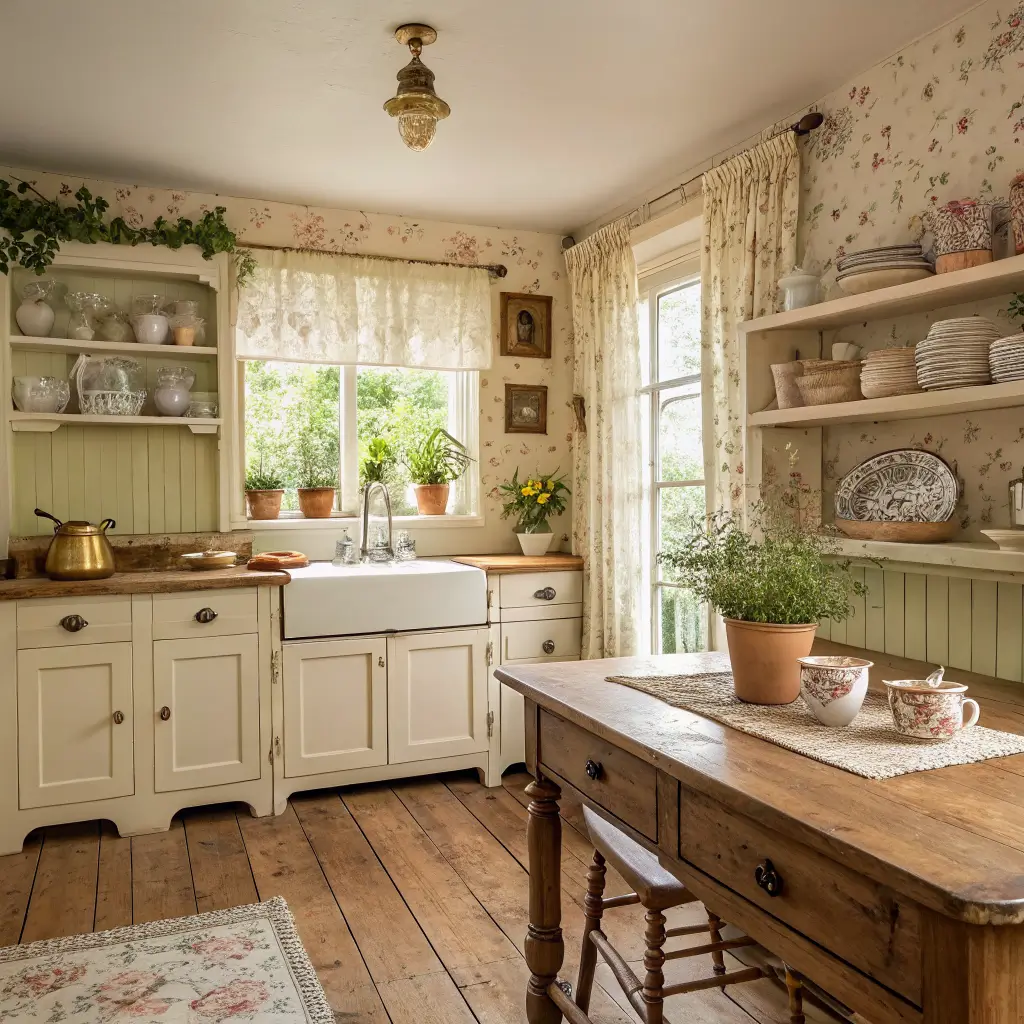
Small spaces, big charm – that’s the cottage farmhouse kitchen in a nutshell. These kitchens prove you don’t need a massive space to create something magical. In fact, some of my favorite farmhouse kitchens are the tiny ones that pack maximum coziness into minimal square footage.
Cottage farmhouse kitchens are all about creating that “hug in a room” feeling. Think soft, muted colors, vintage textiles, and collections of well-loved pieces that make the space feel lived-in and loved.
The cottage approach embraces a more English countryside vibe compared to the American farmhouse aesthetic. You’ll see more floral patterns, pastel colors, and delicate details that create a softer, more romantic feel.
Essential elements of cottage charm:
- Beadboard wainscoting that adds texture without overwhelming the space
- Glass-front cabinets displaying vintage dishes and pretty glassware
- Gingham or toile patterns in window treatments or seat cushions
- Vintage lighting fixtures like pendant lights with fabric shades
I love how cottage farmhouse kitchens make use of vertical space. Open shelving displays beautiful dishes, while hooks and rails keep everyday items within reach but looking intentional. The key is curation – every visible item should earn its place through either beauty or function (preferably both).
Color palettes lean soft and soothing. Think sage greens, dusty blues, warm creams, and gentle pinks. These colors create a calming backdrop that makes you want to linger over morning coffee and evening wine.
Also Read: 10 Elegant Italian Farmhouse Kitchen Ideas with Rustic Charm
Rustic Brick Vintage Farmhouse Kitchen
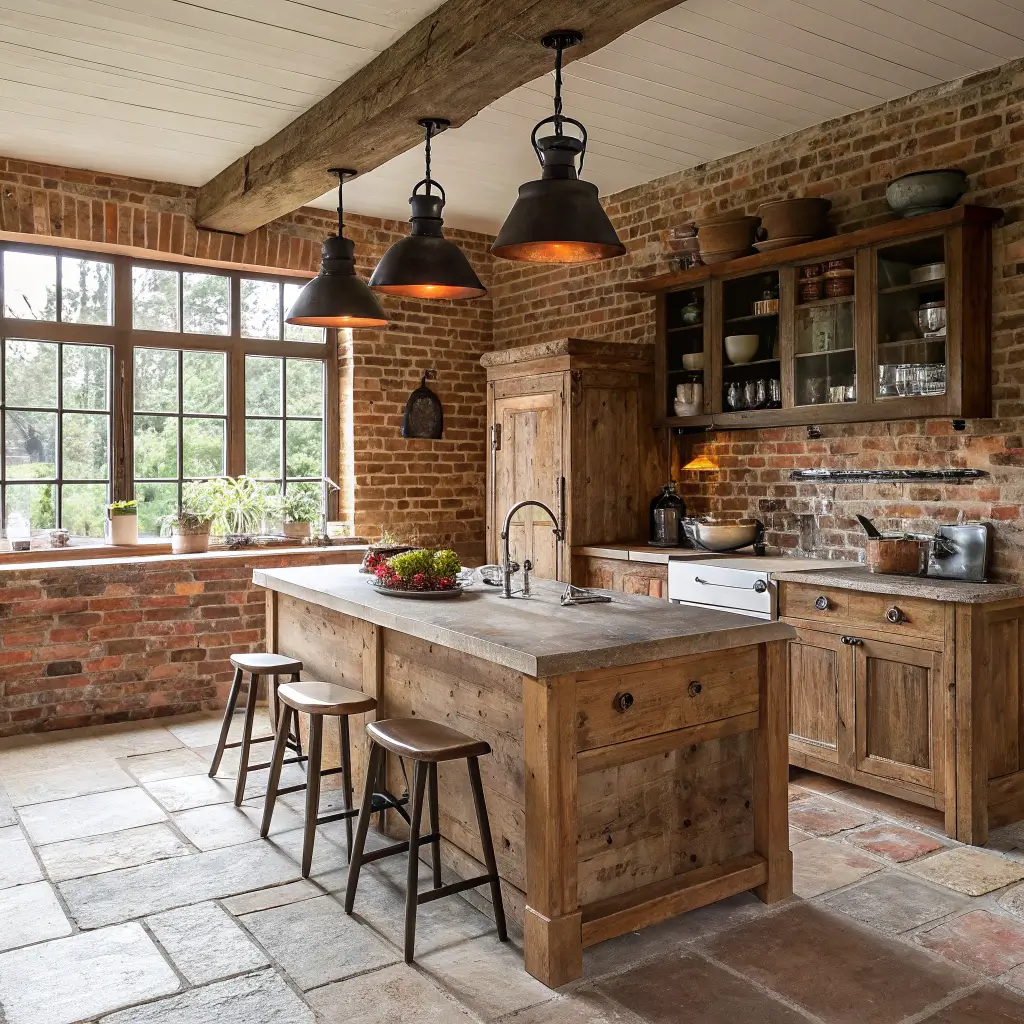
Want to add some serious character to your kitchen? Exposed brick is your answer. There’s something about the texture and warmth of brick that instantly makes a space feel more authentic and grounded.
I’ve seen brick used beautifully as accent walls, backsplashes, and even full wall treatments in farmhouse kitchens. The key is choosing the right brick for your space and not going overboard. Brick has a strong personality, so you want to let it be the star without competing elements fighting for attention.
The beauty of brick lies in its imperfections. Uneven surfaces, varied coloring, and natural aging create visual interest that no manufactured material can replicate. Each brick tells a story, and together they create a backdrop that feels both timeless and deeply rooted in history.
Ways to incorporate brick successfully:
- Kitchen island base wrapped in reclaimed brick for a stunning focal point
- Backsplash treatment extending from counter to ceiling for dramatic impact
- Accent wall behind open shelving to create depth and warmth
- Archway or nook details that add architectural interest
Color coordination matters with brick. The natural reddish-brown tones pair beautifully with warm whites, deep greens, and rich navy blues. Avoid fighting the brick’s natural warmth with cool, stark colors that’ll create visual tension.
Lighting becomes crucial in brick kitchens. The textured surface can absorb light, so you’ll need strategic lighting placement to keep things bright and welcoming. Under-cabinet lighting helps illuminate work surfaces, while pendant lights create ambient warmth.
Sage Green Vintage Farmhouse Kitchen
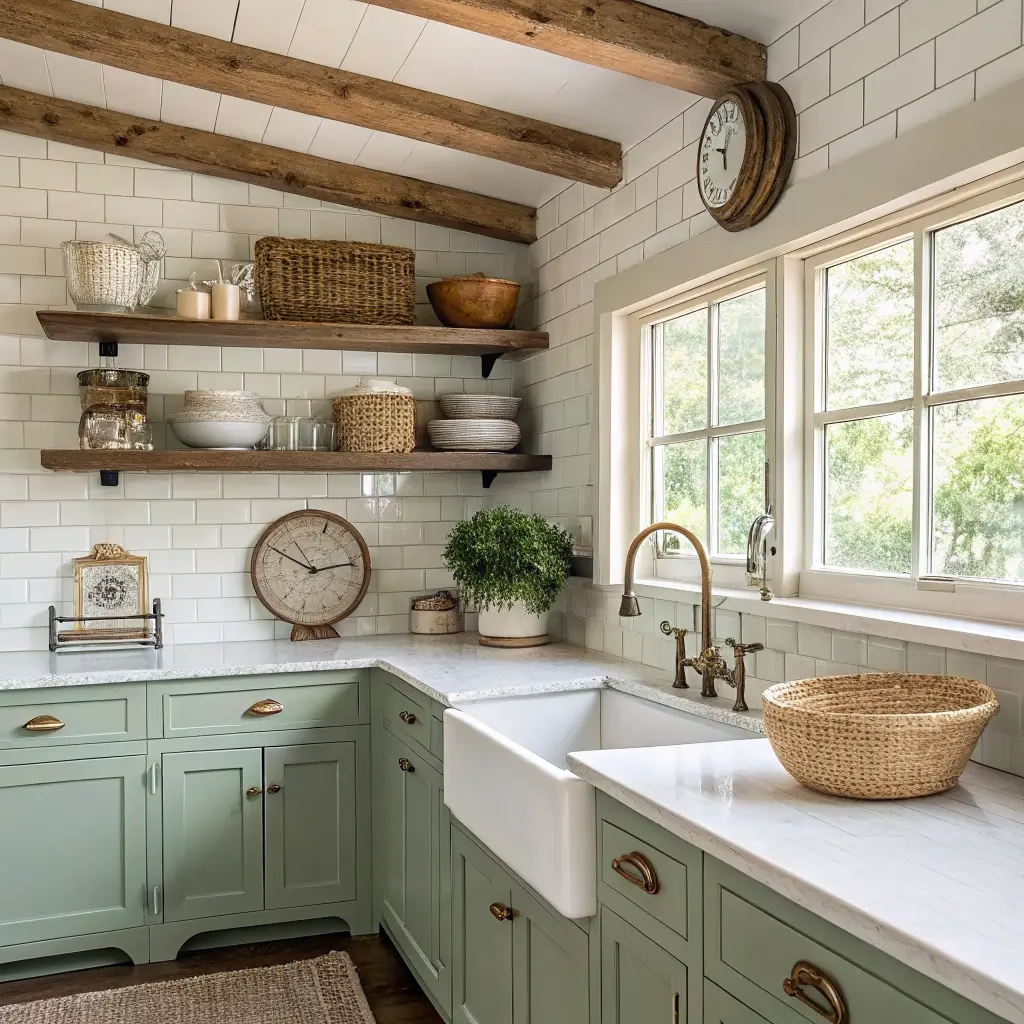
Sage green is having a serious moment, and honestly, it’s about time. This sophisticated yet earthy color brings nature indoors while maintaining that vintage farmhouse authenticity we’re all craving.
Unlike the bright, in-your-face greens that dominated kitchens in previous decades, sage green whispers rather than shouts. It’s calming, versatile, and timelessly elegant in a way that feels both fresh and nostalgic.
I’ve noticed sage green works particularly well in farmhouse kitchens because it complements natural materials beautifully. Wood tones, natural stone, brass fixtures, and white accents all play nicely with this sophisticated green.
What makes sage green kitchens special:
- Depth and complexity that changes with lighting throughout the day
- Natural compatibility with both warm and cool accent colors
- Timeless appeal that won’t feel dated in five years
- Versatile backdrop for seasonal decorating and styling changes
The secret to pulling off sage green successfully is understanding its undertones. Some sage greens lean more blue, others pull gray, and some have subtle yellow notes. Pick your direction based on your existing elements and natural light situation.
Sage green cabinets paired with warm brass hardware create an incredibly sophisticated look that feels both vintage and current. Add in some natural wood open shelving and white subway tile, and you’ve got a kitchen that’ll never go out of style.
Don’t forget about the power of layering different shades of green. Maybe your cabinets are sage, but your accessories pull in deeper forest greens or lighter mint tones. This creates depth and prevents the monochromatic look from feeling flat.
Copper Accent Vintage Farmhouse Kitchen
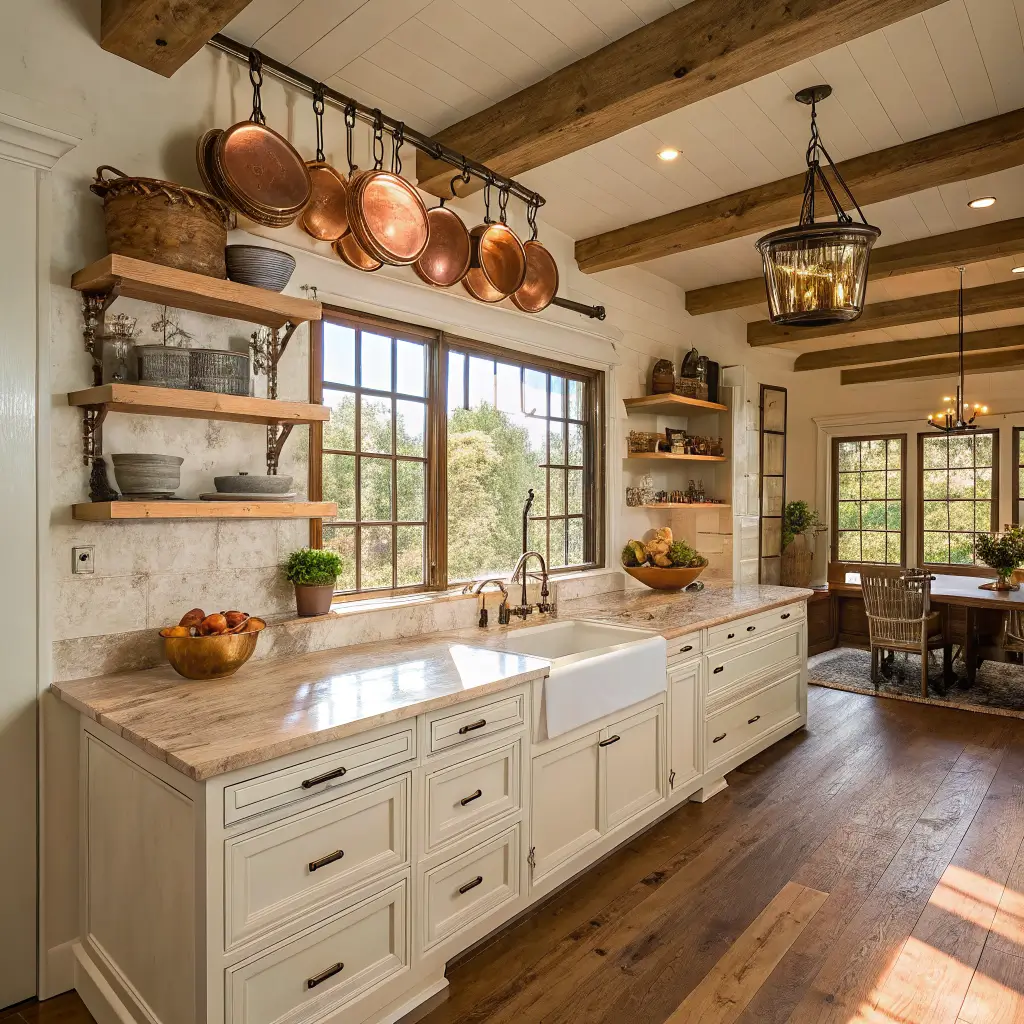
Copper brings the warmth like nothing else can. FYI, this isn’t about having a copper-everything kitchen that looks like a steampunk fever dream. We’re talking strategic copper accents that add richness and character to your farmhouse space.
I’m obsessed with how copper ages and develops that gorgeous patina over time. Unlike other metals that fight aging, copper embraces it, developing character marks that make each piece unique. It’s like the metal equivalent of a well-worn leather jacket – better with age.
Copper works beautifully in farmhouse kitchens because it bridges the gap between rustic and refined. It’s earthy enough for country charm but sophisticated enough for elevated design.
Strategic copper placements that work:
- Pendant lighting above islands or dining areas for warm, ambient glow
- Farmhouse sinks that develop beautiful patina patterns over time
- Range hoods that create stunning focal points and architectural interest
- Cabinet hardware mixed with other warm metals for layered sophistication
The trick with copper is moderation and intentionality. Too much copper can overwhelm a space and start feeling theme-y rather than authentic. I prefer using copper as accent pieces rather than dominant features.
Copper pairs beautifully with deep navy blues, forest greens, and warm whites. These color combinations create sophisticated, grounded palettes that feel both vintage and current. The warm tones of copper also complement natural wood beautifully, creating harmonious, earthy color schemes.
Maintenance-wise, copper requires some care, but that’s part of its charm. The patina development is natural and beautiful, but if you prefer the shiny copper look, regular polishing keeps pieces bright and reflective.
Also Read: 10 Charming Country Farmhouse Kitchen Ideas for Every Style
French Country Vintage Farmhouse Kitchen
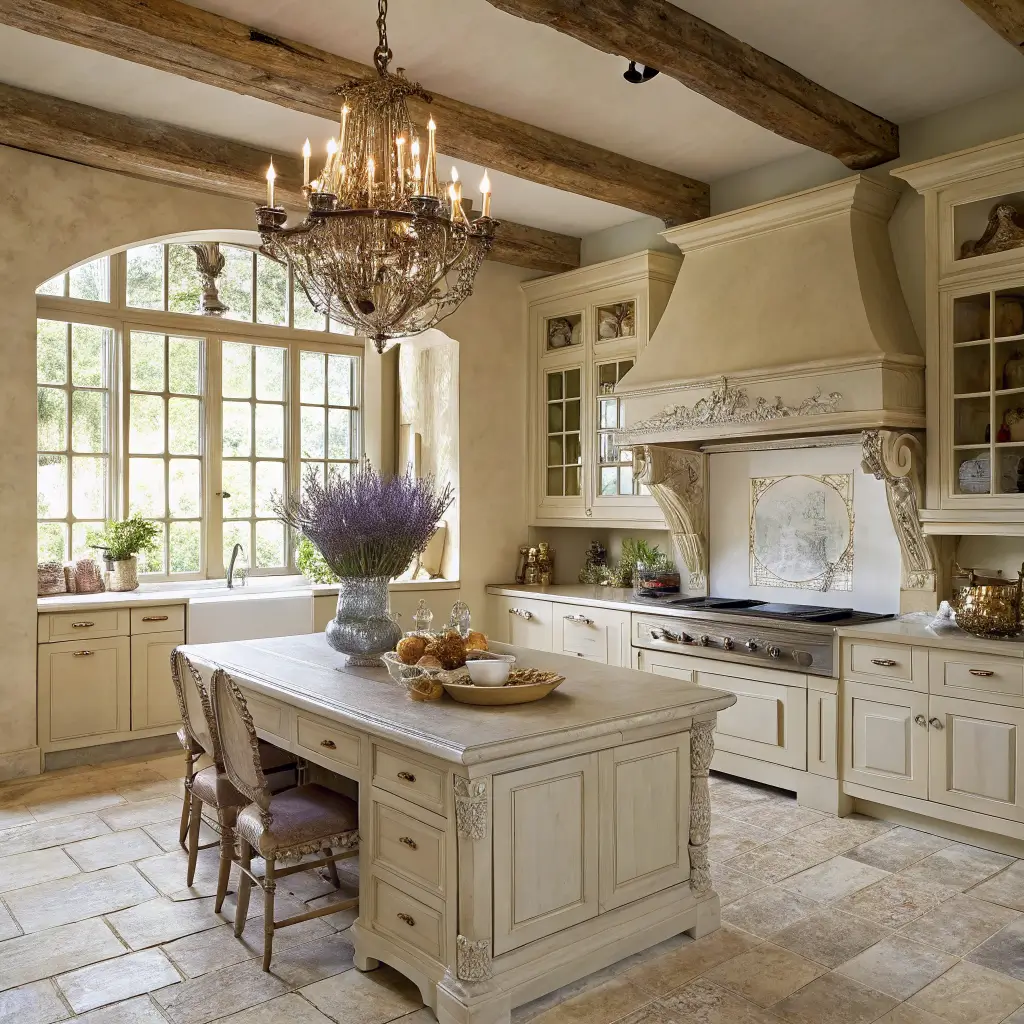
Ooh la la – French country farmhouse kitchens bring that effortless European sophistication that makes everything feel more elegant. This style takes the rustic charm of farmhouse design and adds a touch of French refinement that’s absolutely irresistible.
French country kitchens are about celebrating imperfection with style. Think worn limestone floors, distressed painted furniture, and that perfectly imperfect patina that only comes with time and use.
The color palette leans softer and more muted than typical American farmhouse styles. Lavender grays, warm creams, dusty blues, and sage greens create sophisticated, lived-in palettes that feel both relaxed and refined.
Key elements that scream French country charm:
- Distressed painted finishes on cabinets and furniture pieces
- Natural stone or limestone countertops with organic edge details
- Wrought iron accents in light fixtures, pot racks, and hardware
- Vintage French ceramics displayed on open shelving and countertops
I love how French country farmhouse kitchens embrace mixing materials and finishes. You might have painted cabinets alongside natural wood elements, stone counters paired with ceramic backsplashes, and iron fixtures mixed with brass hardware. The key is choosing pieces that feel authentic rather than matchy-matchy.
French country kitchens also excel at incorporating vintage textiles and patterns. Think toile fabrics, vintage linens, and embroidered details that add softness and personality to harder surfaces.
The lighting in French country kitchens tends toward romantic and ambient rather than stark and utilitarian. Chandeliers, lantern-style pendants, and sconces create warm, inviting atmospheres perfect for long dinners and intimate conversations.
Vintage Farmhouse Kitchen with Open Shelving
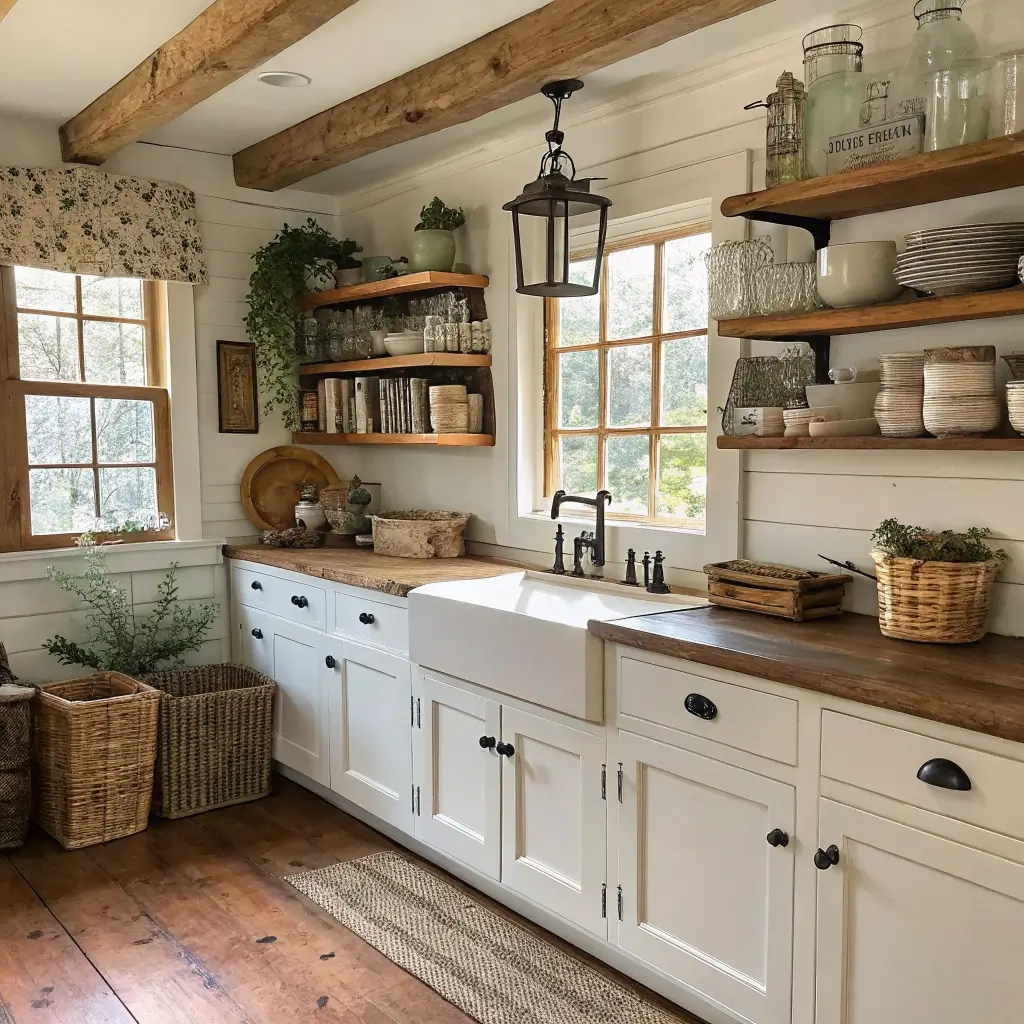
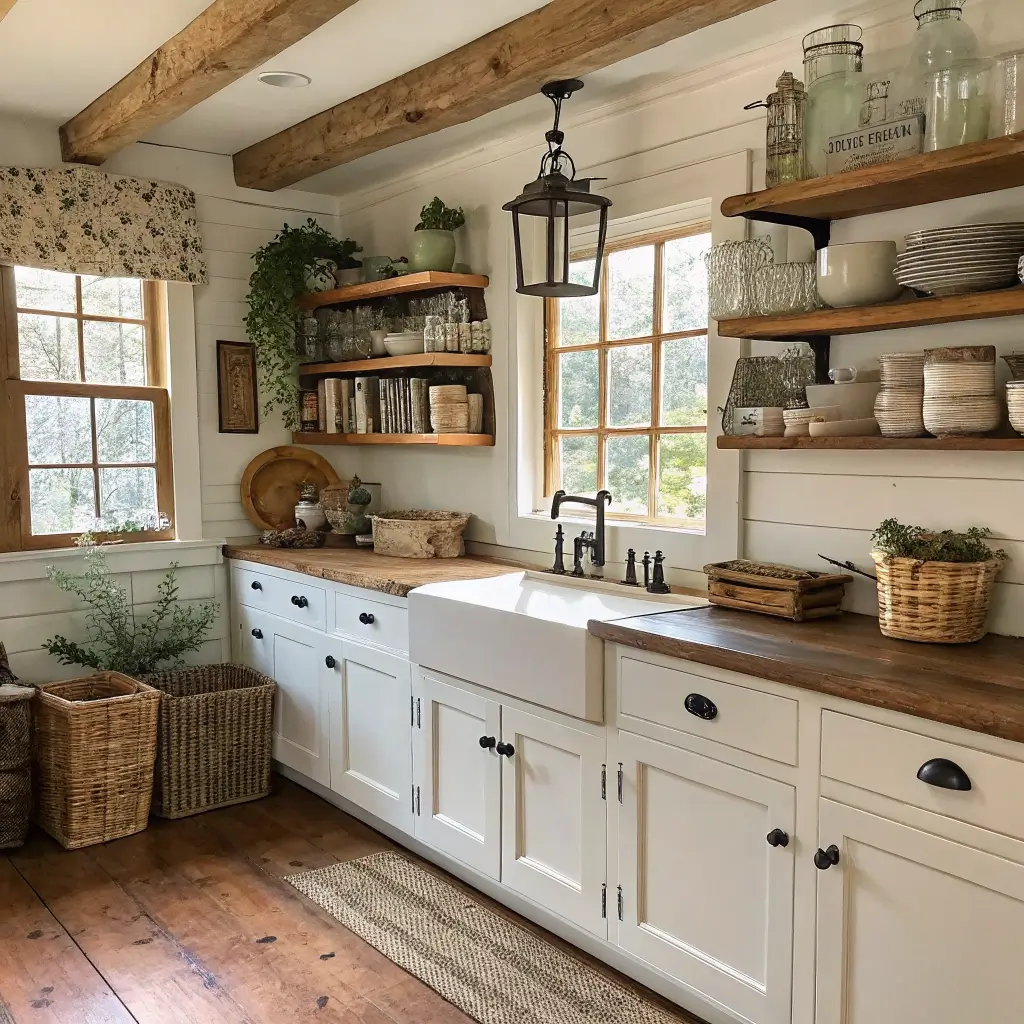
Open shelving is where function meets beauty, and honestly, when done right, it’s pure kitchen magic. This isn’t about cramming every dish you own onto visible shelves – it’s about curated displays that showcase your prettiest pieces while keeping everyday essentials within reach.
I’ve seen too many open shelving attempts that end up looking cluttered and chaotic. The secret to gorgeous open shelving is treating each shelf like a vignette. Mix heights, vary textures, and leave breathing room between items.
Open shelving works particularly well in vintage farmhouse kitchens because it showcases all those beautiful vintage pieces you’ve been collecting. Mason jars, vintage mixing bowls, antique cake stands, and pretty dishes become part of the decor when displayed thoughtfully.
Styling secrets for stunning open shelves:
- Group items in odd numbers for visual interest and natural flow
- Mix functional and decorative pieces to avoid the museum look
- Vary heights and shapes to create dynamic, interesting compositions
- Use consistent color palettes to tie diverse pieces together
The practical side of open shelving can’t be ignored. Daily dishes become easily accessible, and you’ll actually use those pretty serving pieces when they’re visible rather than buried in cabinets. Just be prepared for more dusting – open shelving requires maintenance to look its best.
I recommend starting with a mix of closed storage and open shelving rather than going all open. This gives you places to hide the less photogenic kitchen necessities while showcasing your beautiful pieces.
Reclaimed Barnwood Vintage Farmhouse Kitchen
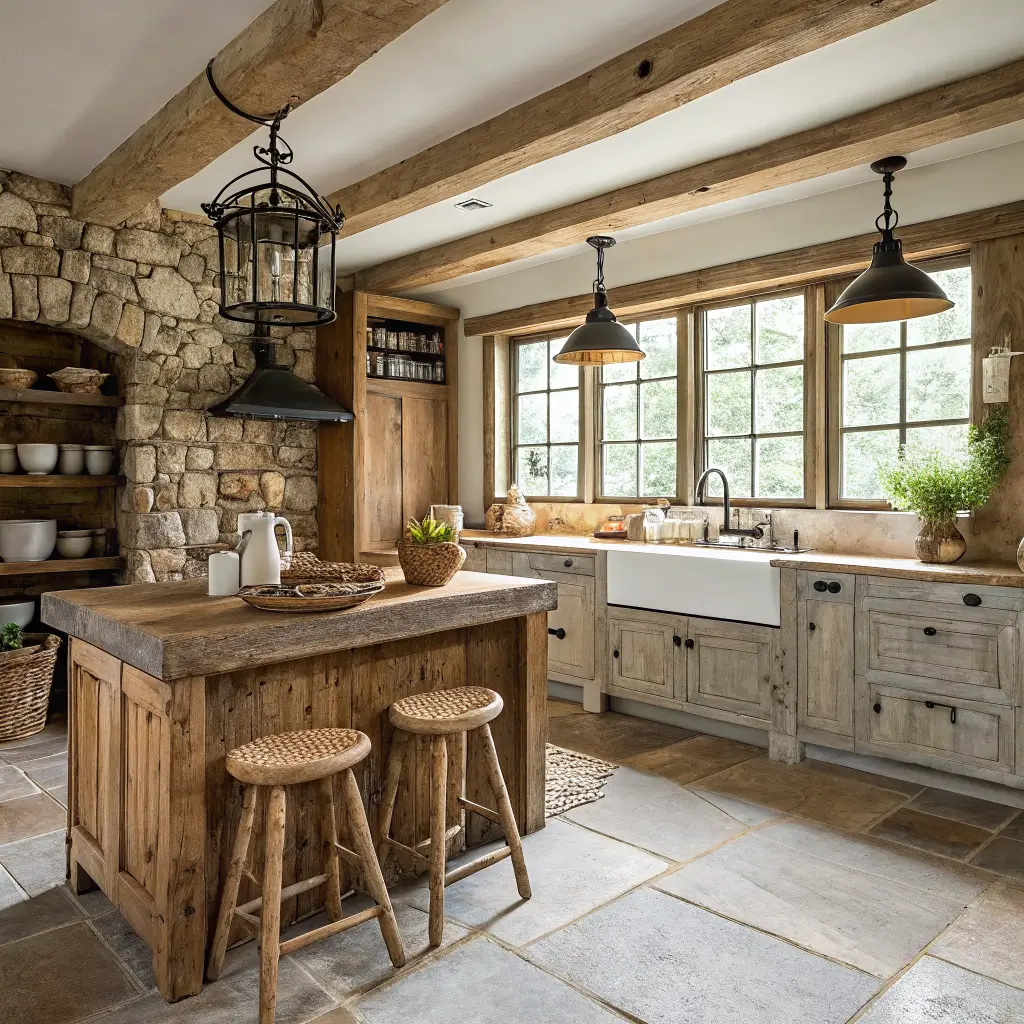
Authentic reclaimed barnwood is the holy grail of farmhouse materials. This isn’t about buying new wood and distressing it – we’re talking about genuine reclaimed lumber with decades (sometimes centuries) of history built right into its fibers.
Real barnwood tells stories. You can see nail holes from old barn construction, weathering patterns from years of exposure, and color variations from different wood species and aging processes. Each plank is unique, creating surfaces that manufactured materials simply can’t replicate.
I’ve worked with reclaimed barnwood in several kitchen projects, and the character it adds is absolutely unmatched. The patina, texture variations, and natural imperfections create depth and authenticity that instantly grounds a space in history.
Using reclaimed barnwood effectively:
- Accent walls that create stunning focal points without overwhelming the space
- Kitchen islands wrapped in barnwood for dramatic impact and texture
- Ceiling treatments that add architectural interest and warmth overhead
- Floating shelves that showcase the wood’s natural beauty and character
The key with reclaimed barnwood is balancing its rustic character with more refined elements. Pair weathered barnwood with sleek countertops, modern appliances, and clean-lined cabinet styles to create spaces that feel collected rather than themed.
Color coordination becomes important with reclaimed barnwood since you’re working with the wood’s existing tones rather than choosing them. Most barnwood leans gray and weathered, but you’ll find pieces with brown, silver, and even green undertones depending on the wood’s history and exposure.
Sourcing authentic barnwood requires some detective work. Look for architectural salvage companies, barn deconstruction specialists, and reclaimed lumber dealers who can verify the wood’s history and authenticity.
Also Read: 10 Gorgeous White Farmhouse Kitchen Ideas with Rustic Charm
Vintage Farmhouse Kitchen with Floral Charm
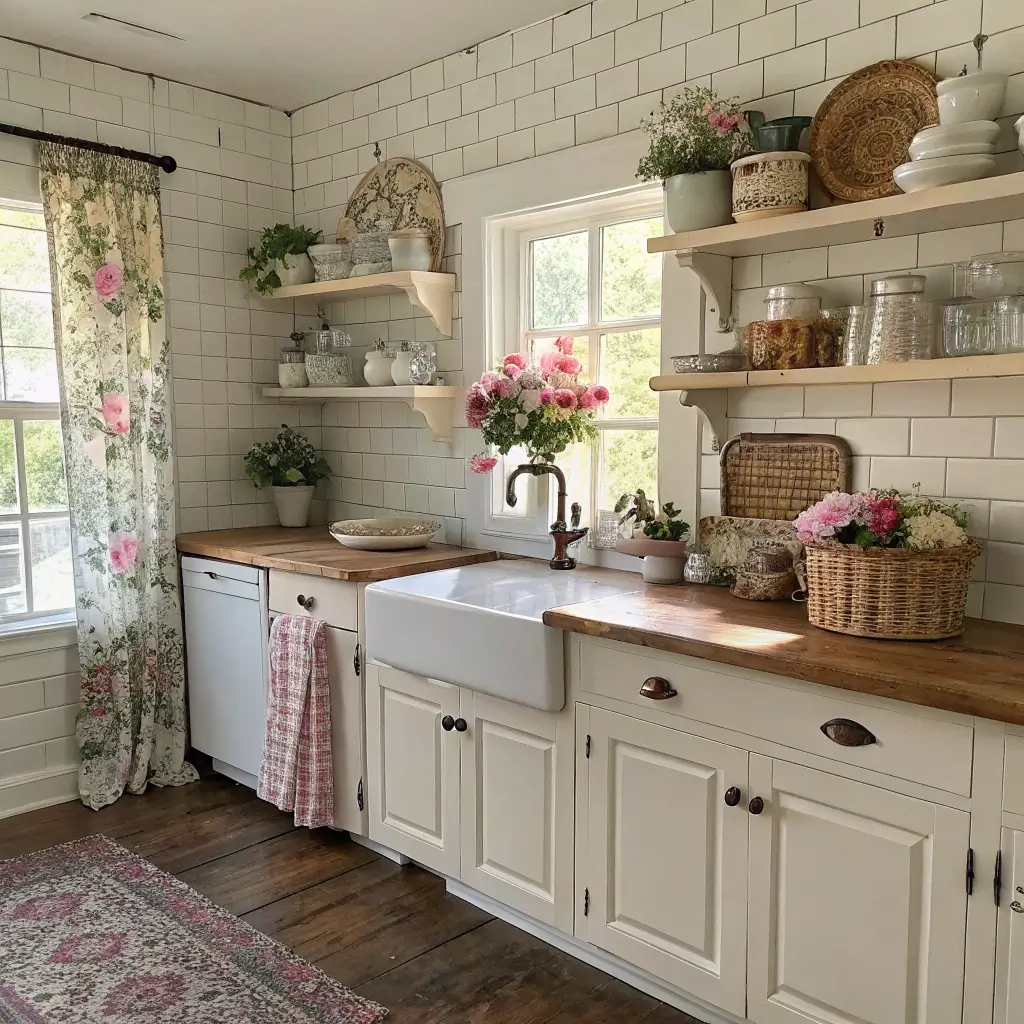
Florals in the kitchen might sound overly feminine or busy, but when done right, floral elements add softness, romance, and vintage authenticity that perfectly complements farmhouse style.
The trick is incorporating florals subtly rather than going full cottage-core explosion. Think vintage floral textiles, botanical prints, and fresh flower displays rather than floral wallpaper covering every surface.
I love how floral elements can bridge seasons in a kitchen. Fresh flowers from the garden in summer, dried hydrangeas in fall, and forced bulbs in winter keep the space feeling connected to nature year-round.
Sophisticated ways to add floral charm:
- Vintage floral tea towels displayed on hooks or hanging from cabinet hardware
- Botanical prints in simple frames creating gallery walls or vignettes
- Fresh flower arrangements in vintage vessels and Mason jars
- Floral-patterned dishes mixed into open shelving displays
The key is mixing floral elements with more structured pieces to prevent the space from feeling overly sweet or busy. Pair delicate florals with rustic wood, industrial metals, and clean white surfaces for balanced, sophisticated looks.
Color palettes for floral farmhouse kitchens tend toward soft and muted rather than bright and bold. Dusty roses, sage greens, lavender grays, and warm creams create romantic backdrops that let floral elements shine without competing.
Seasonal flexibility is crucial in floral kitchens. Choose base elements in neutral tones, then layer in seasonal floral accents that can be easily swapped throughout the year. This keeps the space feeling fresh and prevents floral fatigue.
IMO, the best floral farmhouse kitchens feel collected over time rather than decorated all
Wrapping It All Up
There you have it – ten vintage farmhouse kitchen ideas that prove old-school charm never goes out of style. Whether you’re drawn to the crisp elegance of antique white, the earthy warmth of sage green, or the storied character of reclaimed barnwood, there’s a farmhouse style out there with your name on it. 🙂
Remember, the best vintage farmhouse kitchens aren’t created overnight – they’re collected, curated, and lived in over time. Start small, trust your instincts, and don’t be afraid to mix and match elements from different styles until you find your perfect blend.
Now go forth and create the cozy, character-filled kitchen of your dreams. Your morning coffee will taste better in a space you truly love – I promise. ☕