
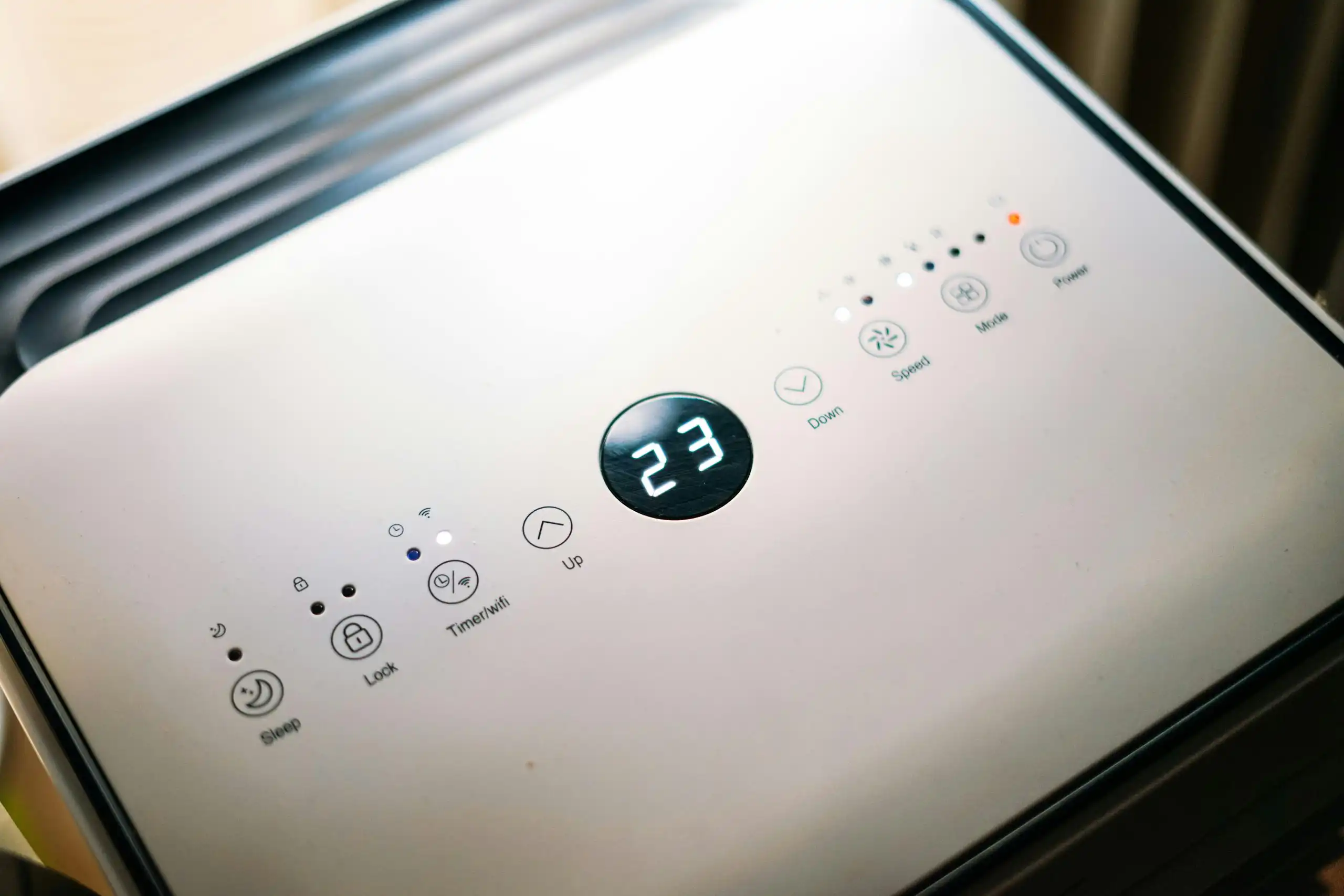
Understanding the nuances between a Dehumidifier vs. Air Conditioner is crucial for maintaining optimal indoor comfort and air quality, especially when dealing with the pervasive issue of excess moisture.
This article will delve into the distinct mechanisms and benefits of each appliance, helping you determine the most effective solution for your home’s humidity challenges. We will explore how these systems contribute to a healthier living environment by addressing various aspects of moisture control.
Understanding Air Conditioning
How Air Conditioners Work
Your home’s air conditioner cools the air and simultaneously pulls some moisture out through a sophisticated process of cooling and condensing. As warm, humid air flows over the unit’s cold coils, the moisture in the air reaches its dew point and condenses into water droplets on the surface of the heat exchanger.
This dehumidifying effect means that the air that then flows back into the home is not only significantly cooler but also considerably drier, effectively removing excess moisture from the air. This process is fundamental to the air conditioner’s ability to dehumidify.
Benefits of Air Conditioning
Air conditioning has become an integral part of modern living, especially during warmer months, offering significant benefits beyond just cooling the air. The dehumidification function of an air conditioner can improve air quality and minimize the risk of health problems by reducing mold and mildew growth.
Regular use, particularly in bedrooms, helps maintain optimal humidity levels, which can enhance sleep quality and prevent issues like dry skin and mucous membranes. Furthermore, in office settings, air conditioners with a dehumidification function contribute to improved working comfort by:
- Mitigating health problems associated with dry air, such as eye irritation.
- Reducing respiratory tract irritation caused by dry air.
Air Conditioner vs. Dehumidifier: Key Differences
While an air conditioner will keep air slightly drier in the home, its primary design is to provide comfortable indoor conditions through cooling. The dehumidification capacity of an air conditioner is limited to incidental moisture removal during active cooling only, and manufacturers generally do not publish specific moisture removal rates due to numerous variables affecting its performance.
In contrast, here’s a comparison with a dehumidifier:
| Feature | Dehumidifier |
| Primary Function | Specifically designed to remove moisture from the air all year round. |
| Moisture Removal Rate | Specified, usually measured in liters over 24 hours for a given temperature and humidity. |
| Maintenance | Requires regular tank emptying or drainage setup, and filter cleaning. |
The Role of Dehumidifiers
What is a Dehumidifier?
A dehumidifier is an appliance specifically engineered to reduce and maintain an optimal humidity level in the air within indoor spaces. Its primary function is to extract excess moisture, thereby creating a more comfortable and significantly healthier indoor environment.
By controlling dampness, a dehumidifier actively prevents condensation from forming on windows and substantially reduces the risk of detrimental mold growth, which often thrives in humid conditions. This focused approach to humidity control sets it apart from other climate control devices.
How Dehumidifiers Help in Removing Moisture
Most dehumidifiers excel at removing moisture from the air primarily through condensation. In heat pump dehumidifiers, air is drawn into the unit where it is chilled, causing it to reach its dew point. As the air cools, its capacity to hold moisture diminishes, leading to this moisture being deposited within the unit.
The fresh, dry air is then circulated back into the home, significantly reducing the overall humidity level. Additionally, chemical dehumidifiers utilize drying agents to dehumidify the air, helping to preserve belongings by maintaining stable humidity levels and preventing long-term damage from moisture.
When You Need a Dehumidifier
Many situations require the combined power of both an air conditioner and a dehumidifier to maintain optimal comfort in hot weather. You may need a dehumidifier if your air conditioner alone cannot keep indoor relative humidity below 50 percent, or if mold growth becomes apparent. A damp feeling in the home, even with lower relative humidity, or a persistent musty odor indicating hidden mold, also suggests a need for a dehumidifier.
Furthermore, on days when cooling isn’t necessary but the air still feels muggy, a dehumidifier can prevent relative humidity from escalating to uncomfortable and unhealthy levels, proving invaluable when drying laundry indoors or in regions with high humidity.
Dehumidification Process
Methods of Dehumidifying
Most dehumidifiers effectively remove moisture from the air primarily through the process of condensation. In heat pump dehumidifiers, which represent a common and efficient type, ambient air is drawn into the unit where it is meticulously chilled. As the air cools, its capacity to hold moisture diminishes, leading to the deposition of this excess moisture within the unit in the form of water droplets.
Subsequently, fresh, dry air is expertly circulated back into the home, significantly reducing the overall humidity level. Alternatively, chemical dehumidifiers employ specialized drying agents to dehumidify the air, offering another method for efficient moisture removal.
Choosing the Right Dehumidification System
Selecting the appropriate dehumidification system is crucial for achieving optimal indoor humidity control. Conversely, whole-house dehumidifiers are the ideal choice if consistent high humidity levels, typically above 40 to 50 percent, affect several rooms or the entire residence. These systems integrate seamlessly with your HVAC system, pulling air through return ducts, efficiently removing moisture, and circulating dry air throughout the home.
| Dehumidifier Type | Ideal Application |
|---|---|
| Portable Dehumidifier | Homes requiring targeted dehumidification in specific areas (e.g., basement, laundry room, individual bedroom). |
| Portable Dehumidifier | Localized moisture removal; however, water receptacles necessitate frequent emptying. |
Impact on Indoor Air Quality
High humidity, especially when coupled with elevated temperatures, creates an intensely uncomfortable indoor environment because perspiration cannot evaporate efficiently. Beyond making the air feel considerably warmer, this excess moisture causes everything to feel damp and sticky, significantly impacting air quality.
This pervasive dampness provides an ideal breeding ground for mold, mildew, and bacterial growth indoors, which can lead to various respiratory issues and allergic reactions. Dehumidifiers play a vital role in improving overall air quality by substantially reducing airborne moisture, thereby alleviating musty odors and mitigating conditions that aggravate allergies, ensuring a healthier living space.
Heat Pumps and Their Benefits
How Heat Pumps Function
In the context of dehumidification, heat pump dehumidifiers operate on a precise principle to remove moisture from the air. Air is drawn into the unit, where it encounters a coil that rapidly chills it to its dew point.
As the air is chilled, its capacity to retain moisture drastically decreases, causing the water vapor to condense into liquid water, which is then collected within the unit. This process efficiently removes excess moisture in the air. The now dry air is then circulated back into the home, effectively reducing the indoor humidity level and contributing to a more comfortable environment.
Heat Pumps as Dehumidifiers
Heat pumps excel as dehumidifiers due to their inherent ability to cool and dry the air simultaneously, even when the primary goal isn’t significant temperature reduction. By utilizing a refrigeration cycle, they draw in humid air, pass it over an evaporator coil to cool it down, causing moisture to condense.
This effective moisture removal makes them particularly adept at maintaining optimal indoor humidity levels without overcooling the space, which can be a significant advantage in temperate climates or during humid but mild weather. This dual functionality ensures improved air quality and comfort.
Comparing Heat Pumps to Traditional Systems
When comparing heat pumps to traditional air conditioning systems for dehumidification, heat pumps often offer a more energy-efficient solution, especially in scenarios where cooling and dehumidifying are needed without extreme temperature drops.
Unlike traditional air conditioners, which primarily focus on cooling and only incidentally remove moisture from the air, heat pumps can operate in a dedicated dehumidifying mode, effectively reducing humidity without significantly altering the air temperature. This allows for superior humidity control and improves air quality more efficiently, ultimately leading to lower energy consumption and enhanced indoor comfort compared to conventional systems.
Drying the Air: Best Practices
Maintaining Optimal Humidity Levels
Maintaining optimal humidity levels in your home is paramount for both comfort and health, preventing issues such as dry skin, eye and throat irritation, headaches, and a heightened risk of respiratory infections. Excessive drying by air conditioning, though rare below 35% relative humidity in domestic settings, can also damage upholstered and wooden furniture.
To circumvent these problems, it is advisable to regularly check and maintain the correct humidity level, ideally between 40–60%. This can be achieved by adhering to the manufacturer’s instructions for your air conditioner, performing regular cleaning and replacement of filters, and ensuring annual servicing of the equipment to support its dehumidification function.
Tips for Effective Moisture Removal
For effective moisture removal and to dry the air efficiently, understanding and managing your indoor environment is key. A hygrometer can precisely measure the relative humidity, allowing you to make informed adjustments. To reduce operational costs, consider investing in energy-efficient dehumidifiers. For optimal performance, simply set your desired humidity level and select the AUTO mode, allowing the dehumidifier to regulate itself.
Further improve results by increasing air circulation through improved ventilation, utilizing exhaust fans in kitchens and bathrooms, and promptly addressing any leaks or damp areas that contribute to excess moisture. For peak energy efficiency, leverage the Auto Eco mode, which intelligently activates and deactivates the dehumidifier to maintain your chosen humidity level without unnecessary operation.
Seasonal Considerations for Dehumidifying
The approach to dehumidifying the air often varies with seasonal changes and geographical location. In regions with consistently high humidity or during the rainy season, daily use of a dedicated dehumidifier may be indispensable to keep moisture in the air under control and prevent issues like mold and mildew. Conversely, in drier conditions, occasional operation may suffice to maintain a comfortable indoor humidity level.
Modern dehumidifiers with built-in humidity monitors are particularly advantageous, as they can be precisely set to operate only when necessary, automatically maintaining ideal humidity levels and effectively removing moisture from the air, thus optimizing energy consumption.
Do I need a dehumidifier or an air conditioner?
Deciding between a dehumidifier and an air conditioner, or using both, depends largely on your specific needs for cooling and humidity control. If your primary concern is cooling in summer, with incidental dehumidification as a secondary benefit, an air conditioner is often sufficient, especially in areas where high humidity is occasional.
However, if your climate is consistently humid, during rainy seasons, or when there’s a high risk of condensation and mold—such as in coastal Australian cities like Brisbane, Cairns, and Sydney—a dedicated dehumidifier for mold prevention and efficient indoor laundry drying offers year-round benefits. For comprehensive comfort, combining both allows for effective cooling in summer alongside targeted humidity reduction for health, protection of valuables, and efficient indoor clothes drying, ensuring your indoor environment remains both cool and dry.
The Dehumidifying Capabilities of Air Conditioners
While an air conditioner cools the air, it simultaneously provides a degree of dehumidification, keeping the air slightly drier in the home. This dehumidifying effect occurs primarily when the air conditioner operates in cooling mode, and the room temperature is at least 2°C above the cooling mode set point. For instance, if the room temperature is 25°C and the air conditioner is set to 23°C, it will actively dehumidify.
However, if this temperature difference drops below 2°C, the compressor will reduce its effort, significantly diminishing its capacity to remove moisture from the air. Furthermore, an inverter air conditioner, once it reaches the set temperature and the compressor backs off, becomes less effective at moisture removal. It is important to note that air conditioners do not provide dehumidification when operating in heating mode, as the coil must be below the dew point to condense moisture, a condition not met during heating.
Do air conditioners dehumidify when cooling?
Yes, air conditioners do dehumidify when cooling, although the extent of this dehumidification varies. The fundamental principle behind this involves cooling and condensing the moisture in the air. As warm, humid air passes through the air conditioner’s evaporator coil, it is cooled below its dew point.
This causes water vapor to condense on the surface of the heat exchanger, forming water droplets that are then collected and drained away. This process effectively removes excess moisture from the air, contributing to a more comfortable indoor environment by providing both cooling and dehumidifying the air.
What is the 3 minute rule for air conditioners?
The 3-minute rule for air conditioners is a guideline designed to protect the compressor, a critical component of your air conditioning system. This rule suggests that once your air conditioner has been turned off, you should wait at least three minutes before turning it back on. The reason for this pause is to allow the pressures within the refrigeration system to equalize.
When an air conditioner is running, the compressor builds up significant pressure. If the unit is restarted too quickly after being shut off, the compressor has to work against these high pressures, which can lead to increased stress, overheating, and potential damage to the compressor. Adhering to this rule helps to prolong the lifespan of your air conditioner and maintain its efficiency, ensuring it continues to effectively cool and dehumidify the air.
Can AC cause sinus issues?
While an air conditioner’s primary function is to cool and dehumidify the air, excessive or improper use can, in some cases, contribute to sinus issues. Air conditioning can dry the air too much, especially if the relative humidity drops below optimal levels. Very dry air can irritate the delicate mucous membranes in the nasal passages and sinuses, leading to dryness, congestion, or even sinus pain.
Additionally, if the air conditioner’s filters are not regularly cleaned or replaced, they can accumulate dust, allergens, and mold spores. When these are circulated back into the indoor environment, they can trigger allergic reactions and exacerbate existing sinus problems, leading to poor air quality. Therefore, maintaining appropriate humidity levels and ensuring proper air handling and filtration are crucial to prevent AC-related sinus discomfort while still benefiting from the cooling and dehumidifying effects.
Are dehumidifiers costly to run?
Modern dehumidifiers, especially those equipped with inverter technology, are designed to be energy-efficient, consuming considerably less power than a continuously running air conditioner. For example, a unit like the MJ-EV38HR-A features an inverter compressor that intelligently adjusts its power and running speed based on the ambient humidity level, rather than operating at maximum capacity constantly.
While its highest setting might use around 500W, enabling Auto Eco mode allows it to automatically start and stop to maintain your desired humidity level, significantly reducing energy consumption. The actual energy usage depends on the unit’s size, chosen settings, and the space’s humidity level. It’s also worth noting that dry air is easier to heat and cool than moist air, meaning a dehumidifier can actually improve the energy efficiency of your air conditioner.
In most scenarios, the benefits—such as improved air quality, prevention of mold, faster indoor laundry drying, and protection of belongings—outweigh the modest running costs, particularly during humid seasons when an air conditioner alone cannot effectively control moisture levels.
Can you leave a dehumidifier on 24/7?
Dehumidifiers, such as the MJ-EV38HR-A, are specifically engineered for continuous operation and can be safely left running unattended, provided all safety guidelines in the instruction manual are meticulously followed. These units typically incorporate built-in safeguards that automatically shut them off when the water tank is full or once your desired humidity level is achieved, preventing overflows or excessive drying.
For extended 24/7 operation, the MJ-EV38HR-A offers a convenient permanent drainage option. By simply attaching a commercially available hose with an internal diameter of 15mm, the unit can continuously drain water, allowing it to run indefinitely without the need for manual tank emptying. This feature makes it an ideal solution for persistently damp environments like basements, laundries, or coastal homes during humid seasons, effectively managing high humidity and ensuring consistent moisture removal from the air.
Dehumidifier vs Air Conditioner: Do You Need Both?
Indeed, in many instances, both an air conditioner and a dehumidifier are necessary to maintain a truly comfortable and healthy home environment. While an air conditioner will cool and inherently dry the air to some extent, its primary function is cooling, and its dehumidification capabilities are often secondary and limited, especially when the cooling demand isn’t high.
Many situations, particularly in climates with high humidity, necessitate the combined efforts of both appliances to maintain optimal comfort in hot weather. You might prioritize an air conditioner if your main concern is cooling in summer, with humidity control being an incidental benefit. However, a dedicated dehumidifier becomes invaluable if the climate is consistently humid, during rainy seasons, or when there’s a significant risk of condensation and mold.
Using both together allows you to achieve effective cooling in summer while also providing targeted humidity reduction for enhanced health, comfort, protection of valuables, and efficient indoor clothes drying, ensuring good air quality year-round.
