
Ever scrolled through Instagram and felt that instant pang of bedroom envy when you see those perfectly curated Japanese-inspired spaces? Yeah, me too. There’s something about the clean lines, natural materials, and that “I-have-my-life-together” vibe that makes you want to toss out half your furniture and start fresh.
Here’s the thing – creating a Japanese bedroom aesthetic isn’t about buying expensive furniture or completely gutting your space. It’s about understanding the philosophy behind the design and making smart choices that bring peace, functionality, and beauty into your most personal space.
After years of experimenting (and making plenty of mistakes), I’ve narrowed down the ten most effective approaches to nail this look.
Ready to transform your bedroom into a serene sanctuary? Let’s get started.
1. Japandi Zen Retreat Bedroom
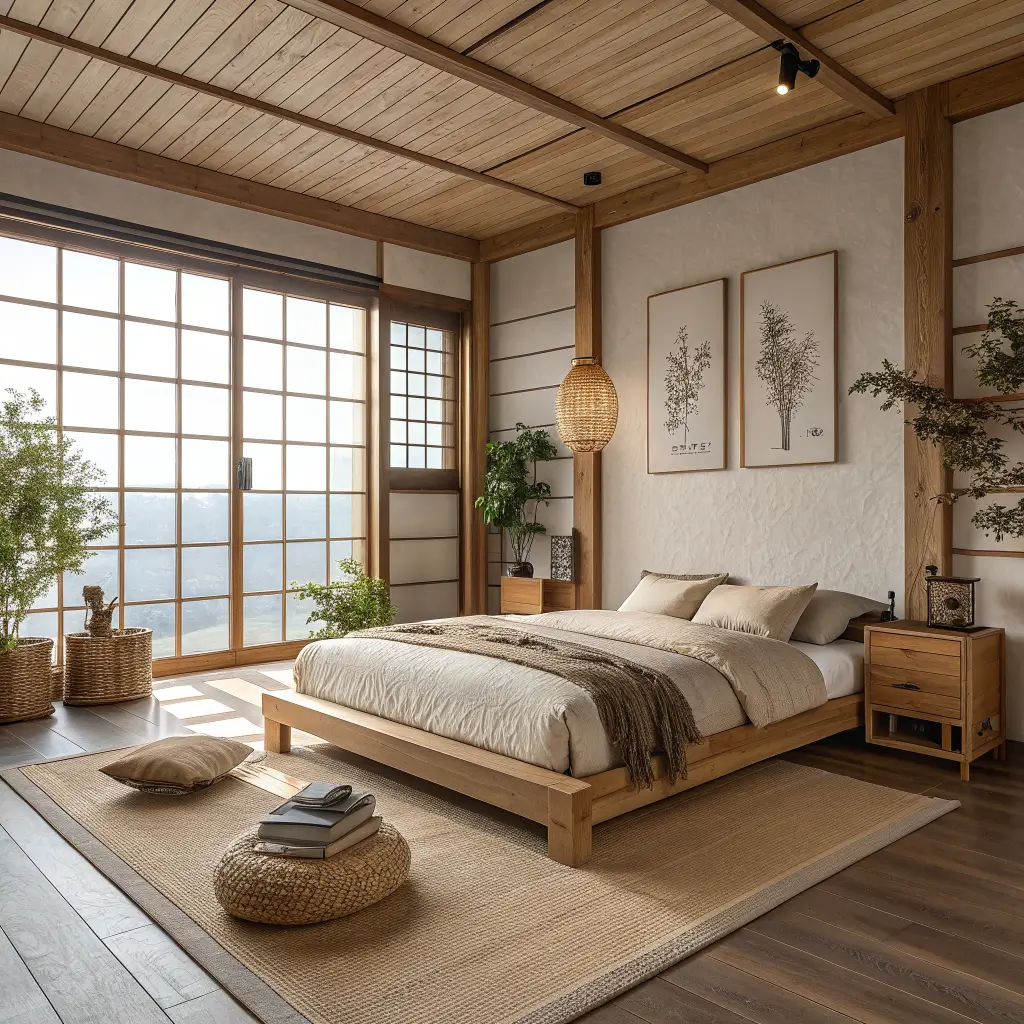
The Japandi style is like the cool cousin of traditional Japanese design – it takes the best of Japanese minimalism and marries it with Scandinavian hygge. Think of it as East meets North, and honestly? It’s a match made in design heaven.
What makes Japandi so appealing is its warm minimalism. Unlike stark modern spaces that can feel cold, Japandi bedrooms wrap you in comfort while maintaining that clean, uncluttered aesthetic we all crave. The secret lies in the color palette: soft whites, warm grays, and natural wood tones create a cocoon-like atmosphere that’s both sophisticated and cozy.
Key Elements That Define Japandi:
Natural textures play a huge role here. I’m talking linen bedding that gets softer with every wash, chunky wool throws that beg you to snuggle, and wood furniture with visible grain patterns. The goal isn’t perfection – it’s about celebrating the beauty in natural imperfections.
Functional furniture is another cornerstone. Every piece should serve a purpose, but that doesn’t mean sacrificing style. A sleek wooden bed frame with built-in storage, a simple nightstand that doubles as a reading nook, or a bench at the foot of the bed that’s perfect for laying out tomorrow’s outfit.
The lighting in a Japandi bedroom feels like a warm hug. Forget harsh overhead fixtures – think pendant lights with woven shades, table lamps with ceramic bases, or even strategically placed candles. The goal is to create pools of soft, ambient light that make you want to slow down and breathe.
2. Traditional Japanese Tatami Bedroom Sanctuary
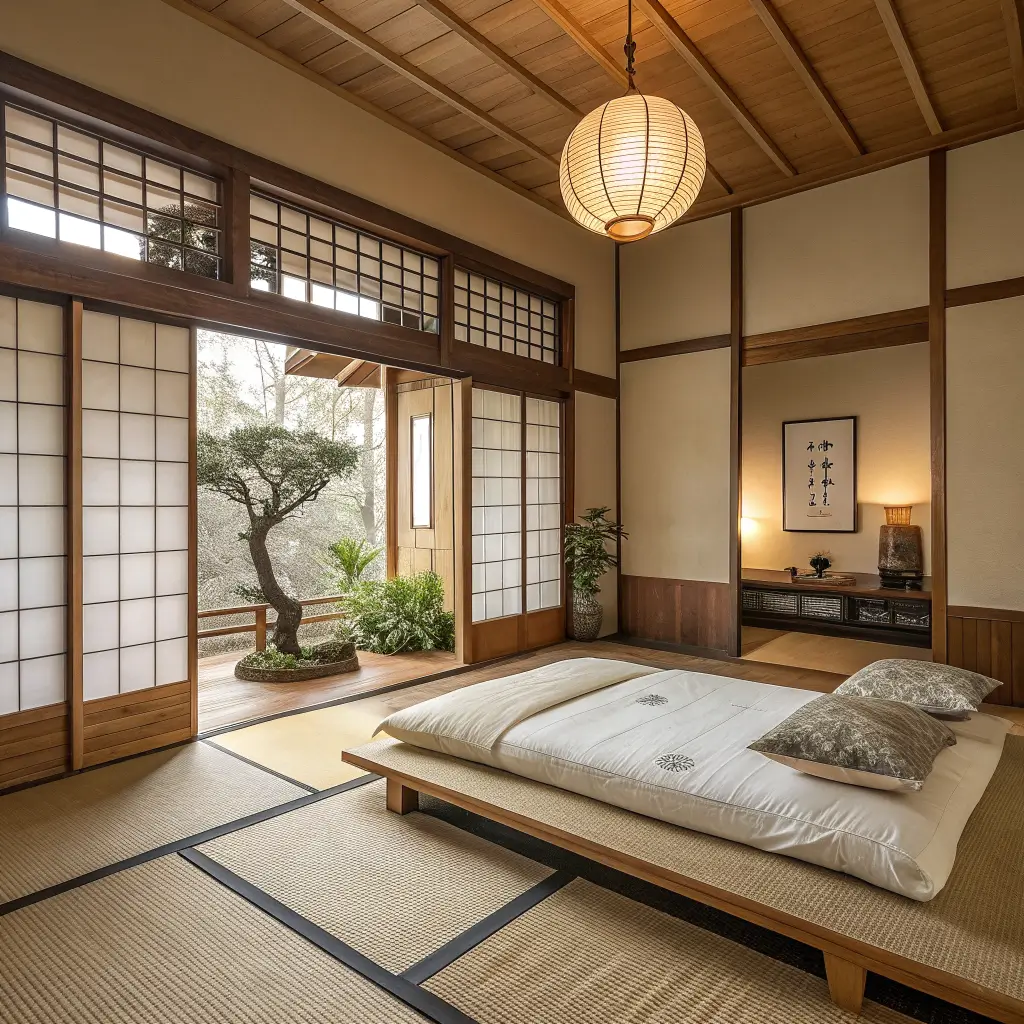
Now we’re talking about going full traditional – and trust me, there’s something incredibly grounding about sleeping close to the earth. Tatami mat flooring isn’t just a design choice; it’s a lifestyle statement that says you value simplicity, natural materials, and mindful living.
Traditional tatami bedrooms strip away everything unnecessary and focus on what truly matters: rest, reflection, and connection with nature. The low-to-the-ground aesthetic might feel foreign at first, especially if you’re used to towering bed frames, but there’s something deeply calming about this approach.
Creating Your Tatami Sanctuary:
Authentic tatami mats are made from woven rush grass and provide natural insulation and a subtle, earthy fragrance. If full tatami flooring isn’t in your budget (and let’s be real, it’s an investment), consider tatami-style area rugs or even interlocking tatami tiles for a more affordable option.
Futon bedding on a low platform or directly on the tatami creates that authentic experience. Modern futons have come a long way from the lumpy college dorm versions – high-quality cotton or wool futons provide excellent support and can be folded away during the day to maximize your space.
The beauty of traditional Japanese bedrooms lies in their multifunctional nature. During the day, your bedroom transforms into a meditation space, reading room, or even a place for tea ceremony. It’s minimalism with purpose, and honestly, it’s pretty liberating once you get used to it.
Shoji screens or room dividers add that authentic touch while providing flexibility in how you use your space. They filter light beautifully and create intimate zones within larger rooms.
3. Modern Japanese Minimalist Bedroom Design
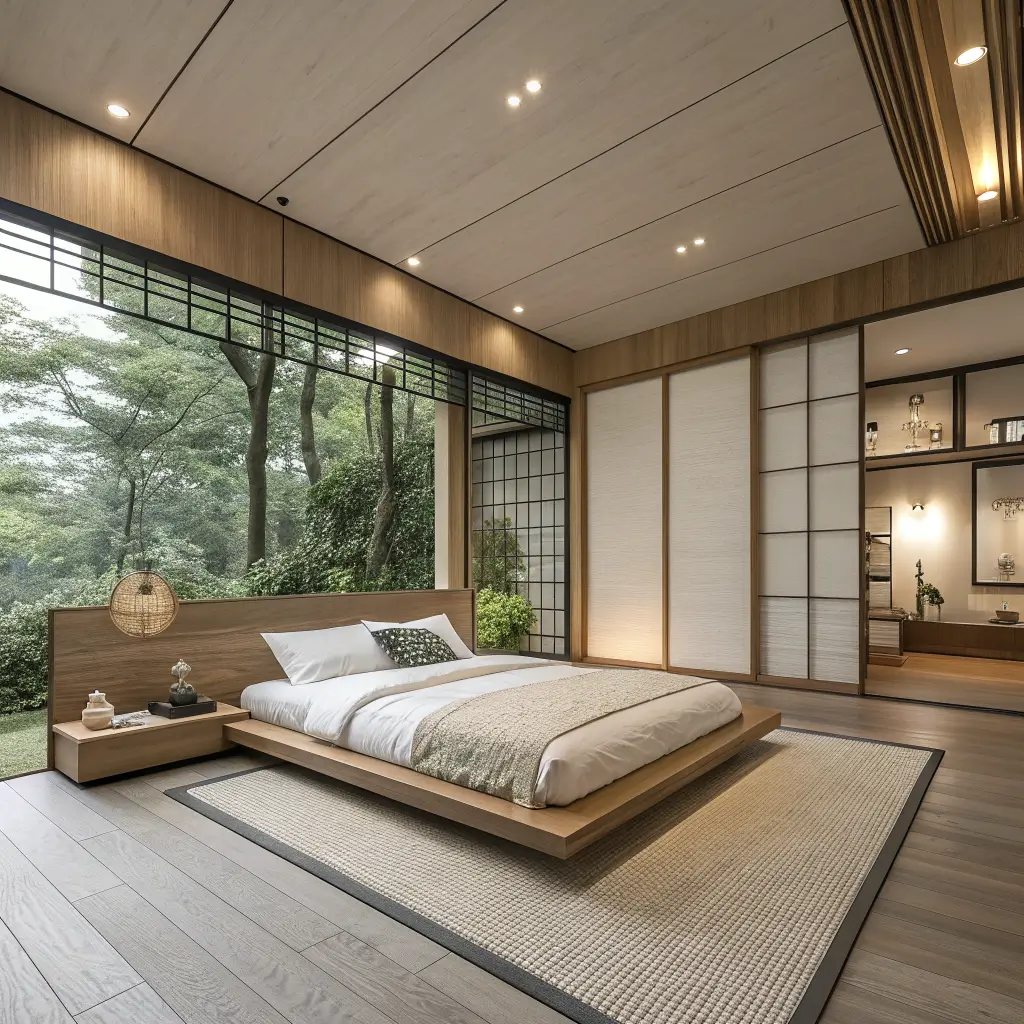
Sometimes you want that Japanese aesthetic but with contemporary conveniences – enter the modern minimalist approach. This style takes the philosophical foundations of Japanese design and updates them for 21st-century living.
Modern Japanese minimalism is all about intentional choices. Every element in your bedroom should either serve a function or bring you joy (Marie Kondo was onto something, folks). The result is a space that feels spacious, calm, and effortlessly elegant.
The Modern Minimalist Formula:
Clean geometric lines define this aesthetic. Your bed frame might be a simple rectangular platform, your nightstands perfect cubes, and your lighting fixtures geometric sculptures. But here’s the key – these pieces should feel warm and inviting, not cold and clinical.
Smart storage solutions are essential because clutter is the enemy of minimalism. Built-in wardrobes with sleek sliding doors, under-bed storage drawers that glide silently, and floating shelves that seem to defy gravity all contribute to that “everything has a place” feeling.
Technology integration can enhance rather than detract from the aesthetic. Hidden outlets, wireless charging stations built into nightstands, and smart lighting systems that adjust throughout the day all serve the minimalist goal of reducing visual clutter.
The color palette stays neutral but doesn’t have to be boring. Warm whites, soft grays, and natural wood tones create a foundation, while a single accent color – perhaps a deep forest green or warm terracotta – adds personality without overwhelming the space.
Also Read: 10 Magical Vintage Princess Aesthetic Bedroom Ideas for Fairytale Rooms
4. Cozy Japanese Wabi-Sabi Bedroom Aesthetic
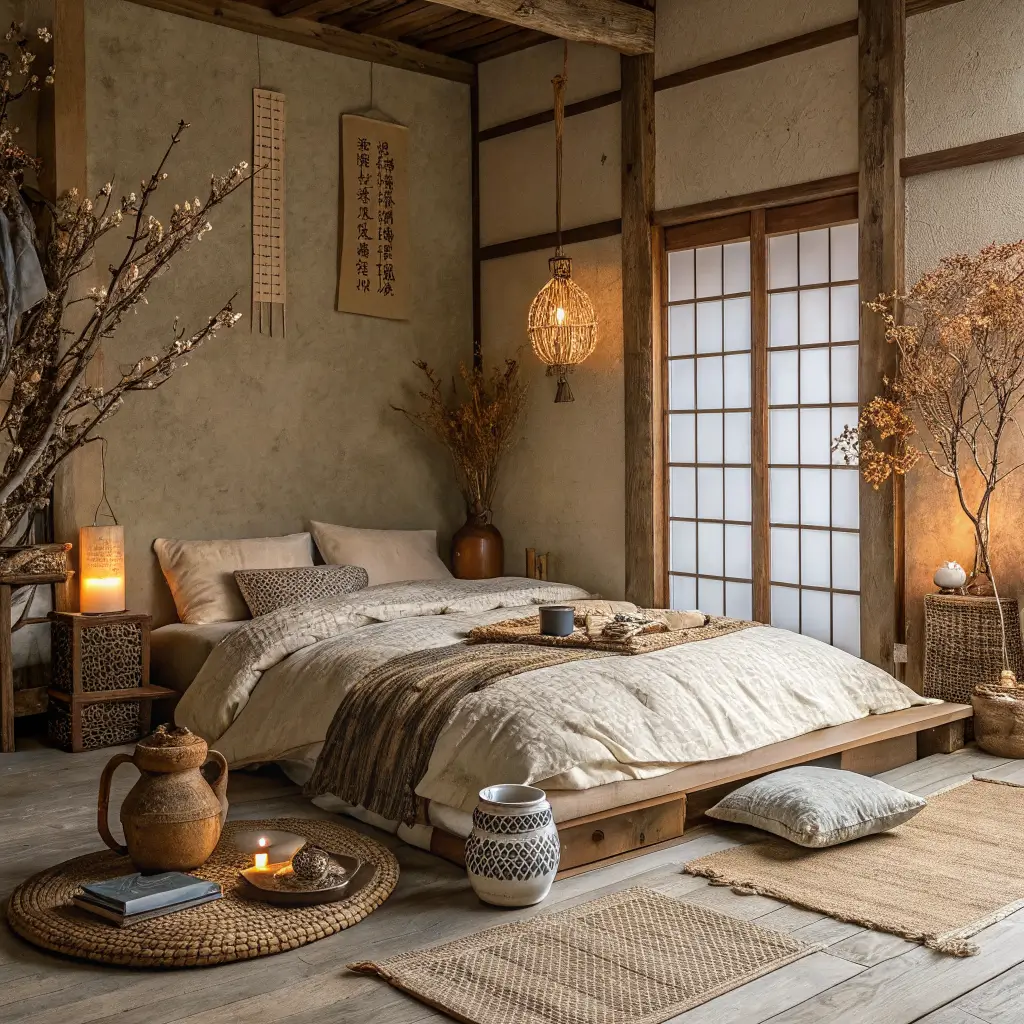
Wabi-sabi is probably my favorite Japanese aesthetic philosophy because it celebrates imperfection, and let’s face it – perfection is overrated anyway. This approach finds beauty in weathered wood, celebrates the patina on metal, and embraces the slight asymmetry that makes handmade objects special.
Creating a wabi-sabi bedroom means letting go of the need for everything to match perfectly. That vintage wooden nightstand with water rings? It tells a story. The handwoven throw with slight irregularities? It’s evidence of human craftsmanship. This aesthetic is about embracing the lived-in beauty that comes with time and use.
Embracing Beautiful Imperfection:
Aged and weathered materials are your friends here. Reclaimed wood bed frames, vintage brass hardware, and linen bedding that’s been softened by countless washes all contribute to that perfectly imperfect wabi-sabi feel.
Handmade elements add soul to the space. Ceramic vases with visible finger marks, hand-thrown pottery, or even artwork created by local artisans bring humanity into the sterile world of mass production.
Natural aging processes should be celebrated, not hidden. That beautiful patina developing on your copper light fixture? The way your wooden floor is wearing smooth in high-traffic areas? These are features, not flaws.
The subdued color palette of wabi-sabi tends toward earth tones – think mushroom grays, soft browns, and muted greens. Colors that feel like they’ve been kissed by time and weather.
5. Small Space Japanese Bedroom Makeover
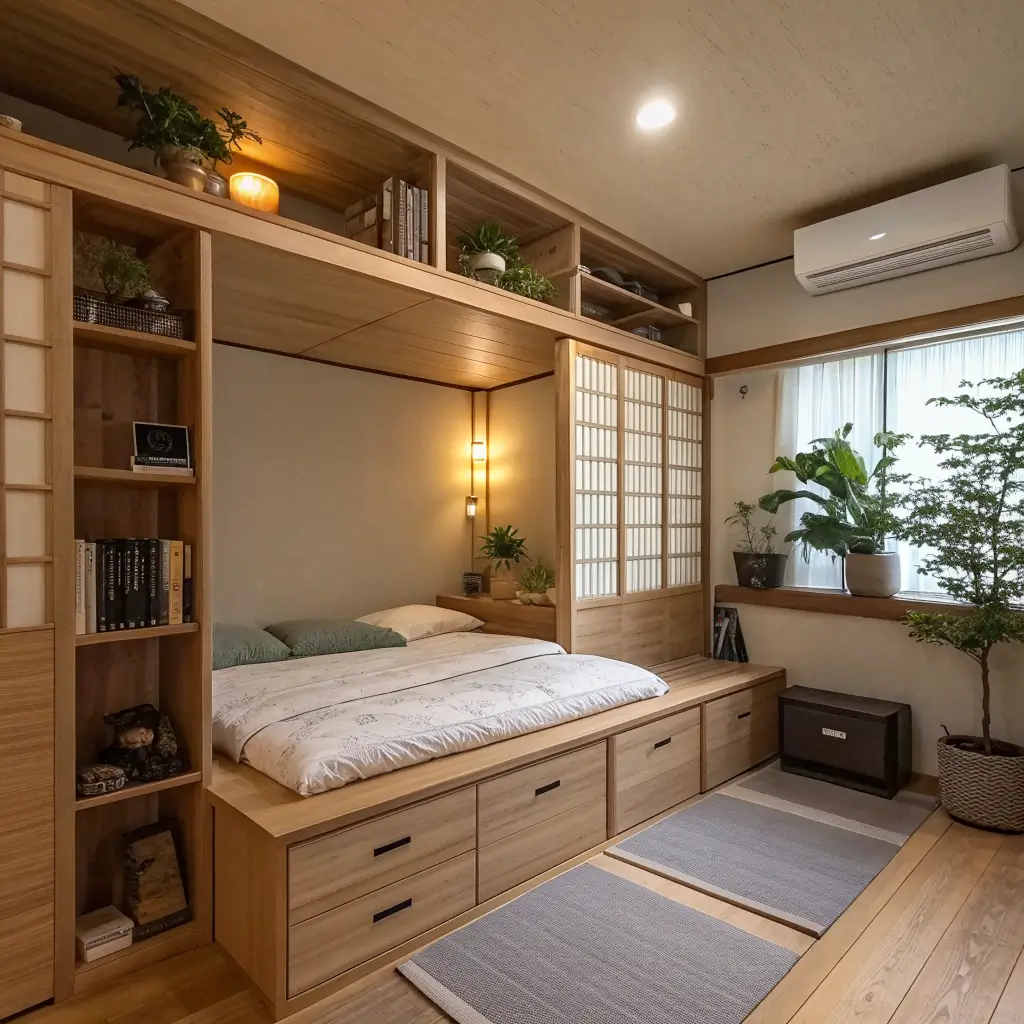
Living in a small space doesn’t mean sacrificing style – in fact, Japanese design principles are perfectly suited for compact living. Small space Japanese bedrooms maximize every square inch while maintaining that serene, uncluttered aesthetic we all crave.
The key is vertical thinking and multifunctional furniture. When floor space is limited, you’ve got to get creative with storage and functionality. Japanese small-space design has been perfected over centuries in compact urban homes, so there’s plenty of wisdom to draw from.
Small Space Solutions That Actually Work:
Murphy beds or wall-mounted platforms can completely transform a tiny bedroom. During the day, fold up your bed to reveal a meditation space, home office, or yoga studio. It sounds dramatic, but the psychological impact of having that extra floor space is huge.
Under-bed storage becomes your best friend. Platform beds with built-in drawers, storage boxes that slide effortlessly on runners, or even a simple bed riser system can double your storage capacity without adding visual clutter.
Vertical storage solutions draw the eye upward and make ceilings feel higher. Floor-to-ceiling built-ins, floating shelves that climb the walls, or even a simple ladder shelf can hold essentials while maintaining that clean aesthetic.
Mirrors and lighting can make a small space feel twice as large. A large mirror positioned to reflect natural light, strategically placed LED strips, or pendant lights that draw the eye upward all contribute to the illusion of spaciousness.
6. Natural Wood Japanese Bedroom Oasis
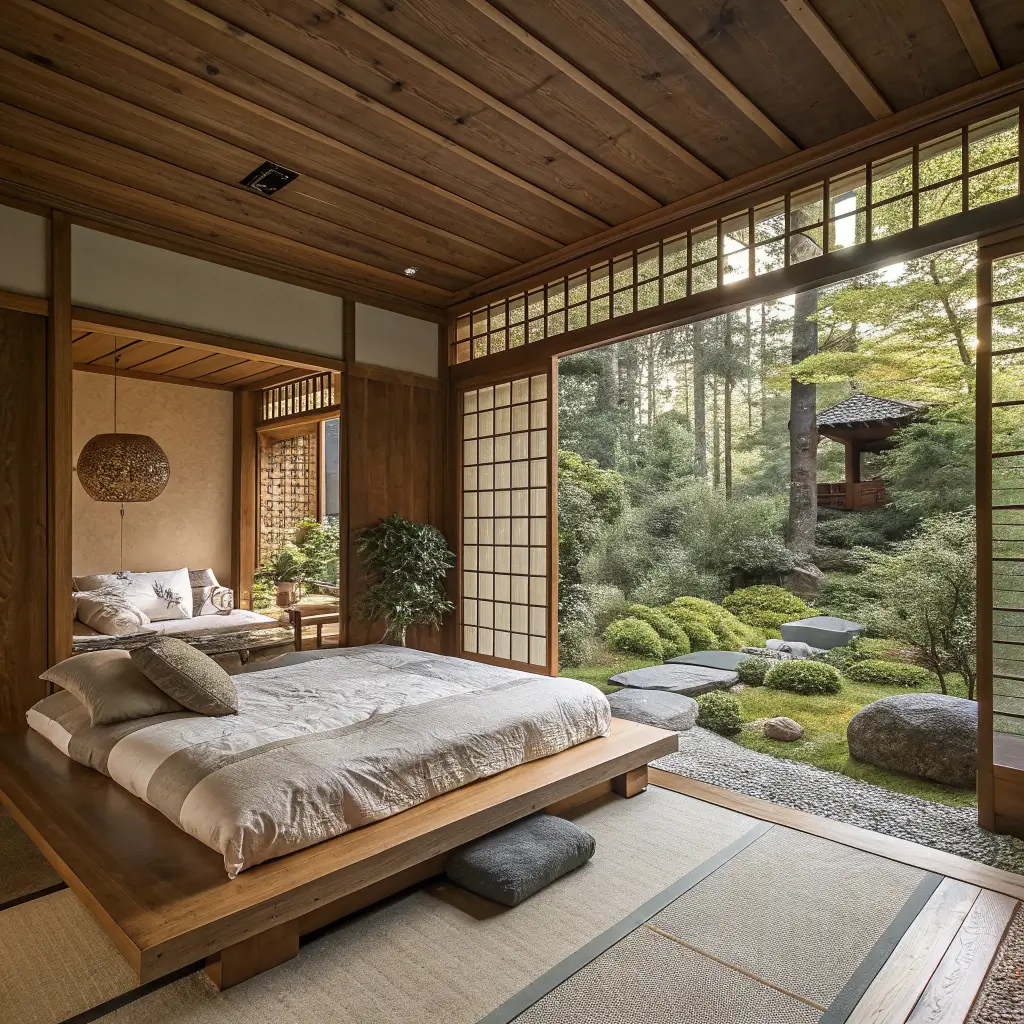
There’s something primal about surrounding yourself with natural wood – it connects us to nature and creates an instantly calming atmosphere. Japanese design has always celebrated wood as a living material, and a wood-focused bedroom feels like a forest retreat right in your home.
Different wood species bring different energies to your space. Light woods like bamboo and ash create airiness and brightness, while darker woods like walnut and cherry add richness and grounding. The trick is choosing woods that complement rather than compete with each other.
Creating Your Wood Sanctuary:
Live-edge furniture celebrates the natural form of trees and brings organic shapes into your geometric bedroom. A live-edge wooden headboard, a tree trunk nightstand, or floating shelves cut from a single plank all add that connection to nature.
Wood grain patterns should be celebrated, not hidden under stain or paint. Clear finishes that enhance the natural patterns, oil treatments that bring out the wood’s character, and even leaving some pieces completely unfinished can create visual interest while maintaining the natural aesthetic.
Mixing wood tones requires a careful eye, but when done right, it creates depth and complexity. The key is to vary the tones gradually – don’t jump from bleached pine to dark ebony in one room. Think of it like a color gradient, moving from light to dark or warm to cool in harmonious steps.
Wood maintenance becomes part of the ritual of living with natural materials. Regular oiling, gentle cleaning, and accepting the way wood changes over time all contribute to that wabi-sabi appreciation for natural aging processes.
Also Read: 10 Charming French Bedroom Aesthetic Ideas You’ll Love
7. Japanese Futon Style Sleeping Space
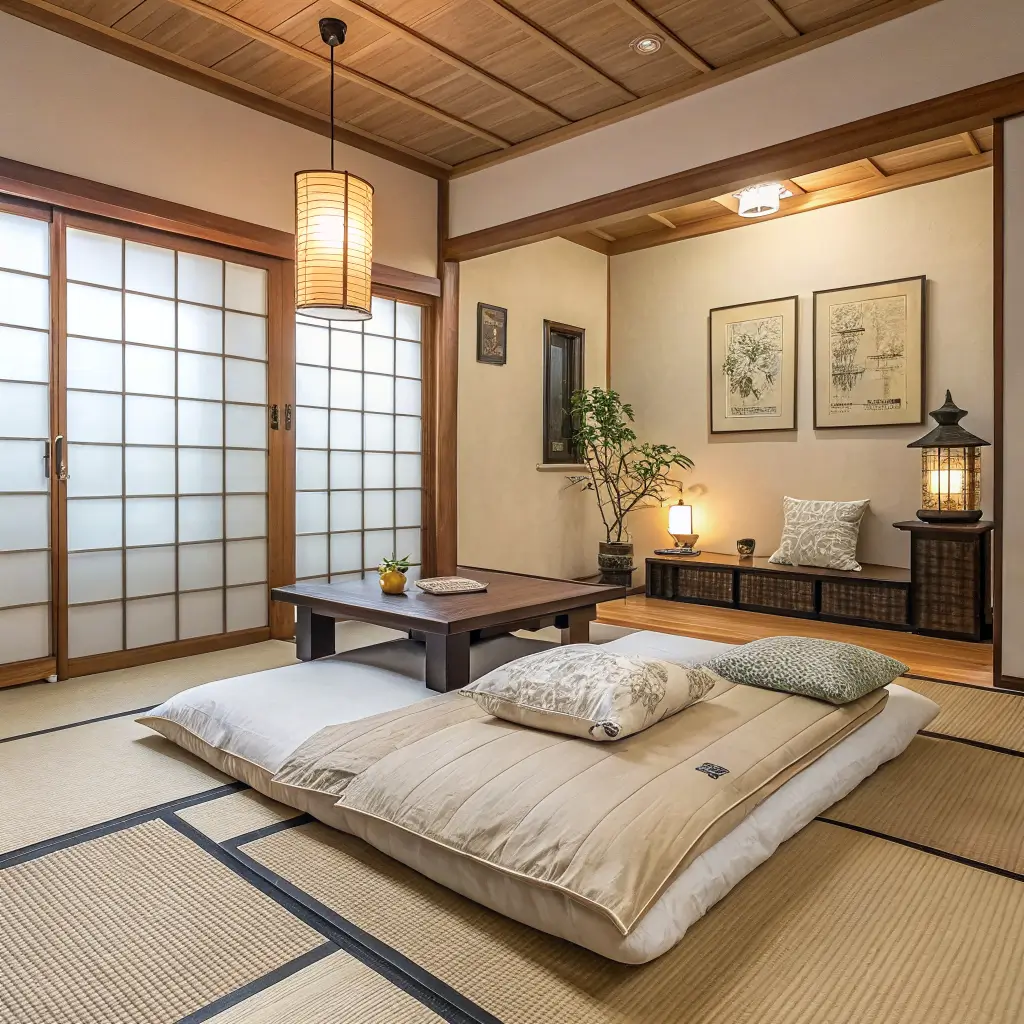
Let’s clear up a misconception right away – authentic Japanese futons are nothing like those fold-out couch contraptions from college. Traditional futons are high-quality cotton or wool mattresses designed to be folded and stored daily, maximizing your living space and connecting you to centuries of Japanese sleeping wisdom.
Sleeping on a futon might seem like a step backward if you’re used to pillow-top mattresses, but there are genuine health benefits. Better spinal alignment, improved circulation, and the daily ritual of making and storing your bed can actually improve your sleep quality and morning routine.
The Art of Futon Living:
Quality matters when it comes to futons. A proper Japanese futon should be thick enough to provide cushioning (usually 3-4 inches), made from natural materials that breathe, and firm enough to provide support without a box spring.
Daily rituals become part of the futon lifestyle. Each morning, you’ll fold and store your bedding, transforming your bedroom into a multipurpose space. Each evening, you’ll unfold and arrange your sleeping area, creating a mindful transition into rest time.
Proper storage keeps your futon fresh and extends its life. Traditional Japanese homes have built-in cupboards for futon storage, but you can create a dedicated closet space or even a beautiful wooden chest that doubles as seating.
Accessories and comfort can enhance the futon experience without sacrificing authenticity. A proper pillow (the traditional buckwheat hull variety is surprisingly comfortable), high-quality sheets, and a lightweight comforter complete the ensemble.
8. Luxury Modern Zen Japanese Bedroom
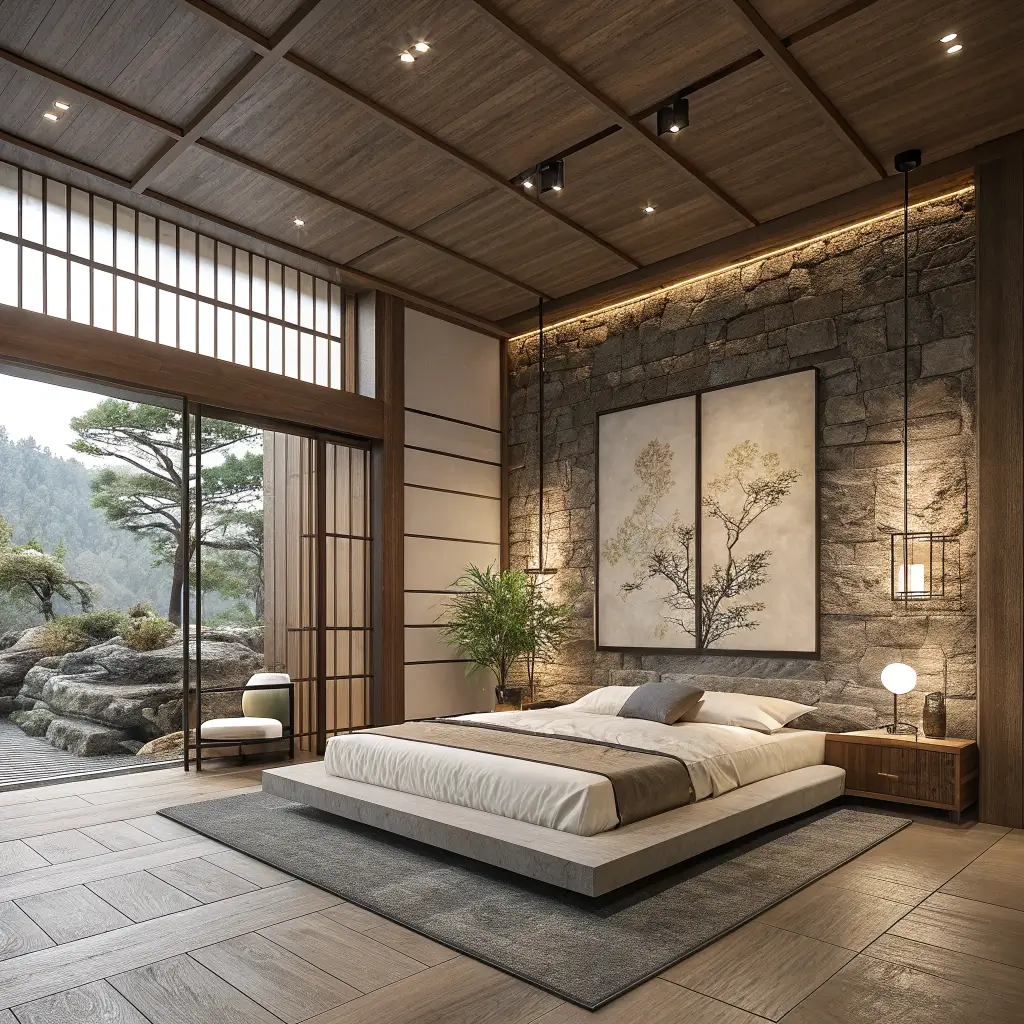
Who says minimalism can’t be luxurious? Luxury Japanese bedrooms prove that you can have opulence and serenity in the same space – it’s all about choosing quality over quantity and investing in pieces that will last a lifetime.
Luxury Japanese style isn’t about showing off wealth through excess; it’s about appreciating craftsmanship, natural materials, and the subtle details that elevate everyday objects into works of art. Think handcrafted furniture, premium textiles, and technology that seamlessly integrates without disrupting the aesthetic.
Elements of Luxury Japanese Design:
Premium materials define luxury Japanese bedrooms. We’re talking solid hardwood furniture with hand-cut joinery, silk or high-thread-count organic cotton bedding, and natural stone accents that feel substantial and permanent.
Artisanal craftsmanship is worth the investment. Hand-forged hardware, custom-built furniture that perfectly fits your space, and textiles created by master weavers all contribute to that feeling of living surrounded by art.
Integrated technology can enhance comfort without compromising aesthetics. Heated floors that warm your feet on cold mornings, automated window treatments that adjust to the sun’s movement, and air purification systems that keep your space fresh and clean.
Subtle luxury details make all the difference. Hidden drawer pulls, soft-close mechanisms on every cabinet door, and lighting systems that remember your preferred settings all contribute to a sense of effortless sophistication.
9. Japanese Inspired Bedroom With Indoor Garden
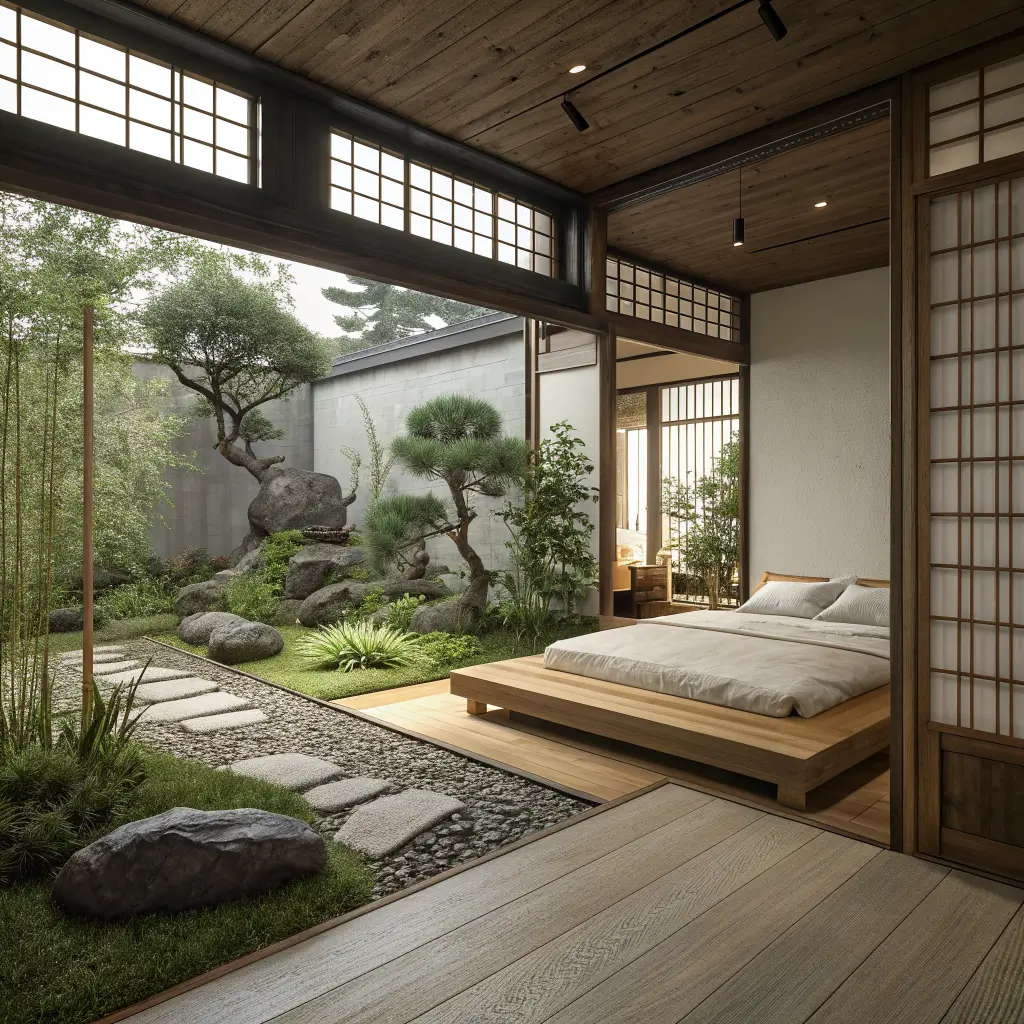
Bringing living plants into your bedroom creates that crucial connection with nature that’s central to Japanese design philosophy. An indoor garden doesn’t mean turning your bedroom into a greenhouse – it’s about thoughtfully integrating plants that thrive in bedroom conditions and enhance your sleep environment.
Air-purifying plants serve double duty in Japanese bedrooms. Snake plants, peace lilies, and spider plants naturally clean your air while adding that essential green element that connects your space to the natural world. Plus, there’s something deeply satisfying about nurturing living things in your most personal space.
Creating Your Indoor Oasis:
Low-maintenance plants are key for bedroom success. ZZ plants, pothos, and rubber trees tolerate low light and infrequent watering – perfect for busy lifestyles. The last thing you want is plant guilt disrupting your zen sanctuary.
Strategic placement maximizes impact while maintaining the clean lines of Japanese design. A single statement plant in a beautiful ceramic planter can be more effective than a collection of small plants scattered around the room.
Natural containers complement Japanese aesthetics better than plastic pots. Bamboo planters, ceramic vessels with subtle glazes, and even repurposed wooden boxes add to the natural material palette while housing your green friends.
Care rituals can become part of your mindful bedroom routine. Watering your plants, checking for new growth, and occasionally repositioning them for optimal light can be meditative practices that connect you to natural rhythms.
Also Read: 10 Amazing Earthy Bedroom Aesthetic Ideas You’ll Love
10. Dark Japanese Moody Bedroom Aesthetic
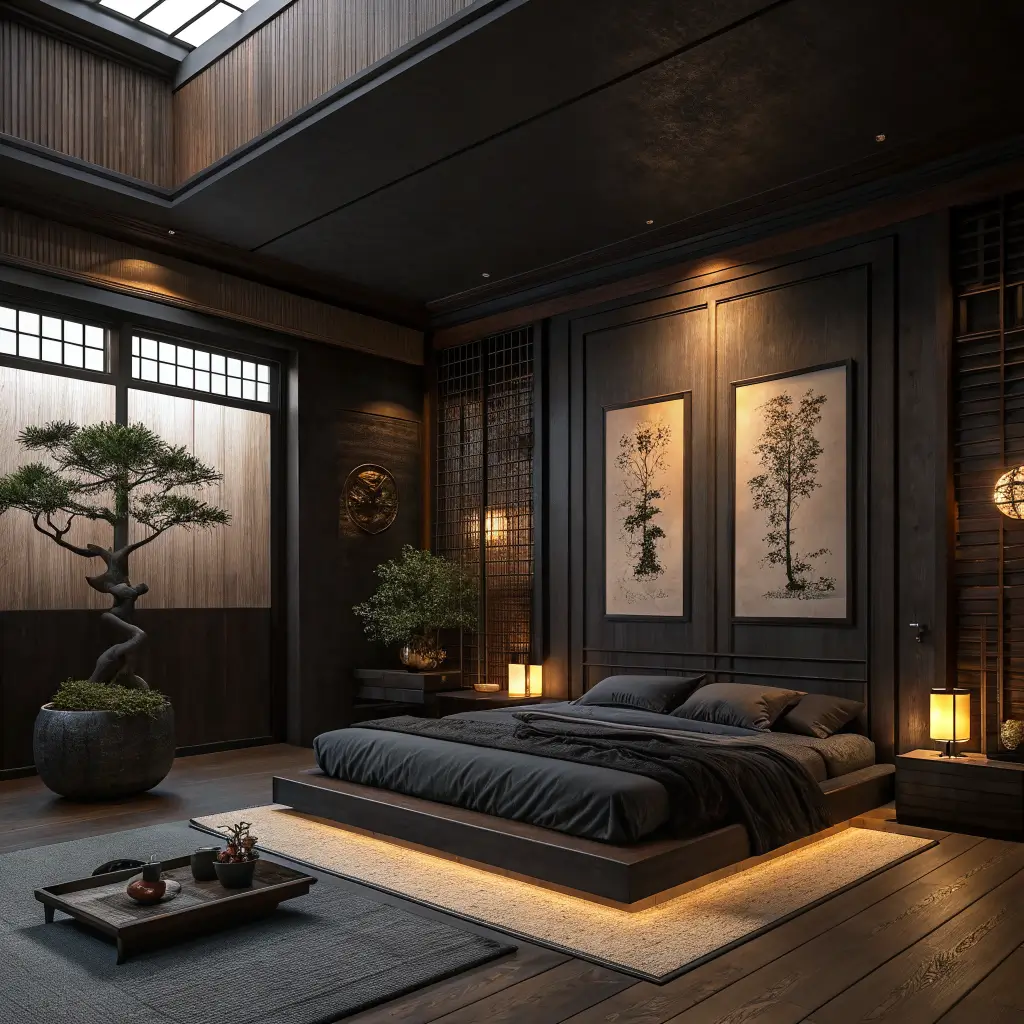
Not all Japanese bedrooms need to be light and airy – sometimes you want to embrace the mysterious and contemplative side of Japanese design. Dark Japanese bedrooms can be incredibly sophisticated and cozy, perfect for people who prefer dramatic, cocoon-like sleeping spaces.
Dark color palettes might seem to contradict Japanese minimalism, but when executed thoughtfully, they create depth and intimacy that lighter schemes can’t match. We’re talking charcoal walls, black furniture, and deep navy accents that feel sophisticated rather than gloomy.
Mastering the Dark Aesthetic:
Layered lighting becomes crucial in darker bedrooms. Multiple light sources at different heights create depth and prevent the space from feeling cave-like. Table lamps, wall sconces, and even strategically placed candles can add warmth and dimension.
Texture variation prevents dark colors from feeling flat. Matte and glossy finishes, smooth ceramics paired with rough textiles, and the contrast between hard and soft surfaces all add visual interest in monochromatic schemes.
Natural light balance requires careful window treatment consideration. Heavy curtains can make dark rooms feel oppressive, while sheer panels or bamboo blinds filter light beautifully while maintaining privacy.
Metallic accents in bronze, brass, or copper add warmth and prevent dark schemes from feeling too cold. These metals complement the earthy foundation while adding subtle glamour.
Conclusion
The beauty of Japanese bedroom aesthetics lies in their adaptability – you can lean into traditional elements or modernize the principles for contemporary living. Whether you’re drawn to the zen-like simplicity of minimalism or the cozy imperfection of wabi-sabi, these ten approaches offer pathways to creating a bedroom that truly feels like a sanctuary.
IMO, the best Japanese-inspired bedrooms aren’t perfect replicas of traditional designs – they’re thoughtful interpretations that honor the philosophy while serving your modern lifestyle. Start with one or two elements that speak to you, and gradually build your perfect zen retreat. Sweet dreams! 🙂